
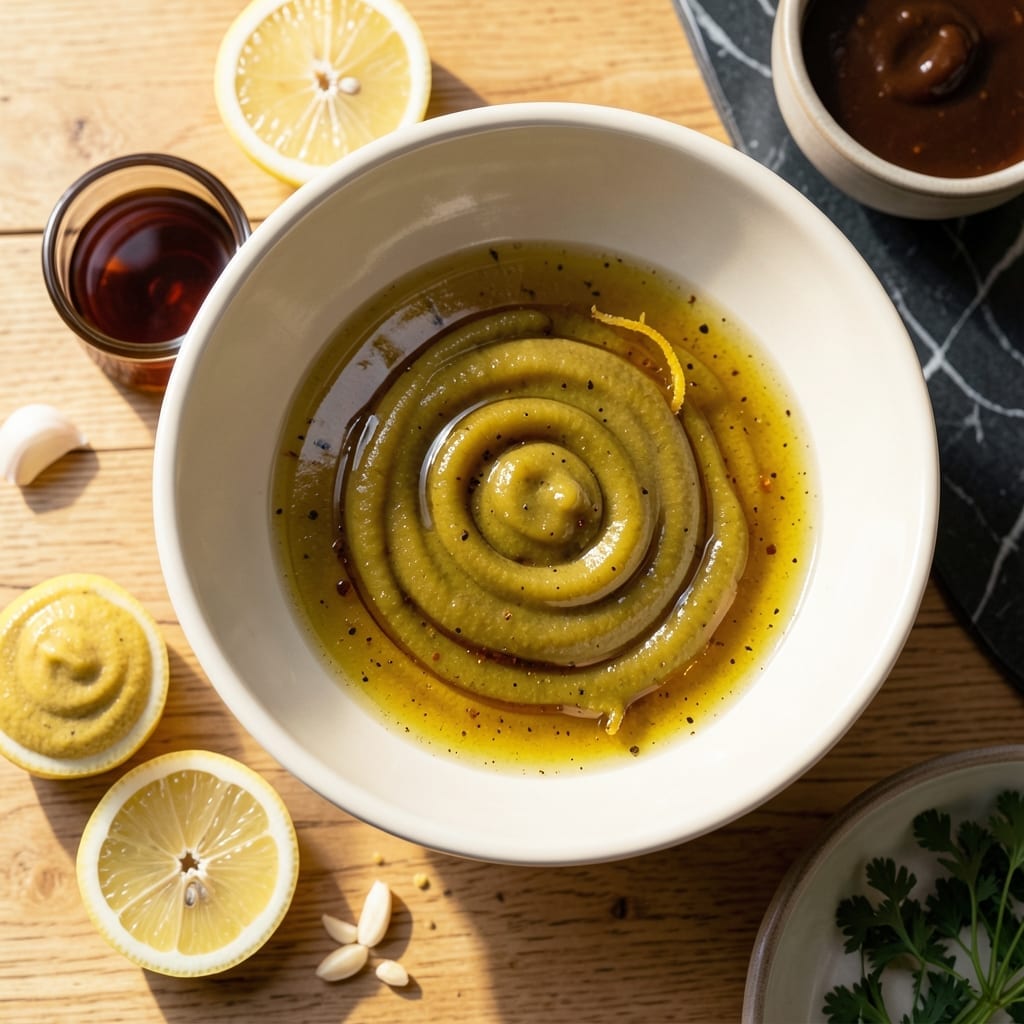
This gentle dressing offers a soothing alternative to traditional acidic vinaigrettes without sacrificing flavor. I developed this recipe specifically for those with sensitive stomachs who still want to enjoy fresh salads.
The key is using mild ingredients that create a balanced, creamy base. A touch of apple cider vinegar provides just enough tang without overwhelming the palate, while olive oil adds richness.
What you get is a smooth, velvety dressing that coats greens beautifully and enhances rather than overpowers. It stores well in the refrigerator for up to 10 days, making it perfect for weekly meal prep.
Vegan-friendly and versatile, this works on everything from delicate lettuce to hearty grain bowls. Here’s how to make it right.
Ingredients for Low Acid Salad Dressing
Eight gentle ingredients create a soothing dressing perfect for sensitive stomachs.
| Ingredient | Amount | Notes |
|---|---|---|
| Extra-Virgin Olive Oil 🫒 | ¾ cup | Mild, fruity variety preferred |
| Apple Cider Vinegar 🍏 | 2 tbsp | Raw, unfiltered for gentle acidity |
| Dijon Mustard 🟡 | 1 tbsp | Smooth, mild variety |
| Pure Maple Syrup 🍁 | 1 tbsp | Grade A for balanced sweetness |
| Fresh Lemon Juice 🍋 | 1 tbsp | Strained for no pulp |
| Garlic Clove 🧄 | 1 clove | Peeled and minced |
| Sea Salt 🧂 | ½ tsp | Fine grain for even distribution |
| Freshly Ground Black Pepper 🌶️ | ¼ tsp | Adjust to taste preference |
The olive oil is your foundation here. Look for a mild, fruity extra-virgin—nothing too peppery or bitter. California Olive Ranch or Bertolli are solid grocery store picks. Apple cider vinegar should be raw and unfiltered (the cloudy kind) for that gentle tang. Bragg is the gold standard, but any organic brand works. Skip the white vinegar—it’s too harsh for this.
No maple syrup? Agave nectar at a 1:1 ratio keeps it vegan. Short on Dijon? Yellow mustard at half the amount works in a pinch, though the flavor’s milder. If lemon juice feels too bright (rare, but happens), white balsamic vinegar adds tang without the citrus. The garlic can be granulated at a pinch—just use one-quarter teaspoon.
This keeps beautifully in the fridge for 10 days—maybe longer, but best fresh. Store in a glass jar (mason jars are perfect) to keep it from absorbing plastic flavors. Give it a good shake before using since the oil and vinegar will separate naturally.
Why You’ll Love This Recipe
- Ready in Minutes: I shake it together in a jar while the salad greens are still drying.
- Balanced Sweet-Tang: The maple syrup and apple cider vinegar hit that spot where it’s bright but never harsh.
- Drizzles on Everything: I’ve used it on kale, roasted veggies, even as a quick marinade for chicken.
- Keeps for Days: Honestly, a batch lasts me all week in the fridge and tastes just as good on day five.
Step-by-Step Instructions for Low Acid Salad Dressing
Here’s the method. Straightforward, tested, works every time.
Step 1: Mince the Garlic and Prep the Bowl
Peel and mince the 1 clove Garlic Clove as finely as possible. I use the flat side of my chef’s knife to crush it first—this releases more of its aromatic oils and makes mincing easier. Place the minced garlic in a medium mixing bowl.
This small step makes a big difference. Fresh garlic adds depth without overpowering the gentle acid profile we’re building. The bowl should be large enough to whisk vigorously without splashing.
Step 2: Combine the Wet Components
To the bowl with garlic, add the 0.75 cup Extra-Virgin Olive Oil, 2 tbsp Apple Cider Vinegar, 1 tbsp Fresh Lemon Juice, and 1 tbsp Pure Maple Syrup. The apple cider vinegar contributes mild acidity that’s easier on sensitive stomachs compared to white vinegar or red wine vinegar.
I always use a mild, fruity extra-virgin olive oil here—its smooth character complements the other flavors without bitterness. The maple syrup balances the acidity with natural sweetness, while the lemon juice adds just enough brightness to keep the dressing lively.
Step 3: Add the Remaining Seasonings
Now stir in the 1 tbsp Dijon Mustard, 0.5 tsp Sea Salt, and 0.25 tsp Freshly Ground Black Pepper. The Dijon mustard acts as an emulsifier, helping the oil and vinegar stay combined longer, while adding its own subtle tang.
The fine grain sea salt dissolves easily, ensuring even distribution throughout the dressing. Freshly ground black pepper adds a gentle warmth that won’t overpower the delicate balance of flavors. This is where the magic starts to happen.
Step 4: Whisk Until Fully Emulsified
Using a wire whisk, beat the mixture vigorously for 30-45 seconds until it thickens slightly and becomes uniform in appearance. You’ll notice the dressing change from separated to creamy as the mustard works its emulsifying magic.
Don’t rush this step—proper emulsification means your dressing won’t separate into oil and vinegar layers when stored. The final texture should coat the back of a spoon lightly. If it looks too thick, a splash of water can loosen it to your preferred consistency.
Taste and adjust seasoning if needed, though the measured amounts should provide perfect balance for most palates. The flavor should be smooth, slightly sweet, with just a gentle tang from the vinegar and lemon.
Pro Tips For Making Low Acid Salad Dressing
- Whisk Vigorously: I learned this the hard way—give it a solid 30 seconds of whisking to fully emulsify the olive oil and vinegar, or the dressing will separate in minutes.
- Use Room-Temp Oil: Cold olive oil resists blending, so pull it out 10 minutes early or the mustard won’t bind properly with the vinegar.
- Skip Cheap Vinegar: That bargain apple cider vinegar tastes harsh; spring for the organic, unfiltered kind—it’s smoother and less acidic.
- Balance with Syrup: After burning my tongue on too-tart dressing, I now add the maple syrup in ½-teaspoon increments until the acidity mellows just right.
Perfect Pairings for low acid salad dressing
Salad Pairings
This dressing shines on delicate greens like butter lettuce or baby spinach, where its gentle flavor won’t overpower. I love it on a simple bed of greens with sliced cucumbers and cherry tomatoes. The sweetness complements the vegetables beautifully. 🥗
Protein Pairings
For heartier meals, drizzle it over grilled chicken breast or baked tofu. The dressing’s mild acidity tenderizes the protein without making it soggy. I also enjoy it with chickpeas for a vegan protein boost.
Grain Bowls
Transform a grain bowl by tossing quinoa or farro with this dressing. Add roasted sweet potatoes and avocado slices for a satisfying meal. The dressing’s creamy texture coats every ingredient perfectly.
Fruit Salads
This dressing works surprisingly well with fruit. Toss it with mixed berries, sliced peaches, and fresh mint for a refreshing summer salad. The maple syrup enhances the natural sweetness of the fruit. 🍓
Dip or Marinade
Use it as a dip for crudités or a marinade for grilled vegetables. I’ve even used it to marinate portobello mushrooms before roasting—they absorb the flavors beautifully.
Nutrition Facts
Frequently Asked Questions
What can I substitute for maple syrup?
Agave nectar works perfectly at a 1:1 ratio to keep it vegan. Honey is another option if you’re not strict about veganism. Avoid artificial sweeteners as they can alter the texture.
Why does my dressing separate after whisking?
This is normal! The mustard helps emulsify, but oil and vinegar naturally separate over time. Just give it a good shake before each use. 30 seconds of whisking should re-combine it.
Can I make this ahead for a party?
It stays fresh in the fridge for up to 10 days in a glass jar. For best results, make it the day before to let flavors meld. Always shake well before serving.
How do I adjust the sweetness?
Start with the recipe as written. Then taste and add more syrup in 1/2 tsp increments until balanced. Remember the garlic and mustard add subtle sweetness too.

- Bread Recipe KitchenAid Mixer: Foolproof Loaf With Perfect Rise - September 28, 2026
- BBQ Oysters Recipe Grill: Smoky Garlic Butter Bliss - September 28, 2026
- Crock Pot Mac and Cheese Recipe Paula Deen: Ultra Creamy Southern-Style Comfort - September 28, 2026