
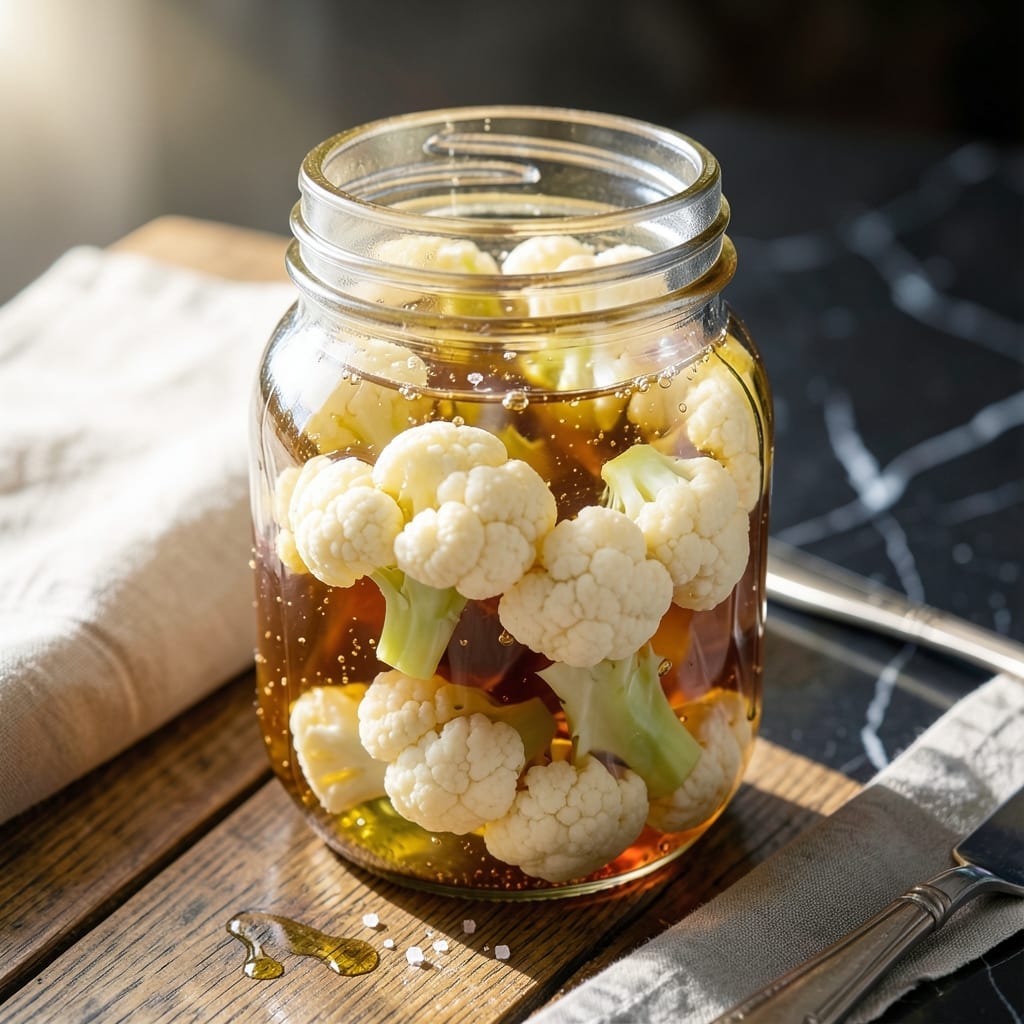
This pickled cauliflower delivers the perfect balance of sweet and tangy with every crisp bite. The simple brine transforms fresh florets into a versatile condiment that brightens any sandwich or snack board.
With just 15 minutes of prep, you can create jars of vibrant, crunchy cauliflower that keep for weeks in the fridge. The vinegar base preserves the vegetable’s texture while infusing it with bold, zesty flavor.
The result is a vegan addition that pairs equally well with savory dishes or as a standalone treat. Its versatility makes it a pantry staple worth keeping on hand.
This method ensures consistent, professional-quality pickles every time with minimal effort.
Ingredients for Sweet Pickled Cauliflower
Fresh florets and a spiced brine create vibrant, crunchy pickles with minimal effort.
| Ingredient | Amount | Notes |
|---|---|---|
| Cauliflower 🥦 | 1 whole | Cut into small florets |
| White Vinegar 💧 | 1 ½ cups | 5% acidity preferred |
| Apple Cider Vinegar 🍏 | ½ cup | Adds fruity depth |
| Granulated Sugar 🍚 | ½ cup | White or cane sugar |
| Water 💧 | ½ cup | Filtered for clarity |
| Kosher Salt 🧂 | 1 tbsp | Diamond Crystal preferred |
| Black Peppercorns 🌶️ | 1 tsp | Whole, not ground |
| Mustard Seeds 🌿 | 1 tsp | Yellow or brown |
| Coriander Seeds 🌿 | 1 tsp | Lightly crushed |
| Red Pepper Flakes 🌶️ | ½ tsp | Adjust for heat preference |
| Garlic Cloves 🧄 | 4 cloves | Smashed, peeled |
| Bay Leaves 🍃 | 2 whole | Dried, whole leaves |
The cauliflower should be firm and fresh—look for heads with tight, unblemished florets. Whole Foods or local farmers markets often have the best selection. For the vinegars, Heinz white vinegar and Bragg apple cider vinegar are reliable brands. The sugar dissolves faster if you use fine granulated, but raw cane sugar adds a subtle molasses note that complements the tang.
No apple cider vinegar? Rice vinegar at equal amount works, though it’s milder. Mustard seeds can be swapped for celery seeds for a different aromatic profile. If avoiding sugar, maple syrup at three-quarters the volume substitutes well. The red pepper flakes can be omitted for a milder pickle, but a pinch adds depth without overwhelming heat.
These pickles stay crisp for 3-4 weeks refrigerated in a sealed jar. The brine can be reused once for a fresh batch of veggies. For best texture, let them sit at least 24 hours before tasting—patience rewards with maximum crunch and flavor development.
Why You’ll Love This Recipe
- 20-Minute Magic: I can prep and jar this while dinner cooks—just chop, boil the brine, and pour.
- Sweet-Tangy Crunch: The sugar mellows the vinegar’s bite, and the cauliflower stays crisp for days.
- Fridge Staple: I keep a jar for salads, sandwiches, or straight-from-the-jar snacking.
- Pantry Hero: A head of cauliflower and vinegar I already have turn into something special—no extra shopping.
Step-by-Step Instructions for Sweet Pickled Cauliflower
This method ensures crisp, tangy florets with balanced sweetness and subtle spice.
Step 1: Prepare the Cauliflower Florets
Begin by cutting the 1 whole Cauliflower into uniform 1-inch florets. Smaller pieces absorb the brine faster, but keep them large enough to maintain texture. You should have about 6-7 cups of florets from a standard head.
Rinse the florets briefly under cold water to remove any dirt, then pat them completely dry with a clean kitchen towel. Excess moisture dilutes the brine and can lead to soft pickles. Pack the florets into sterilized jars, leaving ½ inch of headspace at the top.
Step 2: Infuse the Brine Base
In a medium saucepan, combine the 1.5 cups White Vinegar, 0.5 cup Apple Cider Vinegar, 0.5 cup Granulated Sugar, and 0.5 cup Water. Add the 1 tbsp Kosher Salt and stir until the sugar and salt begin to dissolve.
Add the 1 tsp Black Peppercorns, 1 tsp Mustard Seeds, 1 tsp Coriander Seeds, 0.5 tsp Red Pepper Flakes, 4 cloves Garlic Cloves, and 2 whole Bay Leaves. Bring the mixture to a gentle boil over medium-high heat, then reduce to a simmer for 2 minutes to allow the spices to bloom.
Step 3: Pour and Seal the Jars
Carefully ladle the hot brine over the cauliflower florets, ensuring they are completely submerged. Use a chopstick to gently press down the florets and release any air bubbles. The liquid should cover the cauliflower by at least ¼ inch.
If the brine doesn’t fully cover the florets, prepare a small additional batch using equal parts water and vinegar, heated just until steaming, and top off the jars. Seal the jars with lids while the contents are still hot to create a vacuum seal as they cool.
Step 4: Cool and Store for Optimal Flavor
Let the jars cool to room temperature on the counter, which typically takes 1-2 hours. As they cool, you’ll hear the lids pop, indicating a proper seal. Once cooled, refrigerate the pickles for at least 24 hours before tasting.
The flavors deepen over time, so for the best results, wait 48-72 hours before serving. The cauliflower will turn slightly translucent and develop a satisfying crunch. Store in the refrigerator for up to 1 month for peak quality.
Pro Tips For Making Sweet Pickled Cauliflower
- Blanch First: Parboil cauliflower florets for 2-3 minutes in salted water before pickling. I learned this the hard way—raw florets stay crunchy for a day or two, then turn mushy in the brine.
- Balance Vinegars: Use a 1:1 ratio of white vinegar to apple cider vinegar for bright acidity with a hint of fruitiness. My grandmother swore by this, and she was right: all white vinegar tastes flat, all cider can be overpowering.
- Dissolve Sugar Fully: Heat the vinegar, water, and sugar together until the sugar completely dissolves—no cheating with cold liquid. Sounds tedious, but it prevents grainy syrup at the bottom of your jars.
- Trim Evenly: Cut florets into uniform 1-inch pieces so they pickle at the same rate. After ending up with half soft, half crunchy batches, I finally started measuring—yes, even for pickles.
Essential Equipment for Great sweet pickled cauliflower
Essential Jars
I always use 16-ounce mason jars for pickling—they’re perfect for small batches and create an airtight seal. Ball or Kerr brands are my go-to because they’re durable and widely available.
Saucepan Choice
A medium stainless steel saucepan (about 2-3 quarts) is ideal for the brine. I prefer All-Clad for even heat distribution, but any heavy-bottomed pan works. Avoid aluminum, as it can react with the vinegar.
Submersion Tools
To keep cauliflower fully submerged, I use a fermentation weight or a small glass ramekin. A clean chopstick helps release air bubbles trapped in the jar. These simple tools prevent mold and ensure even pickling.
Precision Thermometer
A candy or instant-read thermometer helps monitor brine temperature. Aim for 180-190°F when pouring over florets—hot enough to sterilize but not so hot it cooks the veggies. I trust my ThermoWorks for accuracy.
Cutting Board
A large, stable cutting board is key for prepping cauliflower. I use a bamboo board for its gentle surface and natural antimicrobial properties. A sharp 8-inch chef’s knife makes quick work of the florets. 💡
Storage Space
Ensure your fridge has space for the jars to sit undisturbed for at least 24 hours. A cool, dark pantry works for short-term storage before refrigeration. Proper cooling is crucial for achieving that signature crunch.
Nutrition Facts
Frequently Asked Questions
Can I use frozen cauliflower?
Fresh is best for crisp texture, but frozen works in a pinch. Thaw completely and pat very dry first. Expect slightly softer results since freezing breaks cell walls.
How long do these pickles last?
Properly sealed and refrigerated, they stay crisp for 3-4 weeks. The flavors peak after 48-72 hours but remain delicious until the last bite.
What can I substitute for apple cider vinegar?
Rice vinegar works well at equal volume, though it’s milder. For more tang, add 1 tbsp lemon juice per cup of substitute.
Why did my pickles turn soft?
Usually from excess moisture or uneven brine coverage. Ensure florets are fully submerged and jars are sealed tightly. Using very fresh cauliflower helps too.

- Bread Recipe KitchenAid Mixer: Foolproof Loaf With Perfect Rise - September 28, 2026
- BBQ Oysters Recipe Grill: Smoky Garlic Butter Bliss - September 28, 2026
- Crock Pot Mac and Cheese Recipe Paula Deen: Ultra Creamy Southern-Style Comfort - September 28, 2026