
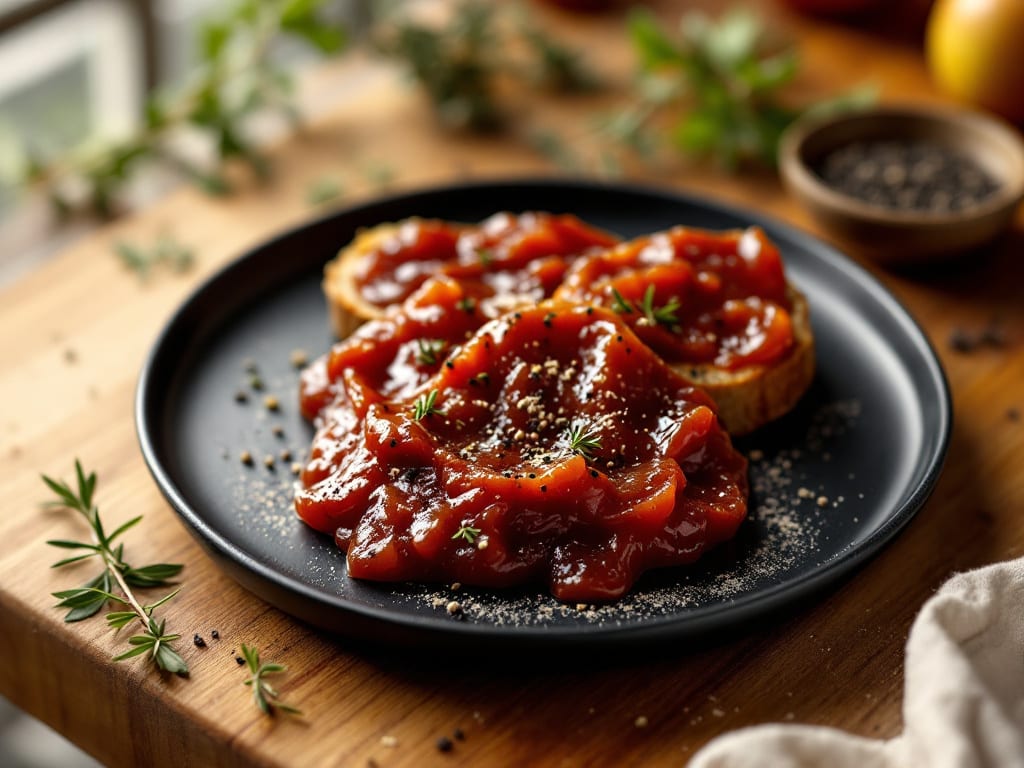
This Lucille’s apple butter recipe—without celery—transforms a classic Southern staple into a smoother, more versatile spread perfect for toast, cheese boards, or even desserts. The slow-simmered method develops deep caramelized flavors and a velvety texture that’s impossible to resist.
I’ve refined this recipe over years to balance sweetness and spice precisely—no bitterness, just rich apple goodness.
What sets this version apart is the omission of celery, which many find unnecessary, while still delivering that signature depth of flavor.
You’ll start with peeled apples, simmered until they break down into a thick, fragrant purée, then blended with warm spices and just enough sweetener to enhance—not overpower—the natural fruit sweetness. The result is a spread that’s perfectly balanced between tangy and sweet.
By the time you’re done, you’ll have a batch of apple butter that’s smooth, glossy, and packed with warm cinnamon and nutmeg notes.
It’s the kind of homemade treat that elevates simple meals—think slathered on warm biscuits, drizzled over vanilla ice cream, or paired with sharp cheddar on a charcuterie board. The best part? It keeps beautifully in the fridge for weeks.
This recipe is designed for simplicity, with clear steps to ensure you achieve that perfect consistency every time. Whether you’re making it for the first time or perfecting your technique, the slow-simmered method guarantees restaurant-quality results at home. Let’s get started on creating this timeless condiment.
Ingredients for lucille’s apple butter
Nine ingredients that transform humble apples into velvety spiced perfection—no celery needed.
| Ingredient | Amount | Notes |
|---|---|---|
| Honey 🍯 | ½ cup | Raw or wildflower preferred |
| Granulated Sugar 🍚 | ½ cup | Light brown sugar for depth |
| McIntosh Apples 🍎 | 4 lb | Peeled, cored, quartered |
| Ground Cinnamon 🌿 | 2 tbsp | Freshly ground preferred |
| Ground Nutmeg 🌿 | 1 tsp | Freshly grated nutmeg better |
| Ground Cloves 🌶️ | ½ tsp | Whole cloves toasted first |
| Apple Cider Vinegar 🍶 | 1 tbsp | For tangy balance |
| Unsalted Butter 🧈 | 2 tbsp | Cold, cubed for blending |
| Salt 🧂 | ½ tsp | Diamond Crystal preferred |
The apples are the foundation—McIntosh gives that classic tangy sweetness, but Fujis or Granny Smiths work too if that’s what you’ve got. Local orchards or Trader Joe’s usually have them at peak season for the best flavor. Peeled and cored, they should be roughly quartered for even cooking. For the spices, Penzeys or bulk bins at natural markets have the freshest ground spices—nutmeg and cloves make all the difference here. If you can’t find whole cloves, pre-ground is fine, but toast them briefly in a dry pan first to wake up the flavor. The honey? Raw wildflower has more complexity than regular grocery store honey—look for it at specialty markets.
No honey? Maple syrup works beautifully—use the same amount. Short on apples? Pear or quince can substitute at half the quantity, but apples are non-negotiable for that classic apple butter flavor. The vinegar might seem like an odd addition, but it’s what prevents bitterness and adds that perfect tang. Substitute lemon juice at half the amount if you’re out. For the sugar, light brown sugar gives that caramelized depth, but white sugar works in a pinch. The butter at the end is what makes it silky—don’t skip it. If you’re watching fat, you can reduce it to 1 tbsp, but it’ll be less luxurious.
This keeps like a dream—4-6 weeks in the fridge in a sealed jar, or up to a year in the freezer. I like to portion it into small jars so I can grab just what I need. The flavor actually improves after the first week as the spices meld. If it gets too thick, just add a splash of warm water and stir. For serving, warm it slightly before spreading—it’s even more decadent that way. The butter layer on top? That’s your sign it’s ready for the freezer—just scoop it out and store.
Why You’ll Love This Recipe
- No Peeling Required: I swear by McIntosh apples for this—toss the skins in whole, and they break down into that velvety texture without a single knife scrape. Honestly, the kids can handle the chopping while I stir.
- Honey-Sweetened Magic: That first spoonful? It’s like autumn in a jar—honey and cinnamon team up to make it rich but never cloying, while nutmeg sneaks in for that cozy, almost spiced-tea warmth. (Yes, even on a Tuesday night.)
- Gift-Worthy in Minutes: Slather it on toast, dollop it over yogurt, or jar it up for holiday presents—this stuff disappears faster than I can say “make a double batch.” Between us, my sister-in-law now asks for it every Christmas.
- Pantry Staple, Zero Waste: Apples get used up, sugar lasts forever, and you’ll have jars of this for months. I’ll be real: I’ve had a half-full jar sitting since last fall, and it’s still perfect. Budget-friendly? More like pantry genius.
Step-by-step instructions for slow-simmered apple butter
Here’s how to transform humble McIntosh apples into velvety, fragrant apple butter packed with warm spices.
Prepare the Apples for Cooking
Start by peeling, coring, and quartering the 4 lb McIntosh Apples. I like to cut them into roughly even-sized chunks about 1-inch thick—this ensures even cooking and prevents some pieces from turning to mush while others stay firm. The skin contains pectin, but peeling creates that classic smooth texture Lucille’s version is famous for.
Transfer the prepared apples to a large, heavy-bottomed pot. Add the 0.5 cup Granulated Sugar and 0.5 cup Honey right away, stirring to distribute evenly. This initial sweetening helps balance the natural tartness of the apples while they cook down. Give it a quick stir now—you’ll be working with this mixture for hours, so getting it moving early prevents sticking.
Build the Spice Base
Increase heat to medium and bring the apple mixture to a gentle boil. Once boiling, reduce heat to low and let it simmer uncovered for 20 minutes. This initial simmer helps break down the apple fibers and develop the base flavor. Here’s where the magic begins—I add the 2 tbsp Ground Cinnamon, 1 tsp Ground Nutmeg, and 0.5 tsp Ground Cloves all at once, stirring well to incorporate.
Real talk: Don’t be tempted to rush this step. The spices need time to bloom and infuse into the apples. After 20 minutes, you should notice the mixture darkening slightly and becoming fragrant. If it looks too thick, add ¼ cup water—this helps prevent burning. The goal is a loose, saucy consistency that will thicken dramatically as it reduces.
Simmer Low and Slow for Deep Flavor
Now comes the patience test. Reduce heat to the lowest setting possible—just enough to maintain a gentle simmer, not a rolling boil. Cover the pot and let it cook for 2 to 2.5 hours. This slow cooking transforms the apples into a thick, syrupy consistency while developing complex caramelized flavors. I like to stir occasionally, especially if the mixture starts to stick to the bottom.
After about 1 hour, add the 1 tbsp Apple Cider Vinegar and 0.5 tsp Salt. The vinegar brightens the flavors while cutting through the sweetness, and the salt enhances all the spices. You’ll know it’s working when you smell that unmistakable apple-cinnamon aroma filling your kitchen. If the butter hasn’t melted yet, add the 2 tbsp Unsalted Butter now—it’ll blend in beautifully as it melts into the warm mixture.
Test for Perfect Consistency
After 2 to 2.5 hours, it’s time to check the consistency. Remove the lid and use a spoon to scoop up some mixture. Let it cool slightly on a plate—when it’s cool enough to touch, try pushing it with your finger. If it holds its shape but still feels slightly loose, it’s ready. If it’s too thin, return it to low heat and simmer uncovered for another 15 to 30 minutes, stirring occasionally to prevent burning.
The butter should be thick enough to hold peaks when spooned, but still spreadable—not so stiff it cracks when chilled. Here’s the thing—every stove and pot behaves differently, so don’t stress if your timing varies slightly. The key is that beautiful balance between spreadable and thick, where it still has that luxurious, glossy sheen.
Finish and Store Properly
Once you reach the perfect consistency, transfer the apple butter to a clean glass jar or airtight container while it’s still warm. This prevents a skin from forming on the surface. Let it cool completely at room temperature, then refrigerate. The butter will thicken further as it cools, developing that perfect knife-spreadable texture.
This apple butter keeps beautifully in the refrigerator for up to 3 months or can be canned for long-term storage. The flavors actually deepen over time, making it perfect for gifting. And trust me—once you taste this version without celery, you’ll never go back to the traditional recipes. The spices shine through in a way that’s rich, complex, and utterly addictive.
Pro Tips For Making Lucille’S Apple Butter
- STIR CONSTANTLY FIRST 20 MINUTES: I learned this the hard way—skipping this means scorched sugar and burnt apples. The honey and sugar caramelize fast, so keep that spoon moving until everything’s smooth and bubbling evenly. (Yes, even if you’re impatient like me.)
- PEEL AND GRATE McINTOSH APPLES: Whole apples won’t break down right, and chopped ones leave chunks. Peel, core, and grate them—no need for fancy tools, just a box grater. This cuts cooking time by half and guarantees that silky texture.
- DON’T RUSH THE SIMMER: Low and slow is the only way. After the initial cook, drop the heat to a bare simmer and let it thicken for 45-60 minutes. Rushing leads to watery apple butter that tastes more like syrup than spiced jam.
- ADD SPICES LAST: Cinnamon and nutmeg burn faster than you’d think. Stir them in only after the mixture’s been simmering for 30 minutes—this lets the flavors meld without turning bitter. (Your future self will thank you.)
Troubleshooting this dish
Too Thin or Runny
If your apple butter isn’t thickening enough after 2.5 hours, it’s likely because the apples weren’t cooked long enough or the pot wasn’t hot enough. First, check your pot—use a heavy-bottomed Dutch oven like Le Creuset to maintain even heat.
If it’s still too thin, uncover the pot and simmer on low heat for another 30-45 minutes, stirring occasionally to prevent sticking. For stubborn cases, add 1 tbsp cornstarch mixed with 2 tbsp cold water and stir in—this acts as a natural thickener. 🔥
Too Thick or Gummy
Overcooking or insufficient liquid can leave your apple butter gummy. If it’s too thick while still hot, whisk in 1-2 tbsp warm water or apple cider to loosen it. For stubborn cases, add a pat of butter (1 tbsp) and stir until melted—this helps restore that silky texture.
If it’s already cooled and set too firm, microwave it for 15-20 seconds to soften, then stir until smooth. The key is patience: thicken gradually rather than forcing it.
Burning on the Bottom
Burnt apple butter ruins the whole batch, so constant monitoring is critical. Use a low and slow approach—never let it boil vigorously. If you see browned bits forming, immediately reduce heat to the lowest setting or remove the pot from heat for 2-3 minutes to let it cool slightly.
Stirring occasionally also helps prevent sticking. For stubborn burnt spots, scrape them off with a rubber spatula and discard—don’t try to salvage them, as they’ll make the butter bitter. 🌡️
Spices Not Infusing
If your apple butter tastes bland or lacks spice depth, the spices likely didn’t bloom properly. Start by toasting whole spices—2-3 whole cloves and 1 cinnamon stick in a dry pan for 1 minute before grinding—this intensifies their flavor.
For ground spices, add them 10 minutes before the end of cooking to let them infuse fully. If you’re still underwhelmed, add a pinch of cayenne pepper (¼ tsp) or a splash of vanilla extract (½ tsp) to deepen the aroma.
Skin Forming on Top
A skin forms when the apple butter cools too quickly or sits uncovered. To prevent this, transfer the warm (not hot) apple butter to a clean, dry jar while it’s still liquid. Press a piece of parchment paper directly on the surface to block air, then seal the lid.
If a skin already formed, simply spoon it off—it’s safe to eat but less appealing. For storage, keep the jar in the fridge, and the butter will maintain its glossy sheen for weeks. ✨
Apple Butter Too Tart
If your batch tastes overly tart, you likely used too many tart apples (like Granny Smith) or didn’t balance the flavors enough. Next time, use a mix of McIntosh and Fuji apples for a sweeter base.
Add 1-2 tbsp more honey or sugar during the final 30 minutes of cooking to mellow the acidity. A splash of apple cider vinegar (½ tbsp) can also help round out the flavors—it brightens rather than adds tartness.
Nutrition facts
Frequently asked questions
Why does this recipe skip celery?
Many traditional apple butter recipes include celery for depth, but this version achieves rich flavor through concentrated spices and slow simmering. The 2 tbsp cinnamon, 1 tsp nutmeg, and ½ tsp cloves create warmth without needing celery. The celery-free approach also makes it smoother and more versatile for sweet applications like desserts.
Can I make this in a slow cooker?
Use a 6-quart slow cooker on low for 6-8 hours or high for 3-4 hours. Add ¼ cup water to prevent burning, and stir every hour to distribute heat evenly. The texture may be slightly thinner—simmer uncovered on the stovetop for 15 minutes afterward to thicken.
How do I know when it’s done?
Test consistency by spooning a small amount onto a plate and letting it cool. When it holds its shape but still feels slightly loose (like thick jam), it’s ready. The butter should be spreadable but not runny. If it’s too thin, simmer uncovered for 15-30 more minutes, stirring occasionally. The color should deepen to a rich amber.
What are the best apples for this?
McIntosh apples work best for their tangy-sweet balance, but Fujis or Granny Smiths also work. Avoid overly soft varieties like Red Delicious. For extra depth, use a mix—3 lb McIntosh + 1 lb Fuji gives perfect sweetness. Peeled apples prevent bitterness and ensure a silky texture.
Can I substitute maple syrup for honey?
Yes! Use the same ½ cup of maple syrup in place of honey. It adds a distinct earthy note that pairs beautifully with the spices. For a neutral sweetness, mix ¼ cup honey + ¼ cup maple syrup. Avoid corn syrup—it lacks the complexity needed for authentic flavor.

- White Peppered Gravy Recipe: Silky-Smooth Sauce for Roasted Meats - November 29, 2026
- James Martin’s Cottage Pie Recipe: Flaky Pastry Over Hearty Beef Filling - November 29, 2026
- Sweet Grissini Recipe: Crispy Twists With Honey-Glazed Bite-Sized Magic - November 29, 2026