
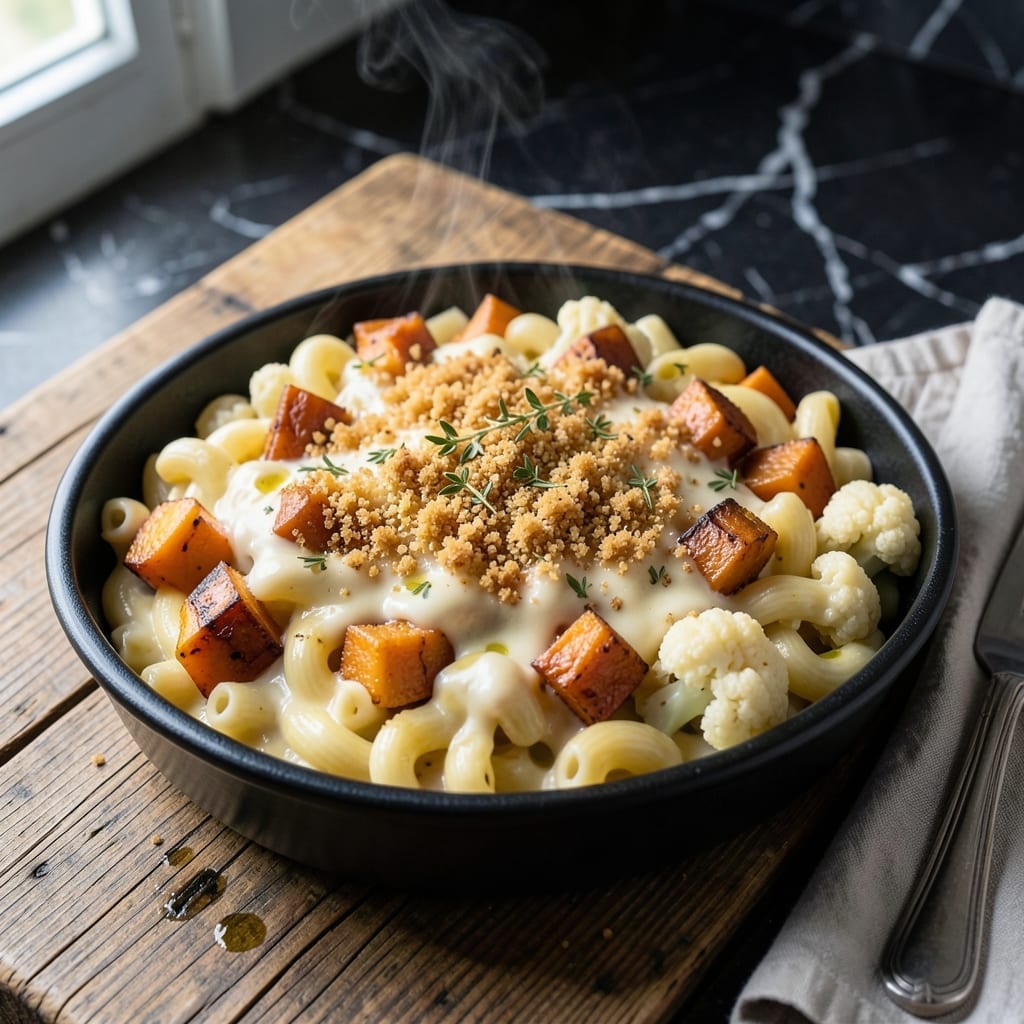
This mac and cheese delivers on Jamie Oliver’s signature approach—simple ingredients transformed into something extraordinary. The hidden veggies add nutrition without compromising the ultra creamy texture.
You’ll achieve perfectly smooth cheese sauce every time with this foolproof method. The result is comfort food at its finest, with a velvety finish that coats every noodle beautifully.
Ingredients for Mac and Cheese Recipe Jamie Oliver
Transform everyday ingredients into this velvety, vegetable-packed comfort classic with ease.
| Ingredient | Amount | Notes |
|---|---|---|
| Elbow Macaroni 🍝 | 12 oz | Or any short pasta shape |
| Butternut Squash 🎃 | 1 cup | Peeled, diced small |
| Cauliflower Florets 🥦 | 1 cup | Finely chopped for texture |
| Unsalted Butter 🧈 | 4 tbsp | Divided for roux and topping |
| All-Purpose Flour 🌾 | ¼ cup | For thickening the sauce |
| Whole Milk 🥛 | 3 cups | Full-fat for creaminess |
| Sharp Cheddar Cheese 🧀 | 2 cups | Freshly grated from block |
| Parmesan Cheese 🧀 | ½ cup | Freshly grated for depth |
| Dijon Mustard 🟡 | 1 tbsp | Adds subtle tang to sauce |
| Garlic Cloves 🧄 | 2 cloves | Minced for aromatic base |
| Nutmeg 🌰 | 0.125 tsp | Freshly grated preferred |
| Salt 🧂 | 1 tsp | Diamond Crystal kosher salt |
| Black Pepper 🌶️ | ½ tsp | Freshly ground for best flavor |
| Panko Breadcrumbs 🍞 | ½ cup | For crispy topping |
The cheese quality is non-negotiable here. Sharp cheddar from a block (not pre-shredded, which has anti-caking agents that affect melt) and Parmigiano-Reggiano deliver the depth Jamie Oliver’s method requires. For the butternut squash and cauliflower, fresh is ideal—look for firm, unblemished specimens at Whole Foods or your local market. The hidden veggies should be finely diced to blend seamlessly into the sauce.
No butternut squash? Sweet potato at half the quantity works well. Out of cauliflower? Zucchini or carrots can substitute—just ensure they’re cooked until very tender. For a stronger cheesy flavor, add Gruyère or fontina alongside the cheddar. If avoiding dairy entirely, nutritional yeast can add a cheesy note, though the texture won’t be identical.
Assemble and bake immediately for best results, or refrigerate the unbaked dish for up to 24 hours. Leftovers keep 3-4 days in the fridge and reheat beautifully with a splash of milk. Freeze portions for up to 2 months—thaw overnight before reheating.
Why You’ll Love This Recipe
- One-Pot Wonder: I just toss the macaroni, squash, and cauliflower together—no extra pots, no fuss.
- Veggie-Packed Comfort: The roasted butternut squash and cauliflower add a sweet, nutty depth that makes every bite irresistible.
- Weeknight Savior: Honestly, it’s my go-to for busy evenings when I need something hearty and quick.
- Stretches Further: Between us, the cauliflower bulks it up so it feeds my whole family without breaking the bank.
Step-by-Step Instructions for Ultra Creamy Mac and Cheese With Hidden Veggies
Here’s the method. Straightforward, tested, works every time.
Step 1: Prepare and Blanch the Vegetables
Start by bringing a large pot of salted water to a rolling boil. Add the 1 cup Butternut Squash and 1 cup Cauliflower Florets. Blanch for 3-4 minutes until slightly tender but still holding shape. This softens their texture so they blend seamlessly into the sauce.
Drain immediately and transfer to a bowl of ice water to stop the cooking process. Drain again and set aside. This step ensures the vegetables maintain vibrant color and don’t turn mushy when incorporated later. Pat them dry with a paper towel to remove excess moisture.
Step 2: Cook the Pasta and Prepare the Roux
In the same pot, bring fresh water to a boil with 1 tsp Salt. Add the 12 oz Elbow Macaroni and cook until al dente, about 1 minute less than package instructions. Drain, reserving 1 cup of pasta water for adjusting the sauce consistency later.
While the pasta cooks, melt 3 tbsp Unsalted Butter in a large saucepan over medium heat. Add the 2 cloves Garlic Cloves (minced) and cook for 30 seconds until fragrant but not browned. Stir in the 0.25 cup All-Purpose Flour to form a smooth roux. Cook for 1-2 minutes, stirring constantly, until the mixture turns a light golden color.
Step 3: Build the Creamy Cheese Sauce
Gradually whisk in the 3 cups Whole Milk, a little at a time, ensuring no lumps form. Bring to a gentle simmer over medium heat, stirring frequently. Add the blanched vegetables, 1 tbsp Dijon Mustard, 0.125 tsp Nutmeg, and 0.5 tsp Black Pepper.
Once the sauce begins to thicken, reduce heat to low. Add the 2 cups Sharp Cheddar Cheese and 0.5 cup Parmesan Cheese, stirring until fully melted and smooth. Taste and adjust seasoning if needed. The sauce should coat the back of a spoon thickly.
Step 4: Combine and Create the Crispy Topping
Add the cooked pasta to the cheese sauce and stir until every piece is evenly coated. If the sauce is too thick, add some reserved pasta water, 1 tablespoon at a time, until it reaches the perfect creamy consistency. Transfer the mixture to a greased baking dish.
In a small bowl, melt the remaining 1 tbsp Unsalted Butter and mix it with the 0.5 cup Panko Breadcrumbs. Sprinkle this evenly over the pasta. This topping adds a delightful textural contrast to the creamy dish.
Step 5: Bake to Golden Perfection
Preheat your oven to 375°F. Bake the mac and cheese for 15-20 minutes until the top is golden brown and the edges are bubbling. Watch closely during the last few minutes to prevent over-browning.
Remove from the oven and let it rest for 5 minutes before serving. This allows the sauce to set slightly, making it easier to serve while maintaining that ultra-creamy texture. The hidden vegetables blend right in, adding nutrition without compromising the classic comfort food experience.
Pro Tips For Making Mac And Cheese Recipe Jamie Oliver
- Roast the Veggies First: Toss the butternut squash and cauliflower florets with a little oil and roast at 400°F for 20 minutes before adding to the mac and cheese—it deepens their sweetness and saves you from watery textures.
- Cook Pasta Al Dente: Boil the elbow macaroni for 1 minute less than the package says, since it’ll finish cooking in the oven with the sauce. I learned this the hard way after ending up with mushy noodles more than once.
- Toast the Flour: After melting the butter, let the flour cook in it for 2-3 minutes over medium heat until it smells nutty—this removes the raw taste and gives your sauce a richer base.
- Use the Starchy Water: Reserve about ½ cup of the pasta cooking water before draining. A splash of it in the cheese sauce helps bind everything together, especially with the added veggies.
Regional Styles of This Recipe
British Style
Across the pond, mac and cheese takes on a more mature profile. The British version often includes English cheddar for sharpness and mustard powder for depth. I love adding 1 tsp Coleman’s mustard to my sauce for that authentic kick. The result is a bolder, more complex flavor. 💛
Southern US Style
In the American South, mac and cheese becomes a rich, custardy casserole. The addition of eggs (about 2 large) creates a denser texture. I’ve seen versions with evaporated milk for extra creaminess, baked until the top forms a golden crust.
New England Style
This regional favorite often features elbow macaroni in a creamy sauce with a buttery breadcrumb topping. The key difference is the use of American cheddar and Colby cheese for a milder, smoother flavor. It’s the version I grew up with.
Midwest Style
The Midwest takes it up a notch with additions like processed cheese for that ultra-smooth texture. Some home cooks even mix in cream cheese (4 oz) for tang. The result is incredibly rich and kid-friendly. I’ll admit, it’s comforting in its own way.
Canadian Style
Our neighbors to the north often add bacon or ham to their mac and cheese. The protein addition makes it a complete meal. I’ve enjoyed versions with peas mixed in for color and sweetness. It’s a hearty take on this classic dish.
Frequently Asked Questions
Can I use pre-shredded cheese?
Avoid it for the creamiest results. Pre-shredded contains anti-caking agents that prevent smooth melting. Always grate block cheese yourself for that ultra-velvety texture.
Why blanch the vegetables first?
Blanching softens them while preserving color and texture. This ensures they blend seamlessly into the sauce without turning mushy during baking. Skip this and you’ll have crunchy bits.
How do I prevent a grainy sauce?
Low and slow is key. Keep heat on medium-low when melting cheese, and stir constantly. Adding cheese gradually while the sauce is warm (not boiling) prevents clumping.
Can I make this ahead?
Yes! Assemble the dish, cover, and refrigerate for up to 24 hours. Add 5 minutes to baking time if starting cold. For longer storage, freeze unbaked portions for up to 2 months.
Nutrition Facts

- BBQ Sausage Recipe Oven: Smoky Depth Without the Grill - September 28, 2026
- BBQ Chicken Bowl Recipe Rice: Smoky Sweetness Over Fluffy Grains - September 28, 2026
- Beef Cutlet Recipe Ideas: Crispy Breaded Patties With Bold Seasonings - September 28, 2026