
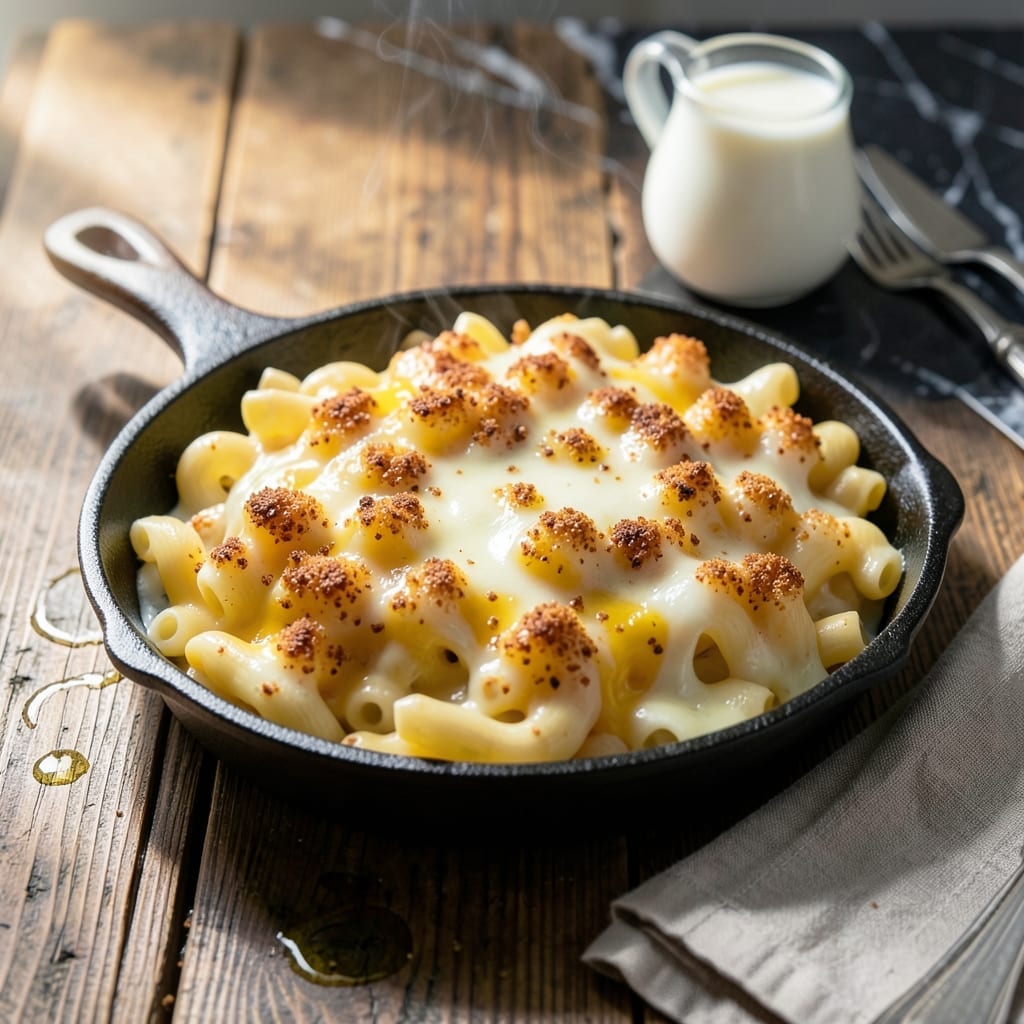
Some nights call for comfort without leftovers, and this single-serving solution delivers exactly that. I developed this method after too many nights of takeout, realizing I needed a rich, velvety mac and cheese that works for one.
The technique is simple but precise: cook the pasta, create a quick roux, then blend in cheese for a sauce that clings perfectly to every noodle. No wasted ingredients, no compromised quality—just restaurant-worthy results in under 20 minutes.
What you get is a bowl of mac and cheese that’s creamy without being heavy, cheesy without being greasy. The sauce coats each piece of pasta evenly, with no dry bites or separated curds.
This is weeknight cooking at its most satisfying and efficient. Here’s how to make it.
Ingredients for Mac and Cheese Recipe Single Serving
A handful of quality ingredients yields rich, velvety mac and cheese for one.
| Ingredient | Amount | Notes |
|---|---|---|
| Elbow Macaroni 🍝 | ½ cup | Dried, uncooked pasta |
| Unsalted Butter 🧈 | 1 ½ tbsp | For roux base |
| All-Purpose Flour 🌾 | 1 ½ tbsp | For thickening sauce |
| Whole Milk 🥛 | ¾ cup | Warm for best results |
| Sharp Cheddar Cheese 🧀 | 1 cup | Freshly grated from block |
| Gruyère Cheese 🧀 | ½ cup | Freshly grated for depth |
| Parmesan Cheese 🧀 | ¼ cup | Freshly grated for umami |
| Dijon Mustard 🟡 | ½ tsp | For tangy complexity |
| Kosher Salt 🧂 | ¼ tsp | Adjust to taste |
| Ground White Pepper 🌶️ | 0.125 tsp | For subtle heat |
| Worcestershire Sauce 💧 | ¼ tsp | Vegetarian version recommended |
The cheese selection is critical for depth of flavor. Sharp cheddar provides the base, while Gruyère adds nutty complexity and Parmesan delivers umami. Source blocks of cheese and grate them yourself—pre-shredded contains anti-caking agents that prevent smooth melting. For the milk, whole milk creates the creamiest sauce, though 2% works in a pinch.
No Gruyère? Fontina or Monterey Jack melt beautifully. Missing Dijon? Dry mustard powder at half the amount works. For a vegetarian Worcestershire, Annie’s makes a reliable version. The pasta shape matters too—elbows hold sauce best, but cavatappi or shells are excellent alternatives. Avoid pre-shredded cheese at all costs.
This is best eaten immediately, but leftovers keep for 2 days in the fridge. Reheat gently with a splash of milk to restore creaminess. For longer storage, freeze the sauce separately from the pasta for up to 3 months.
Why You’ll Love This Recipe
- I’ll be real: from boiling water to first bite in under 20 minutes is exactly what I need after a long day.
- One Pot Wonder: I love that I can make this in a single mug or small pot—no colander, no extra bowls, just melt, mix, and eat.
- Cheesy Perfection: That sharp cheddar melts into the creamiest sauce with whole milk, and honestly, it tastes better than the boxed stuff.
- Solo Feast: Between us, it’s my go-to when I’m cooking just for me—no scaling down, no leftovers to waste.
Step-by-Step Instructions for Mac and Cheese Single Serving
Execute this refined technique to achieve restaurant-quality results with single-serve precision.
Step 1: Cook the Elbow Macaroni Al Dente
Bring a small pot of salted water to a rolling boil. Add the 0.5 cup Elbow Macaroni and cook for 7-8 minutes until the pasta is al dente—it should have a slight bite when tasted. Stir occasionally to prevent sticking.
Reserve ¼ cup of the starchy pasta water before draining. This liquid is essential for adjusting the sauce consistency later. Drain the Elbow Macaroni but do not rinse it; the surface starch helps the cheese sauce adhere better to each piece.
Step 2: Create a Smooth Roux Base
In a small saucepan, melt the 1.5 tbsp Unsalted Butter over medium heat until it begins to foam. Immediately whisk in the 1.5 tbsp All-Purpose Flour to form a paste. Continue whisking constantly for 1-2 minutes until the mixture turns a pale golden color and emits a light, nutty aroma.
This roux serves as the thickening agent for your sauce. Be vigilant—if the butter browns or the roux darkens, it will impart an off-flavor to your final dish. The mixture should be smooth and free of lumps.
Step 3: Develop the Velvety Cheese Sauce
Gradually pour in the 0.75 cup Whole Milk while whisking continuously to prevent lumps from forming. Increase the heat to medium-high and bring the mixture to a gentle simmer, stirring frequently. Cook for 2-3 minutes until the sauce thickens enough to coat the back of a spoon.
Reduce the heat to low and stir in the 0.5 tsp Dijon Mustard, 0.25 tsp Worcestershire Sauce, 0.25 tsp Kosher Salt, and 0.125 tsp Ground White Pepper. Then, add the 1 cup Sharp Cheddar Cheese, 0.5 cup Gruyère Cheese, and 0.25 cup Parmesan Cheese, stirring until fully melted and smooth. The sauce should be creamy and glossy, not stringy or separated.
Step 4: Combine and Finish to Perfection
Add the cooked Elbow Macaroni to the cheese sauce and stir to coat every piece evenly. If the mixture seems too thick, add the reserved pasta water 1 tablespoon at a time until it reaches your desired consistency. The sauce should cling to the pasta without pooling at the bottom of the pan.
Taste and adjust the seasoning if needed. The flavors should be rich and well-balanced, with the tang of the Dijon Mustard and depth from the Gruyère Cheese complementing the sharpness of the Sharp Cheddar Cheese. Serve immediately while hot, as the sauce will thicken slightly as it cools.
Pro Tips For Making Mac And Cheese Recipe Single Serving
- Cook Pasta Al Dente: Boil the elbow macaroni for 1 minute less than the package suggests—it’ll finish cooking in the cheese sauce and won’t turn mushy.
- Grate Your Cheese: Skip the pre-shredded stuff and grate the sharp cheddar yourself. The anti-caking agents in bagged cheese make the sauce grainy instead of silky.
- Low Heat for Sauce: I learned this the hard way—keep the heat on medium-low when adding milk to the roux, or it’ll scorch and taste bitter.
- Add Cheese Off Heat: After making the béchamel, take the pot off the burner before stirring in the cheddar. The direct heat can make the cheese stringy or split.
Storing and Reheating Leftovers
Refrigerator Storage
Let your mac and cheese cool completely—no more than 2 hours at room temperature. Transfer to a small airtight container and refrigerate at 40°F or below. It’ll keep for up to 2 days without losing much creaminess. ❄️
Freezer Storage
For longer storage, freeze the sauce and pasta separately. Portion sauce into ice cube trays, then transfer to a freezer bag. Pasta can go in a small bag. Both will last 3 months at 0°F. Label with the date—trust me, you’ll forget otherwise.
Stovetop Reheating
Gently reheat on low heat in a small saucepan, stirring frequently. Add 1-2 tbsp whole milk or reserved pasta water to restore creaminess. Heat until 165°F, about 5-7 minutes. 🔥
Microwave Reheating
Place in a microwave-safe bowl, sprinkle with 1 tsp milk, and cover loosely. Heat on 50% power for 1 minute, stir, then repeat in 30-second bursts until hot. This prevents rubbery pasta.
Nutrition Facts
Frequently Asked Questions
Can I use pre-shredded cheese?
No, pre-shredded cheese contains anti-caking agents that prevent smooth melting. Always grate your own from a block for the creamiest sauce.
What if my sauce is too thick?
Add reserved pasta water 1 tablespoon at a time until it reaches your desired consistency. The starchy water helps the sauce cling to the pasta.
Can I make this ahead of time?
It’s best eaten immediately, but you can store it in an airtight container in the fridge for up to 2 days. Reheat gently with a splash of milk.
What pasta shapes work best?
Elbows hold sauce perfectly, but cavatappi or shells are great alternatives. Avoid long pasta like spaghetti for this recipe.

- BBQ Sausage Recipe Oven: Smoky Depth Without the Grill - September 28, 2026
- BBQ Chicken Bowl Recipe Rice: Smoky Sweetness Over Fluffy Grains - September 28, 2026
- Beef Cutlet Recipe Ideas: Crispy Breaded Patties With Bold Seasonings - September 28, 2026