
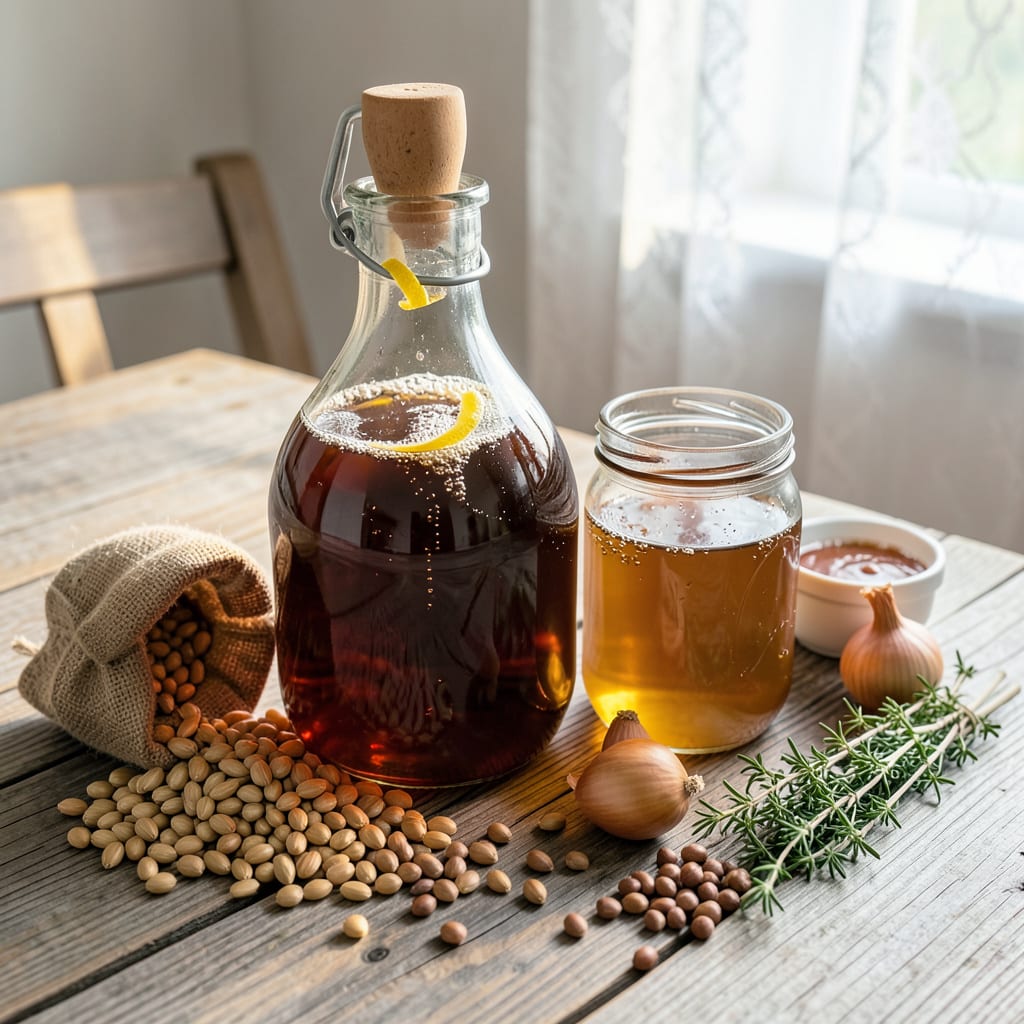
Homemade malt vinegar starts with brewed malted barley, fermented into ale, then converted to vinegar using acetic acid bacteria. The process takes 4-6 weeks, yielding a tangy, robust condiment perfect for fish and chips or pickling.
Crafting this vinegar at home lets you control the depth of flavor and acidity level. The magic happens when Acetobacter bacteria transform the alcohol into acetic acid, creating that signature sharpness. I’ve found that using a dark malt base produces richer, more complex results compared to lighter malts. 💫
What’s fascinating is how temperature plays a role—keeping your mixture between 70-80°F ensures steady fermentation without off-flavors. The waiting period might test your patience, but the reward is a custom vinegar that surpasses anything store-bought. ✨
💡 In This Article
- Fermentation Science Behind Malt Vinegar Production
- Step-by-Step Guide to Brewing Malt Vinegar at Home
Fermentation Science Behind Malt Vinegar Production
The transformation from malted barley to tangy vinegar happens in two distinct biological stages. First, yeast converts the malt sugars into alcohol during primary fermentation—this is essentially brewing a weak ale with 4-6% ABV. The real magic begins when Acetobacter bacteria take over, oxidizing that alcohol into acetic acid.
These bacteria form a gelatinous “mother” culture that floats on the liquid’s surface, working like tiny chemical factories. 🔥
Temperature control is absolutely critical during the acetic fermentation phase. The sweet spot is 70-80°F—below 60°F and the bacteria become sluggish, while above 90°F can kill them. I’ve found that maintaining consistent warmth (using a heating pad if needed) cuts the conversion time from 6 weeks down to 4 weeks while preventing off-flavors.
The acidity should climb to 4-5% for that classic malt vinegar sharpness. ✨
The type of malt you choose dramatically alters the final product. Dark malts like chocolate or black patent create vinegars with caramelized, almost coffee-like depth, while pale malts yield cleaner, brighter acidity. The roasting process develops melananoidins—compounds that contribute to both color and complex flavor profiles.
This is why commercial malt vinegars vary so widely in taste and appearance. 💫
Oxygen exposure is another key factor that many beginners overlook. The Acetobacter need constant air access to convert alcohol efficiently, which is why you’ll see traditional vinegar makers using shallow, wide vessels. However, too much surface area can lead to excessive evaporation—aim for about 1 inch of headspace per gallon of liquid.
The bacteria will form that telltale leathery pellicle within 3-5 days if conditions are right. ⚡
What’s happening at the microbial level is fascinating. The bacteria produce cellulose fibers that create the “mother” structure while secreting enzymes that break down alcohol molecules. This process generates heat—you might notice your fermentation vessel feeling slightly warm to the touch.
The resulting vinegar contains not just acetic acid but also trace amounts of other organic acids that contribute to its complex flavor profile. 🌟
For those wondering about the science of flavor development, the Maillard reaction plays a role during malting. When barley is kilned at 150-220°F, amino acids and reducing sugars react to create hundreds of flavor compounds.
These survive into the final vinegar, giving it those toasty, nutty undertones that make malt vinegar so distinctive compared to wine or apple cider vinegars. 💛
The final acidity level isn’t just about taste—it’s also a preservation factor. Vinegars with at least 4% acetic acid are self-preserving and can be stored indefinitely at room temperature. This is why testing your batch with pH strips (aiming for pH 2.4-3.4) is so important before bottling.
The science ensures both safety and that perfect tangy punch we all love. 💫

- BBQ Sausage Recipe Oven: Smoky Depth Without the Grill - September 28, 2026
- BBQ Chicken Bowl Recipe Rice: Smoky Sweetness Over Fluffy Grains - September 28, 2026
- Beef Cutlet Recipe Ideas: Crispy Breaded Patties With Bold Seasonings - September 28, 2026