
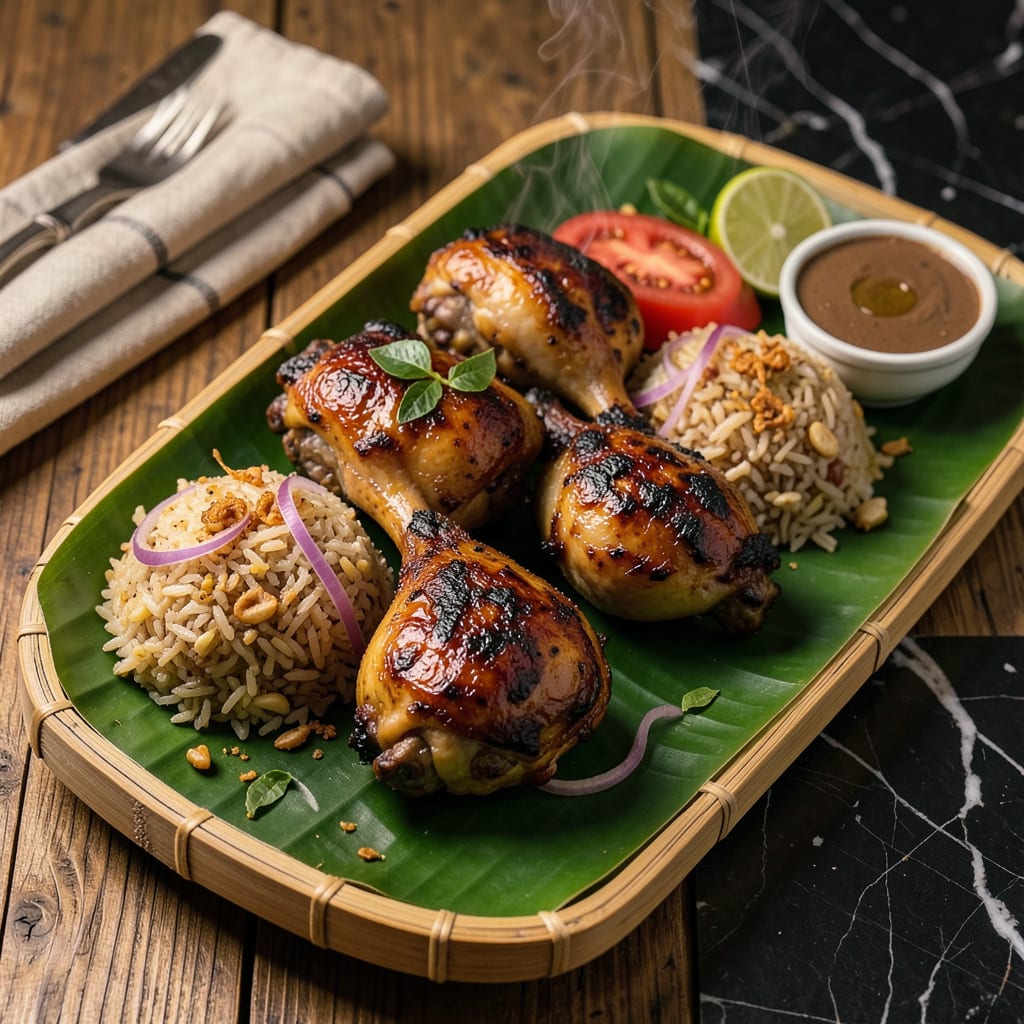
The authentic Mang Inasal recipe features chicken marinated in calamansi, vinegar, brown sugar, and a blend of garlic, lemongrass, and native spices, then grilled over charcoal for its signature smoky-sweet flavor. The secret lies in the marinade balance and basting technique.
This beloved Filipino barbecue stands out because of its layered flavors—where tangy citrus meets caramelized sweetness, all elevated by smoky charcoal notes. 🔥 The marinade isn’t just about ingredients; it’s about timing and technique. I’ve found that letting the chicken absorb the flavors for at least 4 hours (overnight for best results) makes all the difference. What truly sets it apart is the basting process, where the marinade transforms into a glossy, flavor-packed glaze that locks in moisture while adding depth.
💡 In This Article
- Key Ingredients Behind Mang Inasal’s Signature Flavor
- Step-by-Step Grilling Technique for Restaurant-Quality Results
Key Ingredients Behind Mang Inasal’s Signature Flavor
The magic starts with calamansi juice, which does more than add tang. Its pH 2.0-2.5 acidity breaks down chicken proteins, tenderizing while preventing bacterial growth during marination. Unlike regular lemons, calamansi has a unique 3:1 citrus-to-bitterness ratio, creating that bright, clean sourness without harshness.
When combined with white vinegar (typically 5% acetic acid), it forms a preservative barrier that locks in moisture during grilling. 🔥
Brown sugar isn’t just for sweetness—it’s the caramelization catalyst. At grill temperatures of 350-400°F, its sucrose molecules break into glucose and fructose, then undergo Maillard reactions with amino acids in the chicken. This creates over 100 new flavor compounds, including pyrazines (nutty notes) and furans (caramel depth). The 1:2 sugar-to-liquid ratio in the marinade ensures proper coating without crystallizing.
Lemongrass and garlic work synergistically through their sulfur compounds. Lemongrass contains citral (38-45%), which binds to fat molecules in the chicken, while garlic’s allicin transforms into diallyl sulfides when heated—creating that lingering umami warmth. Native Filipino chefs often bruise lemongrass stalks to release 2x more essential oils than simple chopping. The combination gives that signature “sunshine on a stick” aroma. ✨
Charcoal grilling amplifies these flavors through pyrolysis. As fat drips onto glowing coals (700-900°F), it vaporizes and redeposits as smoky phenols (like guaiacol) onto the chicken. This is why Mang Inasal’s flavor can’t be replicated on gas grills—they lack the 10,000+ volatile compounds created by burning wood.
The basting technique (applying marinade every 3-4 minutes) builds layers of flavor while preventing charring.
Regional variations exist: Visayan versions add siling labuyo (bird’s eye chili) for heat, while Tagalog recipes might include bay leaves for earthiness. For substitutions, lime juice (with 1 tsp zest) can mimic calamansi’s complexity, and palm sugar offers a closer caramelization profile than white sugar.
The key is maintaining the 30% acid, 20% sugar, 50% aromatic balance in the marinade.
What most home cooks miss is the marinade’s osmotic effect. The sugar-vinegar solution creates a hypertonic environment that draws moisture from the chicken, then reabsorbs it with the flavor compounds. This is why overnight marination (12-16 hours) yields juicier results than quick soaks—the chicken’s water content gets replaced by flavor molecules at a cellular level.
💫
Pro tip: The chicken’s skin acts as a flavor sponge. Scoring it in a crosshatch pattern increases surface area by 40%, allowing more marinade penetration and crispier results. Always pat the chicken dry before grilling to achieve that coveted glass-like sheen on the finished product.

- BBQ Sausage Recipe Oven: Smoky Depth Without the Grill - September 28, 2026
- BBQ Chicken Bowl Recipe Rice: Smoky Sweetness Over Fluffy Grains - September 28, 2026
- Beef Cutlet Recipe Ideas: Crispy Breaded Patties With Bold Seasonings - September 28, 2026