
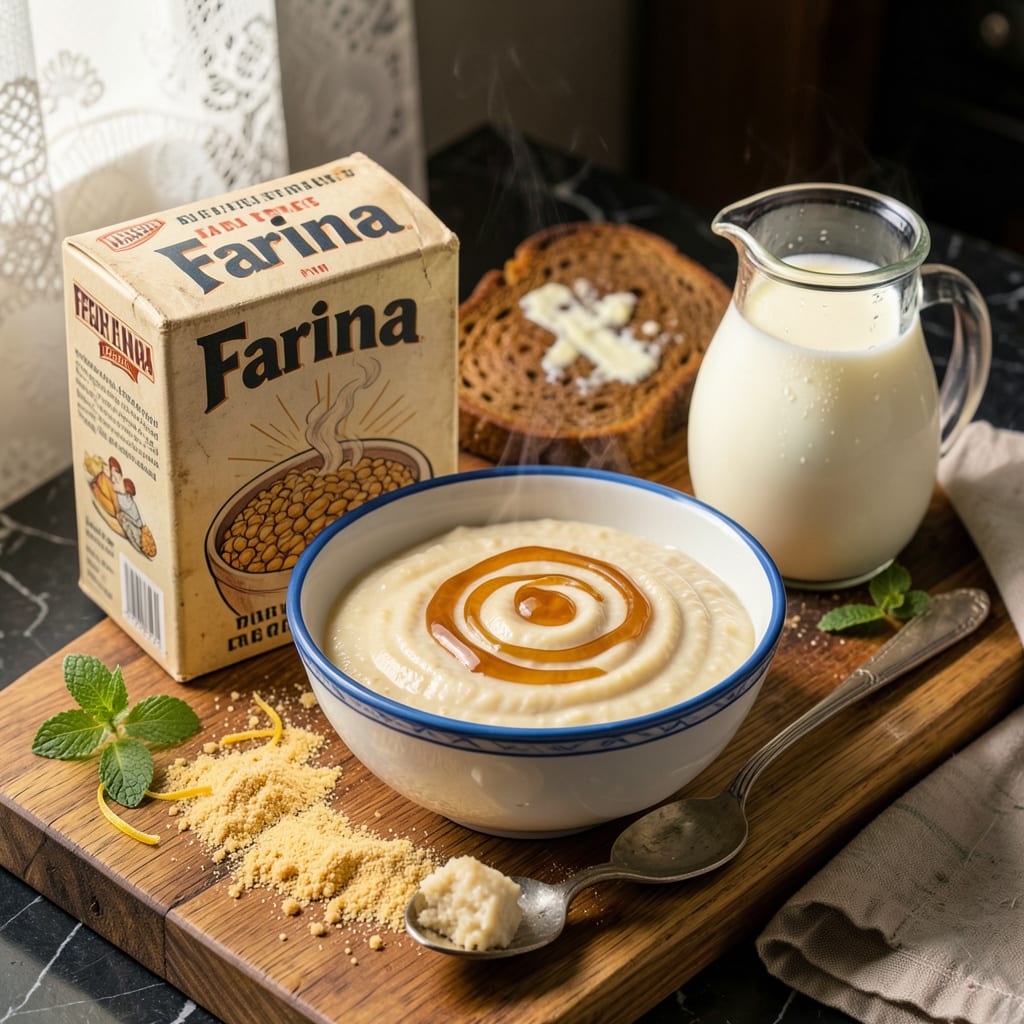
The classic box instructions for farina call for combining 1/4 cup cereal with 1 cup water or milk, cooking while stirring for 2-3 minutes until thickened, then sweetening with sugar, honey, or fruit to taste. Serve hot for a creamy breakfast dish.
This simple ratio creates the perfect balance between smoothness and heartiness. The key lies in farina’s finely ground wheat, which absorbs liquid quickly while maintaining a velvety consistency. I’ve found that using whole milk instead of water adds extra richness, though plant-based milks work beautifully for dietary preferences. 🔥
What makes this preparation foolproof is the short cooking time—just enough to soften the grains without risking a gluey texture. The final sweetening step lets you customize each bowl, whether you prefer classic maple syrup or fresh seasonal berries.
💡 In This Article
- Why Traditional Farina Box Recipes Work Perfectly
- Customizing Your Farina Recipe Beyond the Box
Why Traditional Farina Box Recipes Work Perfectly
The classic 4:1 liquid-to-cereal ratio isn’t arbitrary—it’s scientifically optimized for farina’s unique composition. Farina is made from wheat endosperm that’s been toasted and ground to a fine consistency, which means it absorbs liquid rapidly while maintaining a smooth texture.
The wheat germ content (about 3-5% of the grain) contributes natural oils that create that signature creaminess you can’t get from oatmeal or grits.
Here’s what happens during those 2-3 minutes of cooking: The starch granules in farina absorb moisture and swell, but unlike oatmeal which can become gummy, farina’s finer grind means the starches distribute more evenly.
Constant stirring prevents these swollen granules from clumping together—think of it like keeping marbles moving in water rather than letting them settle and stick. The ideal cooking temperature range is 190-210°F, hot enough to activate the starches but not so hot that the proteins seize up and create lumps.
Compare this to other hot cereals: Grits require a 5:1 liquid ratio and 15-20 minutes of cooking because cornmeal absorbs slower, while steel-cut oats need 4:1 ratio but 30+ minutes to soften their dense structure.
Farina’s quick cooking time comes from its pre-processed state—the wheat has already been steamed, dried, and ground, so you’re essentially just rehydrating and heating rather than cooking raw grain. ✨
The box instructions account for farina’s 7-9% protein content too. Proteins in wheat interact with heat differently than starches—they unfold and then re-bond. Too much heat or time causes them to form tight networks that squeeze out moisture, creating that dreaded “paste” texture.
That’s why the 2-3 minute window is crucial: long enough to cook the starches but short enough to keep proteins relaxed and the texture creamy.
What most people don’t realize is that farina’s toasted flavor comes from the Maillard reaction during processing. When you cook it, you’re reactivating those same flavor compounds. Using milk instead of water enhances this through its natural sugars and proteins—whole milk adds about 150mg of calcium per serving while creating a richer mouthfeel.
The box recipe’s simplicity actually preserves these carefully balanced flavor and texture elements. 🔥
Even the final sweetening step is strategic. Adding sugar or honey after cooking prevents them from caramelizing during the short cook time (which would require higher heat and longer cooking). This keeps the sweetness bright and distinct rather than baked-in.
The box instructions create a neutral base that lets you customize the flavor profile while guaranteeing perfect texture every time.

- BBQ Sausage Recipe Oven: Smoky Depth Without the Grill - September 28, 2026
- BBQ Chicken Bowl Recipe Rice: Smoky Sweetness Over Fluffy Grains - September 28, 2026
- Beef Cutlet Recipe Ideas: Crispy Breaded Patties With Bold Seasonings - September 28, 2026