
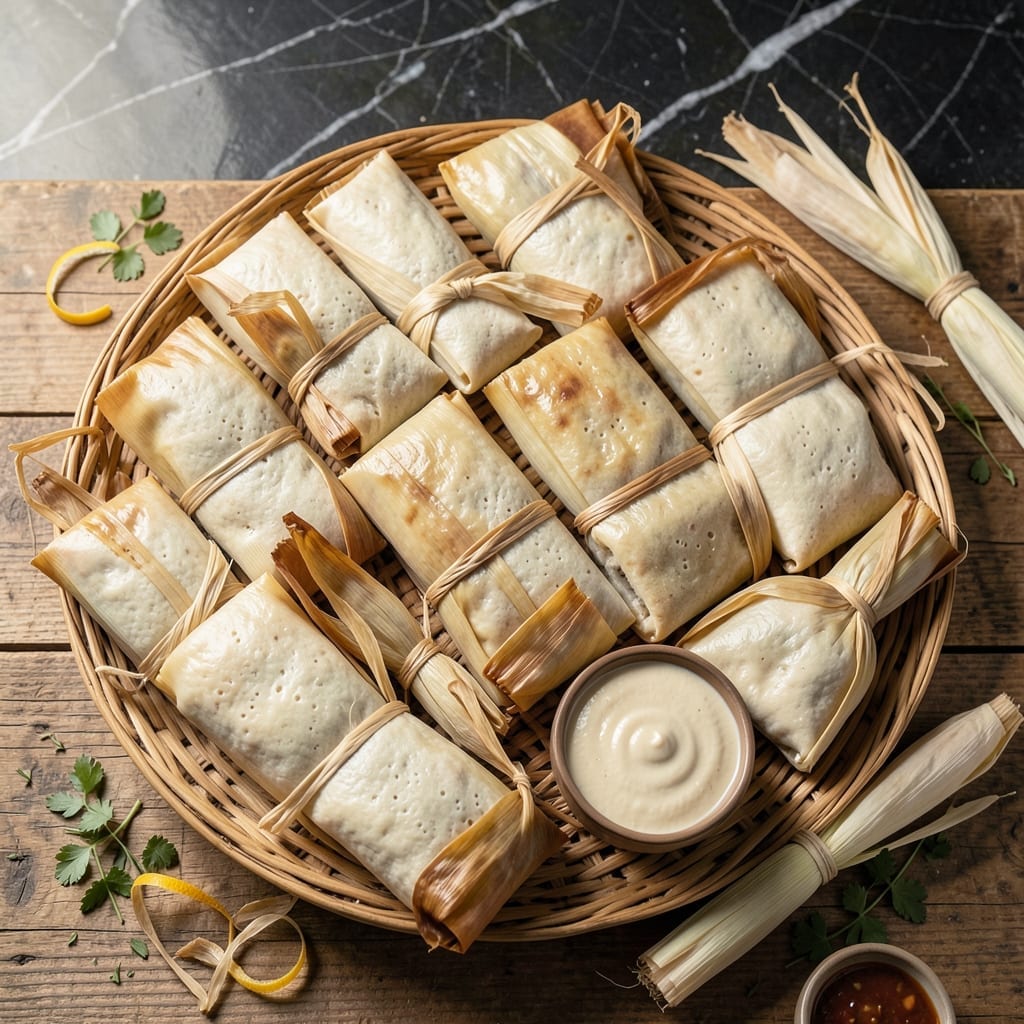
Few dishes capture tradition like freshly steamed tamales, where homemade masa meets tender fillings wrapped in corn husks. This method stays true to time-honored techniques that have been passed down through generations.
The foundation is masa harina rehydrated with broth, beaten until light and airy. Properly preparing the dough ensures the right texture—soft yet sturdy enough to hold its shape during steaming.
What emerges from the pot is tender, fragrant tamales with fillings that burst with flavor in every bite. The steaming process locks in moisture, creating a dish that tastes like home.
Whether you choose sweet or savory fillings, the technique remains the same. The result is always worth the effort.
Ingredients for Masa Tamales
Traditional masa dough with savory cheese and roasted poblano filling wrapped in corn husks.
| Ingredient | Amount | Notes |
|---|---|---|
| Masa Harina 🌾 | 4 cups | Corn flour for tamales |
| Vegetable Broth 🥕 | 3 cups | Warm, for rehydrating masa |
| Vegetable Shortening 🧈 | 1 ½ cups | Or lard substitute for vegetarians |
| Baking Powder 🧂 | 2 tsp | For lift in masa dough |
| Salt 🧂 | 2 tsp | Fine sea salt preferred |
| Dried Corn Husks 🌽 | 1 package | 8 oz, soaked in warm water |
| Cheese 🧀 | 8 oz | Oaxaca or Monterey Jack, shredded |
| Poblano Peppers 🌶️ | 2 whole | Roasted, peeled, diced |
| Onion 🧅 | 1 whole | Medium, finely diced |
| Tomato Sauce 🍅 | 1 cup | For savory filling moisture |
| Ground Cumin 🌿 | 1 tsp | Toasted for depth |
| Garlic Cloves 🧄 | 3 cloves | Minced for filling |
| Dried Oregano 🍃 | 1 tsp | Mexican oregano preferred |
The masa harina is non-negotiable—Maseca is the gold standard for authentic texture. Vegetable shortening (like Crisco) gives the right consistency without animal products. For corn husks, Mexican grocery stores sell them by the pound, but most supermarkets stock them in the Latin foods aisle. Soak them in very warm water for at least 30 minutes to soften before using.
No poblano peppers? Anaheim or bell peppers work in a pinch, though the flavor will be milder. Skip the cheese? Refried beans or sautéed mushrooms make excellent vegetarian alternatives. The broth can be swapped for water, but vegetable broth adds depth. For extra richness, stir a spoonful of the shortening into the masa while beating.
Assembled tamales keep in the fridge for 2-3 days or freeze for 1 month. Reheat by steaming again until hot. The masa dough can be prepped a day ahead—just cover tightly and refrigerate. Soaked husks stay pliable for 24 hours in the fridge.
Why You’ll Love This Recipe
- One Bowl Wonder: I just dump masa harina, broth, and shortening in one bowl—no fancy tools, no mess, and the baking powder does all the lifting.
- Rich Corn Flavor: That toasty masa harina taste shines through, and the vegetable broth adds a subtle depth that makes every bite satisfying.
- Feeds a Crowd: Honestly, I make a double batch for parties and freeze the leftovers—they reheat like a dream for lazy dinners later.
- Budget Friendly: Masa harina and shortening stretch further than you’d think, and I’ve yet to find a cheaper way to fill a table with something this hearty.
Step-by-Step Instructions for Masa Tamales
Traditional technique ensures authentic texture and flavor in every bite of this dish.
Step 1: Prepare the Dried Corn Husks
Begin by submerging the dried corn husks in a large bowl of warm water. I cover them completely and weigh them down with a plate to ensure full submersion. Let them soak for at least 1 hour until they become pliable and soft.
Drain the husks and pat them dry with paper towels. This preparation prevents cracking during assembly and ensures the masa adheres properly. You’ll need about 20-24 husks for this recipe, so inspect them beforehand and discard any torn or brittle pieces.
Step 2: Make the Masa Dough
In a large mixing bowl, beat the 1.5 cups vegetable shortening with a hand mixer or stand mixer until light and fluffy, about 3-4 minutes. This step incorporates air, creating a tender texture in the finished tamales.
Gradually add the 4 cups masa harina, 2 tsp baking powder, and 2 tsp salt, alternating with the 3 cups vegetable broth. Mix on medium speed until the dough resembles thick hummus and pulls away from the sides of the bowl. Test the consistency by dropping a small piece in water—it should float, indicating proper aeration.
Step 3: Prepare the Savory Filling
Char the 2 whole poblano peppers under a broiler or over an open flame until blackened all over, about 8-10 minutes. Place them in a bowl, cover with plastic wrap, and let steam for 10 minutes to loosen the skins.
Peel, seed, and dice the peppers. In a skillet, sauté the finely diced onion until translucent, then add the minced 3 cloves garlic cloves, 1 tsp ground cumin, and 1 tsp dried oregano, cooking for 1 minute until fragrant. Stir in the 1 cup tomato sauce and diced poblano peppers, simmering for 5 minutes. Remove from heat and fold in the 8 oz cheese until melted and combined.
Step 4: Assemble and Steam the Tamales
Lay a soaked corn husk flat and spread about ¼ cup of the masa dough evenly in the center, leaving a 1-inch border on all sides. Spoon 1-2 tablespoons of the filling down the middle of the dough.
Fold the sides of the husk inward to encase the filling, then fold the bottom up, leaving the top open. Place the tamale upright in a steamer basket lined with extra husks. Repeat with the remaining dough and filling.
Steam over boiling water for 1 to 1.5 hours, checking occasionally to ensure the water doesn’t evaporate completely. The tamales are done when the husk peels away easily from the masa and the dough is firm yet tender.
Pro Tips For Making Masa Tamales
- Beat the Shortening: Cream the vegetable shortening with the masa harina for at least 5 minutes—it should look like wet sand. I learned this the hard way when my first batch turned out dense and dry.
- Warm the Broth: Use warm vegetable broth, not cold, when mixing with the masa harina. It helps the fat distribute evenly and prevents a gummy texture.
- Skip the Overmixing: Once the dough comes together, stop mixing. Overworking it develops gluten in the masa, which makes tamales tough instead of tender.
- Test with Water: Drop a small ball of dough in a glass of water—if it floats, it’s ready to spread. If it sinks, beat in a bit more shortening and try again. My grandmother swore by this, and she was right.
Perfect Pairings for This Recipe
Traditional Sides
Serve these tamales with Mexican rice—I use 1 cup long-grain white rice cooked with 2 cups broth and ½ cup tomato sauce for extra flavor. A side of refried beans adds heartiness and balances the meal beautifully. 💛
Fresh Toppings
Offer pico de gallo made with diced tomatoes, onions, cilantro, and lime juice. I also love adding pickled red onions—thinly slice 1 red onion and soak in lime juice with 1 tsp salt for 30 minutes. These toppings cut through the richness.
Beverage Pairings
Agua fresca is my go-to drink with tamales, especially hibiscus or horchata. For something stronger, a light Mexican beer like Modelo Especial or Pacífico complements the savory flavors perfectly. The crispness refreshes your palate between bites. 🍺
Dessert Options
End the meal with tres leches cake or Mexican hot chocolate—I whisk 2 cups milk with 2 oz Mexican chocolate and a pinch of cinnamon. Both desserts embrace the cultural roots of this dish while providing a sweet finish.
Nutrition Facts
Frequently Asked Questions
How do I know when the masa is properly beaten?
Drop a small piece into water—if it floats, it’s ready. The dough should be light and airy, resembling thick hummus. Beat for 8-10 minutes for best results.
Can I use fresh corn instead of masa harina?
Traditional recipes often use nixtamalized corn, but masa harina is more reliable for beginners. Fresh corn requires grinding and special preparation. Stick with the flour for consistency.
Why did my tamales turn out dense?
Under-beaten masa or insufficient steam time causes this. Beat the dough until fluffy and steam for the full 1 to 1.5 hours. Keep water boiling the entire time.
How do I store leftover tamales?
Cool completely, then refrigerate in an airtight container for 2-3 days. For longer storage, freeze for up to 1 month. Reheat by steaming until hot.

- BBQ Sausage Recipe Oven: Smoky Depth Without the Grill - September 28, 2026
- BBQ Chicken Bowl Recipe Rice: Smoky Sweetness Over Fluffy Grains - September 28, 2026
- Beef Cutlet Recipe Ideas: Crispy Breaded Patties With Bold Seasonings - September 28, 2026