
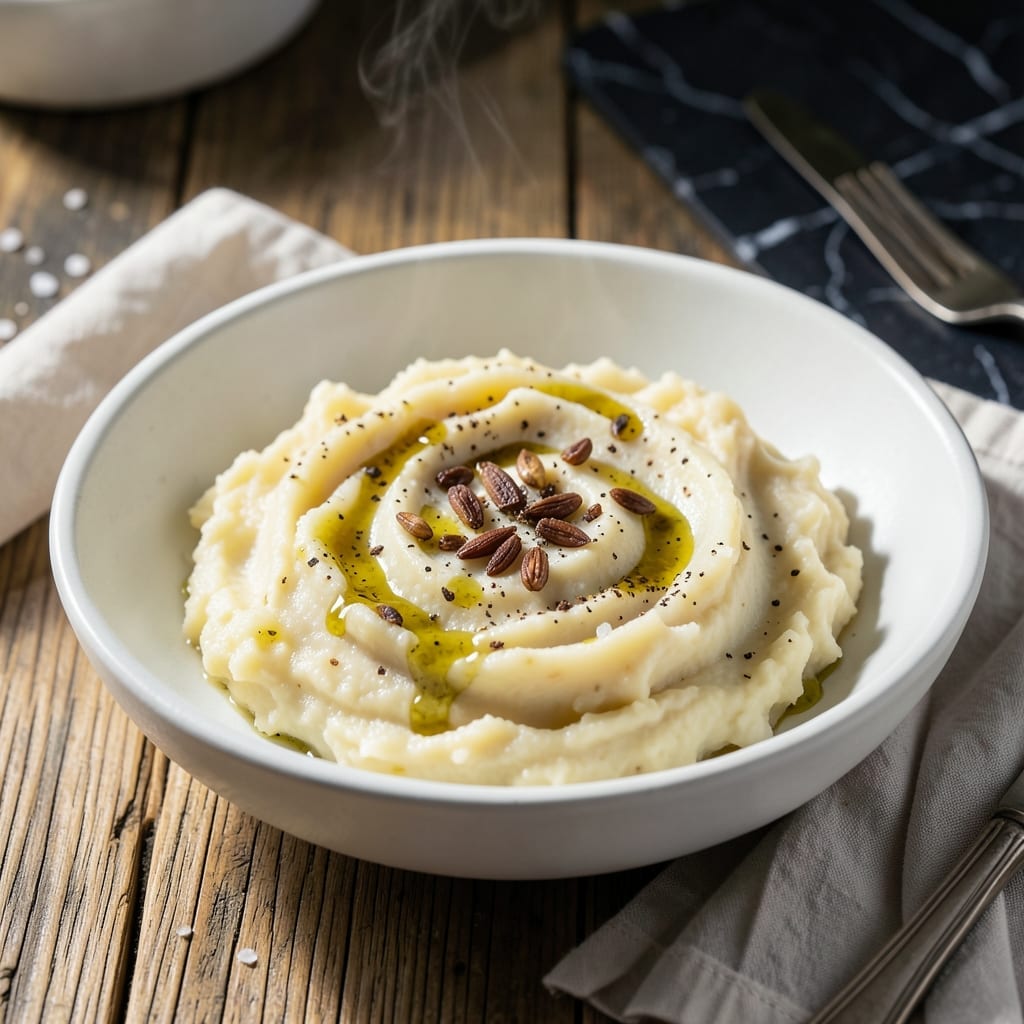
Achieving creamy mashed potatoes without dairy is simpler than you think. This method uses high-quality olive oil as the secret to rich, velvety texture that rivals traditional versions.
By roasting the potatoes first, we concentrate their natural sweetness and create a base that absorbs the olive oil beautifully. The result is smooth, flavorful mashed potatoes with no compromise on taste.
Ingredients for Mashed Potatoes Recipe No Milk
Rich, velvety mashed potatoes without a drop of dairy or compromise.
| Ingredient | Amount | Notes |
|---|---|---|
| Yukon Gold Potatoes 🥔 | 2 ½ lb | Peeled and cubed evenly |
| Extra-Virgin Olive Oil 🫒 | ½ cup | High quality, fruity variety |
| Garlic Cloves 🧄 | 4 cloves | Minced for maximum flavor |
| Sea Salt 🧂 | 1 ½ tsp | Divided for seasoning layers |
| Freshly Ground Black Pepper 🌶️ | ½ tsp | Adjust to taste preference |
| Vegetable Broth 🥣 | ½ cup | Low-sodium for control |
| Fresh Rosemary Sprigs 🌿 | 2 whole | Leaves stripped and chopped |
| Nutritional Yeast 🧀 | 3 tbsp | For cheesy, umami depth |
| Unsweetened Almond Milk 🥛 | ¼ cup | Optional for creamier texture |
| Dijon Mustard 🟡 | 1 tsp | Emulsifies and adds tang |
The potatoes are everything here. Yukon Golds have that perfect buttery texture without actual butter. Look for firm, smooth skins at the store—Whole Foods or your local farmers market usually has the best selection. I always grab a few extra because leftovers reheat beautifully (more on that later). The olive oil needs to be good quality—this isn’t the time for that dusty bottle in the back of your cabinet.
No Yukon Golds? Russets work too (they’re fluffier, less creamy). Swap rosemary for thyme or sage—whatever fresh herbs you’ve got. Out of nutritional yeast? A splash of white miso paste adds that umami kick. The almond milk is totally optional, but if you’re using it, unsweetened is key. And if you’re feeling fancy, roast the garlic whole with the potatoes (just slice the top off the head, drizzle with oil, wrap in foil).
These keep 4-5 days in the fridge—reheat with a splash of broth to loosen them up. Freezes for 3 months too (portion before freezing so you can grab just what you need). Pro tip: make extra and use them for potato pancakes the next day (trust me, it’s worth it).
Why You’ll Love This Recipe
- No-Fuss Mash: Honestly, it’s just boil, smash, and drizzle with olive oil—no last-minute grocery runs for milk.
- Garlic-Infused Comfort: The roasted garlic and olive oil give it this rich, velvety depth that’s even better than the dairy version.
- Feeds a Crowd: I’ve served this at potlucks and weeknight dinners alike, and the bowl’s always empty.
- Leftovers? No Problem: They reheat like a dream, and I’ll be real: I’ve eaten them cold straight from the fridge.
Step-by-Step Instructions for Mashed Potatoes With Olive Oil
Here’s how I make ultra-creamy mashed potatoes without a drop of dairy.
Step 1: Boil the Yukon Gold Potatoes with Aromatics
Place the 2.5 lb Yukon Gold Potatoes (peeled and cubed evenly) in a large pot and cover them with cold water by about 1 inch. I always start with cold water—it ensures even cooking from the outside in, preventing that dreaded raw center.
Add the 4 cloves minced Garlic Cloves, the stripped and chopped leaves from the 2 whole Fresh Rosemary Sprigs, and 1 tsp Sea Salt. Bring to a boil over high heat, then reduce to a gentle simmer. Cook for 15-20 minutes until the potatoes are fork-tender—they should slide off a fork with zero resistance.
Step 2: Drain and Return to Low Heat
Drain the potatoes in a colander, shaking gently to remove excess water. Return them to the warm pot and place it back over low heat for 1-2 minutes. This step is non-negotiable—it evaporates any lingering moisture so your mash doesn’t turn watery.
Stir the potatoes occasionally with a wooden spoon to prevent sticking. You’ll see steam rising and the surfaces drying slightly—that’s your cue they’re ready for the next step. Remove from heat and let them sit for 1 minute to cool slightly.
Step 3: Incorporate Olive Oil and Broth for Creaminess
Drizzle in the 0.5 cup Extra-Virgin Olive Oil while the potatoes are still warm. I use a high-quality, fruity variety here because it adds depth and richness that replaces the butter you’d typically use. Add the 0.5 cup Vegetable Broth and 0.5 tsp Freshly Ground Black Pepper.
Using a potato masher, work the liquids into the potatoes in a circular motion. The broth and oil should absorb quickly, creating a velvety texture. If the mixture seems dry, add the 0.25 cup Unsweetened Almond Milk—it’s optional but guarantees that ultra-creamy finish.
Step 4: Finish with Nutritional Yeast and Dijon Mustard
Sprinkle in the 3 tbsp Nutritional Yeast and the 1 tsp Dijon Mustard. The nutritional yeast adds a cheesy, umami depth, while the mustard emulsifies the oil and broth, binding everything into a cohesive, luscious texture.
Fold these in gently with a spatula until fully incorporated. Taste and adjust the seasoning with the remaining 0.5 tsp Sea Salt if needed. The final mash should be smooth, glossy, and rich—proof that you don’t need milk to achieve a decadent result.
Pro Tips For Making Mashed Potatoes Recipe No Milk
- Start in Cold Water: I learned this the hard way—beginning potatoes in cold water guarantees even cooking, while hot water starts unevenly and leaves some pieces underdone.
- Warm the Oil: Sounds weird, but it works: gently heat the olive oil with minced garlic before mixing it in—this blooms the flavor and takes the edge off raw garlic.
- Skip the Blender: Resist the urge to use a food processor; hand mashing with a potato masher gives you that perfect rustic texture without turning them gluey.
- Salt the Water: More salt than you think—about 1 tablespoon per quart of water—because Yukon Golds soak up seasoning like a sponge, and you can’t fix bland mashed potatoes later.
Troubleshooting This Dish
Lumpy Texture
If your mash turns out lumpy, it’s likely because the potatoes weren’t cooked long enough or you didn’t use enough liquid. Ensure they’re fork-tender before draining. For lumps that persist, use a potato ricer or food mill instead of a masher.
Too Dry or Dense
This usually means the potatoes were overcooked or not enough olive oil or broth was added. Start with ½ cup each and adjust as needed. Warm the liquids slightly before mixing for better absorption. 💡
Watery Mash
Excess moisture is the culprit here.
Bland Flavor
Boost the taste with more sea salt or a splash of Dijon mustard for tang. The nutritional yeast adds umami depth—don’t skip it. Fresh rosemary and garlic should be potent; if they’re not, add more.
Greasy Texture
This happens if the olive oil separates. To fix, whisk in 1 tsp Dijon mustard to emulsify the mixture. Alternatively, add the oil slowly while mashing to prevent pooling. Stirring vigorously helps bind everything together. ✨
Uneven Seasoning
Taste as you go and layer the salt—1 tsp in the water, ½ tsp at the end. If the flavor is inconsistent, fold in additional seasoning gently but thoroughly. Always adjust gradually to avoid over-salting.
Frequently Asked Questions
Can I use a different oil instead of olive oil?
Yes! Avocado or melted coconut oil work well, but avoid strong-flavored oils. Use the same ½ cup measurement and add slowly while mashing for best texture.
How do I make them extra creamy without dairy?
Use the full ¼ cup unsweetened almond milk and ensure potatoes are well-drained. Warm your liquids before adding them to the potatoes for smoother absorption.
What if my potatoes turn gluey?
Overworking causes this. Mash gently with a potato masher, not a food processor. If it happens, stir in a splash of warm vegetable broth to loosen.
Can I prepare these ahead of time?
Store in an airtight container for 4-5 days in the fridge. Reheat with a splash of broth to restore creaminess.
Nutrition Facts

- BBQ Sausage Recipe Oven: Smoky Depth Without the Grill - September 28, 2026
- BBQ Chicken Bowl Recipe Rice: Smoky Sweetness Over Fluffy Grains - September 28, 2026
- Beef Cutlet Recipe Ideas: Crispy Breaded Patties With Bold Seasonings - September 28, 2026