
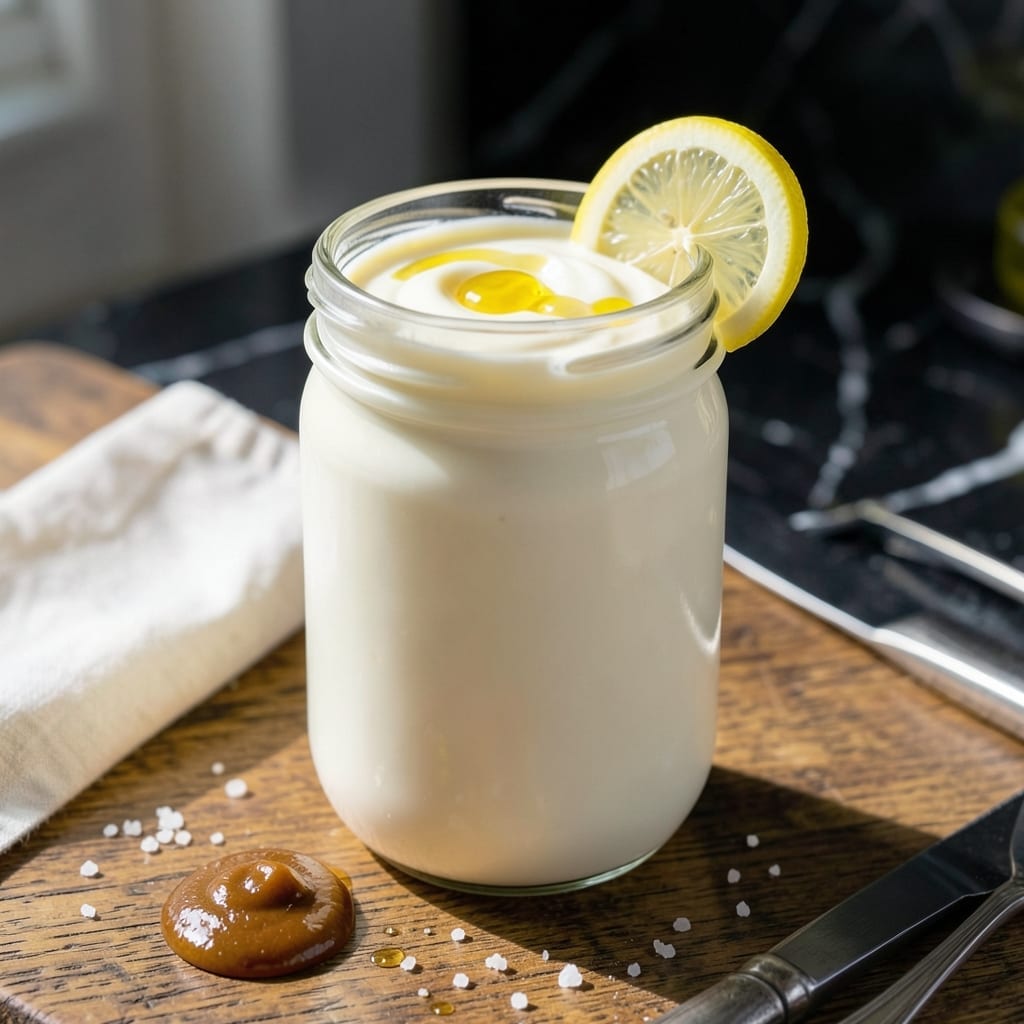
Making homemade mayonnaise is simpler than you think, especially with an immersion blender creating a perfect emulsion every time. This method delivers creamy, stable results without the risk of separation that comes with traditional whisking.
The beauty of this technique lies in its precision. By slowly dripping oil into the egg yolk while blending, you create thousands of tiny oil droplets suspended in the liquid—a process that transforms simple ingredients into rich, velvety mayonnaise.
What you get is a condiment that puts store-bought versions to shame: thick, luscious, and perfectly balanced. The immersion blender method also means you can make small batches fresh whenever needed, ensuring peak flavor and texture.
Use it as a base for dressings, sandwich spreads, or as a creamy addition to countless dishes.
Ingredients for Mayonnaise Recipe Alton Brown
Seven simple ingredients transform into rich, velvety homemade mayonnaise with precision.
| Ingredient | Amount | Notes |
|---|---|---|
| Large Egg Yolk 🥚 | 1 whole | Room temperature for best emulsion |
| Dijon Mustard 🟡 | 1 tsp | Smooth, not whole grain |
| White Wine Vinegar 🍷 | 1 tbsp | Or apple cider vinegar |
| Lemon Juice 🍋 | 1 tsp | Freshly squeezed preferred |
| Sea Salt 🧂 | ½ tsp | Fine grain for even distribution |
| Granulated Sugar 🍚 | ¼ tsp | Optional, balances acidity |
| Neutral Oil 🛢️ | 1 cup | Avocado, grapeseed, or light olive oil |
The oil quality is critical here. Avocado oil yields the neutral flavor Alton Brown prefers, while light olive oil (not extra-virgin) works as a budget-friendly alternative. Costco’s Kirkland avocado oil is a professional favorite for its clean taste and high smoke point. Egg yolks must be room temperature—cold yolks resist emulsifying, leading to potential separation.
No immersion blender? A tall, narrow jar and regular blender works too. Substitute rice vinegar for white wine vinegar if needed—milder but still effective. Dried mustard powder (1/2 tsp) can replace Dijon in a pinch. The vinegar and lemon juice are interchangeable at a 1:1 ratio for acidity balance. Skip the sugar entirely if you prefer a tangier profile.
Fresh mayonnaise keeps for 1 week refrigerated in an airtight container. The emulsion may thin slightly over time—simply whisk to restore. For longer storage, freeze in ice cube trays for up to 3 months (thaw in fridge before use).
Why You’ll Love This Recipe
- I’ll be real: it stays fresh in the fridge for a solid week, so I always have some on hand for impromptu burger night.
- One Bowl Wonder: I love that this comes together with just a whisk and a bowl—no fancy gadgets, and the egg yolk and mustard do all the heavy lifting.
- Tangy Perfection: The combo of white wine vinegar and lemon juice gives it that bright, zingy kick that store-bought just can’t match.
- Sandwich Superstar: Honestly, this mayo turns even the simplest turkey sandwich into something worth writing home about.
Step-by-Step Instructions for Mayonnaise
This immersion blender method creates a perfect emulsion with minimal effort and maximum reliability.
Step 1: Combine Acidic and Flavoring Base
In a container just wide enough to accommodate your immersion blender, add the 1 whole Large Egg Yolk. I recommend using a tall, narrow vessel—this creates the perfect vortex for emulsification.
Next, add the 1 tsp Dijon Mustard, 1 tbsp White Wine Vinegar, 1 tsp Lemon Juice, 0.5 tsp Sea Salt, and 0.25 tsp Granulated Sugar. The mustard acts as an emulsifier, while the vinegar and lemon juice provide the characteristic tang. The sugar balances the acidity without overpowering.
Step 2: Establish the Emulsion Foundation
Place the immersion blender at the bottom of the container and pulse it briefly to combine the egg yolk with the other ingredients. You’ll notice the mixture begin to thicken slightly as the blade incorporates air.
This initial blending is crucial—it creates the base that will hold the oil in suspension. Make sure the ingredients are fully combined before moving to the next step. The mixture should look smooth and slightly pale at this stage.
Step 3: Gradually Incorporate the Neutral Oil
With the immersion blender running continuously at the bottom of the container, begin slowly pouring in the 1 cup Neutral Oil in a thin, steady stream. The key here is patience—adding the oil too quickly will break the emulsion.
As you add the oil, you’ll see the mixture thicken and lighten in color, transforming into a creamy, glossy mayonnaise. The blender should remain submerged in the mixture to maintain the vortex. If the mixture becomes too thick to blend, pause and let it settle before continuing.
Step 4: Finish and Adjust Consistency
Once all the oil has been incorporated, move the immersion blender up and down a few times to ensure everything is fully emulsified. The mayonnaise should be thick, smooth, and hold its shape when the blender is lifted.
Taste and adjust seasoning if necessary. If the mayonnaise is too thick, you can thin it with a teaspoon of water or additional lemon juice. For a lighter texture, blend in a bit more oil at the end. The final product should coat the back of a spoon with a rich, velvety finish.
Pro Tips For Making Mayonnaise Recipe Alton Brown
- Room Temp Eggs: Pull your egg out 30 minutes before starting—cold yolks resist emulsifying, and I learned this the hard way after three broken batches.
- Slow Drizzle: Add the oil in a thin, steady stream, especially at first. After burning through two cups of oil with a broken mayo, I finally figured out that patience is non-negotiable here.
- Acid Last: Hold off on the lemon juice and vinegar until the emulsion is stable. My grandmother swore by this, and she was right: adding acids too early can break it.
- Salt the Yolk: Mix the sea salt directly into the yolk and mustard before adding oil. Sounds weird, but it works—it seasons the base and actually changes the outcome for the better.
Troubleshooting Perfect Results
Broken Emulsion Fix
If your mayonnaise separates, don’t panic. Start with a fresh 1 Large Egg Yolk in a clean container. Slowly drizzle in the broken mixture while blending—it will re-emulsify beautifully. I’ve saved many batches this way. 💡
Too Thick or Thin
For overly thick mayonnaise, whisk in 1 tsp water or lemon juice at a time until it loosens. If too thin, blend in additional neutral oil in a thin stream until it thickens again.
Oil Temperature Matters
Cold oil can cause the emulsion to break. Use room temperature oil (about 70°F) for best results. If your kitchen is chilly, warm the oil slightly in a bowl of warm water first.
Salty or Bland
Taste before adjusting. If too salty, whisk in a little more oil. If bland, add ¼ tsp Sea Salt or a squeeze of lemon juice to brighten the flavor. Balance is key.
Storage Separation
After refrigeration, the mayonnaise may weep slightly. Simply stir or whisk to restore its creamy texture. Always store in an airtight container for up to 1 week. ❄️
Egg Safety Tip
Use the freshest Large Egg Yolk possible. If concerned about raw eggs, pasteurize them first by heating in a 160°F water bath for 3 minutes before using. This maintains safety without affecting texture.
Nutrition Facts
Frequently Asked Questions
Can I use a whole egg instead of just the yolk?
Yes, but the texture will be slightly different. A whole egg makes a lighter, less rich mayonnaise. Stick to room temperature for best results.
What’s the best oil for this recipe?
Avocado oil is ideal for its neutral taste and high smoke point. Light olive oil or grapeseed oil also work well. Avoid extra-virgin olive oil—it’s too strong.
How long does homemade mayonnaise last?
Store in an airtight container in the fridge for up to 1 week. For longer storage, freeze in ice cube trays for 3 months.
Can I make this without a blender?
Yes, use a whisk and a bowl. Drizzle oil very slowly while whisking vigorously. It takes practice but works!

- BBQ Sausage Recipe Oven: Smoky Depth Without the Grill - September 28, 2026
- BBQ Chicken Bowl Recipe Rice: Smoky Sweetness Over Fluffy Grains - September 28, 2026
- Beef Cutlet Recipe Ideas: Crispy Breaded Patties With Bold Seasonings - September 28, 2026