
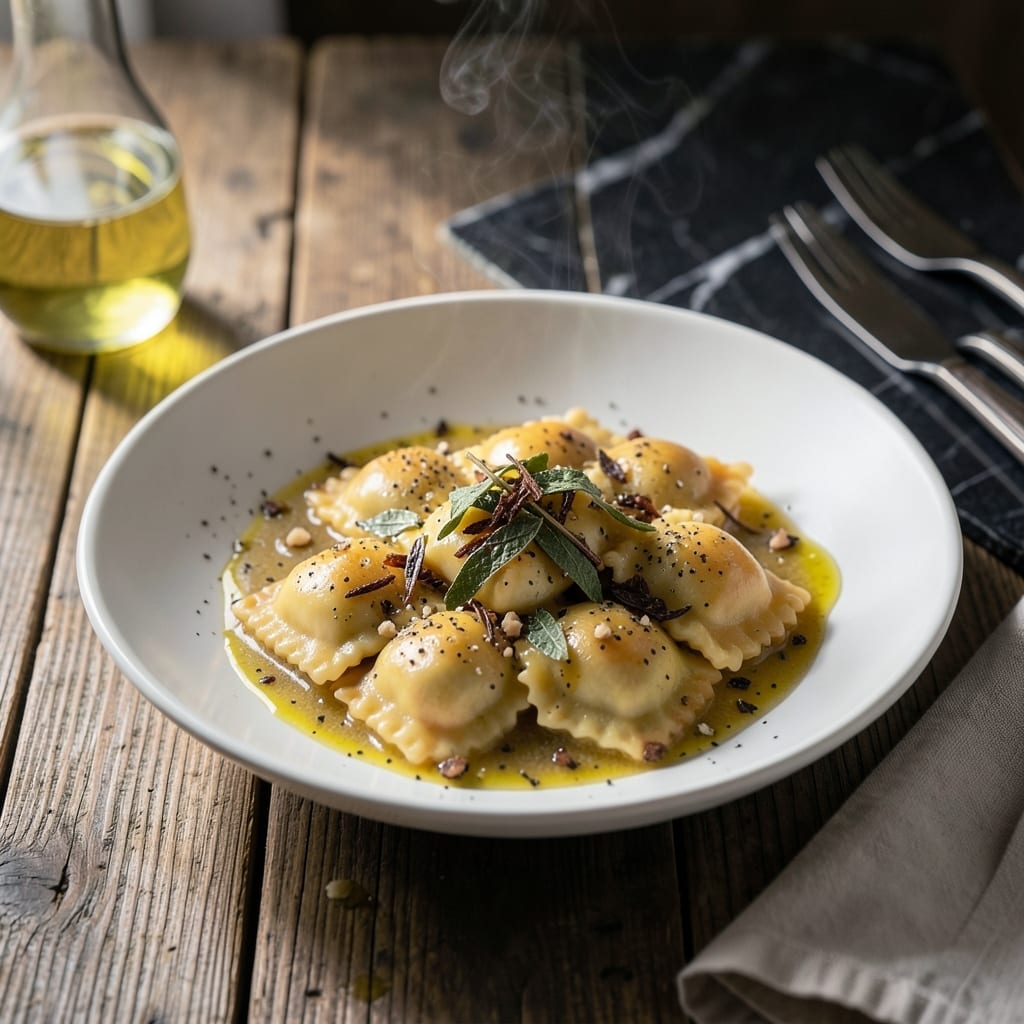
This brown butter and sage sauce transforms simple ravioli into a restaurant-quality dish with minimal effort. The nutty aroma of browned butter pairs perfectly with earthy sage, creating a rich, velvety sauce that clings to each bite.
The process is surprisingly simple: melt butter until it turns golden brown, then infuse it with fresh sage leaves. The key is watching closely to prevent burning while developing deep, toasty flavors.
What results is a luxurious sauce with complex layers—sweet, nutty, and slightly savory—that elevates store-bought or homemade ravioli alike. The sage adds an aromatic touch without overpowering.
Ready in under 15 minutes, this sauce proves that extraordinary flavor doesn’t require complicated techniques or long ingredient lists.
Ingredients for Ravioli Recipe Sauce
Eight ingredients transform ravioli into restaurant-quality dish with minimal effort.
| Ingredient | Amount | Notes |
|---|---|---|
| Unsalted Butter 🧈 | ¾ cup | High-quality for best flavor |
| Fresh Sage Leaves 🍃 | 24 whole | Whole leaves, not ground |
| Garlic Cloves 🧄 | 2 cloves | Lightly crushed for infusion |
| Kosher Salt 🧂 | ¼ tsp | Diamond Crystal preferred |
| Freshly Ground Black Pepper 🌶️ | 0.125 tsp | Coarse grind ideal |
| Lemon Juice 🍋 | 1 tsp | Freshly squeezed for brightness |
| Parmesan Cheese 🧀 | ¼ cup | Freshly grated Parmigiano-Reggiano |
| Heavy Cream 🥛 | ¼ cup | Optional for richer sauce |
The butter is the foundation—European-style unsalted gives the best nutty aroma. Plugrá or Kerrygold are top picks at most grocers. Fresh sage is non-negotiable; dried won’t infuse properly. Look for vibrant green leaves at Whole Foods or your local farmers market. The Parmigiano-Reggiano must be freshly grated from a wedge (pre-ground loses its sharpness).
No sage? Fresh rosemary at half the amount works in a pinch, though the flavor profile shifts. For a dairy-free version, swap butter for coconut oil (but it won’t brown the same). The heavy cream can be omitted entirely—just reduce the butter slightly. Lemon juice brightens; white wine vinegar is a decent substitute if that’s what you have on hand.
Browned butter goes from golden to burnt fast—watch it like a hawk. The sauce keeps 3 days refrigerated in an airtight container. Reheat gently to avoid separation. For longer storage, freeze without cream for up to 2 months.
Why You’ll Love This Recipe
- One-Pot Simplicity: I can melt the butter, toast the sage, and infuse the garlic all in a single pan—no stacking dishes in the sink.
- Butter & Sage Magic: That nutty brown butter with crispy sage leaves and garlic? It turns store-bought ravioli into something restaurant-worthy.
- Weeknight Hero: Honestly, it’s my Tuesday night lifesaver when I need something fancy-feeling but fast.
- Leftovers? Please.: The flavors deepen overnight, so I actually make extra just to drizzle over roasted veggies the next day.
Step-by-Step Instructions for Brown Butter and Sage Sauce
This refined technique delivers a luxurious sauce with nutty depth and aromatic complexity.
Step 1: Infuse the Butter with Sage and Garlic
In a heavy-bottomed saucepan over medium heat, melt the 0.75 cup unsalted butter. As it begins to foam, add the 24 whole fresh sage leaves and the 2 cloves garlic cloves (lightly crushed). The butter will start to crackle and pop as the water content evaporates.
Continue cooking, swirling the pan occasionally, until the butter turns a rich golden brown and the milk solids at the bottom of the pan develop a deep amber hue. This process takes 5-7 minutes. The sage will crisp slightly, and the garlic will release its fragrant oils, infusing the butter with layers of flavor. Watch closely—browned butter can turn to burnt butter in seconds.
Step 2: Season and Introduce Acid
Once the butter reaches the desired color, immediately remove the pan from heat. Stir in the 0.25 tsp kosher salt and 0.125 tsp freshly ground black pepper to season the base. The residual heat will continue to cook the butter slightly, so working quickly is essential.
Add the 1 tsp lemon juice to cut through the richness of the butter. The acid not only balances the flavors but also brightens the sauce, enhancing the earthy notes of the sage and the warmth of the browned butter. Stir well to combine all the elements uniformly.
Step 3: Incorporate Cream and Cheese
Return the pan to low heat and pour in the 0.25 cup heavy cream. Stir constantly as the cream warms and blends with the browned butter, creating a silky, emulsified sauce. This step should take 2-3 minutes—just enough time to heat through without boiling.
Gradually sprinkle in the 0.25 cup Parmesan cheese, stirring continuously until it melts completely. The sauce will thicken slightly as the cheese integrates, resulting in a velvety texture that clings beautifully to ravioli. Avoid high heat at this stage to prevent the sauce from breaking or the cheese from becoming stringy.
Step 4: Adjust Consistency and Finish
Taste the sauce and adjust the seasoning if needed, though the initial measurements should provide perfect balance. If the sauce appears too thick, thin it with a splash of reserved pasta water. Conversely, if it’s too thin, allow it to simmer for an additional 1-2 minutes to reduce slightly.
Remove the garlic cloves if desired, or leave them in for a more pronounced garlic flavor. The sage leaves, now crisp and infused with butter, make an elegant garnish. Serve the sauce immediately over freshly cooked ravioli, ensuring each portion is generously coated with the rich, aromatic mixture.
Pro Tips For Making Ravioli Recipe Sauce
- Brown the Butter: Let the butter cook until it turns golden brown and smells nutty—about 3-4 minutes over medium heat. Pull it off just before it looks too dark, or it’ll taste bitter.
- Slap the Sage: Give the sage leaves a quick slap between your palms before adding them to the pan. It releases their oils and makes the flavor pop without overpowering.
- Skip Burnt Garlic: Add the garlic only after the butter is browned and sage is crisp, then cook for 30 seconds max. Burnt garlic ruins the whole sauce—I learned this the hard way.
- Season in Layers: Salt the butter as it melts, then again after adding sage. Unsalted butter needs a little boost at each stage to build depth.
Regional Styles of ravioli recipe sauce
Northern Italian Tradition
In Lombardy, this sauce is called burro e salvia and is a staple with fresh ravioli. They often use local butter from Alpine cows for extra richness. The simplicity lets the quality of ingredients shine through. 🗺️
Tuscan Herb Variation
Tuscans add fresh rosemary alongside sage for a piney note. They also incorporate toasted pine nuts for texture. The butter is often clarified first for a cleaner flavor.
Roman Winter Style
In Rome, winter versions include sautéed porcini mushrooms with the sage. A splash of white wine deglazes the pan before adding butter. This creates a deeper, earthier sauce perfect for cold months.
Venetian Citrus Twist
Venice adds zest from 1 lemon along with the juice. They also use local salted butter from the Po Valley. The citrus brightens the rich butter beautifully.
Emilian Creamy Version
Emilia-Romagna incorporates local cream and Parmigiano-Reggiano early. They often add prosciutto di Parma bits for saltiness. This creates a more decadent, spoon-coating sauce.
Ligurian Light Touch
Liguria uses less butter (½ cup) and adds fresh marjoram with sage. A drizzle of local olive oil finishes the dish. This lighter version lets the ravioli filling shine.
Nutrition Facts
Frequently Asked Questions
Can I use dried sage instead of fresh?
Fresh sage is ideal for this sauce, but you can substitute with 1 tablespoon dried sage. Add it earlier to allow time for rehydration and flavor infusion. The taste won’t be as vibrant, but it will still work.
How do I prevent the sauce from separating?
Keep the heat low when adding cream and cheese. Stir constantly to create an emulsion. If separation occurs, whisk in a splash of warm water or reserved pasta water to bring it back together.
What’s the best way to store leftovers?
Store in an airtight container in the fridge for up to 3 days. Reheat gently on low heat, stirring frequently. Avoid freezing if cream is included, as it may curdle upon thawing.
Can I make this sauce without cream?
Yes! Simply omit the cream and add a splash of pasta water to help the sauce cling to the ravioli. The brown butter and cheese will still provide plenty of richness and flavor.

- BBQ Sausage Recipe Oven: Smoky Depth Without the Grill - September 28, 2026
- BBQ Chicken Bowl Recipe Rice: Smoky Sweetness Over Fluffy Grains - September 28, 2026
- Beef Cutlet Recipe Ideas: Crispy Breaded Patties With Bold Seasonings - September 28, 2026