
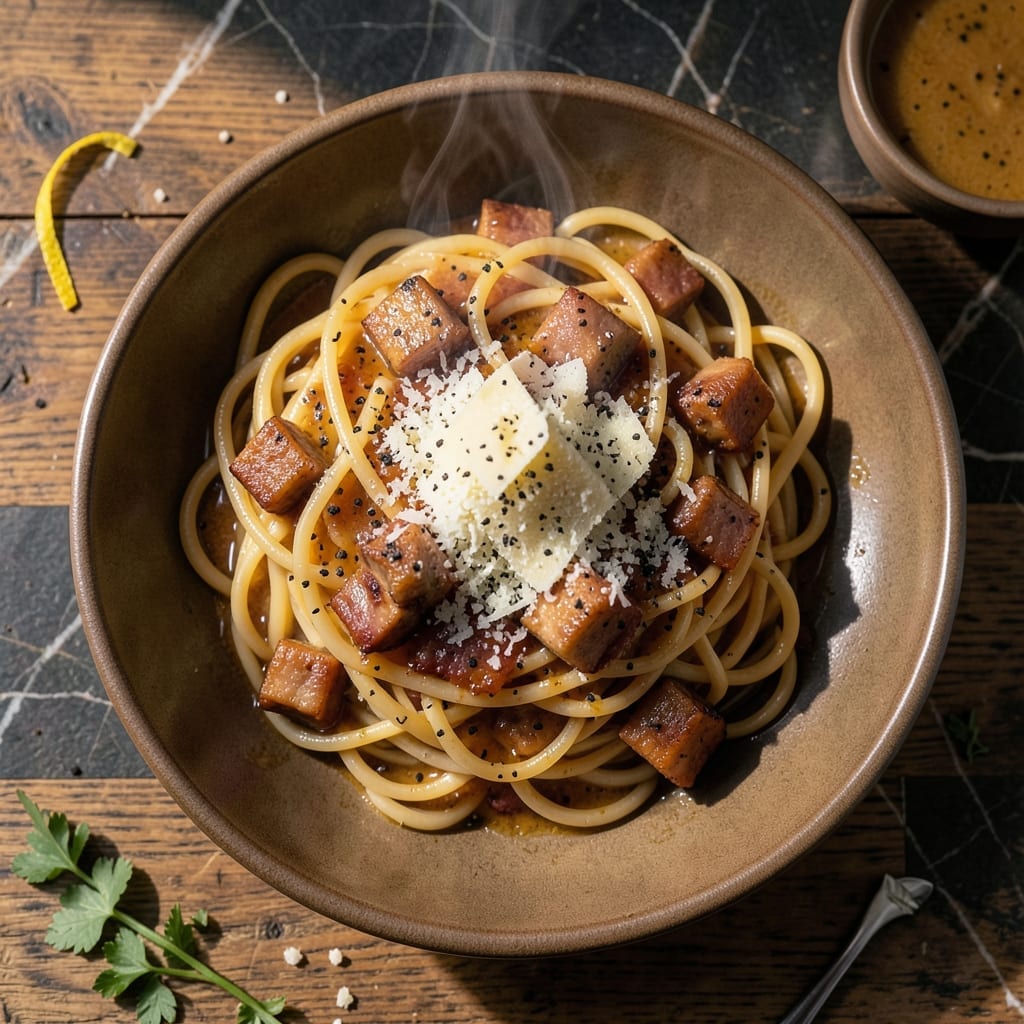
Roman carbonara done right starts with the finest cured pork cheek—guanciale—that renders into golden fat to coat every strand of pasta. This isn’t just another bacon substitute; it’s the soul of authentic Roman cooking.
The technique is precise: crisp the guanciale slowly to release its fat, then toss with al dente pasta and a silky egg-cheese sauce. No cream, no shortcuts—just the authentic method that’s been perfected over generations.
What emerges is a dish with perfectly crispy guanciale pieces, glossy sauce clinging to each noodle, and that signature peppery finish. The balance of salty pork, rich eggs, and sharp pecorino creates a flavor only true carbonara delivers.
Serve immediately while the sauce is at its creamiest. Here’s how to master this classic.
Ingredients for Guanciale Recipe Pasta
Authentic Roman carbonara demands guanciale, eggs, cheese, and pasta for perfect results every time.
| Ingredient | Amount | Notes |
|---|---|---|
| Guanciale 🥓 | 6 oz | Diced, cured pork cheek |
| Spaghetti 🍝 | 1 lb | Dried, high-quality Italian |
| Large Eggs 🥚 | 4 whole | Room temperature, fresh |
| Pecorino Romano Cheese 🧀 | 1 ½ cups | Freshly grated, aged |
| Parmigiano-Reggiano Cheese 🧀 | ½ cup | Freshly grated, fine |
| Black Pepper 🌶️ | 1 tsp | Freshly cracked, coarse |
| Sea Salt 🧂 | 1 tsp | For pasta water, fine grain |
| Water 💧 | 4 cups | For cooking pasta |
| Garlic Cloves 🧄 | 2 cloves | Optional, minced lightly |
| Parsley 🌿 | ¼ cup | Fresh, chopped for garnish |
The guanciale is non-negotiable for authenticity. Eataly carries the real deal, or order online from D’Artagnan or La Quercia. Look for cured pork cheek with visible marbling—avoid pre-diced if possible, as it may dry out. For pasta, De Cecco or Barilla spaghetti hold sauce beautifully. The cheese must be aged Pecorino Romano and Parmigiano-Reggiano—freshly grated is essential for proper melting and texture.
No guanciale? Pancetta at a 1:1 ratio is the closest substitute, though not identical. Bacon works in a pinch but lacks the delicate flavor. For cheese, Pecorino alone can replace the blend if needed, though the depth suffers. Fresh eggs are critical—farmers market eggs yield the creamiest sauce. Avoid pre-grated cheese; it contains anti-caking agents that ruin the texture.
Store guanciale wrapped tightly in the fridge for up to 2 weeks or freeze for 3 months. Pecorino and Parmigiano keep indefinitely in the fridge. Fresh parsley wilts quickly—use within 3 days or store stems in water. Cooked carbonara is best served immediately but can be reheated gently with a splash of pasta water.
Why You’ll Love This Recipe
- One Pot Wonder: I love that everything comes together in a single pan—spaghetti, eggs, and guanciale sizzling while the cheese melts right in.
- Rich and Savory: The guanciale brings this deep, salty-sweet flavor that pairs perfectly with the sharp punch of Pecorino and Parmigiano.
- Weeknight Winner: Honestly, it’s my go-to for busy evenings—ready faster than takeout and way more satisfying.
- Leftovers? Yes Please: The flavors actually get better overnight, and it reheats beautifully for lunch the next day.
Step-by-Step Instructions for Guanciale Pasta
Master the authentic Roman technique with precise timing and traditional ingredients.
Step 1: Render the Guanciale to Crisp Perfection
Heat a large, heavy skillet over medium-low heat—no oil needed as the guanciale provides ample fat. Add the 6 oz Guanciale and cook slowly for 8-10 minutes, stirring occasionally, until the fat renders completely and the diced meat turns golden and crisp.
This gradual rendering ensures the fat remains clear and flavorful, forming the base of your sauce. Watch carefully to prevent burning; the guanciale should sizzle gently, not smoke. Remove from heat and set aside, leaving the rendered fat in the pan.
Step 2: Prepare the Egg and Cheese Emulsion
In a medium bowl, whisk together the 4 whole Large Eggs, 1.5 cups Pecorino Romano Cheese, and 0.5 cup Parmigiano-Reggiano Cheese until smooth. Add the 1 tsp Black Pepper and whisk vigorously for 30 seconds until the mixture is pale, thick, and fully emulsified.
The combination of aged Pecorino and Parmigiano-Reggiano creates the authentic Roman flavor profile. Ensure the eggs are at room temperature to prevent curdling when combined with the hot pasta later. Set this mixture aside while you cook the pasta.
Step 3: Cook Spaghetti Al Dente
Bring the 4 cups Water to a rolling boil in a large pot and add the 1 tsp Sea Salt. Add the 1 lb Spaghetti and cook according to package instructions, but stop 1 minute early—you want it slightly underdone. Stir occasionally to prevent sticking.
Reserve 1 cup of the starchy pasta water before draining. This liquid is essential for creating the creamy sauce. Drain the spaghetti but do not rinse; the surface starch helps the sauce cling to every strand. Transfer the pasta directly to the skillet with the rendered guanciale fat.
Step 4: Combine Everything Off Heat
Remove the skillet from heat and let it cool for 1 minute to prevent scrambling the eggs. Add ¼ cup of the reserved pasta water to the pasta and toss vigorously with tongs. The starchy water will begin to create a silky emulsion.
Pour the egg and cheese mixture over the pasta and toss continuously for 1-2 minutes until the sauce thickens and coats the spaghetti evenly. If the sauce seems too thick, add more pasta water 1 tablespoon at a time until it reaches a creamy consistency. The residual heat from the pasta will gently cook the eggs without curdling.
Step 5: Finish with Optional Garlic and Garnish
If using, stir in the 2 cloves Garlic Cloves (minced lightly) and toss for an additional 30 seconds to infuse the sauce with a subtle aroma. Transfer the pasta to serving plates and garnish with the 0.25 cup Parsley, chopped fresh.
Serve immediately while the sauce is glossy and creamy. Each bite should deliver the rich, salty flavor of guanciale, the sharp tang of aged cheeses, and the silky texture of perfectly emulsified eggs. The parsley adds a touch of freshness to balance the dish.
Pro Tips For Making Guanciale Recipe Pasta
- Render the Guanciale Low: Cook the guanciale on medium-low heat until crispy but not burnt—about 8-10 minutes. I learned this the hard way after charring two batches trying to rush it.
- Save the Pasta Water: Reserve at least a cup of starchy pasta water before draining. Sounds weird, but it works: that silky liquid is the only thing that’ll properly emulsify your sauce.
- Skip the Pre-Grated Cheese: Grate the Pecorino Romano and Parmigiano-Reggiano fresh—pre-shredded cheese has anti-caking agents that make the sauce grainy. My grandmother swore by this, and she was right.
- Toss Off the Heat: Combine the pasta, guanciale, and egg-cheese mixture in a warm bowl, not over direct heat. After burning three batches, I finally figured out the eggs scramble if the pan’s too hot.
Serving Suggestions for This guanciale recipe pasta
Plating Perfection
I always use shallow pasta bowls to showcase this dish—they let the glossy sauce pool beautifully. Toss the pasta one final time in the skillet before plating to ensure every strand glistens with that silky emulsion. A pasta server helps twist perfect portions.
Garnish Like a Roman
Finish with an extra sprinkle of Pecorino Romano and a crack of fresh black pepper over each serving. The parsley isn’t just decorative—it cuts through the richness. I add it just before serving to preserve its vibrant color. 🌟
Bread for Sauce
Serve with crusty Italian bread to soak up every last bit of sauce. I warm slices in the oven for 5 minutes at 375°F until lightly toasted. This is non-negotiable in my house—no one leaves sauce behind!
Wine Pairing
A crisp Italian white like Frascati or Vernaccia di San Gimignano balances the dish’s richness. For red lovers, a light Chianti Classico works beautifully. Serve wine slightly chilled for whites, at room temperature for reds.
Family Style
For gatherings, transfer everything to a large serving platter. The communal experience is part of the joy. I always make extra guanciale to pass around for those who want more of that salty crunch.
Just remember—this dish waits for no one. Serve immediately while the sauce is at its creamiest. 💛
Nutrition Facts
Frequently Asked Questions
Can I substitute pancetta for guanciale?
Yes, pancetta is the closest substitute at a 1:1 ratio. While it lacks guanciale’s distinct pork cheek flavor, it still delivers salty richness. Avoid smoked bacon as it overpowers the dish.
Why is my sauce scrambling?
This happens when the eggs hit too much heat. Always remove the pan from heat and let it cool for 1 minute before adding the egg mixture. Toss continuously to create a creamy emulsion, not scrambled eggs.
What pasta shape works best?
Spaghetti is traditional, but bucatini or rigatoni also excel. The sauce clings beautifully to long strands and hollow shapes. Avoid short pastas that can’t trap the silky sauce.

- BBQ Sausage Recipe Oven: Smoky Depth Without the Grill - September 28, 2026
- BBQ Chicken Bowl Recipe Rice: Smoky Sweetness Over Fluffy Grains - September 28, 2026
- Beef Cutlet Recipe Ideas: Crispy Breaded Patties With Bold Seasonings - September 28, 2026