
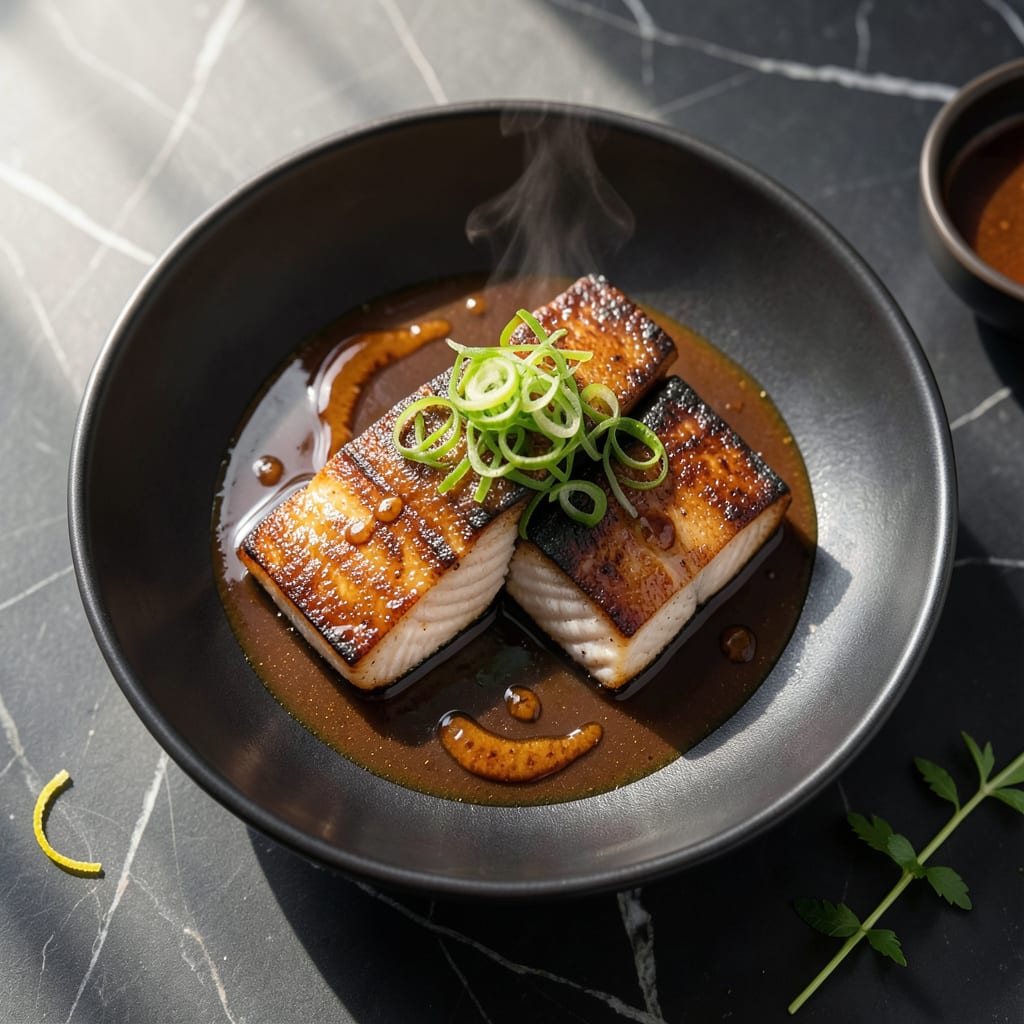
This Nobu-style miso black cod delivers silky, buttery fish with a glossy sweet-savory glaze that’s become legendary. The marinating process transforms the texture entirely.
With just a few ingredients and precise timing, you’ll achieve restaurant-quality results at home. The key is patience—let the miso work its magic overnight for the best flavor and texture.
Ingredients for Miso Black Cod Nobu
Elevate cod with Nobu’s signature miso marinade for restaurant-quality results every time.
| Ingredient | Amount | Notes |
|---|---|---|
| Black Cod Fillets 🐟 | 1 ½ lb | Skin-on, center-cut preferred |
| White Miso Paste 🥣 | ½ cup | Fermented, smooth texture |
| Sake 🍶 | ¼ cup | Dry variety preferred |
| Mirin 🍷 | ¼ cup | Sweet rice wine essential |
| Granulated Sugar 🍚 | 3 tbsp | Balances miso saltiness |
| Soy Sauce 🫒 | 2 tbsp | Low-sodium for control |
| Fresh Ginger 🌿 | 1 tbsp | Finely grated for marinade |
| Garlic Cloves 🧄 | 2 cloves | Minced for depth |
| Neutral Oil 💧 | 1 tbsp | Grapeseed or vegetable oil |
| Yuzu Zest 🍊 | 1 tsp | Optional for brightness |
| Toasted Sesame Seeds 🌾 | 1 tsp | For garnish finish |
| Thinly Sliced Scallions 🧅 | 2 tbsp | Green parts only |
The black cod must be sushi-grade freshness—look for translucent, pearly flesh at reputable fishmongers like Whole Foods or Asian markets. White miso from Miso Master or South River Miso delivers authentic umami depth. Sake and mirin are non-negotiable; Kikkoman’s Aji-Mirin is widely available and consistent in quality. Avoid substitutions that compromise the glaze’s balance.
No sake? Dry sherry works in a pinch but lacks depth. Mirin can be replaced with 1 tbsp sugar plus 3 tbsp water per quarter cup, though authenticity suffers. Black cod is irreplaceable—Chilean sea bass is the only viable alternative. The sugar quantity is precise; do not reduce or the glaze won’t caramelize properly. Fresh ginger and garlic cannot be substituted with powders.
Marinate cod exactly 24-48 hours—shorter and the texture won’t transform, longer and it over-cures. The glaze keeps 5 days refrigerated in a sealed container. Cooked fish is best served immediately but holds 1 hour at room temperature for plating flexibility.
Why You’ll Love This Recipe
- Marinate & Forget: I mix the miso, sake, mirin, and sugar in the morning, let the cod soak all day, and dinner practically cooks itself.
- Umami Bomb: The white miso caramelizes into this sticky, savory-sweet glaze that makes every bite of the buttery cod irresistible.
- Dinner Party Star: I serve this when I want to impress without slaving in the kitchen—it feels fancy but takes minutes of active work.
- Leftovers? Unlikely: Honestly, there never are any. But if by some miracle there are, it reheats beautifully and tastes just as good the next day.
Step-by-Step Instructions for Miso Black Cod
Master the marinade timing and broiling technique for restaurant-quality, silky fish with caramelized edges.
Step 1: Prepare the Miso Marinade
In a bowl, combine the 0.5 cup white miso paste, 0.25 cup sake, 0.25 cup mirin, 3 tbsp granulated sugar, and 2 tbsp soy sauce. Whisk vigorously until the mixture becomes smooth and homogeneous—this ensures the sugar fully dissolves and the flavors meld completely.
Add the 1 tbsp fresh ginger and 2 cloves garlic cloves, minced. Stir to incorporate evenly. The ginger provides a subtle warmth while the garlic adds depth to the sweet-savory profile. Let the marinade rest for 5 minutes to allow the aromatics to infuse before using.
Step 2: Marinate the Black Cod Fillets
Pat the 1.5 lb black cod fillets dry with paper towels to ensure the marinade adheres properly. Place the fillets skin-side down in a shallow dish and pour the marinade over them, making sure every surface is coated. Cover with plastic wrap and refrigerate.
Marinate for a minimum of 24 hours and up to 48 hours—this extended time is critical. The miso’s enzymes tenderize the fish while the sugars caramelize during cooking, creating the signature glossy glaze. Do not marinate longer than 48 hours, as the texture may become mushy.
Step 3: Broil the Fish to Perfection
Preheat your oven’s broiler to high and position the rack 6 inches from the heat source. Line a baking sheet with parchment paper and lightly brush it with 1 tbsp neutral oil to prevent sticking. Remove the fillets from the marinade, wiping off excess with your fingers, and place them skin-side down on the prepared sheet.
Broil for 8-10 minutes until the tops are deeply caramelized with charred edges and the fish flakes easily when tested with a fork. Watch closely during the last 2 minutes—the sugars in the marinade can burn quickly. The fish is done when the thickest part reaches an internal temperature of 145°F.
Step 4: Garnish and Serve Immediately
Transfer the fillets to a serving platter. Sprinkle evenly with the 1 tsp toasted sesame seeds and 2 tbsp thinly sliced scallions for a fresh, vibrant finish. The sesame seeds add a nutty crunch while the scallions provide a mild, oniony brightness.
For an elevated touch, finely grate 1 tsp yuzu zest over the top just before serving. The citrusy aroma cuts through the richness of the miso, balancing each bite. Serve immediately with steamed rice and additional marinade on the side if desired.
Pro Tips For Making Miso Black Cod Nobu
- Marinate Longer: Give the cod at least 48 hours in the miso marinade—24 hours just doesn’t penetrate enough. I learned this the hard way after serving under-flavored fish to guests.
- Pat Fish Dry: Before marinating, blot the cod fillets thoroughly with paper towels. Excess moisture dilutes the miso paste and weakens the glaze.
- Skip Boiling Marinade: Resist the urge to boil the leftover marinade for sauce—it’s raw fish juice. Instead, set aside a clean portion of marinade before adding the cod.
- Broil, Don’t Bake: Finish under a hot broiler for 2-3 minutes to caramelize the miso. Baking alone leaves the surface pale and the texture mushy.
Serving Suggestions for This miso black cod nobu
Plating Like Nobu
Serve each fillet on a warm rectangular plate with a bed of steamed jasmine rice. The white rice contrasts beautifully with the dark caramelized glaze, making the dish pop visually. I always warm my plates first for that restaurant touch.
Side Pairings
A simple cucumber sunomono salad with rice vinegar dressing cuts through the richness. Or try blanched bok choy with a drizzle of toasted sesame oil for an authentic Japanese touch. Both keep the focus on the star of the plate. 🥗
Sauce Drizzle
Reduce the leftover marinade in a small saucepan over medium heat for 3-4 minutes until thickened. Drizzle artfully around the fish in a zigzag pattern. This adds extra depth and makes the dish look professionally plated.
Garnish Perfection
Always finish with fresh scallions and sesame seeds just before serving. For special occasions, add a sprinkle of microgreens or edible flowers for color. The contrast of green against the dark glaze is stunning.
Drink Pairing
A chilled dry sake like Dassai 39 complements the sweet-savory flavors perfectly. For non-alcoholic options, green tea or yuzu-infused sparkling water cleanses the palate between bites. 🍶
Family-Style Option
For a more casual presentation, arrange all fillets on a large platter with steamed rice in the center. Let guests serve themselves—this works especially well for dinner parties. The communal style enhances the dining experience.
Nutrition Facts
Frequently Asked Questions
Can I use a different type of fish?
Chilean sea bass is the only good substitute for black cod. Avoid salmon or halibut—their textures won’t achieve the same silky finish. Stick to sushi-grade fish for best results.
Why is my glaze burning before the fish cooks through?
Broil on high heat with the rack 6 inches from the source. Watch closely after 6 minutes—the sugars caramelize quickly. For even cooking, ensure fillets are similar thickness.
How long can I store the marinade?
Unused marinade keeps for 5 days refrigerated in an airtight container. To reuse it as a sauce, boil for 3 minutes first to kill bacteria from raw fish contact.
What if I can’t marinate for 24 hours?
Minimum marinating time is 24 hours—any less and the texture won’t transform properly. The enzymes in miso need time to break down proteins for that signature buttery consistency.

- BBQ Sausage Recipe Oven: Smoky Depth Without the Grill - September 28, 2026
- BBQ Chicken Bowl Recipe Rice: Smoky Sweetness Over Fluffy Grains - September 28, 2026
- Beef Cutlet Recipe Ideas: Crispy Breaded Patties With Bold Seasonings - September 28, 2026