
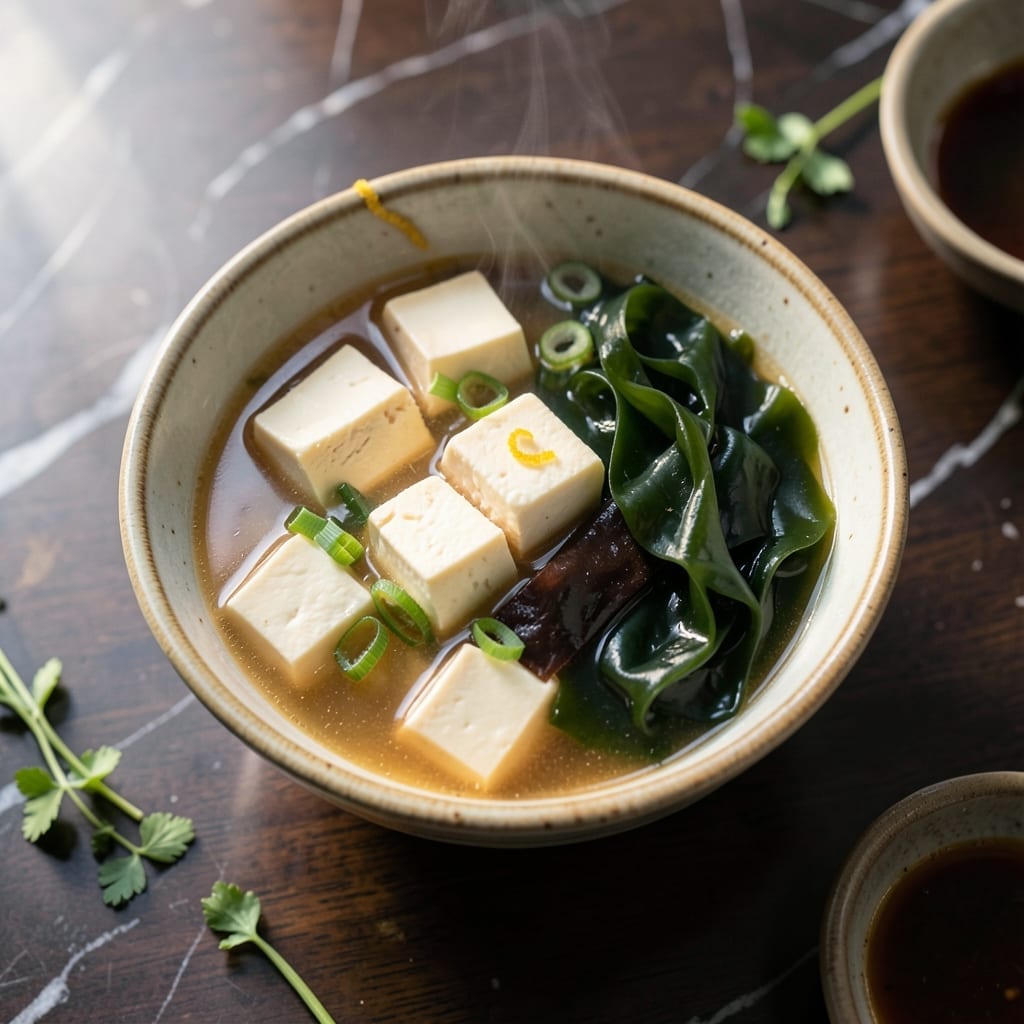
This traditional Japanese soup brings authentic umami flavor to your table in minutes.
The secret is quality dashi stock, which forms the perfect base for miso paste to dissolve into. Soft tofu and seaweed add texture while green onions provide fresh contrast.
You’ll achieve restaurant-worthy results with simple ingredients and minimal effort. The key is never boiling the miso paste, which preserves its delicate flavors and probiotics.
Serve immediately for the best flavor and texture. This comforting bowl works as a starter or light meal.
Ingredients for Miso Soup Recipe with Dashi
Simple, authentic Japanese flavors start with these quality ingredients for your bowl.
| Ingredient | Amount | Notes |
|---|---|---|
| Dashi Stock 🍜 | 4 cups | Traditional kombu and bonito or instant granules |
| White Miso Paste 🥣 | ½ cup | Fermented soybean paste, unpasteurized preferred |
| Soft Tofu 🧈 | 14 oz | Silken or regular, drained and cubed |
| Dried Wakame Seaweed 🌊 | ¼ oz | Rehydrated in warm water |
| Green Onions 🧅 | 4 whole | Thinly sliced, white and green parts |
| Kombu Sheets 🌿 | 2 pieces | For homemade dashi stock |
| Bonito Flakes 🐟 | ½ cup | For traditional dashi, optional for vegetarian |
| Soy Sauce 🫒 | 1 tbsp | Low-sodium preferred for balance |
| Mirin 🍶 | 1 tbsp | Sweet rice wine for depth |
| Sesame Oil 🫒 | ½ tsp | Toasted for aroma |
| Red Pepper Flakes 🌶️ | ¼ tsp | Optional for heat |
| Fresh Ginger 🌿 | 1 piece | 1-inch knob, grated |
The dashi is everything here. Kombu and bonito flakes give the authentic base, but instant dashi granules work in a pinch (look for Kallo or Ajinomoto at Asian markets). For vegetarian dashi, skip the bonito and use extra kombu. The miso paste should be unpasteurized and refrigerated—check the label. I grab mine from Whole Foods or the refrigerated section at H Mart.
No bonito flakes? Shiitake mushroom stems steeped in hot water make a great vegetarian dashi. Short on wakame? Nori sheets torn into pieces work too. The tofu can be firm if that’s what you have, but soft tofu melts into the broth beautifully. If you don’t have mirin, a pinch of sugar plus rice vinegar gets you close.
Dashi keeps in the fridge for about 3 days, or freeze for 1 month. The miso paste will last 6-12 months unopened, 3 months refrigerated after opening. Tofu should be used within 1 week of opening. Always add miso to warm—not boiling—liquid.
Why You’ll Love This Recipe
- Ready in 15: I can have this steaming bowl ready before the rice cooker finishes—just dashi, miso, and a quick tofu chop.
- Umami Bomb: That first sip with the dashi and white miso hits different. Honestly, it’s the seaweed soaking in the broth that makes it irresistible.
- Fridge to Table: I keep dried wakame and tofu on hand for lazy dinners or when friends pop over unexpectedly.
- Stretches Far: One batch costs pennies and tastes even better the next day. I’ll be real: I’ve eaten it for breakfast, lunch, and dinner.
Step-by-Step Instructions for Miso Soup With Dashi
Here’s the simple method I use to make this classic Japanese soup in minutes.
Step 1: Rehydrate the Wakame and Prep Tofu
Place the 0.25 oz Dried Wakame Seaweed in a bowl and cover with warm water. Let it soak for 5 minutes until fully rehydrated and expanded. Drain well before using—this removes any excess salt and ensures a clean flavor.
While the wakame soaks, drain and cube the 14 oz Soft Tofu into ½-inch pieces. I like to pat the tofu dry with a paper towel first to help it absorb more of the broth’s flavor. Set both aside until ready to use.
Step 2: Heat the Dashi and Infuse with Aromatics
In a medium pot, heat the 4 cups Dashi Stock over medium heat until it just begins to simmer. Add the 1 piece Fresh Ginger (grated) and let it steep for 2-3 minutes to infuse the broth with its warm, spicy notes.
This step is subtle but important—the ginger adds depth without overpowering the delicate miso flavor. Keep the heat gentle to avoid boiling, which can make the stock cloudy and dull the flavors.
Step 3: Dissolve the Miso Paste
Reduce the heat to low and add the 0.5 cup White Miso Paste. Use a whisk to dissolve it completely into the broth. I find that adding the miso to a ladle first and then submerging it helps prevent clumping.
Never let the soup boil after adding the miso—high heat kills its beneficial probiotics and mutes its complex umami flavor. Stir in the 1 tbsp Soy Sauce, 1 tbsp Mirin, and 0.5 tsp Sesame Oil for a balanced, aromatic base.
Step 4: Add Tofu, Wakame, and Finish
Gently add the cubed tofu and rehydrated wakame to the pot. Simmer for 2-3 minutes just until everything is heated through. The tofu should stay intact but warm up, and the wakame will soften slightly in the hot broth.
Taste and adjust seasoning if needed. If you like a little heat, sprinkle in the 0.25 tsp Red Pepper Flakes now. The flakes will bloom in the hot liquid, adding a subtle kick without overpowering the soup’s delicate balance.
Step 5: Garnish and Serve Immediately
Ladle the soup into bowls and garnish with the 4 whole Green Onions, thinly sliced. The green onions add a fresh, crisp contrast to the warm, savory broth. Serve right away while the tofu is still silky and the wakame retains a slight bite.
This soup is best enjoyed fresh, as the wakame and tofu can become mushy if left to sit too long. Each bowl should have a good mix of tofu, wakame, and broth for the full experience.
Pro Tips For Making Miso Soup Recipe With Dashi
- Temper the Miso: Always mix the miso paste with a ladle of warm dashi first before adding it back to the pot—I learned this the hard way after ending up with clumpy soup that never fully dissolved.
- Skip Boiling Miso: Never let the soup boil after adding miso paste, or it’ll turn bitter and lose its delicate flavor. Keep it at a gentle simmer, just enough to warm through.
- Soak Wakame First: Rehydrate the dried wakame in cold water for 5-10 minutes before adding it to the soup—this guarantees even texture and prevents chewy bits in your bowl.
- Cube Tofu Last: Add the soft tofu cubes at the very end, just before serving, so they stay intact and don’t turn to mush in the broth.
Troubleshooting miso soup recipe with dashi
Cloudy Broth Fix
If your dashi turns cloudy, you likely boiled it. Strain through a fine-mesh sieve and start fresh with low heat. I keep a Kallo dashi granule backup for emergencies. Next time, simmer at 180°F max. 💡
Miso Clumping
Always whisk miso paste in a ladle first before adding to broth. Use warm—not hot—liquid to dissolve smoothly. If clumps form, strain through cheesecloth. I prefer H Mart’s white miso for its creamy texture.
Bland Flavor
Under-seasoned soup often needs more miso paste or soy sauce. Add 1 tbsp at a time, tasting between additions. A splash of mirin can brighten dull flavors. Remember, miso reduces as it cooks.
Mushy Tofu
Add tofu at the very end and heat just until warm. Use silken tofu for melt-in-mouth texture. For firmer cubes, choose extra-firm tofu and add 1 minute before serving. Overcooking turns it spongy.
Wakame Too Salty
Soak dried wakame in cold water for 5 minutes, then rinse. This removes excess salt. If already in soup, add 1 cup water and adjust seasoning. I buy Annie Chun’s wakame for consistent quality.
Weak Aroma
Boost with ½ tsp toasted sesame oil or 1 tsp grated ginger. Fresh bonito flakes steeped in broth add depth. For vegetarian versions, shiitake mushroom stems create umami richness. 🌟
Nutrition Facts
Frequently Asked Questions
What can I use instead of dashi?
Vegetable or chicken broth works in a pinch, though the flavor won’t be as authentic. For a closer match, steep kombu and shiitake mushrooms in hot water for 20 minutes.
Can I use red miso paste?
Yes, but it has a stronger, saltier flavor than white miso. Use 1/3 less and adjust to taste. Red miso also has a darker color and heartier taste.
How long does miso soup last?
Store leftovers in the fridge for up to 3 days, but note that wakame and tofu will soften. Reheat gently without boiling to preserve the miso’s flavor.

- Pav Bhaji Recipe Food Lab: Mumbai Street Food Magic at Home - October 6, 2026
- Peach Jelly Recipe Without Pectin: Naturally Set Sweet Spread - October 6, 2026
- Pasta Salad Recipe With Zesty Italian Dressing: Bright Herb-Kissed Medley for Picnics - October 6, 2026