
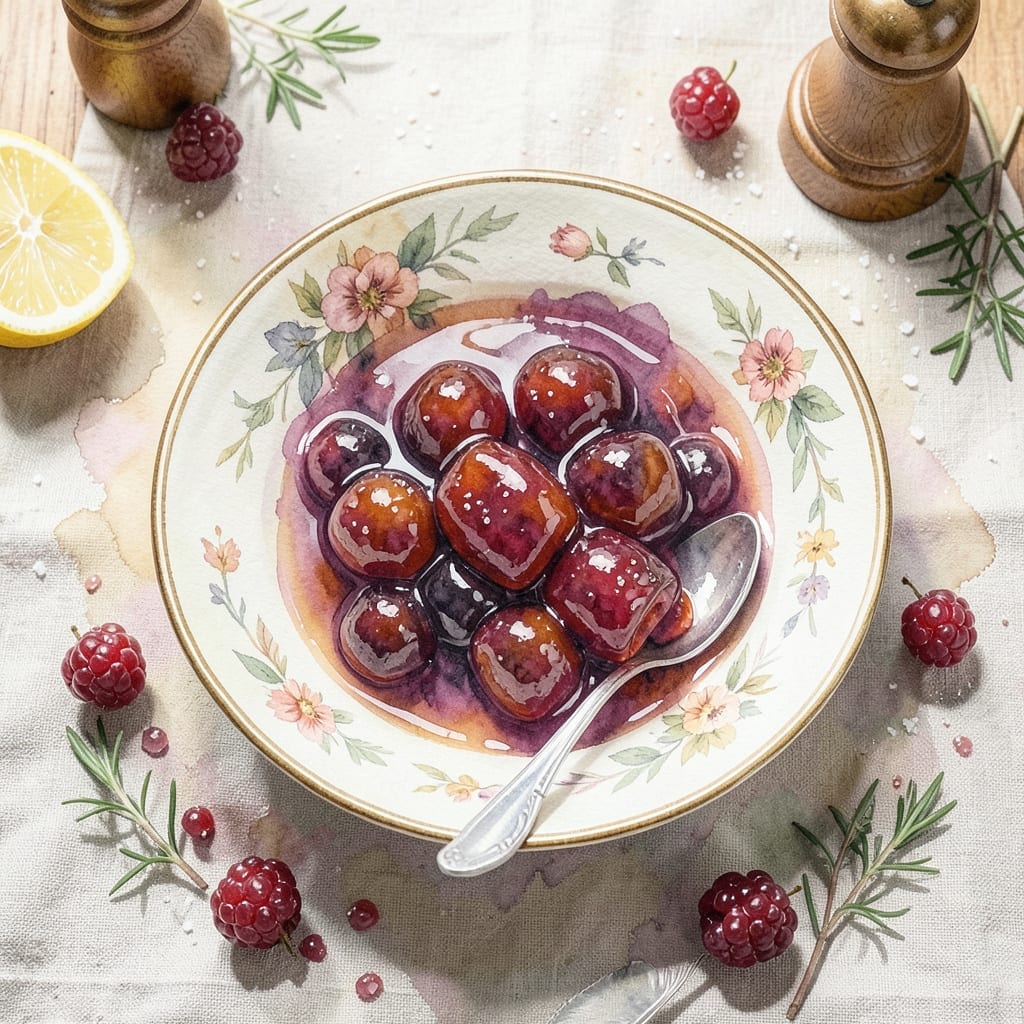
There’s a simple elegance in making jelly the old-fashioned way, letting natural fruit pectin do the work. This method relies on mulberries’ inherent pectin and the power of lemon juice to achieve the perfect set without commercial additives.
The process is surprisingly straightforward: cook the berries with sugar and lemon juice, then strain and boil the juice to the jelly stage. The result is a vibrant, glossy jelly with pure mulberry flavor that’s as satisfying to make as it is to eat.
What emerges is a smooth, spreadable jelly that captures summer in a jar. The natural thickening creates a texture that’s neither too firm nor too runny—just right for toast, pastries, or gift-giving.
Best of all, this technique preserves the berries’ fresh taste while ensuring a long shelf life when properly canned.
Ingredients for Mulberry Jelly Recipe Without Pectin
Five ingredients transform into a glossy, spreadable jelly with natural pectin from ripe mulberries.
| Ingredient | Amount | Notes |
|---|---|---|
| Fresh Mulberries 🫐 | 4 cups | Fully ripe, stems removed |
| Granulated Sugar 🍚 | 3 cups | White or raw cane sugar |
| Lemon Juice 🍋 | ½ cup | Freshly squeezed preferred |
| Water 💧 | ½ cup | For initial cooking |
| Lemon Zest 🍋 | 1 tbsp | Optional for extra citrus flavor |
The mulberries are the key to natural thickening—pick fully ripe ones (deep purple, slightly soft) for maximum pectin content. Farmers markets often have the best selection in late spring to early summer. Avoid underripe berries, as they won’t set properly. If you’re foraging, make sure they’re from pesticide-free areas. Organic mulberries are ideal if you can find them, but conventional works too.
No fresh mulberries? Frozen works in a pinch—thaw and drain well before using. Out of lemons? Lime juice at the same amount can substitute, though the flavor will be slightly different. For a less sweet jelly, reduce sugar to 2 cups, but texture may be softer. The water can be swapped for apple juice if you want extra depth of flavor.
Store unopened jars in a cool, dark place for up to 1 year. Once opened, refrigerate and use within 3 months. For gift-giving, sterility is key—process jars properly for shelf-stable results.
Why You’ll Love This Recipe
- No-Fuss Cooking: I just dump mulberries, sugar, and lemon juice in a pot and let them do their thing—no pectin, no stress.
- Bright & Tangy: The lemon zest and juice cut through the sweetness, making every bite taste like summer in a jar.
- Spreads Like Magic: Honestly, it’s perfect on toast, swirled into yogurt, or even as a glaze for roasted chicken.
- Pantry Friendly: I use whatever mulberries I’ve foraged or bought on sale, and it keeps for weeks—no waste here.
Step-by-Step Instructions for Mulberry Jelly Without Pectin
This natural method relies on the mulberries’ pectin and lemon juice to achieve the perfect set.
Step 1: Cook the Mulberries with Water
Combine the 4 cups Fresh Mulberries and 0.5 cup Water in a large, heavy-bottomed pot. I use a stainless steel pot for even heat distribution and easy monitoring of the color change. Bring the mixture to a boil over medium-high heat, then reduce to a simmer.
Cook for 10-12 minutes, stirring occasionally, until the mulberries have completely broken down and released their juices. You’ll notice the color deepen to a rich purple and the fruit will look mushy. Use a wooden spoon to gently mash any remaining whole berries against the side of the pot.
Step 2: Strain the Cooked Mulberries
Line a fine-mesh strainer with cheesecloth or a clean kitchen towel and set it over a large bowl. Pour the cooked mulberry mixture into the strainer. The cheesecloth catches the seeds and pulp while allowing the clear juice to pass through.
Let it drain naturally for 15-20 minutes without pressing—pressing extracts bitter compounds from the seeds. You should end up with about 3 cups of clear mulberry juice. If you have slightly less, that’s fine; if you have more, simply reduce it on the stove until you reach 3 cups.
Step 3: Combine Juice with Sugar and Lemon
Pour the strained mulberry juice back into your clean pot and add the 3 cups Granulated Sugar, 0.5 cup Lemon Juice, and 1 tbsp Lemon Zest. The lemon juice provides both acidity for flavor balance and natural pectin to help the jelly set.
Stir well to dissolve the sugar completely before turning on the heat. This prevents the sugar from caramelizing and burning at the bottom of the pot. The mixture should look slightly syrupy at this stage, with no visible sugar grains.
Step 4: Cook to the Jelly Point
Bring the mixture to a rolling boil over high heat. Once boiling, stir frequently and watch for the mixture to thicken. After about 15-20 minutes, it will start to foam and the bubbles will look different—smaller and more syrupy.
To test for doneness, use the cold plate method: place a small amount on a chilled plate and let it sit for 1 minute. When you push the edge with your finger, it should wrinkle slightly. The jelly should also sheet off a metal spoon in thick, slow drips rather than running off quickly.
Step 5: Jar and Seal
Remove the pot from heat and let the jelly sit for 5 minutes to allow any foam to settle. Skim off any remaining foam with a metal spoon. The jelly will still be quite liquid at this point but will continue to thicken as it cools.
Ladle the hot jelly into clean, sterilized jars, leaving ¼-inch headspace. Seal with lids and process in a water bath for 10 minutes to ensure proper preservation. The jelly will fully set as it cools, developing a beautiful, glossy finish that holds its shape when inverted.
Pro Tips For Making Mulberry Jelly Recipe Without Pectin
- Simmer Low and Slow: Keep the heat at a gentle simmer—boiling too hard will break down the mulberries into a dull puree instead of a bright, jewel-toned jelly. I learned this the hard way after my first batch turned into a murky blob.
- Mash Some Berries: Lightly crush about a quarter of the mulberries before cooking to release their natural pectin, which helps the jelly set without added thickeners. Sounds weird, but it works.
- Test for Set Early: Start checking for doneness after 20 minutes by chilling a spoonful in the freezer for 2 minutes—if it wrinkles when pushed, it’s ready. Resist the urge to wait until it looks thick in the pot; it’ll firm up as it cools.
- Strain Through Cheesecloth: Use damp cheesecloth in a fine-mesh strainer to remove seeds and pulp, but don’t press too hard or you’ll end up with cloudy jelly. My grandmother swore by this, and she was right.
Regional Styles of This Dish
Southern Appalachian Style
In the Appalachian Mountains, we often add 1 cinnamon stick to the mulberry juice while cooking. This infuses the jelly with warm spice notes that pair beautifully with biscuits. The cinnamon is removed before jarring, leaving just a hint of its presence. 💛
Pacific Northwest Twist
West Coast foragers love incorporating wild blackberries into their mulberry jelly. Use a 1:1 ratio of mulberries to blackberries for a deeper, more complex flavor. This version often includes 1 tsp vanilla extract stirred in at the end.
Midwestern Farmhouse
Midwest cooks often replace ½ cup water with apple cider for added natural pectin and a subtle autumnal flavor. We also love adding 1 star anise pod during the initial cook for a unique aromatic touch.
Texas Hill Country
Here, we give it a spicy kick by adding 1 finely chopped jalapeño (seeds removed) to the berry mixture. The heat is mild but noticeable, creating a sweet-spicy jelly perfect for glaze on grilled meats. Remove the jalapeño pieces before straining.
New England Tradition
Yankee cooks often include 1 tbsp fresh thyme leaves in their jelly. This herbaceous note complements the berries beautifully. The thyme is strained out with the seeds, leaving just its essence. This version is particularly popular with cheese pairings. ✨
California Fusion
West Coast foodies love adding 1 tbsp orange zest along with the lemon for a bright citrus twist. Some even incorporate 1 tsp rose water at the end for a floral note. This modern take reflects California’s love of diverse flavor profiles.
Nutrition Facts
Frequently Asked Questions
Why do I need lemon juice in the jelly?
Lemon juice provides natural pectin and acidity, which helps the jelly set properly. Without it, the jelly may remain too runny. Use freshly squeezed for best results.
Can I use frozen mulberries?
Yes, thaw and drain them well before using. Frozen berries work as effectively as fresh ones, though they may release more liquid during cooking. Adjust water as needed.
How do I test if the jelly is done?
Use the cold plate test: place a small amount on a chilled plate. If it wrinkles when pushed with your finger after 1 minute, it’s ready.
What if my jelly doesn’t set?
If it’s too runny after cooling, re-cook it with an additional 1-2 tbsp of lemon juice. Boil for 5-10 minutes and retest.

- Beyond Burger Recipe Ideas: Plant-Based Creativity for Every Meal - September 28, 2026
- BBQ Bison Recipe Steaks: Smoky Grill Mastery with Bold Flavor - September 28, 2026
- Chicken Breast Recipe Tender: Brine-Soaked Juiciness Without Overcooking - September 28, 2026