
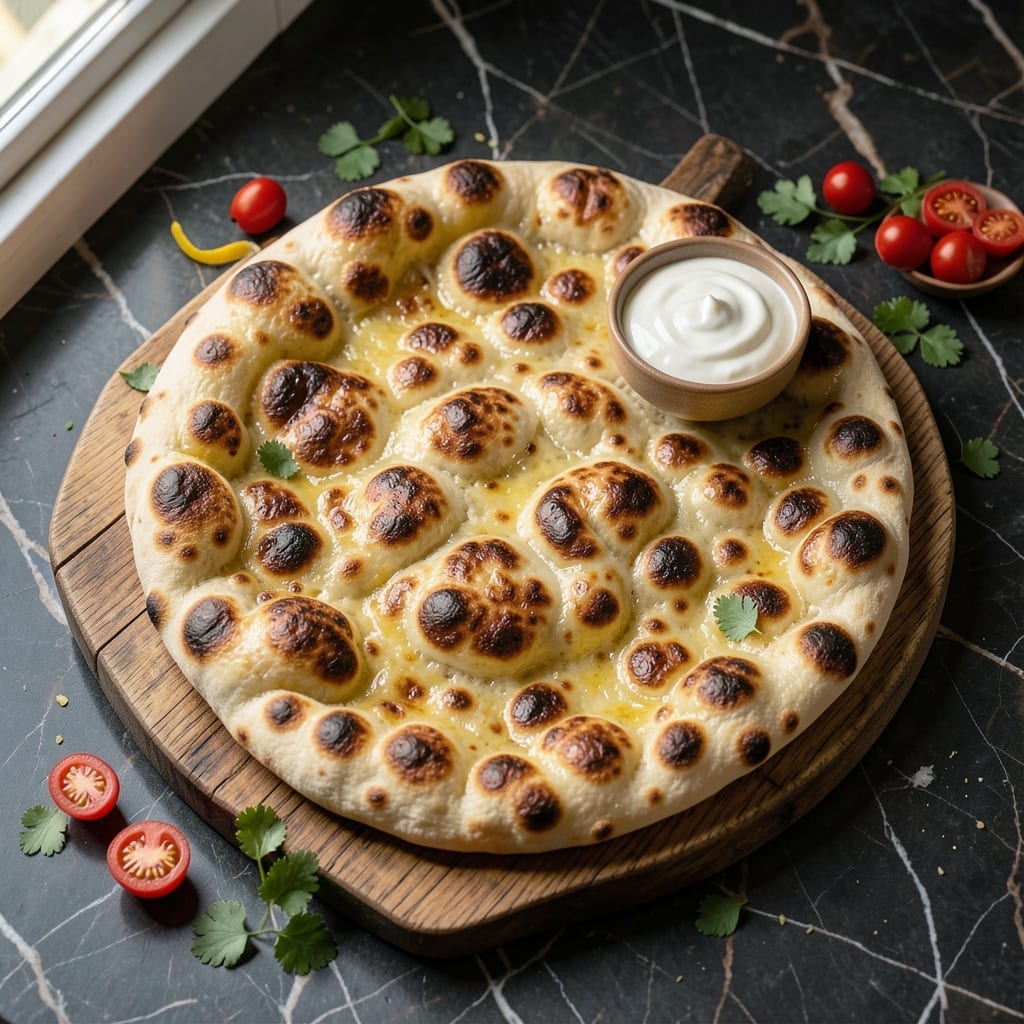
I spent years perfecting bread recipes, but this one delivers pillowy soft texture and charred edges every time.
What sets this apart is the yogurt in the dough, creating that signature elasticity and subtle tang. Resting the dough is non-negotiable for maximum rise.
The cooking method makes all the difference—high heat in a cast-iron skillet mimics a tandoor oven. You’ll get those beautiful blistered bubbles and golden spots.
Serve warm with butter, garlic, or herbs. This version transforms any meal into a restaurant-quality experience.
Ingredients for Naan Flatbread Recipe Ideas
Pantry staples plus yogurt for that signature stretch and char. Nothing exotic here.
| Ingredient | Amount | Notes |
|---|---|---|
| All-Purpose Flour 🌾 | 3 cups | Plus extra for dusting |
| Plain Yogurt 🥛 | 1 cup | Full-fat for best texture |
| Warm Water 💧 | ½ cup | About 110°F, not boiling |
| Granulated Sugar 🍚 | 1 tsp | Activates the yeast |
| Active Dry Yeast 🍞 | 2 ¼ tsp | One standard packet |
| Salt 🧂 | 1 tsp | Fine grain preferred |
| Baking Powder 🧂 | 1 tsp | For extra lift |
| Vegetable Oil 🫒 | 2 tbsp | Or melted ghee |
| Unsalted Butter 🧈 | 3 tbsp | Melted for brushing |
| Garlic Cloves 🧄 | 3 cloves | Minced, optional for topping |
| Fresh Cilantro 🌿 | ¼ cup | Chopped for garnish |
| Nigella Seeds 🌿 | 1 tsp | Optional, for authenticity |
The yogurt is non-negotiable here—full-fat Greek or plain gives you that pillowy texture and subtle tang. I grab mine from Trader Joe’s or any grocery store with a good dairy section. Flour matters too: King Arthur all-purpose is my go-to, but any unbleached brand works. The yeast? Check the expiration date (old yeast = flat bread). Warm the water to about 110°F—too hot and you’ll kill the yeast.
No yogurt? Buttermilk at the same amount works in a pinch. Want it richer? Substitute sour cream thinned with a little water. Skip the nigella seeds if you can’t find them (look at Indian grocery stores), but they add that classic naan flavor. The butter for brushing can be swapped with ghee for deeper flavor or olive oil if you’re avoiding dairy.
Dough rests best in a warm spot—turn on your oven light for a makeshift proofing box. Baked naan keeps 2-3 days in an airtight container, but honestly, it’s best eaten fresh. Freeze extras for up to 1 month (reheat in a dry skillet to revive that char).
Why You’ll Love This Recipe
- No-Knead Magic: I just mix flour, yogurt, and warm water—no fancy techniques, and the yeast does all the work.
- Warm, Pillowy Bite: Honestly, the yogurt makes it tender with that slight tang that pairs perfectly with curries or honey.
- Dinner or Snack: I’ve served this as a side with stews or torn into pieces for quick appetizers with dips.
- Budget Stretch: A handful of pantry staples yields a stack of fresh naan for pennies—leftovers reheat beautifully in a dry pan.
Step-by-Step Instructions for Naan Flatbread
Here’s the method I use for consistently perfect results every time.
Step 1: Activate the Yeast and Prepare the Dough
In a small bowl, combine the 0.5 cup Warm Water, 1 tsp Granulated Sugar, and 2.25 tsp Active Dry Yeast. Stir gently and let it sit for 5-10 minutes until the mixture becomes frothy and bubbly—this confirms your yeast is active and ready to work its magic.
In a large mixing bowl, whisk together the 3 cups All-Purpose Flour, 1 tsp Salt, and 1 tsp Baking Powder. The baking powder gives this bread an extra lift, creating those beautiful air pockets we all love in naan. Add the 1 cup Plain Yogurt and 2 tbsp Vegetable Oil to the dry ingredients, then pour in the activated yeast mixture.
Step 2: Knead and First Rise
Using a wooden spoon or your hands, mix until a shaggy dough forms. It’ll be slightly sticky—that’s normal. Turn it out onto a lightly floured surface and knead for 8-10 minutes until smooth and elastic. You’ll feel the dough transform from sticky to silky as you work it.
Place the dough in a lightly oiled bowl, cover with a damp towel, and let it rise in a warm place for 1-2 hours or until doubled in size. I like to turn my oven on to its lowest setting, then turn it off and place the bowl inside—this creates the perfect proofing environment. The dough should spring back slowly when poked with a finger.
Step 3: Shape and Second Rise
Punch down the risen dough to release the air, then divide it into 8 equal portions. Roll each portion into a ball, place them on a floured surface, cover, and let rest for 15-20 minutes. This second rise makes the dough easier to roll out and ensures a lighter texture.
After resting, roll each ball into an oval or round shape about ¼-inch thick. Don’t stress about perfect shapes—naan is rustic by nature. If the dough resists rolling, let it rest for another 5 minutes before trying again. This relaxation time prevents the dough from shrinking back.
Step 4: Cook Until Charred and Pillowy
Heat a cast-iron skillet or heavy-bottomed pan over medium-high heat until it’s screaming hot. You want it hot enough that a drop of water sizzles and evaporates immediately. Place one piece of rolled dough into the dry pan and cook for 1-2 minutes per side, until charred in spots and puffed in areas.
For extra authenticity, I use tongs to press down gently on any large bubbles that form—this creates more even charring. You’ll know it’s ready to flip when the bottom is golden brown with blackened spots and the top looks slightly dry. Don’t overcrowd the pan; cook one at a time for best results.
Step 5: Finish with Butter and Toppings
As soon as you remove each naan from the pan, brush the top generously with melted Unsalted Butter. This not only adds incredible flavor but also keeps the bread soft and pliable. I melt all 3 tbsp Unsalted Butter at the start so it’s ready when I need it.
For a restaurant-style finish, sprinkle with minced Garlic Cloves, chopped Fresh Cilantro, and Nigella Seeds while the butter is still melting. The residual heat will lightly toast the garlic and seeds, releasing their aromas. Serve immediately while hot and fresh—naan is best enjoyed straight from the pan.
Pro Tips For Making Naan Flatbread Recipe Ideas
- Proof the Yeast: Always bloom your active dry yeast in the warm water with sugar for 5-10 minutes until frothy—I learned this the hard way after making dense, sad naan that refused to puff.
- Warm the Yogurt: Take your plain yogurt out of the fridge 30 minutes before mixing, or microwave it for 10-15 seconds to remove the chill. Cold yogurt can shock the yeast and slow down the rise.
- Skip the Over-Flouring: Resist the urge to dust your surface with too much flour when rolling out the dough. Excess flour makes the naan tough and dry—just enough to prevent sticking.
- Use a Hot Skillet: Heat your cast iron or heavy skillet on medium-high until it’s smoking hot, then reduce to medium. This mimics a tandoor’s intense heat and gives you those beautiful charred bubbles.
Troubleshooting Perfect Results
Dough Not Rising
If your dough isn’t puffing up, check your yeast first—it may be expired. I always test mine by mixing with warm water and 1 tsp sugar to confirm bubbles form within 5-10 minutes. Also ensure your rising spot is warm enough (I use my oven with the light on).
Dense Texture
Over-kneading or insufficient resting causes dense naan. Knead just until smooth, about 8-10 minutes, then let it rest 1-2 hours for the first rise. The second 15-20 minute rest after shaping is equally important for that pillowy texture.
No Char Marks
Your pan isn’t hot enough. Heat your cast-iron skillet over medium-high heat until it’s screaming hot—a drop of water should sizzle and vanish instantly. Cook one at a time to avoid cooling the pan. I wait until I see wisps of smoke before adding the dough. 🔥
Dough Shrinks When Rolling
This happens when the gluten is too tight. Let the dough rest 5 minutes if it resists rolling. Also, avoid using too much flour when rolling—just enough to prevent sticking. The dough should be about ¼-inch thick when ready.
Flat, Not Puffed
Ensure your baking powder is fresh and that you’re cooking on high heat. I press down gently on bubbles with tongs to encourage even puffing. The combination of yeast and baking powder gives that signature lift. Flip when the bottom is golden with blackened spots.
Dry or Tough Bread
Brush with melted butter immediately after cooking while still hot. This keeps it soft. Also, don’t overcook—1-2 minutes per side is plenty. Store leftovers in an airtight container, but honestly, it’s best eaten fresh.
Nutrition Facts
Frequently Asked Questions
Can I make this without yeast?
Yes! Use 1 tsp baking powder plus 1 tsp baking soda mixed with 1 tbsp lemon juice to replace yeast. The texture will be slightly denser but still delicious.
What’s the best pan for cooking?
A heavy cast-iron skillet works best for even heat and charring. Heat it on medium-high until very hot. A grill pan can also add nice markings.
How do I keep naan warm while cooking batches?
Wrap cooked pieces in a clean towel and place in a 200°F oven. This keeps them soft for up to 30 minutes. Avoid stacking directly to prevent sticking.
Why does my naan tear when rolling?
This usually means the dough needs more rest. Let it relax for 5-10 minutes before trying again. Use minimal flour to prevent dryness.

- BBQ Sausage Recipe Oven: Smoky Depth Without the Grill - September 28, 2026
- BBQ Chicken Bowl Recipe Rice: Smoky Sweetness Over Fluffy Grains - September 28, 2026
- Beef Cutlet Recipe Ideas: Crispy Breaded Patties With Bold Seasonings - September 28, 2026