
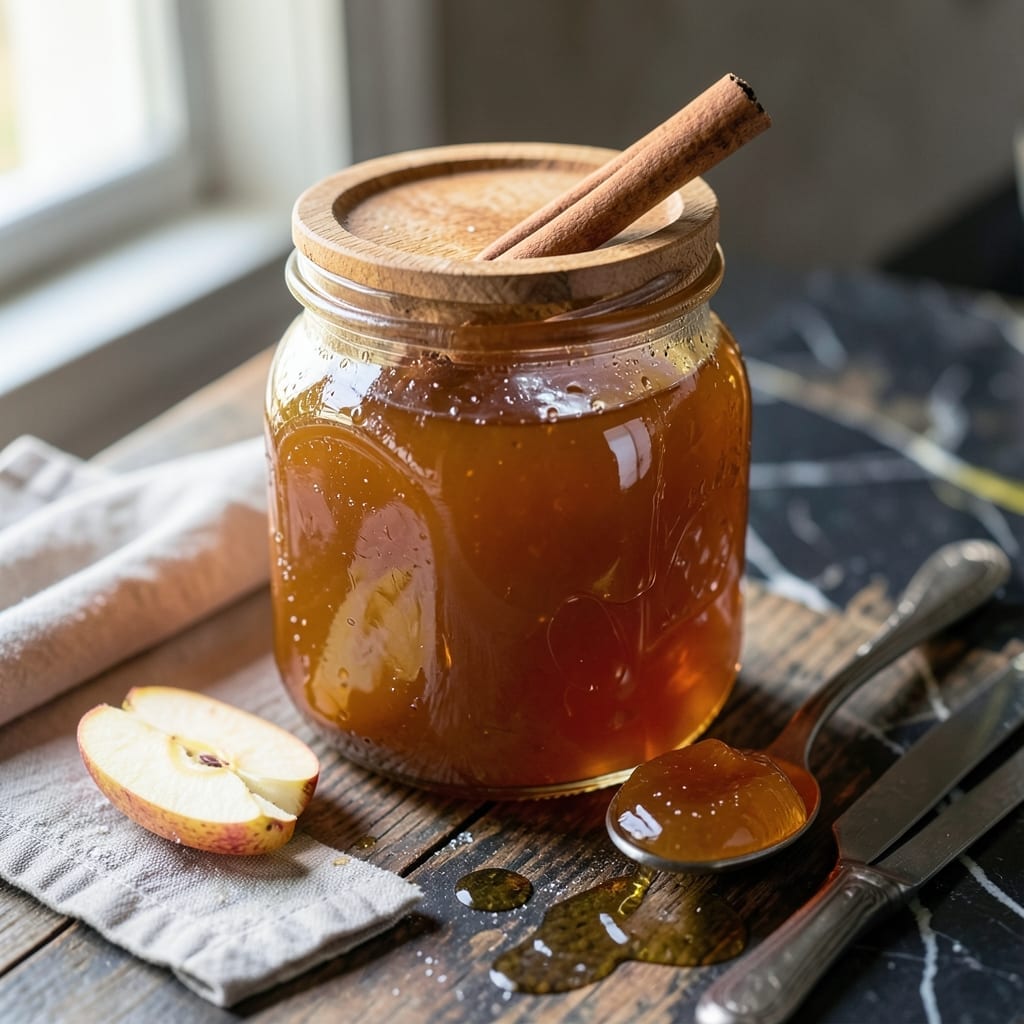
There’s something timeless about homemade apple jelly—its bright, jewel-toned clarity and pure fruit flavor elevate any breakfast table. This recipe transforms simple apples into a glossy, spreadable delight without artificial additives.
The process is surprisingly straightforward: fresh apples simmer into juice, then combine with sugar and pectin for the perfect set. No special equipment is needed beyond basic kitchen tools, making it accessible for any home cook.
What emerges is a smooth, glossy jelly that captures the essence of fresh apples in every bite. It’s ideal for toast, pastries, or even as a glaze for meats, offering versatile sweetness.
Store in sealed jars for up to a year, or share with friends as a thoughtful homemade gift. The results are consistently reliable and deeply satisfying.
Ingredients for Recipe for Apple Jelly
Transform simple apples into this glossy, jewel-toned spread with pure fruit essence.
| Ingredient | Amount | Notes |
|---|---|---|
| Fresh Apple Juice 🍏 | 4 cups | From about 3 lbs apples, strained |
| Granulated Sugar 🍚 | 3 cups | White or raw cane sugar |
| Powdered Pectin 🧂 | 1 ½ oz | Low or no-sugar needed type |
| Lemon Juice 🍋 | ¼ cup | Freshly squeezed for acidity |
| Water 💧 | ½ cup | For dissolving pectin |
| Cinnamon Stick 🌿 | 1 whole | Optional for spiced flavor |
| Star Anise Pod ⭐ | 1 whole | Optional for depth |
The apples are everything here. Use a mix of sweet and tart varieties—Gala, Fuji, and Granny Smith create the perfect balance. Organic apples yield the cleanest juice (no wax residue), but conventional works if scrubbed thoroughly. Whole Foods and Trader Joe’s carry excellent pectin—Ball or Sure-Jell are reliable brands. Avoid overripe fruit; slightly underripe gives better pectin content naturally.
No pectin? You can use green apple slices in the juice for natural pectin, but expect a softer set. Sugar substitutes work at a 1:1 ratio if using pectin designed for them. Lemon juice can be bottled (though fresh is brighter). For a spiced variation, whole cloves or allspice berries infuse beautifully—just strain them out after steeping.
Sealed jars keep at room temperature for 1 year unopened. Once opened, refrigerate and use within 3 months. The jelly thickens as it cools—don’t judge the set while hot. For gift-giving, sterilized mason jars and cute labels elevate the presentation beautifully.
Why You’ll Love This Recipe
- No-Fuss Cooking: I just stir apple juice, sugar, and pectin on the stove—no peeling, no coring, barely any cleanup.
- Bright Apple Taste: That first pop of sweet-tart jelly with real lemon juice? Pure autumn in a jar.
- Gift-Worthy Spread: I portion it into little jars for hostess gifts and holiday breakfasts.
- Pantry Lifesaver: Honestly, it keeps for months, so I always have a quick toast topper or glaze base ready.
Step-by-Step Instructions for Apple Jelly
Master the canning process with precision timing and visual cues for perfect set every time.
Step 1: Prepare the Pectin Mixture
In a small saucepan, combine the 1.5 oz Powdered Pectin with the 0.5 cup Water. Stir thoroughly to create a smooth slurry, ensuring no lumps remain. The pectin needs complete hydration to work effectively in the jelly-making process.
Place the saucepan over medium-high heat and bring to a gentle boil, stirring constantly. You’ll notice the mixture thicken slightly as it heats. Once boiling, remove from heat immediately—the pectin is now activated and ready to incorporate into your jelly base.
Step 2: Combine Juice and Pectin Base
In a large, heavy-bottomed pot (at least 6 quarts to prevent boiling over), combine the 4 cups Fresh Apple Juice, 0.25 cup Lemon Juice, and the prepared pectin mixture. The lemon juice adds essential acidity that helps the pectin set properly and brightens the apple flavor.
Add the 1 whole Cinnamon Stick and 1 whole Star Anise Pod to the pot. These spices will infuse the jelly with warm, aromatic depth as it cooks. Stir well to distribute all ingredients evenly before heating.
Step 3: Bring to Full Rolling Boil
Place the pot over high heat and bring to a full rolling boil that cannot be stirred down. This vigorous boil is crucial for proper pectin activation. Add the 3 cups Granulated Sugar all at once, stirring constantly to prevent scorching as the sugar dissolves.
Continue boiling hard for 1 minute, stirring continuously. Watch for the mixture to reach 220°F on a candy thermometer. At this stage, the jelly should sheet off a spoon in a thick, glossy layer—a visual confirmation that it’s reached the proper consistency.
Step 4: Test Set and Process Jars
Remove from heat and skim off any foam that has formed on the surface using a metal spoon. To test the set, place a small amount of jelly on a chilled plate and return it to the freezer for 30 seconds. If it wrinkles when pushed with a finger, it’s ready to jar.
Ladle the hot jelly into prepared, sterilized jars, leaving 1/4-inch headspace. Process in a water bath canner for 5 minutes to ensure proper sealing and shelf stability. The jars should be completely covered by at least 1 inch of water during processing.
Step 5: Cool and Verify Seal
Remove jars from the canner and place them upright on a towel-lined countertop. Let cool undisturbed for 12-24 hours. As they cool, you’ll hear the satisfying “ping” of each jar sealing—a clear auditory confirmation that the vacuum seal has formed properly.
After cooling, check the seals by pressing the center of each lid. If it doesn’t pop up, the jar is properly sealed. Label with the date and store in a cool, dark place. The jelly will continue to set as it cools completely, achieving its final bright, spreadable consistency.
Pro Tips For Making Recipe For Apple Jelly
- Boil Vigorous and Fast: Once you add the sugar and pectin, bring it to a full rolling boil that can’t be stirred down—I learned this the hard way after ending up with syrup instead of jelly.
- Use Tart Apples: Go for Granny Smith or similar tart varieties for your juice; the natural acidity balances the sugar and gives the jelly that bright, classic apple flavor.
- Measure Pectin Precisely: Resist the urge to eyeball the powdered pectin; even a little extra can make your jelly set too firm, while too little leaves it runny.
- Skim the Foam: As it boils, skim off any foam that rises to the top with a clean spoon—this keeps your jelly clear and prevents a weird texture in the final product.
Common Mistakes When Making This Recipe
Overcooking the Juice
Boiling your apple juice too long before adding sugar can break down the natural pectin, resulting in a runny jelly. I keep my juice at a gentle simmer, never a hard boil, until it’s time to add the sugar and pectin mixture. This preserves the fruit’s natural setting ability. 🌡️
Skipping the Foam
That foam on top isn’t just unsightly—it can affect your jelly’s clarity. Always skim it off with a metal spoon before jarring. I find a cold metal spoon works best to lift foam without disturbing the jelly underneath.
Underestimating Pot Size
Using a pot that’s too small causes dangerous boil-overs. For this recipe, I recommend at least a 6-quart pot—the mixture needs room to expand during the rolling boil. This also prevents sugar crystals from forming on the sides.
Rushing the Set Test
Don’t judge the set while the jelly is hot. I always do the chilled plate test: place a small spoonful on a cold plate, freeze for 30 seconds, then check for wrinkling when pushed. This gives the most accurate indication of your jelly’s final consistency. 💡
Improper Jar Preparation
Unsterilized jars can lead to mold growth. I boil my jars for 10 minutes before filling, and keep them hot until ready to use. The lids only need a quick simmer to soften the sealing compound—not a full boil.
Ignoring Altitude
If you’re above 1,000 feet elevation, processing time needs adjustment. For every additional 1,000 feet, add 1 minute to the water bath processing time. I learned this the hard way after moving to Colorado!
Nutrition Facts
Frequently Asked Questions
Can I use store-bought apple juice instead of fresh?
Fresh juice gives the best flavor and natural pectin, but 100% apple juice without additives works in a pinch. Avoid juices with added sugar or preservatives.
How do I know when the jelly is properly set?
Use the chilled plate test: place a spoonful on a cold plate, freeze for 30 seconds, then push with your finger. If it wrinkles, it’s ready.
How long does homemade apple jelly last?
Unopened, sealed jars keep for up to 1 year in a cool, dark place. Once opened, refrigerate and use within 3 months.
Can I make sugar-free apple jelly?
Yes! Use pectin designed for low/no-sugar recipes and replace sugar with a 1:1 sugar substitute. The texture may differ slightly.

- BBQ Sausage Recipe Oven: Smoky Depth Without the Grill - September 28, 2026
- BBQ Chicken Bowl Recipe Rice: Smoky Sweetness Over Fluffy Grains - September 28, 2026
- Beef Cutlet Recipe Ideas: Crispy Breaded Patties With Bold Seasonings - September 28, 2026