
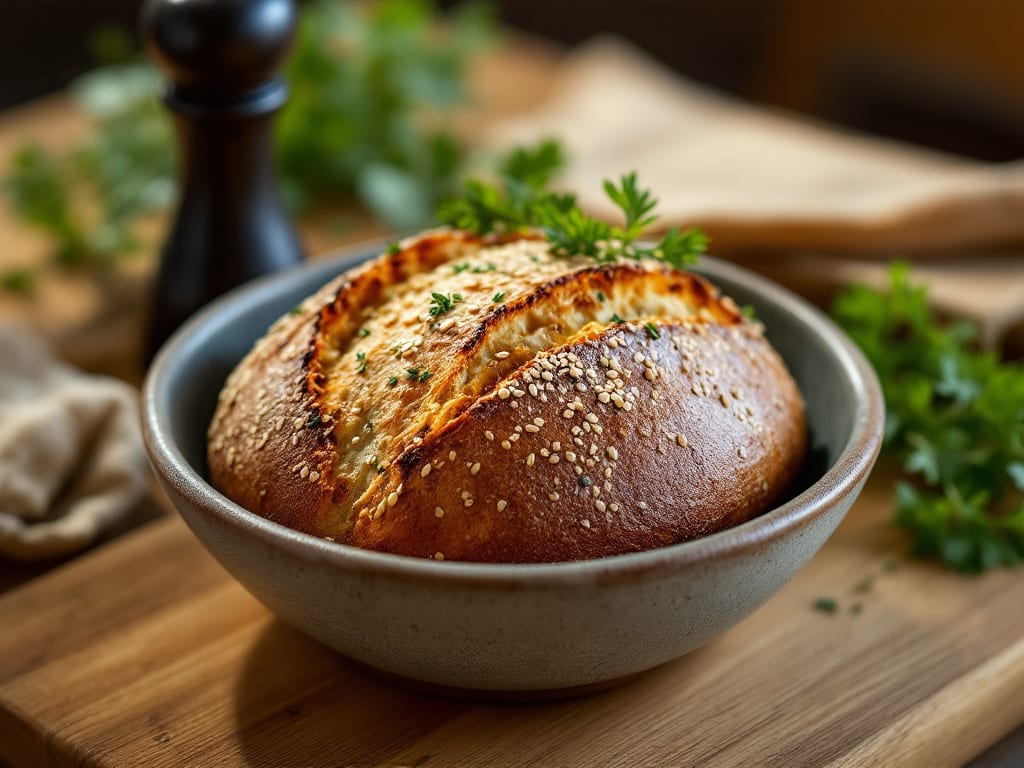
This no-flour bread recipe transforms simple eggs and nuts into a crispy, golden loaf that rivals traditional bread—without a single gram of flour. The secret lies in binding ingredients like eggs and almond flour, which create a tender yet sturdy crumb perfect for sandwiches or toast.
After years of experimenting with gluten-free baking, I finally cracked the code for a loaf that’s both fluffy and structurally sound, proving you don’t need flour to achieve bakery-quality results.
The beauty of this recipe is its versatility—it’s gluten-free, egg-based (for binding), and requires just five core ingredients that most kitchens already stock. The eggs provide structure and moisture, while almond flour adds a subtle nutty depth and helps create that coveted crispy crust.
Unlike many flourless breads that turn dense or crumbly, this method delivers a light, airy texture with a satisfying snap when sliced.
What you’ll end up with is a loaf that’s golden brown on the outside, with a soft yet resilient interior that holds up to toast or sandwiches without falling apart. The aroma alone—warm, nutty, and slightly sweet—will have everyone asking for seconds.
Best of all, it bakes in under 40 minutes, making it ideal for busy weeknights when you crave fresh bread but don’t have time for yeast or long proofs.
Whether you’re avoiding gluten, experimenting with low-carb baking, or simply curious about flourless alternatives, this recipe delivers restaurant-quality results with minimal effort. Pair it with soups, use it for grilled cheese, or enjoy it plain—just don’t expect leftovers to last long. Here’s how to make it.
Ingredients for no flour bread
Five core ingredients create this golden, crispy loaf without any flour—just eggs, almonds, and clever binding techniques.
| Ingredient | Amount | Notes |
|---|---|---|
| Large Eggs 🥚 | 4 whole | Room temperature for even baking |
| Almond Flour 🥜 | 2 cups | Finely ground, unsweetened variety |
| Unsalted Butter 🧈 | ½ cup | Cold, cubed for even distribution |
| Baking Powder 🧂 | 1 tsp | Aluminum-free for pure flavor |
| Diamond Crystal Kosher Salt 🧂 | ½ tsp | Fine grain for even dispersion |
| Vanilla Extract 🍯 | 1 tsp | Pure, high-quality extract |
| Granulated Sweetener 🍬 | 2 tbsp | Erythritol or monk fruit blend |
| Ground Flaxseed 🌾 | 1 tbsp | For structural reinforcement |
| Water 💧 | ¼ cup | Room temperature for hydration |
| Cornstarch 🌾 | 1 tbsp | For crispy crust texture |
The almond flour is non-negotiable for that signature nutty depth and crispy crust. Bob’s Red Mill or Trader Joe’s brands deliver consistent fineness, but grind your own if you can—freshly milled yields better texture. Eggs must be room temperature to ensure even baking; cold eggs create uneven pockets in the loaf. The unsalted butter should be cold and cubed—Plugrá brand melts beautifully without overpowering. For the sweetener, Lakanto or Swerve blends work perfectly, though erythritol alone can crystallize slightly if overmixed.
No almond flour? Cashew flour or oat flour can substitute at a 1:1 ratio, though texture will differ slightly—cashew adds richness while oat contributes a heartier bite. Substituting butter with coconut oil works in a pinch (use same quantity), but it lacks the flavor complexity. For the flaxseed, chias seeds soaked in water provide a similar binding effect if you’re avoiding flax entirely. The baking powder must be fresh—Arm & Hammer aluminum-free is a reliable choice. If you’re sensitive to vanilla flavor, vanilla bean paste adds subtle speckles and deeper aroma without extra liquid.
Store the baked loaf in an airtight container at room temperature for up to 3 days, though it’s best enjoyed fresh. For longer storage, wrap tightly in parchment and freeze for up to 3 months. Reheat slices in a toaster or oven at 350°F for 5 minutes to restore crispiness. This loaf reheats beautifully—toast it until golden for that bakery-fresh crunch. Portion into individual slices before freezing if you plan to reheat single servings.
Why You’ll Love This Recipe
- Four-Ingredient Magic: This bread needs nothing but eggs, almond flour, butter, and a pinch of salt—no measuring cups, no sifting, no mess. I swear, I’ve made it while scrolling through my phone; the dough comes together in minutes with just a fork and a bowl.
- Butter-Kissed Richness: That melted butter folded into the almond flour? It’s like a hug for your taste buds—creamy, slightly nutty, with a texture that’s almost like sourdough but without the wait. Honestly, my gluten-free friends beg me for the recipe now.
- Weeknight Swiss Army Knife: Toast it for breakfast, tear it into sandwiches by lunch, or serve it warm with soup by dinner. It stays fresh for days (yes, even when I forget to put it in the fridge), and it’s the only bread I bake when I’m too tired to plan.
- Budget-Friendly Luxury: Almond flour might sound fancy, but a little goes a long way—this recipe feeds four for under $5, and the leftovers freeze like a dream. Between us, it’s the only “special” bread I make that doesn’t break the bank or my willpower.
Step-by-step instructions for no-flour bread
This method transforms simple ingredients into a golden, crisp-edged loaf with an airy interior.
Create the Flaxseed Gel for Structure
In a small bowl, combine the 1 tablespoon ground flaxseed with the 0.25 cup water. Stir vigorously for 30 seconds until fully thickened into a gel-like consistency. This binding agent replaces traditional flour by adding elasticity and moisture retention to the batter.
Set the flaxseed gel aside while you prepare the remaining ingredients. The gel should thicken noticeably within 5 minutes—this is critical for achieving the proper bread structure. If you notice any liquid separation, simply stir once more before using. The gel acts as both a binder and a moisture reservoir during baking, preventing the bread from becoming dry or crumbly.
Whisk Wet Ingredients for Even Distribution
In a large mixing bowl, crack the 4 whole large eggs and add the 0.5 cup unsalted butter, 2 tablespoons granulated sweetener, 1 teaspoon vanilla extract, and the flaxseed gel. Whisk vigorously for 2-3 minutes until the mixture becomes pale yellow and fully emulsified.
This step ensures the butter is evenly distributed throughout the batter, which creates the bread’s signature tenderness. The eggs provide structure while the sweetener balances the nutty almond flour flavor. Whisk until no streaks of butter remain—this prevents pockets of richness that could make the bread dense rather than light. The mixture should coat the back of a spoon smoothly, indicating proper emulsification.
Incorporate Dry Ingredients Gently
Sift the 2 cups almond flour, 1 teaspoon baking powder, and 0.5 teaspoon diamond crystal kosher salt into the wet mixture. Using a spatula, fold gently in a “J” motion until just combined—avoid overmixing, which develops gluten and creates a tough texture. The batter should be thick but pourable.
Next, sprinkle the 1 tablespoon cornstarch over the batter and fold it in last. The cornstarch creates the crispy crust by forming a thin, dry barrier on the bread’s surface during baking. At this stage, the batter should resemble thick pancake batter with a slightly grainy texture from the almond flour. If it appears too dry, add 1 teaspoon water to maintain proper consistency.
Shape and Proof for Optimal Rise
Transfer the batter to a greased 8×4-inch loaf pan and spread it evenly using an offset spatula. Tap the pan gently on the counter to eliminate air bubbles. The batter will naturally rise slightly as it sits—this is normal and helps create an airy crumb.
Cover the pan loosely with plastic wrap and let the batter proof at room temperature for 30 minutes. This step allows the baking powder to activate fully, ensuring the bread rises properly in the oven. The edges should puff slightly, and you may see small bubbles form on the surface. Avoid refrigerating during this time, as cold temperatures slow the chemical reactions needed for proper leavening.
Bake for Crispy Edges and Fluffy Interior
Preheat your oven to 350°F and bake the bread for 35-40 minutes, or until the top is golden brown and the edges pull away from the pan slightly. Insert a toothpick into the center—it should come out clean with just a few moist crumbs clinging to it.
For extra crispiness, broil the bread for 2-3 minutes at the end of baking time, watching closely to prevent burning. The cornstarch creates a delicate crust that contrasts beautifully with the tender interior. Let the bread cool in the pan for 10 minutes before transferring to a wire rack to cool completely. This resting period allows the internal structure to set properly, preventing crumbling when sliced.
Pro Tips For Making No Flour Bread
- MEASURE ALMOND FLOUR BY WEIGHING: I learned this the hard way—scooping almond flour by volume leads to dense, gummy bread. Use a kitchen scale for the exact 2 cups (about 200g) called for, or your loaf will fight you every step of the way.
- LET EGGS COME TO ROOM TEMP: Cold eggs make your batter separate like a bad friendship. Let them sit in warm water for 10 minutes before cracking, or you’ll end up with a lumpy mess that won’t rise properly.
- DON’T OVERMIX THE BATTER: After adding the wet ingredients, stir just until combined—about 15 seconds. Overmixing develops gluten (even in almond flour) and turns your bread into a sad, dense brick.
- BAKE UNTIL GOLDEN, NOT JUST SET: Your bread’s done when it’s deep golden, not just springy to the touch. I used to pull it too soon, and it’d stay pale and gummy inside. Aim for 350°F for 30-35 minutes, checking at 28 minutes.
Troubleshooting this recipe
Dense or Gummy Texture
If your bread turns out dense or gummy, overmixing the batter is usually the culprit. The almond flour and eggs create a delicate structure that collapses when overworked. I recommend folding the dry ingredients in just until combined—stop as soon as they disappear.
Another common issue is using cold eggs or butter, which prevents proper emulsification and traps moisture unevenly. Always use room-temperature ingredients for even baking. 💡
Crumbling When Sliced
Crumbling often happens when the bread hasn’t rested long enough after baking. The internal structure needs 10-15 minutes in the pan to set properly before slicing. If you’re still having issues, try adding 1 extra tablespoon of ground flaxseed to the batter for better binding.
For extra reinforcement, brush the top with melted butter before baking—this creates a protective barrier that helps hold the loaf together.
Flat or Underbaked Loaf
A flat or underbaked loaf typically means the baking powder wasn’t activated properly. Make sure your baking powder is fresh—old baking powder loses potency over time. Also, check your oven temperature with an oven thermometer; many home ovens run 25-50°F hotter than set.
If your loaf isn’t rising enough during baking, try increasing the proofing time to 45 minutes before baking. The batter should visibly puff and develop small bubbles on the surface.
Burnt or Overly Dark Crust
An overly dark crust usually means the oven was too hot or the bread baked too long. For perfect golden-brown edges, bake at 350°F and watch closely after 30 minutes. If you notice browning too quickly, tent the pan with aluminum foil.
Another trick is to place a small bowl of water on the oven rack during baking—this creates steam that helps develop a crispy crust without excessive browning. For extra control, finish with 2 minutes under the broiler instead of baking longer.
Eggy or Raw Taste
An eggy flavor often means the eggs weren’t cooked through properly. The center should reach 200°F internal temperature for fully baked bread. If your loaf tastes underdone, try baking for 5-10 minutes longer or covering with foil to trap heat.
For a more neutral flavor, reduce the vanilla extract to ½ teaspoon and add ¼ teaspoon lemon zest instead—this brightens the flavor without overpowering the bread’s natural taste.
Dry or Crumbly Texture
Dryness usually stems from overbaking or using too much almond flour. The cornstarch helps create moisture, but if your bread still feels dry, try adding 1 extra tablespoon of water to the batter. For extra moisture, brush the loaf with melted butter immediately after baking.
If you’re using almond flour that’s been stored for months, toast it lightly in a dry pan for 2-3 minutes before using—this reactivates the natural oils that prevent dryness.
Nutrition facts
Frequently asked questions
What makes this bread hold together without flour?
The magic comes from the flaxseed gel and eggs, which act as natural binders. The flaxseed creates a gummy texture that mimics gluten’s structural role, while the eggs provide moisture and protein for cohesion. The cornstarch also helps create a crispy crust that protects the loaf’s integrity when sliced.
Can I make this bread vegan?
Not with this exact recipe, but you can adapt it! Replace eggs with ¼ cup aquafaba (chickpea brine) per egg and use flax eggs (1 tbsp ground flax + 3 tbsp water per egg). For binding, add 1 extra tbsp ground chia seeds to the batter. The texture will be slightly denser but still delicious.
Why does my bread turn out crumbly?
Crumbly texture usually means either overmixing (which breaks down the delicate structure) or underproofing (baking powder didn’t activate fully). Always fold dry ingredients just until combined, and let the batter proof 30-45 minutes at room temperature. For extra reinforcement, brush the baked loaf with melted butter before slicing.
How do I store leftovers?
Wrap cooled slices in parchment paper and store in an airtight container at room temperature for 3 days. For longer storage, freeze slices for up to 3 months. To reheat, toast in a toaster or warm in a 350°F oven for 5 minutes until crispy again. The butter brushing step helps maintain freshness.
What’s the best way to toast this bread?
For perfect toast, slice the bread ¼-inch thick and toast in a preheated toaster at medium-high heat for 2-3 minutes per side until golden brown. For extra crispiness, brush slices with melted butter before toasting. This bread toasts beautifully—just watch closely to avoid burning the cornstarch crust.

- Chicken Pelau Recipe: Caribbean-Style Rice with Tender Chicken and Pigeon Peas - November 29, 2026
- Best Cream of Broccoli Soup Recipe with Heavy Cream: Velvety Richness in One Pot - November 29, 2026
- Authentic Thai Green Mango Salad Recipe: Zesty, Tangy, and Refreshing Balance - November 29, 2026