
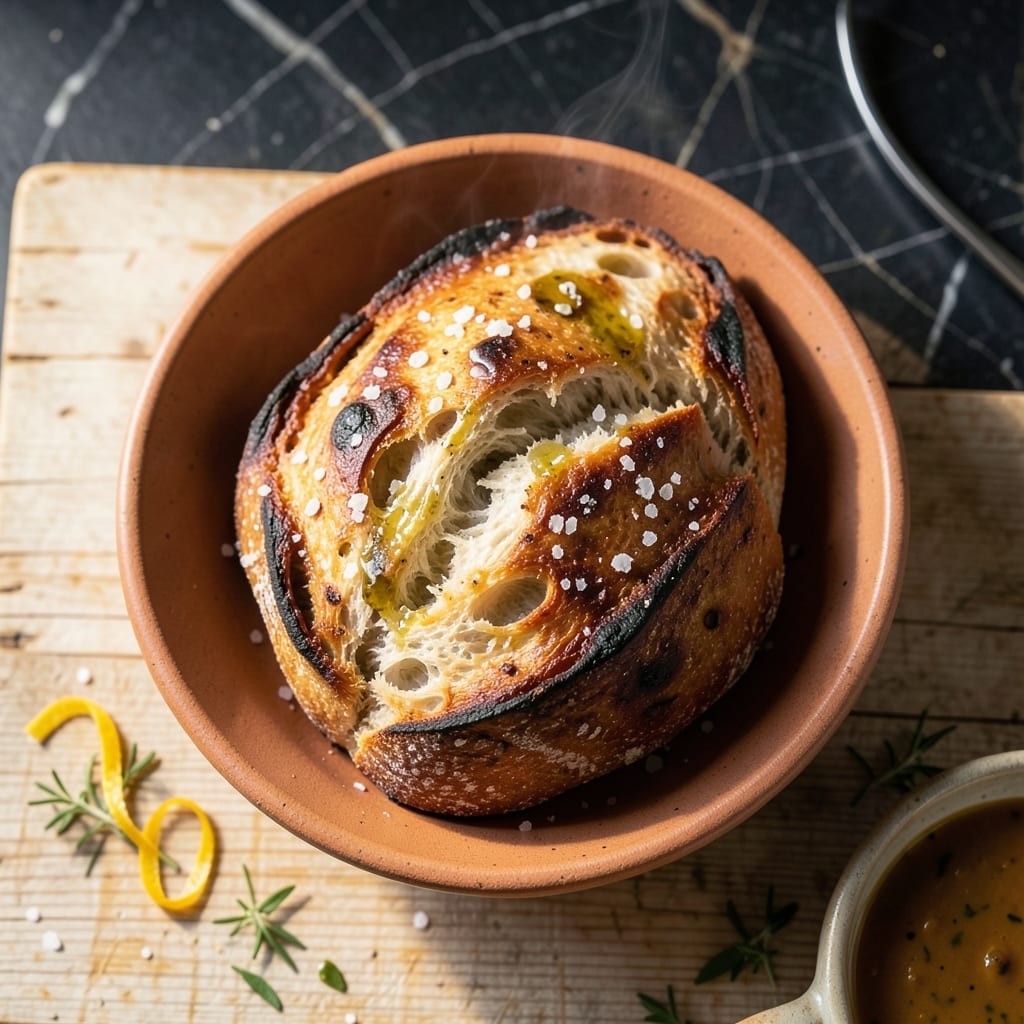
This rustic loaf captures the essence of Italian grandma’s kitchen, delivering a golden crust and tender crumb with every bite.
With simple ingredients and traditional techniques, this bread transforms flour, water, and yeast into something extraordinary. The proofing time develops deep, complex flavors that make it worth the wait.
Ingredients for Nonna Bread Recipe Italian Agenda
Simple pantry staples transform into a rustic Italian masterpiece with patience and care.
| Ingredient | Amount | Notes |
|---|---|---|
| Bread Flour 🌾 | 4 cups | High-protein, unbleached preferred |
| Active Dry Yeast 🍞 | 2 ¼ tsp | One standard packet |
| Warm Water 💧 | 1 ½ cups | 105-110°F for yeast activation |
| Olive Oil 🫒 | 2 tbsp | Extra-virgin for authentic flavor |
| Sea Salt 🧂 | 2 tsp | Fine grain for even distribution |
| Sugar 🍚 | 1 tsp | Granulated, feeds the yeast |
| Semolina Flour 🌾 | ¼ cup | For dusting and golden crust |
| Cornmeal 🌽 | 2 tbsp | For baking surface texture |
| Honey 🍯 | 1 tbsp | Optional for subtle sweetness |
| Fresh Rosemary 🌿 | 1 tbsp | Chopped, for rustic aroma |
| Garlic Powder 🧄 | 1 tsp | Optional for depth of flavor |
The flour is foundational here. King Arthur Bread Flour is my go-to for its consistent high protein content, which develops that chewy, elastic crumb Nonna would approve of. Bob’s Red Mill works too, just avoid all-purpose—it lacks the gluten strength. Yeast should be fresh; test it in warm water with sugar first. If it doesn’t foam within 5 minutes, toss it and start over.
No bread flour? All-purpose with 1 tbsp vital wheat gluten per cup gets you close. Skip the honey if avoiding sugar—it’s optional. Semolina can be swapped for coarse cornmeal if that’s what you’ve got. The olive oil is non-negotiable for authenticity, but any neutral oil works in a pinch. For the rosemary, dried at one-third the amount works, though fresh is ideal.
Proofed dough can refrigerate overnight for deeper flavor development. Baked loaves keep 2-3 days in a paper bag at room temperature. For longer storage, slice and freeze for up to 1 month. Always warm before serving to revive that just-baked texture.
Why You’ll Love This Recipe
- Five Ingredients: I love that this only needs bread flour, yeast, water, olive oil, and sea salt—no fancy shopping required.
- Crusty Perfection: That golden crust with a soft, airy center? It’s all thanks to the olive oil and sea salt.
- Meal Prep Hero: It’s my Sunday ritual—bake a loaf, and suddenly sandwiches, soups, and snacking are sorted for days.
- Penny-Wise Loaf: Honestly, it costs less than a store-bought baguette and tastes way better.
Step-by-Step Instructions for Nonna Bread
Master the technique behind this rustic Italian loaf with its signature golden crust and tender crumb.
Step 1: Activate the Yeast and Proof the Mixture
In a large mixing bowl, whisk together the 1.5 cups Warm Water, 1 tsp Sugar, and 2.25 tsp Active Dry Yeast. Let this sit for 5-7 minutes until the mixture becomes frothy and cloudy—this confirms the yeast is active and ready to work.
I always check the water temperature with a thermometer to ensure it’s between 105-110°F. If it’s too hot, it’ll kill the yeast; too cold, and it won’t activate. Once frothy, stir in the 2 tbsp Olive Oil, 2 tsp Sea Salt, 1 tbsp Honey, 1 tbsp Fresh Rosemary, and 1 tsp Garlic Powder.
Step 2: Incorporate the Flour and Knead the Dough
Gradually add the 4 cups Bread Flour to the wet ingredients, mixing with a wooden spoon until a shaggy dough forms. Turn the dough out onto a lightly floured surface and knead by hand for 8-10 minutes until smooth and elastic.
This is where the magic happens. Proper kneading develops the gluten, which gives the bread its structure and chew. If the dough feels too sticky, resist the urge to add more flour—just keep kneading. The dough should be slightly tacky but not stick to your hands excessively.
Step 3: First Rise Until Doubled in Volume
Place the kneaded dough in a lightly oiled bowl, turning once to coat the surface. Cover with a clean kitchen towel and let it rise in a warm, draft-free place for 1-2 hours, or until it has doubled in size. I like to place mine near (but not directly on) a slightly preheated oven for consistent warmth.
You’ll know it’s ready when the dough springs back slowly when gently pressed with a finger, leaving a slight indentation. This first rise is critical for developing flavor and achieving that airy, open crumb characteristic of traditional Italian bread.
Step 4: Shape, Second Rise, and Prepare for Baking
Punch down the risen dough to release the air, then turn it out onto a floured surface. Shape it into a round loaf or an oval, tucking the edges underneath to create surface tension. This tension helps the bread hold its shape during baking.
Place the shaped loaf on a baking sheet dusted with the 2 tbsp Cornmeal and 0.25 cup Semolina Flour. The cornmeal and semolina not only prevent sticking but also add texture and a rustic, golden crust. Cover lightly and let rise again for 45-60 minutes until puffy.
Step 5: Bake to Golden Perfection
Preheat your oven to 400°F. Just before baking, use a sharp razor or knife to score the top of the loaf in a decorative pattern. This allows the bread to expand properly in the oven and prevents cracking.
Bake for 25-30 minutes until the crust is deep golden brown and the loaf sounds hollow when tapped on the bottom. For an extra-crusty finish, I sometimes add a pan of boiling water to the bottom rack of the oven during the first half of baking to create steam.
Transfer the baked loaf to a wire rack and let it cool completely before slicing. This cooling period allows the crumb to set, ensuring clean slices and the best texture.
Pro Tips For Making Nonna Bread Recipe Italian Agenda
- Test Your Yeast: I learned this the hard way—always bloom your active dry yeast in the warm water with a pinch of sugar first. If it doesn’t foam within 5-10 minutes, your bread won’t rise, no matter how long you wait.
- Warm the Flour: Sounds weird, but it works: take the chill off your bread flour by letting it sit on the counter for 30 minutes before mixing. Cold flour can shock the yeast and slow down the rise.
- Salt Last: Add the sea salt after the yeast has had 5 minutes to activate in the water—salt can inhibit yeast if they meet too early, and you’ll end up with a dense loaf.
- Oil the Bowl: Use about 1 tablespoon of olive oil to coat the bowl before the first rise. It keeps the dough from sticking and makes punching it down later way easier—no scraping required.
Serving Suggestions for Leftovers
Warm and Fresh
Serve this loaf still warm from the oven, sliced into 1-inch thick pieces. The crust stays crisp while the inside remains soft and aromatic. I love tearing off pieces rather than slicing for a true rustic feel.
Olive Oil Dip
Create a simple dipping oil by mixing ¼ cup extra-virgin olive oil with 1 tsp balsamic vinegar, ½ tsp sea salt, and a pinch of crushed red pepper. The flavors complement the rosemary and garlic in the bread beautifully. 💛
Italian Pairings
This bread shines alongside aged Parmigiano-Reggiano or creamy burrata cheese. For a heartier meal, serve with cured meats like prosciutto or soppressata. The saltiness balances the bread’s subtle sweetness.
Soup Companion
Pair with minestrone or ribollita for a classic Italian meal. The bread’s crusty exterior holds up perfectly to soaking in broth. I always save the end piece for this purpose—it’s my favorite part. 🥗
Breakfast Option
Toast leftover slices and top with ricotta cheese and a drizzle of local honey. The combination of creamy, sweet, and crunchy textures makes for an incredible morning treat.
Gift Presentation
Wrap a cooled loaf in parchment paper tied with twine for a thoughtful homemade gift. Add a sprig of fresh rosemary under the twine for a lovely touch that hints at the flavors within.
Frequently Asked Questions
Can I use all-purpose flour instead of bread flour?
Yes, but add 1 tbsp vital wheat gluten per cup to compensate. Bread flour’s higher protein develops better texture, but all-purpose works in a pinch.
How do I know when the dough is ready to bake?
It should spring back slowly when pressed and sound hollow when tapped. The second rise is complete when the loaf looks puffy and nearly doubled.
Why did my bread turn out dense?
Underproofing or not kneading enough are common causes. Ensure the dough doubles in size during both rises and knead for the full 8-10 minutes.
Can I make this dough ahead of time?
After the first rise, refrigerate overnight for deeper flavor. Let it warm to room temperature before shaping and the second rise.
Nutrition Facts

- BBQ Sausage Recipe Oven: Smoky Depth Without the Grill - September 28, 2026
- BBQ Chicken Bowl Recipe Rice: Smoky Sweetness Over Fluffy Grains - September 28, 2026
- Beef Cutlet Recipe Ideas: Crispy Breaded Patties With Bold Seasonings - September 28, 2026