
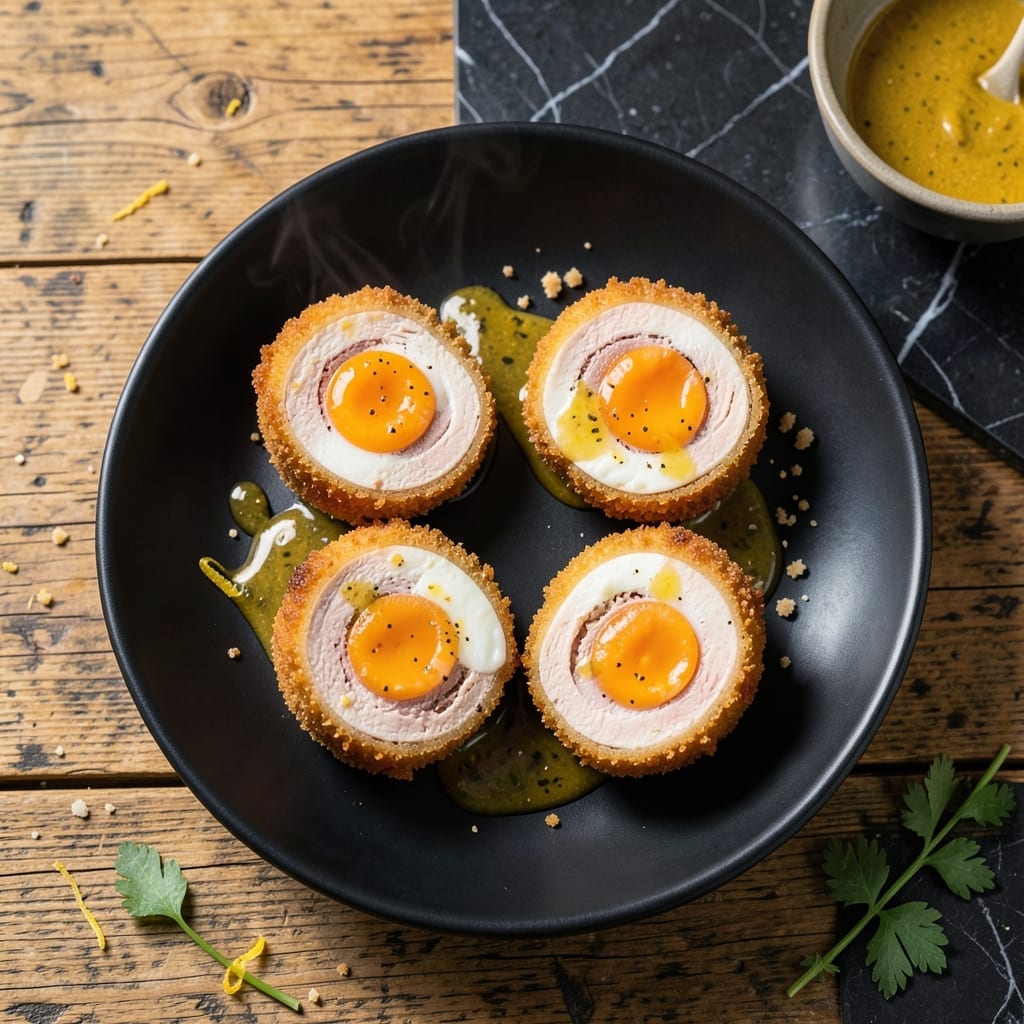
There’s a reason this dish has stood the test of time—perfectly crispy sausage coating and a runny yolk center make it irresistible. I’ve refined the method to ensure every bite delivers that ideal contrast.
This recipe transforms simple ingredients into a showstopping snack. The key is controlling the oil temperature and timing to achieve a golden, crispy finish without overcooking the egg.
Ingredients for Scotch Egg Recipe Gordon Ramsay
Transform simple pantry staples and fresh eggs into a crispy, golden masterpiece with perfect runny yolks.
| Ingredient | Amount | Notes |
|---|---|---|
| Large Eggs 🥚 | 8 whole | Room temperature for even cooking |
| Pork Sausage Meat 🥓 | 1 ½ lb | High-quality, 80/20 fat ratio |
| All-Purpose Flour 🌾 | ½ cup | For dredging sausage coating |
| Large Eggs 🥚 | 2 whole | Beaten for breading station |
| Panko Breadcrumbs 🍞 | 2 cups | Japanese-style for extra crispiness |
| Dijon Mustard 🟡 | 2 tbsp | Smooth, not whole grain |
| Fresh Thyme Leaves 🌿 | 1 tbsp | Finely chopped for seasoning |
| Kosher Salt 🧂 | 1 tsp | Diamond Crystal preferred |
| Freshly Ground Black Pepper 🌶️ | ½ tsp | Coarse grind for texture |
| Vegetable Oil 🫒 | 4 cups | For deep frying, neutral flavor |
| English Mustard Powder 🟡 | 1 tsp | Optional for authentic flavor |
| Nutmeg 🌰 | ¼ tsp | Freshly grated for depth |
The sausage meat is critical here. Opt for high-quality pork with 20% fat content—this ensures a juicy, flavorful coating that doesn’t dry out during frying. Butcher shops often sell it loose, or look for Jimmy Dean or Johnsonville at the supermarket. Ensure it’s fresh, not previously frozen, for the best texture. The panko breadcrumbs are non-negotiable for that signature crispy finish.
No panko on hand? Dried breadcrumbs in a pinch, but pulse them in a food processor first for a finer texture. For a gluten-free version, crushed cornflakes or gluten-free panko work well. The Dijon mustard can be swapped with whole-grain mustard for a coarser bite. If you can’t find fresh thyme, dried thyme at one-third the amount will suffice, though fresh is ideal.
Store uncooked eggs in the fridge for up to 1 week. Once fried, these keep for 3-4 days in an airtight container, but they’re best served fresh. Reheat in a 350°F oven for 10-15 minutes to revive the crispiness. The sausage meat can be frozen for up to 3 months if unopened.
Why You’ll Love This Recipe
- No-Fuss Assembly: I just roll the sausage meat around the eggs, dip in flour and breadcrumbs—done. Honestly, my hands get messy, but cleanup’s a breeze.
- That Crunch: Panko breadcrumbs give it a shatteringly crisp coating, while the yolk stays silky. Between us, the sausage-to-egg ratio is spot-on.
- Picnic Superstar: They travel like a dream in my lunchbox and taste just as good cold. My kids beg for these on road trips.
- Budget-Friendly Protein: A few eggs and sausage meat stretch into a filling meal. I’ll be real: it’s cheaper than takeout and way more satisfying.
Step-by-Step Instructions for Scotch Eggs
Master the technique for achieving that signature crispy coating while keeping the centers perfectly runny.
Step 1: Boil and Peel the Eggs
Place the 8 whole Large Eggs in a saucepan and cover with cold water by 1 inch. Bring to a boil over high heat, then reduce to a simmer. Cook for exactly 6 minutes to achieve a firm white with a slightly runny yolk.
Immediately transfer the eggs to an ice bath to stop the cooking process. Once cool, gently peel under running water to remove any shell fragments. Pat dry with paper towels—this ensures the sausage mixture adheres properly.
Step 2: Prepare the Sausage Mixture
In a mixing bowl, combine the 1.5 lb Pork Sausage Meat, 2 tbsp Dijon Mustard, 1 tbsp Fresh Thyme Leaves, 1 tsp Kosher Salt, 0.5 tsp Freshly Ground Black Pepper, 1 tsp English Mustard Powder, and 0.25 tsp Nutmeg. Mix until just combined—overworking can make the coating tough.
The mustard and spices add depth while the fat in the sausage ensures a juicy, flavorful layer. Divide the mixture into 8 equal portions (about 3 oz each) for even coverage.
Step 3: Assemble the Scotch Eggs
Flatten each sausage portion into a thin patty on a work surface dusted with 0.5 cup All-Purpose Flour. Place a peeled egg in the center and gently wrap the meat around it, pressing lightly to seal completely. The flour prevents sticking and helps the breading adhere.
Ensure no gaps remain—exposed egg can cause the sausage to split during frying. Roll each coated egg gently between your palms to smooth the surface, creating an even layer about ¼-inch thick.
Step 4: Bread and Rest Before Frying
Set up a breading station: one bowl with the beaten 2 whole Large Eggs, and another with 2 cups Panko Breadcrumbs. Dip each sausage-coated egg first into the beaten egg, letting excess drip off, then roll in the panko until fully coated. Press gently to help the crumbs adhere.
Place the breaded eggs on a wire rack and refrigerate for 15 minutes. This critical rest firms up the coating, preventing it from sliding off during frying and ensuring maximum crispiness.
Step 5: Deep-Fry to Golden Perfection
Heat 4 cups Vegetable Oil in a deep, heavy pot to 350°F over medium-high heat. Use a thermometer for accuracy—oil temperature is key to even cooking. Fry the eggs in batches (don’t overcrowd) for 4-5 minutes until the coating is deep golden brown and crisp.
Drain on a wire rack set over paper towels to maintain crispness. Let rest for 2 minutes before serving—the interior sausage will finish cooking while the exterior stays shatteringly crisp. Serve warm for the ultimate contrast of textures.
Pro Tips For Making Scotch Egg Recipe Gordon Ramsay
- Chill the Sausage: Wrap your seasoned pork sausage meat around the soft-boiled eggs, then refrigerate for 20 minutes—I learned this the hard way after my first few attempts kept falling apart in the hot oil.
- Double-Dredge for Crisp: After the flour, dip in beaten egg, then panko, but repeat the egg and panko once more. Sounds tedious, but it creates that shatteringly crisp crust Ramsay’s version is known for.
- Skip Cold Oil: Heat your oil to 170°C (340°F) before frying—dropping the eggs into cool oil gives you a greasy, sad scotch egg. I burned my first batch testing this.
- Use Day-Old Eggs: For the boiling step, use eggs that are a few days old—they peel cleaner than fresh ones, and you won’t end up with half the white stuck to the shell.
Wine and Beer Pairings for This Dish
Beer Pairings
For the ultimate pub experience, I reach for a dry cider like Strongbow—its crisp acidity cuts through the richness of the sausage. An English pale ale such as Bass Pale Ale complements the savory spices with its malty, slightly hoppy profile. 🍺
Wine Pairings
A Sauvignon Blanc from New Zealand offers bright citrus notes that balance the dish’s richness. For red lovers, a Pinot Noir with its light body and earthy undertones pairs beautifully without overpowering the flavors. Serve both slightly chilled for best results.
Non-Alcoholic Options
A sparkling lemonade with a splash of ginger beer provides a refreshing contrast to the fried coating. I also love iced hibiscus tea—its tart, floral notes cleanse the palate between bites.
Serving Temperature
Beer should be served at 45-50°F to allow the flavors to shine without being too cold. White wines like Sauvignon Blanc are best at 45-50°F, while Pinot Noir should be slightly warmer at 55-60°F to highlight its complexity.
Frequently Asked Questions
What’s the ideal oil temperature for frying?
Maintain 350°F for perfect crispiness and even cooking. Use a thermometer for accuracy—too hot and the outside burns before the inside cooks.
How do I prevent the coating from falling off?
Chill breaded eggs for 15 minutes before frying to firm the coating. Also, ensure the sausage completely seals around the egg with no gaps.
Can I bake these instead of frying?
Yes, bake at 400°F for 20-25 minutes on a wire rack. The texture won’t be as crispy, but it’s a healthier alternative.
Why did my yolk turn greenish?
Overcooking causes the sulfur in the yolk to react with the iron. Stick to 6 minutes boiling time for a vibrant yellow center.
Nutrition Facts

- BBQ Sausage Recipe Oven: Smoky Depth Without the Grill - September 28, 2026
- BBQ Chicken Bowl Recipe Rice: Smoky Sweetness Over Fluffy Grains - September 28, 2026
- Beef Cutlet Recipe Ideas: Crispy Breaded Patties With Bold Seasonings - September 28, 2026