
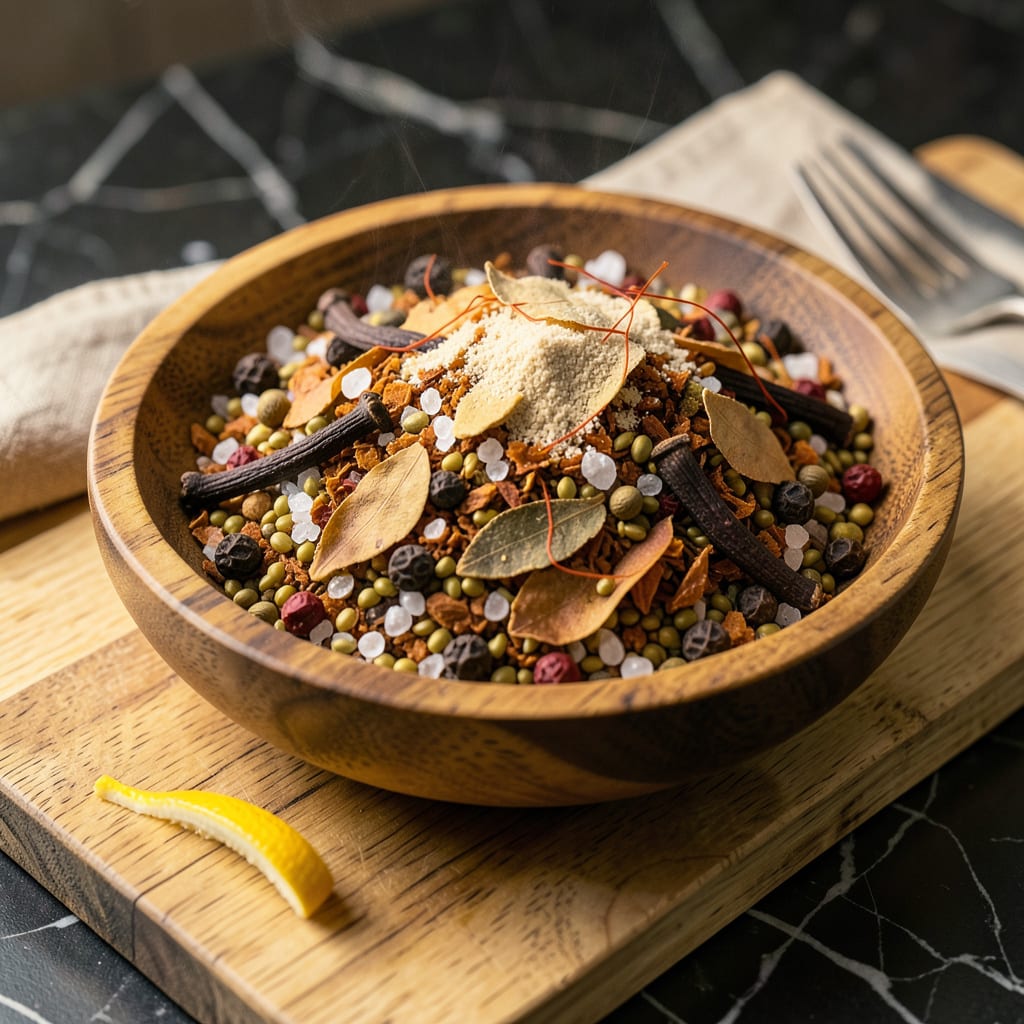
An authentic Old Bay spice recipe combines celery salt, paprika, black pepper, cayenne, mustard powder, ginger, cloves, allspice, cardamom, and bay leaves. The blend delivers a balanced mix of savory, spicy, and slightly sweet flavors perfect for seafood and beyond.
This iconic seasoning traces its roots to Maryland’s Chesapeake Bay region, where it became a staple for crab feasts and seafood boils. 🌟 The magic lies in how the spices interact—celery salt provides a salty backbone, while cayenne and black pepper add layered heat without overpowering. What many don’t realize is that the ginger and cardamom introduce subtle warmth that balances the sharper notes, making it surprisingly versatile beyond just seafood dishes.
I’ve found that homemade versions often taste fresher than store-bought because the aromatic oils in spices like cloves and allspice remain more potent when freshly ground. The key is maintaining the right ratios—too much mustard powder can dominate, while insufficient paprika may leave the blend looking dull. This balance is what gives Old Bay its signature complexity that works equally well on fries, popcorn, or grilled vegetables. ✨
💡 In This Article
- How Traditional Old Bay Spice Ingredients Work Together
- Creative Ways to Use Homemade Old Bay Seasoning
How Traditional Old Bay Spice Ingredients Work Together
The science behind this iconic blend starts with celery salt as the foundation—it provides both salinity and umami depth from the celery seeds’ natural glutamates. This is why the seasoning tastes so satisfying on seafood: the umami compounds enhance the natural sweetness of crab and shrimp.
Meanwhile, paprika contributes more than just color; it contains capsaicinoids that create a mild warmth while its natural sugars caramelize slightly when exposed to heat.
The heat profile comes from a carefully balanced trio: black pepper (piperine), cayenne (capsaicin), and mustard powder (allyl isothiocyanate). These compounds stimulate different heat receptors on your tongue, creating a complex burn that builds gradually rather than hitting all at once.
The ginger and cardamom add citrusy, slightly floral notes that prevent the blend from tasting flat or one-dimensional. 🔥
What most people overlook are the warming spices: cloves (eugenol), allspice (eugenol + methyl eugenol), and bay leaves (cineole). These contain volatile oils that release aromatic compounds when heated, creating that nostalgic “Old Bay” smell.
The Chesapeake Bay origins explain why these spices were chosen—they complement the region’s seafood while standing up to the briny, salty flavors of the water.
The ratio matters because each spice has a different potency. For example, cloves are 20 times more potent than paprika by weight, so they’re used in much smaller quantities (typically 1:20 ratio).
The standard blend uses about 2 parts paprika to 1 part celery salt, with the remaining spices making up less than 20% of the total volume. This precise balance ensures no single flavor dominates.
When you taste Old Bay, you’re experiencing a carefully engineered flavor curve: the salt hits first, followed by the warmth of ginger and cloves, then the building heat from pepper and cayenne, finishing with the lingering sweetness of paprika.
This is why it works so well as both a seasoning and a finishing spice—the flavors evolve in your mouth rather than disappearing after the first bite. ✨
Regional water chemistry even plays a role—the original blend was designed for Maryland blue crabs, which have a naturally sweeter meat than other crab varieties. The spices were chosen to complement rather than overpower this delicate flavor.
This is why Old Bay tastes different on Gulf Coast shrimp versus Chesapeake crabs: the base ingredient’s natural flavors interact differently with the same spice blend.
The freshness factor can’t be overstated: store-bought versions often use pre-ground spices that lose 40-60% of their volatile oils within 6 months. Making it fresh means the cardamom and cloves retain their full aromatic potential, while the cayenne maintains its vibrant red color and sharp heat.
This is why homemade batches often appear more vibrant and taste more complex than commercial versions. 💫

- Crock Pot Mac and Cheese Recipe Paula Deen: Ultra Creamy Southern-Style Comfort - September 28, 2026
- Beyond Burger Recipe Ideas: Plant-Based Creativity for Every Meal - September 28, 2026
- BBQ Bison Recipe Steaks: Smoky Grill Mastery with Bold Flavor - September 28, 2026