
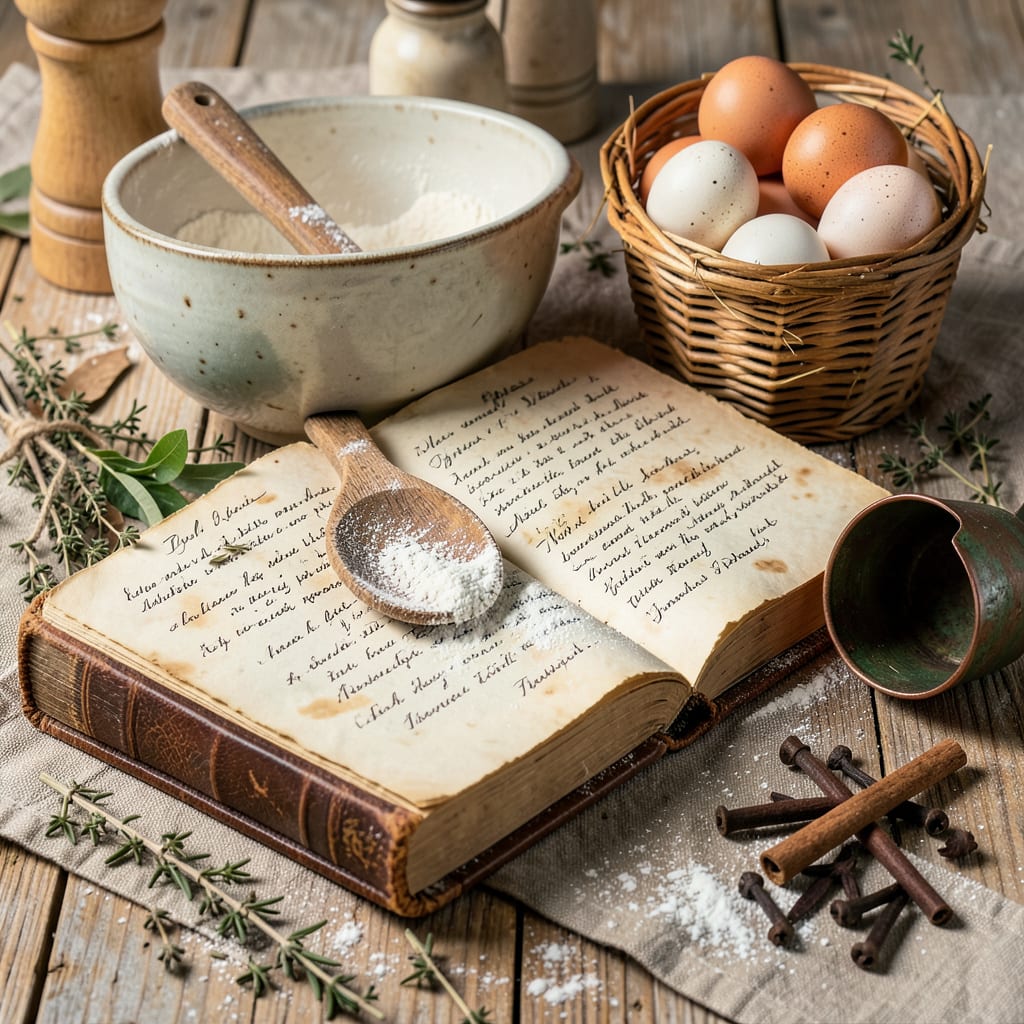
An old fashioned recipe book preserves heritage cooking with handwritten or printed instructions for classic dishes, often featuring measurements in cups and spoons rather than grams. These collections emphasize traditional techniques, seasonal ingredients, and family traditions passed down through generations.
These culinary time capsules offer more than just recipes—they provide a window into how our ancestors cooked before modern conveniences. 🔥 I’ve noticed that many vintage cookbooks include practical household tips alongside food preparation, reflecting a time when resourcefulness was essential. The handwritten notes in margins often reveal personal adaptations or ingredient substitutions that tell stories of scarcity, creativity, and regional influences.
What makes these books particularly valuable is their focus on technique over precision. Unlike today’s standardized recipes, older versions often used descriptive measurements like “a handful” or “a pinch,” requiring cooks to develop intuition. This approach fostered a deeper understanding of ingredients and their interactions—something many modern cooks find both challenging and rewarding to rediscover.
💡 In This Article
- Why Vintage Recipe Books Capture Culinary History
- Finding and Using Authentic Old Fashioned Cookbooks Today
Why Vintage Recipe Books Capture Culinary History
These culinary artifacts serve as edible anthropology, documenting how people ate before globalization homogenized our palates. A 1920s Midwestern cookbook might call for lard in pie crusts because butter was expensive, while a 1950s Southern collection assumes you have access to fresh pecans and sorghum molasses.
The ingredients list becomes a historical record of what was locally available, affordable, and culturally significant during specific eras. 🌟
The handwritten marginalia often reveals economic realities and personal creativity. I’ve seen notes like “used 1/2 cup cornmeal instead of flour during the Depression” or “added extra sugar when the peaches weren’t ripe.” These annotations show how cooks adapted to scarcity, seasonal variations, and personal taste preferences.
The wear patterns on pages—grease stains on the biscuit recipe, dog-eared corners on the fruit preserves section—tell which dishes were family favorites.
What’s fascinating is how these books preserve techniques that modern recipes often omit. A 19th-century bread recipe might specify “knead until the dough sings” rather than giving a precise time, teaching cooks to rely on sensory cues.
The instructions for preserving food without refrigeration—like burying butter in peat moss or storing eggs in lime water—reveal ingenious solutions to pre-electric kitchen challenges. These methods developed through generations of trial and error, not laboratory testing.
The transition from oral tradition to printed collections in the 18th-19th centuries marked a significant cultural shift. Early printed cookbooks like Amelia Simmons’ 1796 “American Cookery” were the first to use distinctly American ingredients like cornmeal and pumpkin, differentiating New World cooking from European traditions.
The language in these books reflects changing social norms—note how 19th-century texts address “the mistress of the household” while 1970s versions begin using gender-neutral terms.
Regional variations become particularly apparent when comparing similar dishes. A New England clam chowder recipe from 1890 uses salt pork and milk, while a 1930s San Francisco version incorporates tomatoes and local Dungeness crab. These differences weren’t just about taste—they reflected what was caught in nearby waters and what immigrant communities brought to the table.
The evolution of measurements from “a walnut-sized piece of butter” to standardized 1/4 cup measurements tracks the industrialization of food production.
Perhaps most valuable is how these books preserve the rhythm of seasonal cooking. Spring sections burst with rhubarb and asparagus recipes, summer pages overflow with berry preserves, while autumn chapters focus on root vegetables and meat preservation.
This cyclical approach to eating—now experiencing a resurgence in farm-to-table movements—was simply how people lived before supermarkets offered strawberries in December. The books implicitly teach us that certain foods taste best when eaten in their natural season.
The tactile experience of using these books connects us to past generations in ways digital recipes can’t replicate. The smell of an old book, the texture of its pages, even the particular way someone wrote “delicious!” in the margin creates a multisensory link to our culinary heritage.
When I cook from my grandmother’s 1942 “Joy of Cooking”, I’m not just making meatloaf—I’m participating in a continuum of family meals that stretches back nearly a century. ✨

- BBQ Sausage Recipe Oven: Smoky Depth Without the Grill - September 28, 2026
- BBQ Chicken Bowl Recipe Rice: Smoky Sweetness Over Fluffy Grains - September 28, 2026
- Beef Cutlet Recipe Ideas: Crispy Breaded Patties With Bold Seasonings - September 28, 2026