
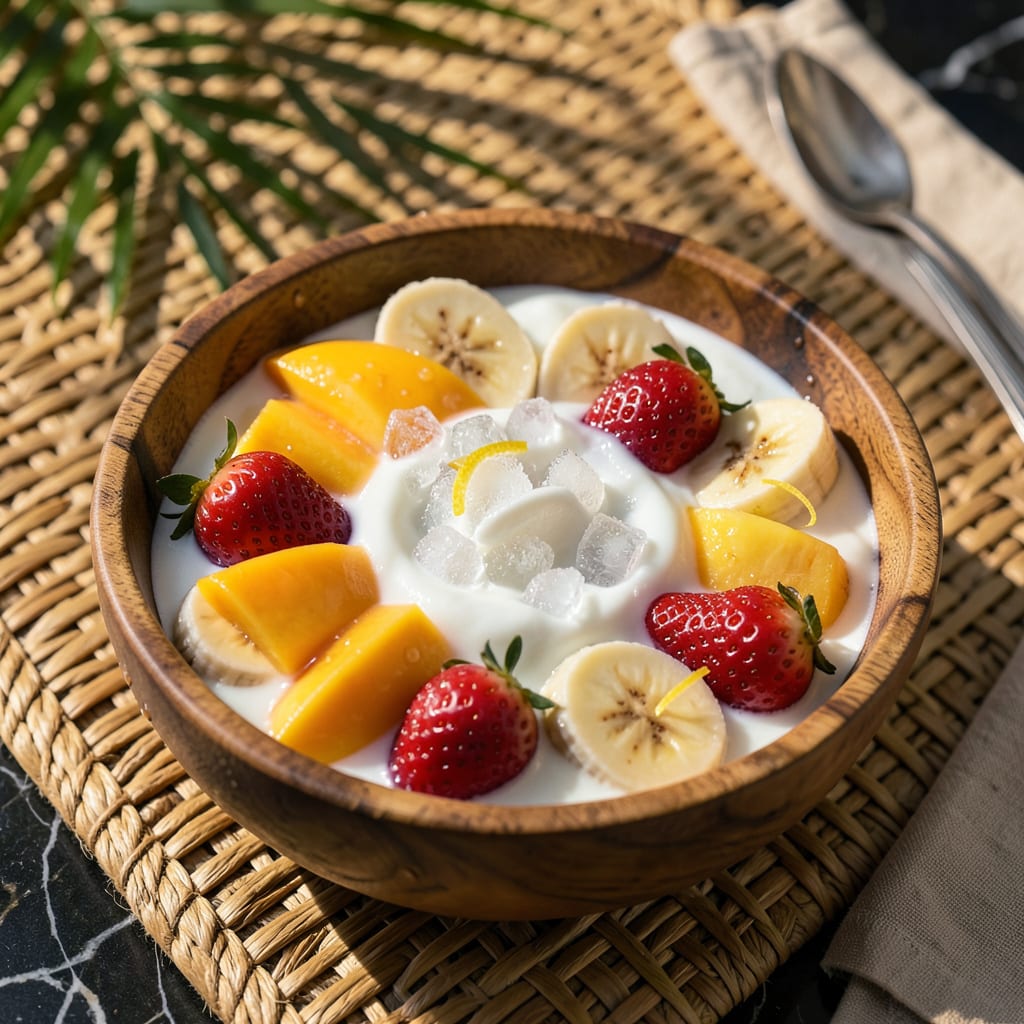
Otai is a refreshing Polynesian fruit drink made by blending tropical fruits like mango, pineapple, or watermelon with coconut milk and water. Serve chilled over ice for a creamy, sweet, and hydrating beverage perfect for warm weather.
This vibrant drink carries deep cultural significance across Pacific Island communities, where it’s often served at celebrations and family gatherings. 🌊 What sets it apart is the balance of textures—coconut milk adds luxurious creaminess while fresh fruit provides bright, natural sweetness. I love how adaptable the recipe is; you can use seasonal fruits like papaya or passionfruit for unique twists, or adjust the sweetness with a touch of honey or agave.
The preparation method matters just as much as the ingredients. Traditional versions emphasize hand-blending for a slightly chunky texture, while modern approaches use blenders for silky smoothness. Either way, the key is letting the flavors meld for at least 30 minutes before serving—this ensures every sip delivers that signature tropical harmony.
💡 In This Article
- The Cultural Roots and Key Ingredients of Otai
- Step-by-Step Guide to Perfect Homemade Otai
The Cultural Roots and Key Ingredients of Otai
This drink traces its origins to Polynesian feasts, where it served as both refreshment and symbol of hospitality. In Tonga, it’s called ʻotai, while Samoans know it as vaisalo—both names reflecting its role in communal gatherings.
The base ingredients were traditionally whatever tropical fruits were abundant: breadfruit in some islands, guava in others, always combined with freshly grated coconut milk. What makes it culturally significant is how it embodies fa’a Samoa (the Samoan way)—prepared collectively and shared generously.
The magic happens in the coconut milk, which does more than add creaminess. Its natural fats (about 17-24% in fresh versions) create tiny emulsified droplets that coat your palate, making the fruit flavors taste richer.
Traditional recipes use 1 part coconut milk to 2 parts water, creating a lighter consistency than modern versions that sometimes add condensed milk. The fruit choice varies dramatically: Fiji favors pineapple for acidity, while Tonga often uses mango for sweetness.
What most people don’t realize is how the preparation method affects texture. Hand-squeezed coconut milk (from 1 mature coconut per 4 servings) yields a silkier result than canned versions. The fruit is traditionally crushed with a wooden pestle rather than blended, leaving pleasant chunks that release flavor gradually.
This technique also preserves more of the fruit’s natural pectin, giving the drink a subtle thickness without added thickeners.
Regional adaptations show incredible creativity. In Hawaii, you might find versions with liliko’i (passionfruit) or lychee, while New Zealand Māori communities sometimes add feijoa when in season. The common thread is always balance—sweetness from fruit, richness from coconut, and refreshment from the water content.
I’ve found the ideal serving temperature is 45-50°F, cold enough to be refreshing but not so icy that it mutes the flavors.
Modern twists often include ingredients like chia seeds for texture or vanilla bean for depth, but purists argue these distract from the pure fruit-coconut harmony. The drink’s versatility is its strength—equally at home in a coconut shell at a beachside fale as it is in a mason jar at a summer potluck.
The cultural rule remains: it must be made with fresh, ripe fruit and shared with others to honor its communal roots.
Here’s what’s actually happening when you take that first sip: the coconut fat molecules carry the fruit aromas directly to your olfactory receptors, while the natural sugars trigger immediate refreshment. This sensory combination is why it’s become a staple from Samoa to California’s Polynesian communities.
The drink’s evolution mirrors migration patterns—each new location adds its own fruit twist while preserving the core tradition of sharing.

- BBQ Sausage Recipe Oven: Smoky Depth Without the Grill - September 28, 2026
- BBQ Chicken Bowl Recipe Rice: Smoky Sweetness Over Fluffy Grains - September 28, 2026
- Beef Cutlet Recipe Ideas: Crispy Breaded Patties With Bold Seasonings - September 28, 2026