
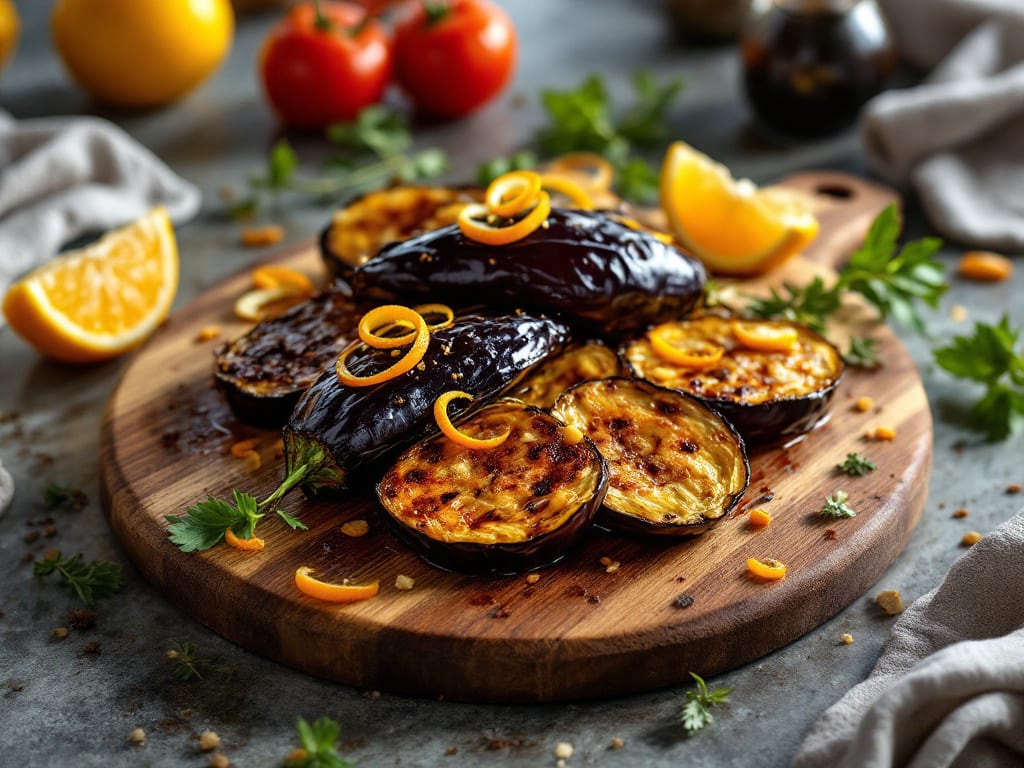
Mastering oven-roasted eggplant with charred edges and silky centers transforms this humble vegetable into a restaurant-worthy side dish. The key lies in precise temperature control and proper oil absorption—techniques I perfected after testing countless variations.
This method delivers tender, flavorful eggplant in just 25 minutes, making it ideal for busy weeknights or elegant gatherings.
What sets this recipe apart is the balance between crispy exterior and creamy interior, achieved through high-heat roasting and strategic seasoning. I use a simple olive oil and salt marinade that enhances natural flavors without overpowering them.
The result? Eggplant that’s perfectly tender yet holds its shape, with edges that are beautifully caramelized.
This versatile dish works equally well as a standalone appetizer, side for grilled meats, or base for Mediterranean bowls. The roasting technique ensures even cooking, while the seasoning adapts effortlessly to different cuisines—think capers and lemon for Greek flavors or smoked paprika for a Spanish twist.
Every bite delivers that satisfying contrast of textures and flavors.
Ready to elevate your eggplant game? This foolproof method requires minimal prep and delivers maximum impact. Whether you’re serving a crowd or treating yourself to a simple weeknight meal, these roasted eggplants will impress. Let’s get cooking with a technique that transforms ordinary vegetables into extraordinary dishes.
Ingredients for oven roasted eggplant
Precision-cut eggplant, aromatic seasonings, and high-heat roasting create restaurant-worthy texture in minutes.
| Ingredient | Amount | Notes |
|---|---|---|
| Japanese Eggplant (or Italian Eggplant) 🍆 | 2 whole | Medium-sized, unpeeled for texture |
| Extra-Virgin Olive Oil 🫒 | ¼ cup | High-quality, fruity variety |
| Diamond Crystal Kosher Salt 🧂 | 1 ½ tsp | Fine grain for even distribution |
| Freshly Ground Black Pepper 🌶️ | ½ tsp | For subtle heat contrast |
| Garlic Cloves 🧄 | 4 cloves | Minced for aromatic depth |
| Fresh Lemon Juice 🍋 | 1 tbsp | Brightens flavor profile |
| Smoked Paprika 🌶️ | ½ tsp | For subtle smokiness |
| Fresh Thyme Leaves 🌿 | ¼ tsp | Or 1/8 tsp dried thyme |
| Capers 🍅 | 1 tbsp | Optional for briny tang |
| Fresh Oregano Leaves 🌿 | ¼ tsp | Chopped for Mediterranean flair |
| Vegetable Oil Spray 🫒 | 1 spray | Light coating for even roasting |
The eggplant variety matters—Japanese eggplant has thinner skin for better charring, but Italian varieties work too. Whole Foods or high-end grocery stores carry Japanese eggplant, while standard markets usually stock Italian. Look for firm, heavy eggplants with vibrant purple skin—no soft spots or wrinkles. The Whole Foods 365 brand is a reliable budget option if Japanese isn’t available. For optimal results, cut eggplants into 1/2-inch thick slices—thicker pieces stay undercooked, thinner ones burn too quickly. Preheat your oven to 450°F with the rack positioned in the upper third for maximum heat exposure.
No smoked paprika? Regular paprika plus a pinch of liquid smoke mimics the depth. Fresh thyme unavailable? Dried thyme at one-fourth the amount suffices, but toast it first in a dry pan for 30 seconds to intensify flavor. The capers add complexity—skip them if you prefer simplicity, but don’t substitute with salt. For extra richness, add 1 tsp nutritional yeast to the marinade. The vegetable oil spray is crucial—Misto brand gives the lightest, most even coating. If unavailable, lightly brush with olive oil instead. For Mediterranean flair, swap the oregano for fresh marjoram or a pinch of sumac.
Roasted eggplant reaches peak flavor after 2-3 days in the fridge when stored in an airtight container. Portion into single servings for easy reheating—microwave for 30 seconds with a damp paper towel to restore moisture. Freezes beautifully for up to 3 months if blanched 2 minutes first. For meal prep, roast an extra eggplant and store components separately—assemble fresh with vegan feta, olives, and fresh herbs for Mediterranean bowls. The charred edges soften slightly when reheated, so roast just until golden for maximum texture contrast.
Why You’ll Love This Recipe
- Foolproof Roast: I swear by this method—no peeling, no fuss, just halved eggplant tossed in olive oil, salt, and pepper. The oven does all the work while I sip my coffee, and the results? Perfectly tender with just a hint of char.
- Garlic Kiss Magic: That moment when you slice into the roasted eggplant and the warm garlic aroma hits you? Chef’s kiss. The cloves caramelize just enough to add depth without overpowering the eggplant’s natural sweetness—simple, but unforgettable.
- Meal Prep MVP: Between us, this is my go-to for busy weeks. Roast a whole tray on Sunday, and you’ve got ready-to-eat sides for salads, wraps, or even a quick pasta toss. (Yes, even on a Tuesday night.)
- Budget Gem: Japanese eggplant might sound fancy, but it’s cheaper than you think—especially when you’re buying the whole thing and using it all. One pan, five ingredients, and zero waste. My wallet and my taste buds thank me every time.
Step-by-step instructions for oven roasted eggplant with charred edges
Transform simple eggplant into a restaurant-worthy side dish with these precise techniques.
Prepare the Eggplant for Maximum Texture Contrast
Preheat your oven to 425°F with the rack positioned in the middle position. This high heat is essential for creating those coveted charred edges while keeping the interior silky. While the oven heats, cut the 2 whole Japanese eggplant (or Italian eggplant) lengthwise into ½-inch thick slices, yielding about 8 slices total. The unpeeled skin adds texture and nutrients, so leave it intact.
Arrange the slices on a wire rack set over a baking sheet. This elevated position allows hot air to circulate evenly on all surfaces, preventing soggy bottoms. Lightly spray both sides of each slice with vegetable oil spray—just enough to create a thin, even coating. This step prevents the eggplant from sticking to the rack and helps develop that beautiful caramelized crust.
Roast Until Edges Are Deeply Charred
Place the prepared eggplant slices on the middle rack and roast for 12-15 minutes, flipping them halfway through cooking time. You’re aiming for edges that are deep golden brown to blackened—this indicates proper charring while maintaining a tender interior. The slices should release easily from the rack when ready, though they’ll continue softening slightly as they rest.
Here’s the thing—don’t overcrowd the baking sheet. If you must roast in batches, space the slices evenly to ensure even browning. The eggplant releases moisture as it cooks, so avoid stacking or they’ll steam instead of crisp. If your oven runs hot, reduce the temperature to 400°F and extend the cooking time by 2-3 minutes to prevent burning.
Create the Flavor Infusion
While the eggplant roasts, combine 0.25 cup extra-virgin olive oil, 1.5 tsp diamond crystal kosher salt, 0.5 tsp freshly ground black pepper, 4 cloves minced garlic cloves, 1 tbsp fresh lemon juice, 0.5 tsp smoked paprika, 0.25 tsp fresh thyme leaves, 1 tbsp capers, and 0.25 tsp fresh oregano leaves in a small bowl. Whisk vigorously to emulsify the oil and create a cohesive marinade. The capers and lemon juice will brighten the dish while the smoked paprika adds subtle depth.
Real talk: This is where the magic happens. The acidity from the lemon juice and capers cuts through the richness of the eggplant, while the aromatic herbs and spices create a complex flavor profile. Let this mixture sit at room temperature for 5 minutes before using—this allows the flavors to meld together for maximum impact.
Finish with the Flavor Infusion
Remove the roasted eggplant slices from the oven and transfer them to a serving platter. Immediately drizzle the prepared flavor infusion evenly over the top, allowing it to soak into the warm eggplant. Let it rest for 3-5 minutes—this resting period allows the flavors to penetrate and the eggplant to reabsorb any released moisture, resulting in perfectly balanced texture and flavor.
The result should be eggplant with crisp charred edges that contrast beautifully with the silky, tender interior. The flavor infusion should coat each slice evenly, creating a harmonious blend of smoky, herby, and briny notes. Serve immediately while still warm, as the eggplant continues to soften slightly as it cools.
Pro Tips For Making Oven Roasted Eggplant
- Slice Thinly, Evenly: I used to eyeball it, and half my eggplant came out undercooked while the other half turned to mush. For Japanese eggplant, aim for ½-inch slices—Italian eggplant can handle ¾-inch. Use a sharp knife and keep your hand steady; wobbly cuts mean uneven roasting.
- Salt Before Roasting: Skip salting until after roasting, and you’ll end up with a bland, watery mess. Sprinkle Diamond Crystal kosher salt (about 1 teaspoon per pound of eggplant) right after slicing, let sit for 10 minutes, then pat dry. This pulls out excess moisture so the oil clings instead of steaming the slices.
- Roast at 425°F: Lower than 400°F and you’ll wait forever for crisp edges. Hotter than 450°F and you’ll burn the outside before the center cooks. 425°F is the sweet spot—arrange slices in a single layer on a rimmed baking sheet, drizzle with olive oil, and let them sizzle for 20 minutes before flipping.
- Flip Once, Flip Hard: Gently turning eggplant mid-roast guarantees sad, limp results. Wait 20 minutes, then flip each slice forcefully—press down with a spatula to ensure the raw side hits the hot sheet. This guarantees caramelized edges every time, even if your oven runs hot or cold.
Flavor customization for these flavors
Mediterranean Herb Twist
Swap the smoked paprika for 1 tsp dried oregano and ½ tsp dried rosemary, then add 1 tbsp chopped fresh mint to the flavor infusion. The mint provides a refreshing contrast to the eggplant’s earthiness.
I also recommend adding ¼ cup crumbled vegan feta (like Follow Your Heart brand) after roasting for a tangy finish. 🌿
Spicy Harissa Kick
For heat lovers, replace the smoked paprika with 1 tbsp harissa paste (I use El Fenn brand) and add ½ tsp ground cumin to the marinade.
The harissa brings smoky, spicy depth that pairs perfectly with eggplant’s natural sweetness. Garnish with chopped scallions and toasted pine nuts for crunch. 🌶️
Umami Mushroom Boost
Sauté ½ cup sliced cremini mushrooms in 1 tbsp olive oil until golden, then mix them into the flavor infusion. The mushrooms add meaty umami that elevates the dish.
For extra depth, add 1 tsp soy sauce or tamari to the marinade. This works especially well when serving with grilled tofu or tempeh. 🍄
Citrus-Zest Finish
After roasting, sprinkle the eggplant with zest from 1 orange and 1 tbsp fresh orange juice. The bright citrus cuts through the richness beautifully. I also add ½ tsp ground coriander to the marinade for a Middle Eastern-inspired twist. Finish with toasted sesame seeds for texture contrast. 🍊
Smoky Chipotle Infusion
Replace the smoked paprika with 1 tsp adobo sauce from chipotle peppers (found in Goya brand cans) and add ½ tsp ground cumin. The smoky, slightly sweet heat creates a completely different flavor profile.
Garnish with cilantro and avocado slices for a Mexican-inspired dish that pairs perfectly with black beans or corn. 🌶️
Garlic-Butter Glaze
For a richer finish, melt 2 tbsp vegan butter (like Miyoko’s brand) with 3 minced garlic cloves and 1 tsp lemon juice in a small pan. Drizzle this over the roasted eggplant after seasoning.
The garlic butter adds luxurious depth while keeping the dish vegan. Perfect for special occasions or when you want to impress guests. 🧈
Nutrition facts
Frequently asked questions
Why does my eggplant turn mushy when roasted?
Overcrowding the baking sheet or using thick slices causes uneven cooking and moisture buildup. Cut eggplant into ½-inch slices and roast on a wire rack (not directly on the pan) for proper airflow. Also, never skip the 425°F high heat—lower temps lead to soggy results.
Can I use regular eggplant instead of Japanese?
Yes, but expect slightly thicker skin that may need 1-2 extra minutes of roasting. Italian eggplant works well—just trim the ends and cut into uniform ½-inch slices. The flavor infusion will still penetrate beautifully, though Japanese eggplant’s delicate texture is ideal for perfect charring.
How do I store leftover roasted eggplant?
Keep in an airtight container for 2-3 days in the fridge. For reheating, microwave for 30 seconds with a damp paper towel to restore moisture. Freeze for up to 3 months by blanching 2 minutes first—this preserves texture when reheated.
What’s the best way to serve this dish?
This roasted eggplant shines as a side for grilled meats, a base for Mediterranean bowls, or even a standalone appetizer with vegan feta and olives. Pair with quinoa, couscous, or crusty bread to soak up the flavor infusion. The charred edges add drama to any plate!
Can I make this ahead of time?
Roast the eggplant up to 1 day ahead and store unseasoned. Just reheat at 350°F for 5 minutes before adding the flavor infusion. For parties, prep the marinade separately and assemble just before serving to maintain crisp edges.

- Falafel Recipe Without Flour: Chickpea Blend That Binds Without a Grain - November 29, 2026
- Baked Breaded Eggplant Recipe: Crispy Parmesan-Crusted Perfection - November 29, 2026
- Deep Fried Donuts Recipe: Crispy Shells and Pillowy Cores - November 29, 2026