
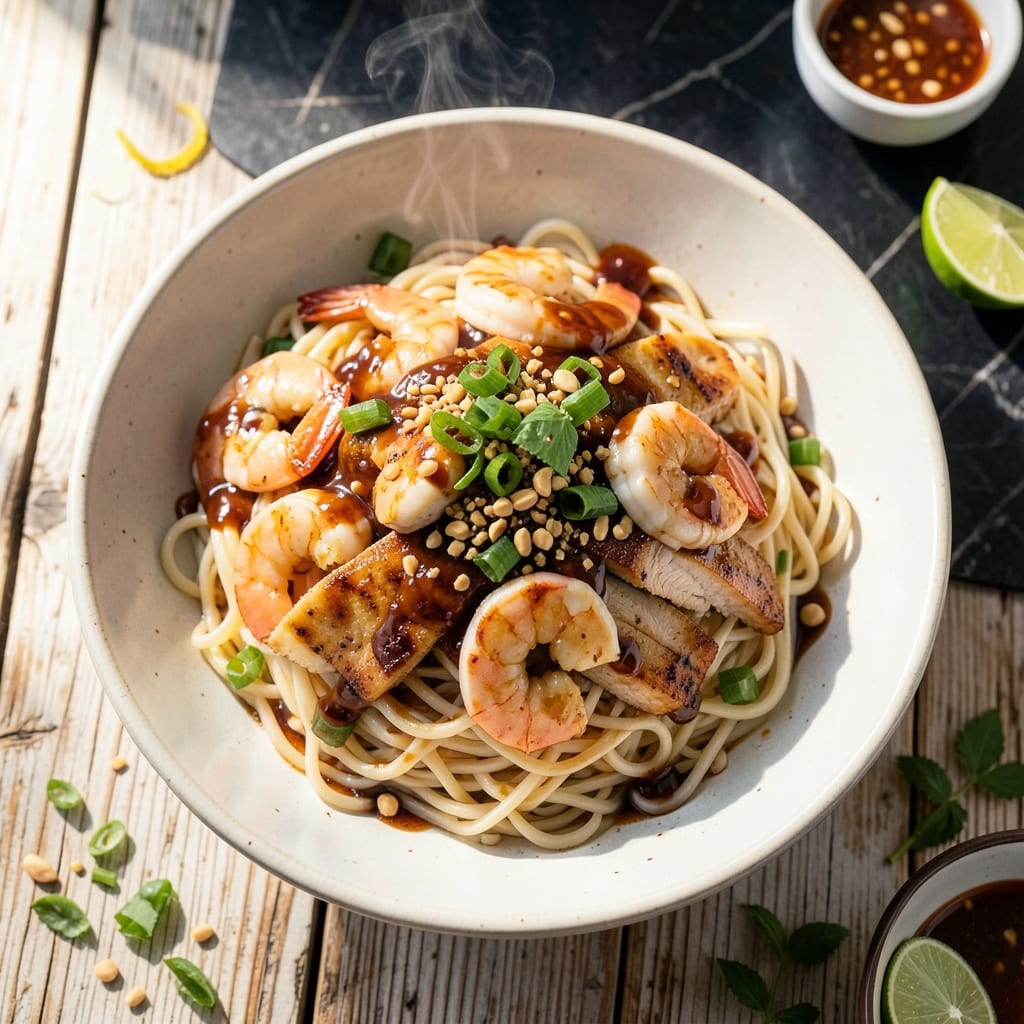
Authentic pad thai doesn’t require tamarind—this version proves it. I developed this recipe after years of hunting for the elusive ingredient, only to discover a simpler path to the same bold flavors.
The secret lies in a balanced sauce of lime juice, fish sauce, and brown sugar. This combination delivers the tangy, savory, and sweet notes that define traditional pad thai without compromise.
You’ll achieve restaurant-quality results with rice noodles, shrimp or chicken, and a tamarind-free sauce that clings perfectly to every strand. The dish comes together in 20 minutes, making it ideal for busy weeknights.
Garnish with crushed peanuts, lime wedges, and fresh cilantro for the full experience. This is pad thai as it’s meant to be—accessible, delicious, and true to its roots.
Ingredients for Pad Thai Recipe No Tamarind
Flat noodles, bold sauce, and bright garnishes make this dish sing. Nothing hard to find here.
| Ingredient | Amount | Notes |
|---|---|---|
| Rice Noodles 🍜 | 8 oz | Flat, medium-width preferred |
| Shrimp 🍤 | ¾ lb | Peeled, deveined, tails off |
| Chicken Breast 🍗 | ¾ lb | Boneless, skinless, thinly sliced |
| Fish Sauce 🐟 | 3 tbsp | Thai brand preferred |
| Brown Sugar 🍚 | 3 tbsp | Light or dark variety |
| Lime Juice 🍈 | 3 tbsp | Freshly squeezed essential |
| Large Eggs 🥚 | 2 whole | Lightly beaten for topping |
| Garlic Cloves 🧄 | 3 cloves | Minced finely |
| Shallot 🧅 | 1 whole | Thinly sliced |
| Bean Sprouts 🌱 | 1 cup | Rinsed and drained |
| Crushed Peanuts 🥜 | ½ cup | Unsalted, roughly chopped |
| Fresh Cilantro 🌿 | ½ cup | Chopped, for garnish |
| Lime Wedges 🍋 | 4 pieces | For serving |
| Vegetable Oil 🫒 | 2 tbsp | For stir-frying |
| Chili Flakes 🌶️ | ½ tsp | Adjust to spice preference |
The rice noodles are non-negotiable—look for flat, medium-width at Asian markets or the international aisle. Thai Kitchen or Annie Chun’s brands are solid. For the protein, shrimp gives that classic flavor, but chicken works just as well (I prefer thighs for extra juiciness). The fish sauce is the backbone—Red Boat or Tiparos are my go-tos for clean, bold flavor without additives.
No shrimp? Tofu or extra chicken keeps it authentic. Out of lime juice? Rice vinegar at half the amount in a pinch (but fresh lime is worth the squeeze). Bean sprouts add crunch—skip if you must, but don’t skip the peanuts. For a vegetarian twist, soy sauce instead of fish sauce works, though the flavor shifts slightly. The brown sugar balances the tang—coconut sugar is a great swap if you’re watching glycemic index.
Noodles cook in minutes, so prep everything first—this moves fast. Leftovers keep 3-4 days in the fridge, but the noodles soften. Reheat in a skillet with a splash of water to revive. The sauce components (fish sauce, lime, sugar) last 6-12 months unopened, 3 months once opened.
Why You’ll Love This Recipe
- 20-Minute Meal: I can go from pantry to plate faster than takeout arrives.
- Sweet-Savory Balance: The fish sauce and brown sugar create that classic pad thai magic without hunting for tamarind.
- Protein Flex: I swap shrimp for chicken or tofu depending on what’s in my fridge.
- Lunchbox Hero: Leftovers taste even better the next day—my kids actually finish their school lunches.
Step-by-Step Instructions for Pad Thai
Master the authentic technique that delivers perfect texture and balance without tamarind.
Step 1: Soak and Prepare the Rice Noodles
Place the 8 oz rice noodles in a large bowl and cover with warm water. Soak for 15-20 minutes until they’re pliable but still slightly firm to the touch. I check by pressing a noodle between my fingers—it should bend but not snap completely.
Drain the noodles and rinse briefly under cool water to stop the cooking process. This prevents them from becoming mushy when stir-fried. The key is timing: under-soaked noodles will be brittle in the pan, while over-soaked ones turn to paste. Have all other ingredients prepped before this step.
Step 2: Stir-Fry Chicken and Shrimp with Aromatics
Heat 1 tablespoon vegetable oil in a wok or large skillet over high heat until shimmering. Add the 0.75 lb chicken breast and stir-fry for 2-3 minutes until just cooked through. Remove and set aside.
In the same pan, add the remaining 1 tablespoon vegetable oil and the 0.75 lb shrimp. Cook for 1-2 minutes per side until pink and opaque. Push to one side, add 3 cloves garlic cloves and 1 whole shallot, and stir-fry for 30 seconds until fragrant but not browned.
Step 3: Combine Noodles with Sauce and Protein
Add the drained rice noodles to the pan along with the 3 tbsp fish sauce, 3 tbsp brown sugar, and 3 tbsp lime juice. Toss vigorously with tongs for 2-3 minutes until the noodles are tender and the sauce coats them evenly.
Return the chicken to the pan. Push everything to one side and pour the 2 whole large eggs into the empty space. Scramble quickly until just set, then fold into the noodle mixture. The eggs should create silky ribbons throughout.
Step 4: Finish with Fresh Garnishes
Remove from heat and stir in the 1 cup bean sprouts—they should soften slightly from the residual heat but retain a crisp bite. Taste and adjust seasoning with a bit more fish sauce if needed.
Transfer to serving plates and top with 0.5 cup crushed peanuts, 0.5 cup fresh cilantro, and a sprinkle of 0.5 tsp chili flakes. Serve immediately with 4 pieces lime wedges on the side for that essential citrus brightening. The contrast of textures—chewy noodles, crunchy peanuts, fresh sprouts—is what makes this dish sing.
Pro Tips For Making Pad Thai Recipe No Tamarind
- Soak Noodles Right: Cover rice noodles with warm water for exactly 20-25 minutes—they should bend but stay firm. I learned this the hard way after ending up with mushy noodles that turned to glue in the pan.
- Precook the Chicken: Slice chicken breast thin and stir-fry it first until just done, then set aside. Sounds like extra work, but it prevents overcooking when you combine everything later.
- Balance Sweet and Salty: Taste as you go and adjust the ratio of fish sauce to brown sugar—usually 2 parts fish sauce to 1 part sugar. After burning a batch that was too sweet, I finally figured out this simple ratio works every time.
- High Heat Only: Crank the heat to high when stir-frying shrimp and noodles. My grandmother swore by this, and she was right: it keeps everything from steaming and getting soggy.
Flavor Customization for pad thai recipe no tamarind
Spice Level Adjustments
For a milder dish, reduce the chili flakes to ¼ teaspoon or omit entirely. I often serve it this way for my kids. For heat lovers, increase to 1 teaspoon or add 1-2 sliced Thai chilies with the garlic and shallot. The heat builds as it cooks, so start conservative. 🌶️
Protein Swaps
Swap shrimp for firm tofu (pressed and cubed) for a vegetarian version. For extra richness, use pork tenderloin sliced thin. I’ve tested with beef strips, but the texture doesn’t quite match. Always cook proteins separately before combining with noodles.
Sauce Tweaks
Prefer it sweeter? Add 1 extra tablespoon brown sugar. Love it tangier? Increase lime juice to 4 tablespoons. For depth, stir in 1 teaspoon soy sauce with the fish sauce. I’ve found the balance holds with these small adjustments.
Noodle Variations
If you can’t find medium-width rice noodles, vermicelli works but cooks faster—reduce soaking time to 10-12 minutes. For a heartier bite, try wide rice noodles. Just adjust soaking and cooking times to avoid mushiness.
Garnish Upgrades
Add thinly sliced green onions or pickled radishes for extra crunch and color. A drizzle of sriracha or hoisin sauce at the table lets everyone customize their bowl. I always set out extra limes—fresh citrus makes every bite pop. ✨
Nutrition Facts
Frequently Asked Questions
Can I use rice vinegar instead of lime juice?
Yes, but use 1.5 tablespoons rice vinegar to replace 3 tablespoons lime juice. It’s less bright but adds the needed tang. Fresh lime is preferred for authentic flavor.
How do I prevent the noodles from sticking?
Rinse soaked noodles under cold water and drain well. Stir-fry over high heat with enough oil, and keep them moving constantly with tongs.
What if my sauce is too sweet?
Balance it with 1 teaspoon fish sauce or a squeeze of lime. Taste as you go and adjust gradually to avoid over-salting.
Can I make this ahead of time?
Prep ingredients in advance, but cook just before serving. Noodles soften if left to sit, so reheat quickly in a skillet with a splash of water.

- BBQ Sausage Recipe Oven: Smoky Depth Without the Grill - September 28, 2026
- BBQ Chicken Bowl Recipe Rice: Smoky Sweetness Over Fluffy Grains - September 28, 2026
- Beef Cutlet Recipe Ideas: Crispy Breaded Patties With Bold Seasonings - September 28, 2026