
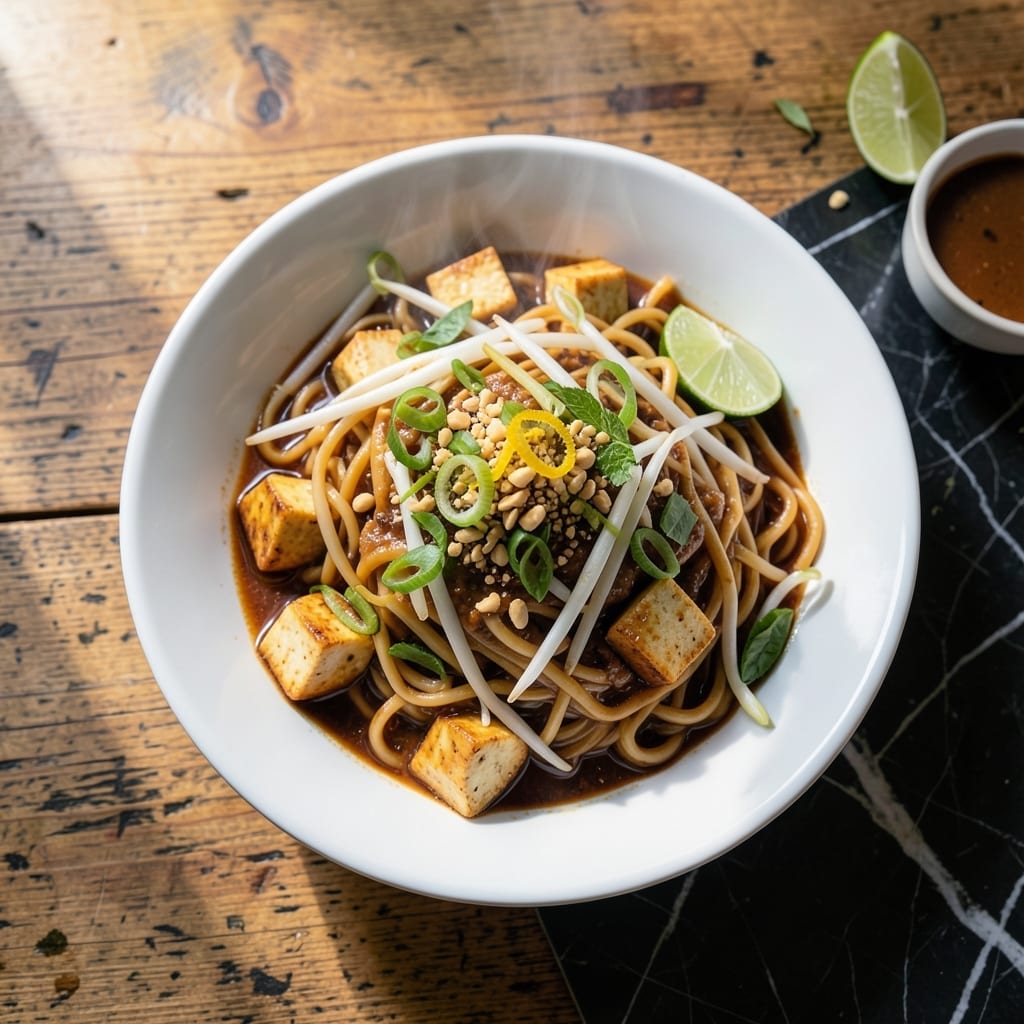
I spent years testing pad thai recipes to achieve authentic flavor without fish sauce. This version uses tamarind and soy as the foundation for that perfect sweet-savory balance.
The key is finding the right tamarind paste concentration. Too much makes it sour, too little loses the essential tang. I’ve refined the ratio through countless trials to match traditional Thai street food.
What you get is a dish with restaurant-quality taste—chewy rice noodles, peanuts, and bean sprouts all coated in that signature sauce. The tamarind-soy base delivers depth without compromising authenticity.
This method works for vegetarians and anyone avoiding fish sauce. The result stays true to the classic while being accessible to home cooks everywhere.
Ingredients for Pad Thai Recipe Without Fish Sauce
Everything you need for restaurant-quality pad thai at home. Simple, fresh, and packed with flavor.
| Ingredient | Amount | Notes |
|---|---|---|
| Rice Noodles 🍜 | 8 oz | Flat, medium-width preferred |
| Tamarind Paste 🌿 | 3 tbsp | 100% pure, no additives |
| Soy Sauce 🫒 | 3 tbsp | Low-sodium if available |
| Palm Sugar 🍚 | 2 tbsp | Or substitute brown sugar |
| Firm Tofu 🧈 | 8 oz | Pressed and cubed |
| Bean Sprouts 🌱 | 2 cups | Fresh, rinsed well |
| Green Onions 🧅 | 4 whole | Thinly sliced, white and green parts |
| Garlic Cloves 🧄 | 3 cloves | Minced finely |
| Dried Chilies 🌶️ | 2 whole | Or 1 tsp red pepper flakes |
| Peanuts 🥜 | ½ cup | Unsalted, roughly chopped |
| Lime 🍈 | 1 whole | Cut into wedges for serving |
| Vegetable Oil 🫒 | 2 tbsp | High smoke point for frying |
| Large Eggs 🥚 | 2 whole | Optional, for garnish |
| Cilantro 🌿 | ¼ cup | Fresh, chopped for garnish |
The tamarind paste is non-negotiable here. Look for 100% pure tamarind at Asian markets or Whole Foods—some brands add sugar or preservatives that throw off the balance. Rice noodles must be the flat, medium-width kind (sometimes labeled pad thai noodles). Thai Kitchen or A Taste of Thai brands work well. For tofu, extra-firm holds up best to frying, but firm works too (just press it well).
No tamarind? Lime juice plus brown sugar gets you close but won’t be the same. Palm sugar can be swapped for brown sugar at a 1:1 ratio. For a nut-free version, swap peanuts for toasted sunflower seeds. The chilies are flexible—use sriracha or chili garlic sauce if you’re out of dried. The eggs are optional but add that classic pad thai texture (skip for vegan).
Noodles cook fast—soak them while prepping everything else. Tamarind paste keeps indefinitely in the fridge once opened. The dish tastes best fresh but leftovers reheat well with a splash of water. 3-4 days in the fridge, though the noodles may soften slightly.
Why You’ll Love This Recipe
- One Pan Wonder: I soak the rice noodles while the tofu crisps—everything comes together in a single skillet.
- Tamarind Tang: The paste and palm sugar hit that sweet-sour balance I crave, no fish sauce needed.
- Meal Prep Hero: Honestly, it tastes even better the next day after the flavors meld overnight.
- Budget Stretcher: A block of tofu and a handful of pantry staples feed us for less than takeout.
Step-by-Step Instructions for Pad Thai Without Fish Sauce
Here’s the authentic method that delivers bold Thai flavors without compromising on tradition.
Step 1: Soak Rice Noodles to Perfect Al Dente
Place the 8 oz Rice Noodles in a large bowl and cover completely with warm water. I use the hottest tap water available—this accelerates the process without over-softening them. Soak for 15-20 minutes until the noodles are pliable but still slightly firm in the center when bitten.
This al dente stage is crucial. If they’re fully soft when you start cooking, they’ll turn to mush in the pan. Drain and rinse with cold water immediately after soaking to stop the cooking process. Set aside while you prepare the remaining ingredients.
Step 2: Prepare the Sauce and Aromatics
In a small bowl, whisk together the 3 tbsp Tamarind Paste, 3 tbsp Soy Sauce, and 2 tbsp Palm Sugar until the sugar fully dissolves. The mixture should be glossy and slightly thick, with a balance of tangy, salty, and sweet notes that defines authentic pad Thai flavor.
Finely mince the 3 cloves Garlic Cloves and thinly slice the 4 whole Green Onions, keeping white and green parts separate. Soak the 2 whole Dried Chilies in warm water for 5 minutes to soften, then slice thinly. Having these ready ensures a smooth cooking process without frantic chopping.
Step 3: Stir-Fry Tofu and Vegetables
Heat 1 tbsp Vegetable Oil in a large skillet or wok over medium-high heat until shimmering. Add the pressed 8 oz Firm Tofu cubes and cook undisturbed for 3-4 minutes until golden brown on one side. Flip and cook another 2-3 minutes until crispy on all sides.
Push the tofu to one side and add the remaining 1 tbsp Vegetable Oil, minced garlic, and sliced dried chilies. Stir-fry for 30 seconds until the garlic is fragrant but not browned. Add the white parts of the green onions and the 2 cups Bean Sprouts, tossing for 1-2 minutes until the sprouts wilt slightly but retain their crunch.
Step 4: Combine Noodles and Sauce
Add the drained rice noodles and sauce mixture to the skillet. Using tongs, toss everything together vigorously for 2-3 minutes until the noodles are evenly coated and the sauce begins to thicken. The noodles should be tender but still have a slight bite.
Here’s the thing—if the mixture seems dry, add 1-2 tablespoons of hot water to loosen the sauce. The starch from the noodles will help it cling beautifully to every strand. Taste and adjust seasoning if needed, though the sauce should be perfectly balanced.
Step 5: Finish with Eggs and Garnishes
Push all the noodles to one side of the pan and add the 2 whole Large Eggs to the empty space. Scramble quickly until just set, then fold into the noodle mixture. This adds richness and authenticity to the dish.
Transfer to serving plates and top with the green parts of the onions, 0.5 cup Peanuts, and 0.25 cup Cilantro. Serve immediately with lime wedges on the side for squeezing over each portion. The lime’s acidity brightens all the flavors beautifully.
Pro Tips For Making Pad Thai Recipe Without Fish Sauce
- Soak Noodles Right: Cover rice noodles in warm water for 15-20 minutes until pliable but still firm—I learned this the hard way after ending up with mushy noodles that turned to paste in the wok.
- Balance the Sauce: Mix 3 tablespoons tamarind paste, 2 tablespoons soy sauce, and 1 tablespoon palm sugar first, then adjust. Sounds weird, but it works: this ratio mimics fish sauce’s tangy-sweet depth without the fishiness.
- Press the Tofu: Wrap firm tofu in a clean towel, place a heavy pan on top for 10 minutes to press out excess water. My grandmother swore by this, and she was right: crispy tofu soaks up the sauce way better than soggy cubes.
- Skip Overcrowding: Cook tofu and noodles in batches if needed—about 2 tablespoons oil per batch. After burning three batches, I finally figured out that steering clear of a packed wok keeps everything from steaming instead of searing.
Make-Ahead Tips for pad thai recipe without fish sauce
Prep Ahead Elements
I always chop all the vegetables and press the tofu the night before. Store them in separate airtight containers in the fridge. This saves 15-20 minutes on cooking day. The tofu stays firm, and the veggies keep their crunch. 💡
Sauce Storage
Mix the tamarind, soy, and palm sugar sauce up to 2 days ahead. Keep it in a sealed jar in the fridge. The flavors meld beautifully overnight, making it even more delicious. Stir well before using.
Noodle Prep
Soak the rice noodles for 10 minutes in warm water, then drain and refrigerate for up to 4 hours. This partial soak ensures they don’t overcook when stir-fried. Rinse with cold water before cooking to remove excess starch.
Tofu Tips
Press the tofu between paper towels with a heavy pan for 30 minutes to remove all liquid. Cube it and store in the fridge. For extra crispiness, dust with 1 tbsp cornstarch before cooking. This step is non-negotiable.
Garnish Prep
Chop the peanuts, slice the green onions, and wash the bean sprouts ahead. Store them in separate containers. These garnishes stay fresh for 2-3 days in the fridge, ready to add that final crunch to your dish. 🔥
Nutrition Facts
Frequently Asked Questions
What can replace fish sauce in pad thai?
A mix of tamarind paste and soy sauce creates the base. Tamarind adds tang while soy provides saltiness. For extra depth, try 1 tsp miso paste or 1 tbsp coconut aminos.
How do I prevent noodles from sticking?
Soak rice noodles in hot water for 15-20 minutes only. Drain and rinse with cold water immediately, then toss with 1 tsp oil. Keep them moving in the pan with tongs.
Can I make this dish gluten-free?
Yes! Swap regular soy sauce for tamari or a certified gluten-free soy sauce. Ensure all other ingredients like tamarind paste and rice noodles are also gluten-free.
Why did my sauce taste too sweet?
Balance is key. If it’s too sweet, add 1 tsp lime juice or 1/2 tsp salt. Taste as you go—authentic pad thai sauce should be tangy, salty, and slightly sweet.

- BBQ Sausage Recipe Oven: Smoky Depth Without the Grill - September 28, 2026
- BBQ Chicken Bowl Recipe Rice: Smoky Sweetness Over Fluffy Grains - September 28, 2026
- Beef Cutlet Recipe Ideas: Crispy Breaded Patties With Bold Seasonings - September 28, 2026