
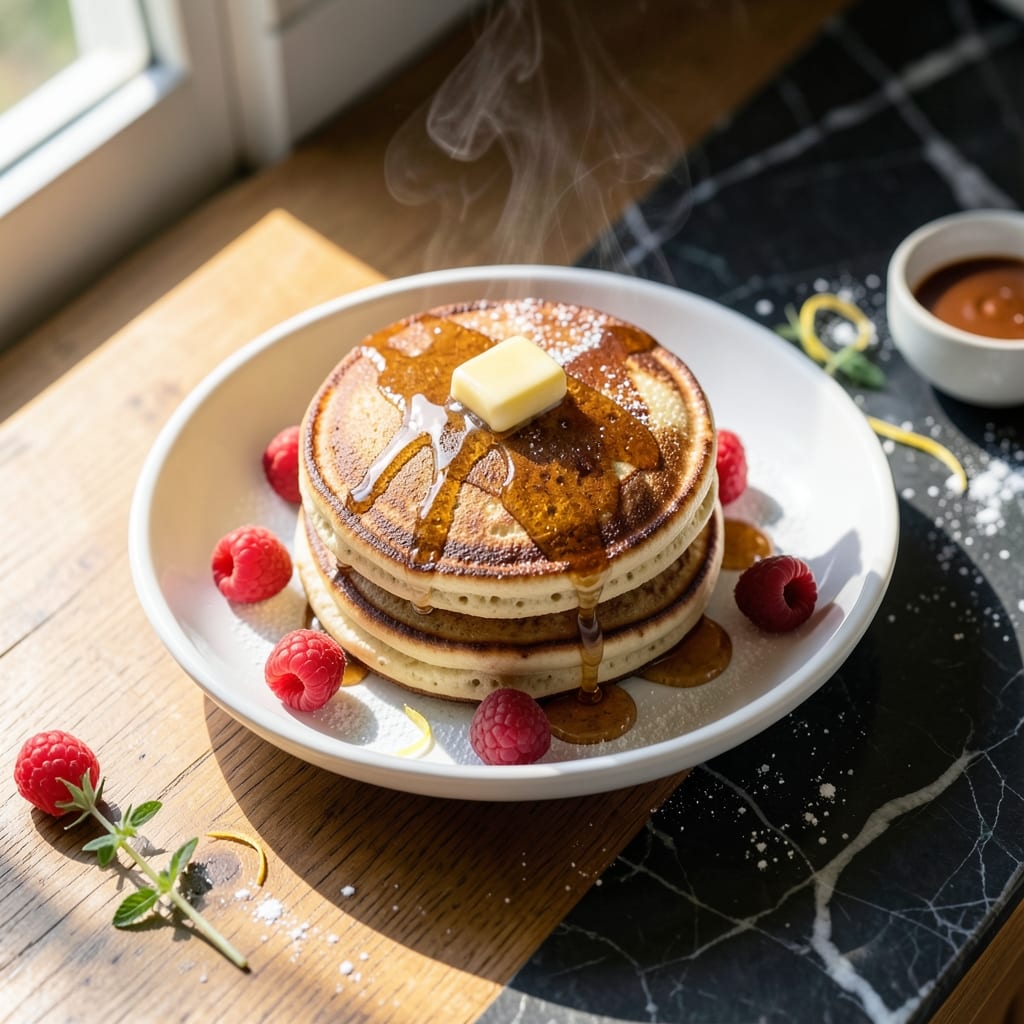
There’s something satisfying about making pancakes just for yourself, without leftovers or waste. This single-serve recipe delivers a fluffy, golden stack with minimal effort and maximum reward.
I’ve perfected this method to ensure consistent results every time—no guessing, no extra batter. The key is precise measurements and a gentle hand when mixing to keep the texture light and airy.
In under 15 minutes, you’ll have a warm, buttery stack ready to top with syrup, fruit, or whatever you crave. No scaling down required—this is designed for one.
Simple ingredients, straightforward steps, and a result that feels indulgent. Breakfast doesn’t get easier than this.
Ingredients for Pancake Recipe for 1 Person
Simple pantry staples come together for this quick single-serve breakfast treat.
| Ingredient | Amount | Notes |
|---|---|---|
| All-Purpose Flour 🌾 | ¾ cup | Sifted for lighter texture |
| Baking Powder 🧂 | 1 ½ tsp | Ensures fluffy rise |
| Granulated Sugar 🍚 | 1 tbsp | Fine white granulated |
| Salt 🧂 | ¼ tsp | Fine table salt |
| Large Egg 🥚 | 1 whole | Room temperature preferred |
| Whole Milk 🥛 | ½ cup | Full-fat for richness |
| Unsalted Butter 🧈 | 1 tbsp | Melted and cooled |
| Vanilla Extract 🌿 | ½ tsp | Pure vanilla preferred |
| Vegetable Oil 🫒 | ½ tbsp | For cooking pancakes |
The flour quality matters here. King Arthur or Bob’s Red Mill all-purpose delivers consistent results. Baking powder is your leavening agent—check it’s fresh (old powder loses potency). For the egg, room temperature ensures better incorporation and a more uniform texture. Whole milk adds richness, but any milk works in a pinch.
No whole milk? Any milk substitute at a 1:1 ratio works fine. Out of vanilla? Skip it or use almond extract—just halve the amount. Butter can be swapped for vegetable oil in the batter (same quantity). For dairy-free, vegan butter melts just as well. The sugar can be reduced slightly, but don’t omit it entirely—it aids browning.
Store dry ingredients in airtight containers at room temperature. Baking powder keeps for about 6 months. The batter is best used immediately, but leftovers (unlikely here) can be refrigerated for up to 24 hours—stir before cooking.
Why You’ll Love This Recipe
- No-Fuss Mixing: I just dump the flour, baking powder, sugar, and salt in a bowl, crack in the egg, and stir—no fancy steps.
- Buttery Sweetness: The sugar caramelizes just enough to give that golden, slightly crisp edge with a soft center.
- Single-Serve Magic: Honestly, it’s my Sunday morning ritual when I want pancakes without a week’s worth of leftovers.
- Pantry Staples: Between us, I always have these ingredients on hand, so it’s a 5-minute decision to treat myself.
Step-by-Step Instructions for Single-Serve Fluffy Pancakes
Master these precise steps for consistently light, golden pancakes with perfect rise and texture.
Step 1: Combine Dry Ingredients for Optimal Rise
In a medium bowl, whisk together the 0.75 cup All-Purpose Flour, 1.5 tsp Baking Powder, 1 tbsp Granulated Sugar, and 0.25 tsp Salt until fully incorporated. The baking powder needs even distribution to create uniform air pockets throughout the batter.
I always sift the dry ingredients first when possible—this aerates the flour and prevents dense pancakes. The mixture should look homogeneous with no visible streaks of flour or baking powder. This foundation ensures your stack will be fluffy rather than flat.
Step 2: Create Wet Mixture with Room Temperature Components
In a separate bowl, whisk together the 1 whole Large Egg, 0.5 cup Whole Milk, 1 tbsp Unsalted Butter (melted and cooled), and 0.5 tsp Vanilla Extract until fully combined. Room temperature ingredients emulsify better, creating a smoother batter.
The butter should be cooled slightly so it doesn’t cook the egg when mixed. The vanilla extract adds depth of flavor that complements the sweetness of the sugar. Whisk vigorously for 30 seconds to create a homogenous liquid base with no visible separation.
Step 3: Marry Wet and Dry Components Gently
Pour the wet mixture into the dry ingredients. Using a silicone spatula, fold the ingredients together with a light hand—mix just until the flour is moistened. A few small lumps are perfectly acceptable and will dissolve during cooking.
Overmixing develops gluten in the flour, which creates tough, rubbery pancakes. The batter should be thick but pourable, with a consistency similar to heavy cream. If it seems too thick, resist the urge to add more liquid—the pancakes will spread properly on the griddle.
Step 4: Cook on Properly Prepared Surface
Heat a non-stick skillet or griddle over medium heat and add 0.5 tbsp Vegetable Oil. The oil should shimmer but not smoke when the pan is ready. Use a paper towel to spread the oil evenly across the cooking surface.
Pour ¼ cup portions of batter onto the hot surface. Cook for 2-3 minutes until bubbles form on the surface and the edges appear set. Flip once and cook for an additional 1-2 minutes until golden brown on both sides and the centers are cooked through.
Step 5: Rest and Serve Immediately
Transfer the cooked pancakes to a wire rack or plate. Let them rest for 1-2 minutes before serving—this allows the structure to set and prevents a gummy texture. The pancakes should be light golden brown with a slightly crisp exterior and a tender, airy interior.
Serve immediately while warm. The baking powder ensures a good rise, while the combination of butter and oil in the batter and cooking process creates a rich flavor and perfect texture. Each bite should be fluffy yet substantial, with a delicate sweetness from the sugar and vanilla.
Pro Tips For Making Pancake Recipe For 1 Person
- Let Batter Rest: After mixing, give the batter 5-10 minutes to sit—this lets the flour fully hydrate and the baking powder activate, so your pancake rises properly instead of staying dense.
- Use Room-Temp Egg: I learned this the hard way: a cold egg straight from the fridge can make the batter clump and resist blending smoothly. Pull it out 10 minutes early or soak in warm water for 5.
- Skip Overmixing: Stir just until the flour disappears—those last few lumps will dissolve on their own. Overmixing develops gluten, and you’ll end up with a tough pancake instead of a tender one.
- Medium-Low Heat: Sounds slow, but it works: cook on medium-low so the outside doesn’t burn before the inside sets. You’ll get even golden browning without a raw center.
Wine and Beer Pairings for This Recipe
Breakfast Beers
For a morning twist, try a Belgian-style witbier like Blue Moon. Its citrus and coriander notes complement the vanilla and sugar in your stack. The light body won’t overwhelm your breakfast. Serve extra chilled at 40-45°F. 🍺
Brunch Cocktails
A mimosa made with fresh orange juice and dry sparkling wine cuts through the richness. Use 1:1 ratio for balance. For a twist, swap orange for grapefruit juice—the slight bitterness pairs surprisingly well.
Coffee Pairings
Black coffee with a medium roast brings out the caramelized notes in the pancakes. Add a splash of vanilla syrup to echo the batter’s flavor. I prefer Starbucks or local roaster beans for this.
Tea Options
English Breakfast tea with a dash of milk mirrors the dish’s comforting warmth. Earl Grey works too—its bergamot aroma adds a sophisticated touch. Steep for 3-5 minutes for full flavor.
Non-Alcoholic Sparkling
A chilled sparkling cider like Martinelli’s offers effervescence without alcohol. The apple notes enhance the vanilla. For a sweeter option, try ginger ale with its zesty kick. 💫
Dessert Wines
For an indulgent treat, pair with a Moscato d’Asti. Its light fizz and honeyed sweetness match the pancakes’ flavor profile. Serve at 45-50°F for the best experience.
Nutrition Facts
Frequently Asked Questions
Can I make the batter the night before?
Yes, but mix dry and wet ingredients separately. Combine them just before cooking to maintain the fluffy texture.
What if I don’t have baking powder?
Use ½ tsp baking soda + ½ tsp lemon juice as a substitute. The acid reacts with the soda to create lift.
How do I know when to flip the pancakes?
Wait until bubbles form on the surface and edges look set, about 2-3 minutes. Flip once for even browning.
Can I use a different type of flour?
Whole wheat works but makes them denser. For gluten-free, use a 1:1 all-purpose blend with xanthan gum.

- BBQ Sausage Recipe Oven: Smoky Depth Without the Grill - September 28, 2026
- BBQ Chicken Bowl Recipe Rice: Smoky Sweetness Over Fluffy Grains - September 28, 2026
- Beef Cutlet Recipe Ideas: Crispy Breaded Patties With Bold Seasonings - September 28, 2026