
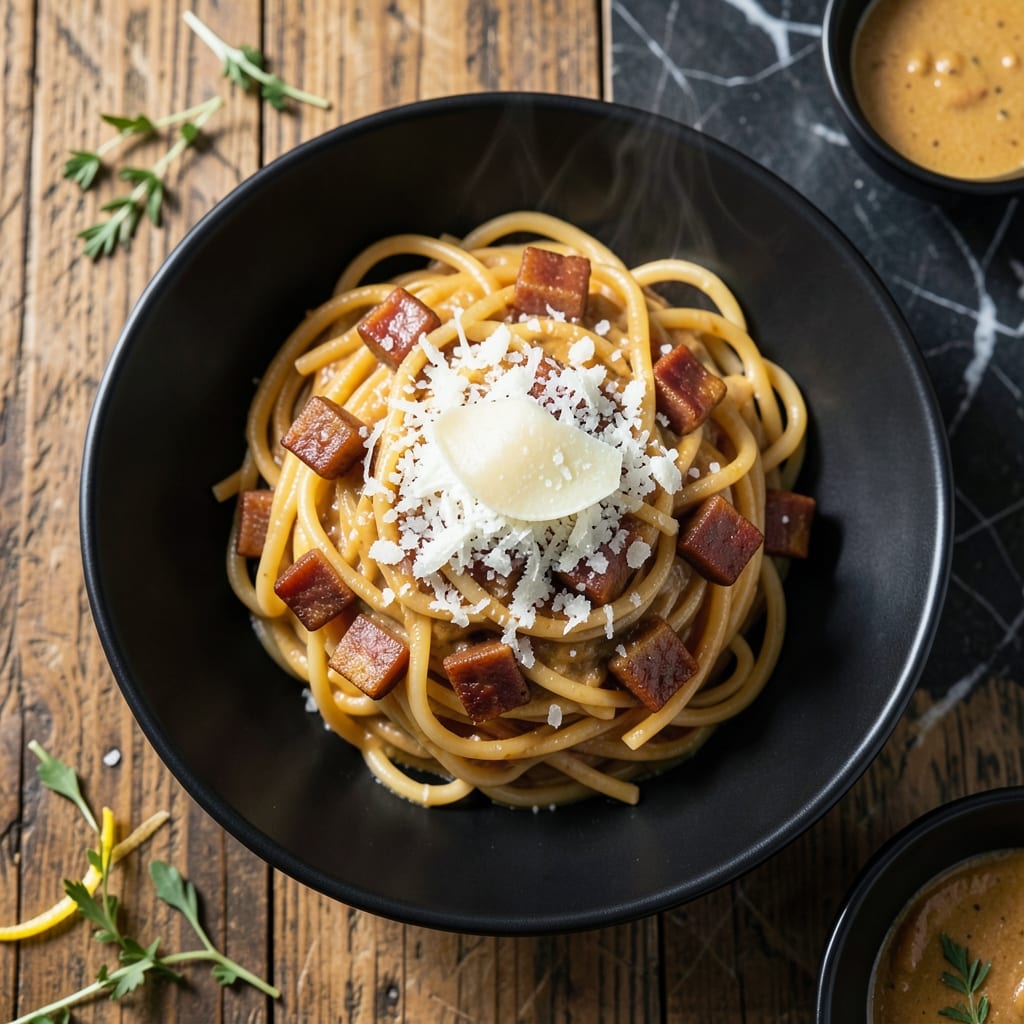
Authentic pasta carbonara is a testament to Roman culinary tradition, built on simple ingredients and precise technique. This dish honors the original method with guanciale and pecorino, delivering restaurant-quality results at home.
I developed this recipe after testing countless variations, focusing on the proper balance between creamy egg sauce and crisp guanciale. The key lies in temperature control—too hot, and the eggs scramble; too cool, and the sauce won’t emulsify.
What emerges is a plate of al dente pasta coated in a silky, rich sauce with bits of cured pork and sharp pecorino. It’s a dish that feels indulgent yet remains true to its humble origins.
Serve immediately for the best texture and flavor. Here’s how to make it right.
Ingredients for Pasta Carbonara Recipe Authentic
Authentic Roman flavors begin with quality guanciale, pecorino, and perfectly al dente pasta.
| Ingredient | Amount | Notes |
|---|---|---|
| Spaghetti 🍝 | 1 lb | Dried, high-quality bronze-die |
| Guanciale 🥓 | 6 oz | Diced, cured pork cheek |
| Pecorino Romano Cheese 🧀 | 1 ½ cups | Freshly grated, aged |
| Large Eggs 🥚 | 4 whole | Room temperature, organic preferred |
| Large Egg Yolks 🥚 | 2 whole | Room temperature, for extra creaminess |
| Coarse Sea Salt 🧂 | 1 tbsp | For pasta water, plus more to taste |
| Freshly Ground Black Pepper 🌶️ | 2 tsp | High-quality, coarsely ground |
| Parmigiano-Reggiano Cheese 🧀 | ½ cup | Freshly grated, for depth |
| Reserved Pasta Water 💧 | ½ cup | Starchy, for emulsification |
| Extra-Virgin Olive Oil 🫒 | 1 tbsp | For rendering guanciale |
The guanciale is non-negotiable for authenticity. Eataly or Italian specialty markets carry it—ask for the cheek, not belly. Pecorino Romano must be imported from Lazio for true Roman flavor. Seek out De Cecco or Barilla bronze-die spaghetti; the rough texture holds sauce better. For cheese, BelGioioso offers excellent domestic pecorino if imports aren’t available.
Substituting pancetta changes the dish fundamentally, but use it at 1:1 ratio if guanciale is impossible to source. Parmigiano-Reggiano alone works in a pinch, though the flavor profile differs. Never use pre-grated cheese—the anti-caking agents prevent proper melting. For eggs, pasture-raised yield richer yolks. The pasta water must be aggressively salted—think seawater levels.
Rendered guanciale keeps 1 week refrigerated in its fat. Freshly grated cheese loses potency quickly—use within 3 days or freeze for 2 months. Cooked carbonara doesn’t reheat well; serve immediately for the silky texture the dish demands.
Why You’ll Love This Recipe
- One Pot Magic: I love that this comes together in a single pan while the pasta cooks—no juggling multiple dishes.
- Guanciale Goodness: The cured pork adds this deep, salty-sweet richness that bacon just can’t match.
- Weeknight Hero: Honestly, it’s my go-to for busy evenings when I need something fast but feel fancy.
- Leftovers? Better: Between us, the flavors meld overnight, so tomorrow’s lunch tastes even more indulgent.
Step-by-Step Instructions for Pasta Carbonara
Authentic Roman technique requires precision. Follow these steps for perfect emulsification every time.
Step 1: Render the Guanciale to Crisp Perfection
Heat a large, heavy-bottomed skillet over medium-low heat. Add the 6 oz Guanciale and 1 tbsp Extra-Virgin Olive Oil, then cook for 8-10 minutes, stirring occasionally. The guanciale should render its fat completely while developing a deep golden-brown crispness.
Watch the heat carefully—too high and the guanciale will burn before the fat renders. You want slow, even cooking that leaves you with crispy cubes and about ¼ cup of rendered fat in the pan. Remove from heat and set aside, leaving the fat in the skillet for later use.
Step 2: Prepare the Egg and Cheese Emulsion
In a medium bowl, whisk together the 4 whole Large Eggs, 2 whole Large Egg Yolks, 1.5 cups Pecorino Romano Cheese, 0.5 cup Parmigiano-Reggiano Cheese, and 2 tsp Freshly Ground Black Pepper. The mixture should be thick, smooth, and pale yellow—almost custard-like in consistency.
I use a combination of whole eggs and yolks for the perfect creamy texture. All yolks would be too rich; all whole eggs would be too thin. The Pecorino provides the authentic Roman sharpness, while the Parmigiano-Reggiano adds depth. Make sure both cheeses are finely grated for smooth melting.
Step 3: Cook Spaghetti to Al Dente
Bring a large pot of water to a rolling boil and add the 1 tbsp Coarse Sea Salt. Cook the 1 lb Spaghetti until 1 minute shy of the package directions for al dente. You want the pasta slightly underdone because it will finish cooking in the sauce.
Reserve 0.5 cup Reserved Pasta Water before draining—this starchy liquid is crucial for creating the creamy emulsion. I keep a measuring cup right by the stove to ensure I don’t forget this critical step. Drain the pasta but do not rinse it; the surface starch helps the sauce cling properly.
Step 4: Combine Everything Off Heat for Perfect Emulsion
Remove the skillet with guanciale from heat and let it cool for 1 minute. Add the drained spaghetti and toss to coat in the rendered fat. Then add ½ cup of the reserved pasta water and toss vigorously for 30 seconds.
Now add the egg and cheese mixture to the skillet. Toss constantly for 1-2 minutes until it forms a creamy, glossy sauce. The pan must be off heat—if it’s too hot, you’ll scramble the eggs. The residual heat from the pasta and pan is sufficient to gently cook the eggs into a silky sauce. If the mixture appears too thick, add more pasta water 1 tablespoon at a time until it reaches the desired consistency.
Step 5: Serve Immediately with Final Touches
Transfer the carbonara to warmed serving plates immediately—this dish doesn’t wait. The sauce should cling to every strand of spaghetti with a glossy, creamy coating. Each bite should deliver rich guanciale, sharp Pecorino, peppery heat, and silky egg sauce.
If the sauce starts to tighten as it cools, toss in a splash of the hot pasta water to loosen it. The authentic Roman approach omits cream entirely, letting the egg and cheese create the signature velvety texture that defines traditional carbonara.
Pro Tips For Making Pasta Carbonara Recipe Authentic
- Use room temp eggs: Take your eggs out of the fridge 30 minutes before cooking—I learned this the hard way after my sauce turned into scrambled eggs in the hot pasta.
- Render guanciale slowly: Cook the guanciale on medium-low heat until crispy, about 8-10 minutes, to render out the fat without burning it.
- Skip the cream: Authentic carbonara doesn’t need cream; the eggs and cheese create a silky sauce on their own.
- Toss off heat: Remove the pan from heat before adding the egg mixture to the pasta, then stir quickly to coat everything without curdling.
Common Mistakes When Making This Recipe
Adding Cream
I test every recipe multiple times, and I can confirm that authentic carbonara never includes cream. The creamy texture comes solely from the egg and cheese emulsion. Adding cream makes the sauce heavy and masks the delicate flavors.
Overcooking the Pasta
Cook your 1 lb spaghetti to 1 minute shy of al dente. The pasta will finish cooking in the sauce. Overcooked pasta absorbs too much sauce, leaving you with a dry, clumpy dish. 💡
High Heat Scrambling
The skillet must be off heat when you add the egg mixture. Even residual heat can scramble the eggs if the pan is too hot. I always let my pan cool for 1 minute after adding the pasta before introducing the eggs.
Skipping Pasta Water
That ½ cup reserved pasta water is liquid gold. The starch in the water helps emulsify the sauce and bind it to the pasta. Without it, your sauce will be thin and won’t cling properly to the strands.
Using Cold Eggs
Always use room temperature eggs to prevent shocking the hot pasta. Cold eggs can cause the sauce to seize up or create uneven texture. I take my eggs out of the fridge 30 minutes before starting. 🥚
Pre-Grated Cheese
Pre-grated cheese contains anti-caking agents that prevent proper melting. For the smoothest sauce, always grate your 1.5 cups Pecorino Romano and ½ cup Parmigiano-Reggiano fresh. The difference in texture is noticeable.
Nutrition Facts
Frequently Asked Questions
Why can’t I use pancetta instead of guanciale?
Guanciale is traditional because it’s cured pork cheek with a milder, sweeter flavor. Pancetta (cured pork belly) works in a pinch but has a stronger taste. Use it at a 1:1 ratio if absolutely necessary.
How do I prevent scrambled eggs in my sauce?
Remove the skillet from heat and let it cool for 1 minute before adding eggs. The residual heat will cook them gently without scrambling. Keep tossing constantly for 1-2 minutes until creamy.
Can I make this ahead of time?
No, authentic carbonara must be served immediately. The sauce thickens and loses its silky texture as it cools. If needed, prep ingredients in advance but cook everything just before serving.

- BBQ Sausage Recipe Oven: Smoky Depth Without the Grill - September 28, 2026
- BBQ Chicken Bowl Recipe Rice: Smoky Sweetness Over Fluffy Grains - September 28, 2026
- Beef Cutlet Recipe Ideas: Crispy Breaded Patties With Bold Seasonings - September 28, 2026