
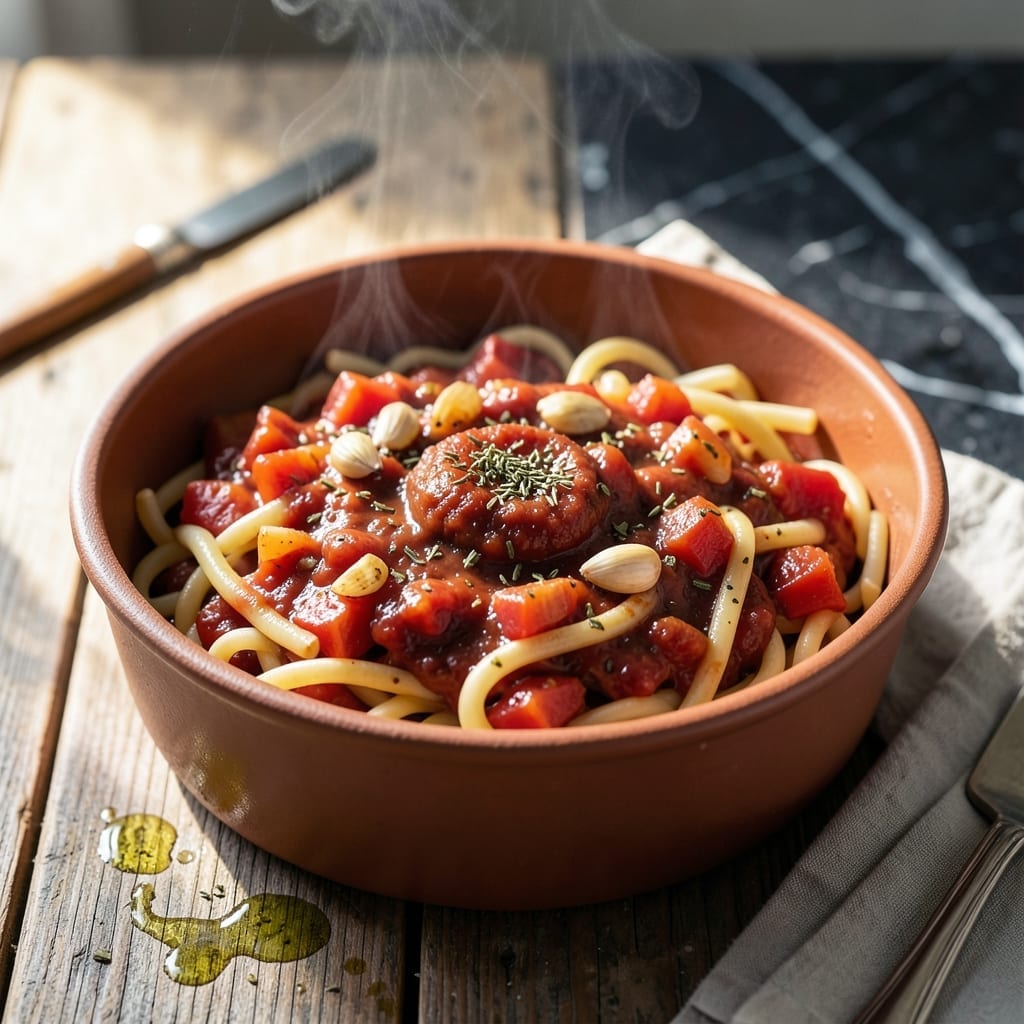
This rustic pasta sauce transforms simple diced tomatoes into a rich, flavorful base for any Italian dish. The slow simmer allows ingredients to meld together beautifully.
With just one pot and basic pantry staples, you’ll create a versatile sauce that freezes well and elevates pasta, lasagna, or meatballs. The result is always satisfying.
Ingredients for Pasta Sauce Recipe Diced Tomatoes
Transform simple pantry staples into a rich, rustic sauce with these ingredients.
| Ingredient | Amount | Notes |
|---|---|---|
| Diced Tomatoes 🍅 | 28 oz | Canned, with juices reserved |
| Extra-Virgin Olive Oil 🫒 | ¼ cup | High quality, fruity |
| Yellow Onion 🧅 | 1 whole | Finely diced for texture |
| Garlic Cloves 🧄 | 5 cloves | Minced for depth of flavor |
| Tomato Paste 🍅 | 2 tbsp | Concentrated for richness |
| Dried Oregano 🌿 | 1 tsp | Mediterranean variety preferred |
| Dried Basil 🍃 | 1 tsp | Crushed between fingers |
| Red Pepper Flakes 🌶️ | ½ tsp | Adjust for heat preference |
| Sea Salt 🧂 | 1 tsp | Fine grain, to taste |
| Black Pepper 🌶️ | ½ tsp | Freshly ground preferred |
The tomatoes are the foundation—San Marzano canned tomatoes offer superior flavor and texture. Find them at Whole Foods or Italian specialty markets. The olive oil should be extra-virgin and robust; avoid light or refined varieties. Use a heavy-bottomed pot for even simmering. Fresh garlic is non-negotiable here; the pre-minced kind lacks depth.
No dried oregano? Fresh oregano at triple the amount works beautifully. Swap dried basil for fresh at a 1:3 ratio. If avoiding heat, omit the red pepper flakes entirely. For extra umami, add 1 tbsp nutritional yeast. Vegetable broth can be stirred in for a thinner consistency.
This sauce keeps in the fridge for 5 days and freezes beautifully for 6 months. Store in airtight containers, leaving headspace for expansion. Thaw overnight in the refrigerator before reheating gently on the stove.
Why You’ll Love This Recipe
- One Pot Wonder: I just dump the diced tomatoes, onion, garlic, and paste in a pan with olive oil—no fancy steps.
- Rich and Simple: The tomato paste deepens the flavor so much that even canned tomatoes taste like they’re fresh off the vine.
- Freezer Hero: I make a double batch and freeze half for those nights I’m too tired to cook from scratch.
- Pennywise Perfection: A can of tomatoes and a few pantry staples stretch into a meal that feels way more expensive than it is.
Step-by-Step Instructions for Pasta Sauce Diced Tomatoes
Master this technique and you’ll create a rich, deeply flavored sauce that clings perfectly to pasta.
Step 1: Sauté the Aromatics in Olive Oil
Heat the 0.25 cup Extra-Virgin Olive Oil in a large, heavy-bottomed pot over medium heat. The oil should shimmer but not smoke—this indicates it’s at the optimal temperature for flavor development without burning.
Add the finely diced Yellow Onion and cook, stirring occasionally, for 5-6 minutes until it becomes translucent and soft. This builds the flavor foundation. Avoid browning the onion, as it can introduce bitter notes to this rustic sauce.
Step 2: Bloom Garlic and Tomato Paste
Add the minced Garlic Cloves to the pot and cook for 30-45 seconds until fragrant. You’ll notice the aroma change immediately as the garlic releases its oils—this is your signal to add the next ingredient.
Stir in the 2 tbsp Tomato Paste and cook for 1-2 minutes, stirring constantly. The paste will darken slightly and develop a deeper, more concentrated flavor. This step is crucial for building complexity in your sauce base.
Step 3: Incorporate Diced Tomatoes and Seasonings
Pour in the 28 oz Diced Tomatoes with their juices. Add the 1 tsp Dried Oregano, 1 tsp Dried Basil, 0.5 tsp Red Pepper Flakes, 1 tsp Sea Salt, and 0.5 tsp Black Pepper. Stir well to combine all ingredients thoroughly.
Crush the Dried Basil between your fingers as you add it—this releases its aromatic oils. The mixture will look thin initially, but it will reduce and thicken as it simmers. Bring the sauce to a gentle simmer, then reduce heat to maintain a steady bubble.
Step 4: Simmer to Perfection
Partially cover the pot and let the sauce simmer on low heat for 45-60 minutes. Stir occasionally to prevent sticking, especially as the sauce thickens toward the end of cooking.
You’ll know it’s ready when the sauce has reduced by about a third and the oil has separated slightly at the top. The color will deepen to a rich, brick-red hue, and the aroma will be intensely savory with herbal notes. Taste and adjust seasoning if needed.
Step 5: Finish and Serve
Remove the pot from heat and let the sauce rest for 5-10 minutes before serving. This allows the flavors to meld completely. The sauce should coat the back of a spoon but still have a slightly loose consistency—it will thicken further as it cools.
For best results, toss the hot sauce directly with cooked pasta. The starch from the pasta will help the sauce cling beautifully. Serve immediately, garnished with fresh herbs if desired.
Pro Tips For Making Pasta Sauce Recipe Diced Tomatoes
- Sauté Onions Slow: Cook the yellow onions on medium-low for 8-10 minutes until soft and translucent—I learned this the hard way, rushing them just gives the sauce a harsh raw bite.
- Bloom Tomato Paste: Let the tomato paste cook in the oil for 2-3 minutes until it darkens slightly; it removes the tinny taste and deepens the flavor.
- Drain Some Tomatoes: Pour off about half the liquid from the diced tomatoes before adding them to the pot, or you’ll be simmering the sauce for 20 extra minutes to thicken it.
- Finish With Oil: Stir in a final drizzle of extra-virgin olive oil at the end—about 1 tablespoon—it adds a velvety richness that plain water-based sauces never achieve.
Essential Equipment for Perfect Results
Heavy-Bottomed Pot
Invest in a 5-6 quart Dutch oven or heavy-bottomed pot for even heat distribution. I swear by my Le Creuset enameled cast iron—it prevents hot spots that can burn your aromatics. The weight also helps maintain steady simmering.
Wooden Spoon
Use a flat wooden spoon for stirring—it won’t scratch your pot and helps break up tomatoes as they cook down. Avoid metal utensils that can damage non-stick or enameled surfaces. This simple tool gives you better control.
Quality Knife
A sharp 8-inch chef’s knife makes quick work of dicing onions and mincing garlic. I recommend Wüsthof or Victorinox for home cooks. Proper prep ensures even cooking and better flavor extraction from your aromatics.
Fine Mesh Strainer
For ultra-smooth sauce, press the finished product through a fine mesh strainer with the back of a ladle. This removes tomato skins and seeds for a velvet-like texture. I use a OXO Good Grips strainer for this. 💡
Immersion Blender
If you prefer a chunkier texture, an immersion blender lets you blend directly in the pot. Pulse for 5-10 seconds to break up larger tomato pieces while keeping some rustic character. Cleanup is a breeze compared to transferring to a countertop blender.
Kitchen Scale
For perfect consistency every time, weigh your 28 oz diced tomatoes on a digital kitchen scale. I use an Escali Primo—it’s accurate to 1 gram and has a tare function for easy measuring. Precision matters in sauce-making. 🔥
Nutrition Facts
Frequently Asked Questions
Can I use fresh tomatoes instead of canned?
Yes, but you’ll need about 3-4 pounds of ripe tomatoes to equal 28 oz canned. Blanch, peel, and dice them first for best texture. Canned tomatoes are preferred for consistent flavor and convenience.
How do I make the sauce thicker?
Simmer uncovered for 10-15 extra minutes to reduce more. For quicker results, stir in 1 tbsp tomato paste or mash the tomatoes with a potato masher. Avoid adding flour or cornstarch.
Can I add meat to this sauce?
Brown 1/2 pound ground beef or Italian sausage with the onions. Drain excess fat before adding tomatoes. This adds hearty protein while keeping the rustic character.
Why does my sauce taste bitter?
Overcooked garlic or burnt tomato paste often causes bitterness. Next time, cook garlic for just 30 seconds and keep heat at medium. A pinch of sugar can balance residual bitterness.

- BBQ Sausage Recipe Oven: Smoky Depth Without the Grill - September 28, 2026
- BBQ Chicken Bowl Recipe Rice: Smoky Sweetness Over Fluffy Grains - September 28, 2026
- Beef Cutlet Recipe Ideas: Crispy Breaded Patties With Bold Seasonings - September 28, 2026