
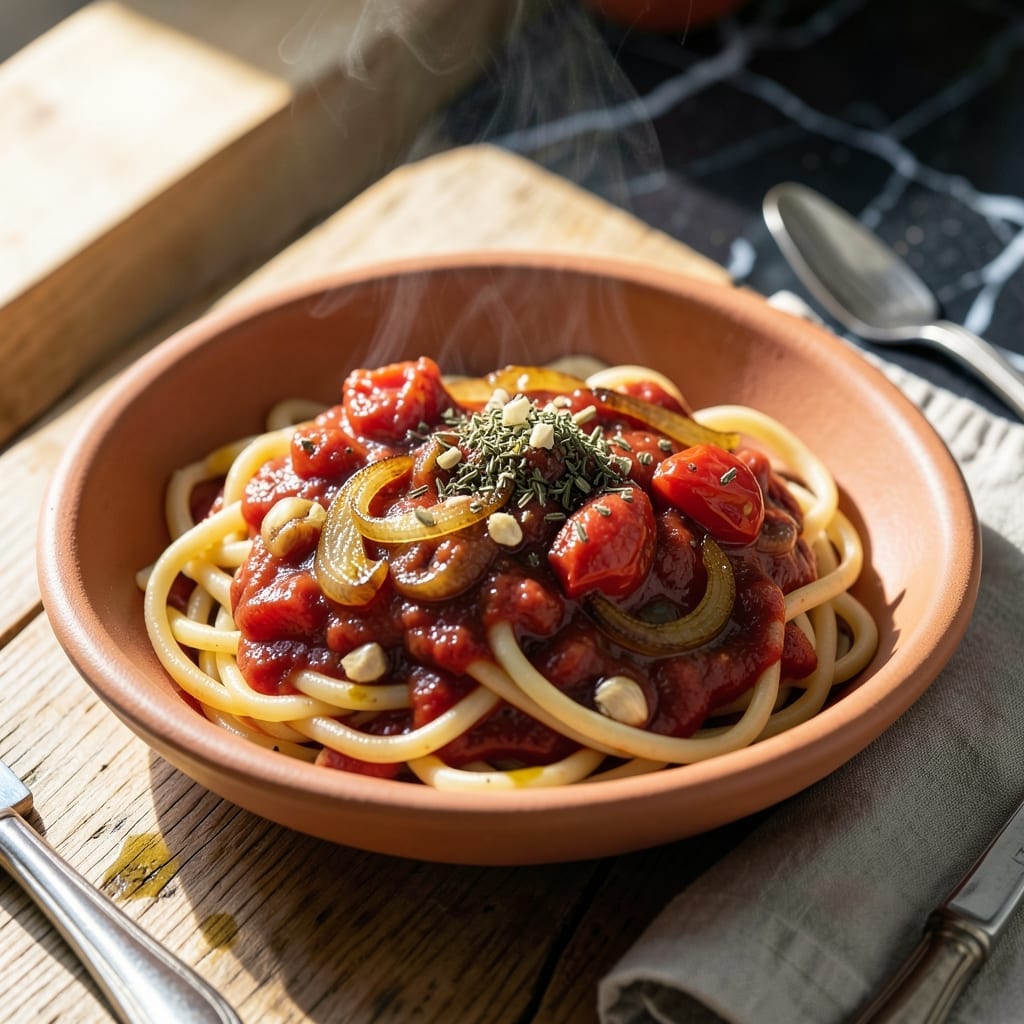
A rich pasta sauce begins with a velvety tomato base, slow-simmered to develop deep flavor. I perfected this version through years of Sunday family dinners, always aiming for that ideal balance of sweetness and acidity.
This sauce relies on simple ingredients and patience. The key is letting it reduce slowly, allowing the flavors to concentrate. A touch of butter at the end adds a luxurious finish that ties everything together.
What you get is a smooth, restaurant-quality sauce that clings to pasta. It transforms basic noodles into something extraordinary with minimal effort. The aroma alone will transport you to an Italian kitchen.
Make a big batch and freeze for quick weeknight meals. This base works beautifully with any pasta shape or as a foundation for other dishes.
Ingredients for Pasta Sauce Recipe with Tomato Sauce
Twelve ingredients stand between you and that velvety, restaurant-quality pasta sauce you crave.
| Ingredient | Amount | Notes |
|---|---|---|
| Canned San Marzano Tomatoes 🍅 | 28 oz | Crushed by hand preferred |
| Extra-Virgin Olive Oil 🫒 | ¼ cup | High-quality, fruity preferred |
| Yellow Onion 🧅 | 1 whole | Finely diced for base |
| Garlic Cloves 🧄 | 4 cloves | Minced for depth |
| Tomato Paste 🍅 | 2 tbsp | Double-concentrated preferred |
| Dried Oregano 🍃 | 1 tsp | Mediterranean variety ideal |
| Dried Basil 🌿 | 1 tsp | Crushed between fingers |
| Red Pepper Flakes 🌶️ | ½ tsp | Adjust to heat preference |
| Sea Salt 🧂 | 1 tsp | Fine grain for even distribution |
| Freshly Ground Black Pepper 🌶️ | ½ tsp | Course grind for texture |
| Vegan Butter 🧈 | 2 tbsp | For luxurious finish |
| Coconut Sugar 🥥 | 1 tsp | Balances acidity naturally |
The tomatoes are non-negotiable. San Marzano cans from an Italian market (or Whole Foods) give that authentic sweetness—avoid the generic brands, which taste tinny. I stock up at Eataly when I’m in the city. Fresh garlic is a must (pre-minced lacks punch), and the olive oil should be something you’d drizzle on bread. Look for cold-pressed and single-origin if you want to geek out.
No San Marzanos? Regular crushed tomatoes work in a pinch, though you’ll need to simmer longer. Fresh herbs at the end? Tear in basil or oregano—but dried is fine here. Vegan butter not on hand? A drizzle of high-quality olive oil still adds richness. Want more umami? A splash of balsamic vinegar deepens the flavor without overpowering.
Sauce freezes like a dream—6 months in airtight containers. Portion into 1-cup servings for easy weeknight meals. Fridge life is 5 days (it’ll taste even better after 24 hours). Pro tip: label with the date. You’ll thank yourself later.
Why You’ll Love This Recipe
- One Pot Wonder: I just dump the San Marzano tomatoes, a glug of olive oil, and a few chopped onions and garlic into one pan—minimal mess, maximum flavor.
- Rich & Velvety: The tomato paste deepens the sauce into this luscious, restaurant-quality consistency that clings to pasta perfectly.
- Freezes Like a Dream: Honestly, I double the batch and freeze half—it tastes just as good months later, and saves me on those no-time nights.
- Budget Stretcher: A can of San Marzano tomatoes and a few pantry staples feed my whole family for pennies compared to takeout.
Step-by-Step Instructions for Pasta Sauce With Tomato Sauce
This method transforms simple ingredients into a rich, velvety base that clings to pasta beautifully.
Step 1: Build the Flavor Foundation
Heat the 0.25 cup Extra-Virgin Olive Oil in a heavy-bottomed pot over medium-low heat. Add the 1 whole Yellow Onion and cook for 8-10 minutes until translucent and soft—this slow start prevents burning and develops sweetness.
Stir in the 4 cloves Garlic Cloves and cook for 1 minute until fragrant but not browned. Garlic burns quickly, so keep it moving. Add the 2 tbsp Tomato Paste and cook for 2 minutes, stirring constantly, until it deepens to a brick-red color.
This step caramelizes the tomato paste, building a base layer of umami that makes all the difference in your finished sauce.
Step 2: Develop the Tomato Base
Add the 28 oz Canned San Marzano Tomatoes, crushing them by hand as they go into the pot. I prefer hand-crushing because it gives you control over the texture—leave some chunks for rustic appeal.
Stir in the 1 tsp Dried Oregano, 1 tsp Dried Basil, 0.5 tsp Red Pepper Flakes, 1 tsp Sea Salt, and 0.5 tsp Freshly Ground Black Pepper. The herbs should bloom in the hot oil, releasing their essential oils into the sauce.
Bring the mixture to a gentle simmer, then reduce heat to low. You want a slow bubble, not a rolling boil, to prevent the sauce from breaking or becoming watery.
Step 3: Simmer for Depth and Richness
Let the sauce simmer uncovered for 45-60 minutes, stirring occasionally. As it cooks, the liquid will reduce, and the flavors will concentrate. You’ll notice the sauce thicken and darken slightly—that’s the natural sugars caramelizing.
If the sauce starts to look too thick before the time is up, add a splash of water. The goal is a velvety consistency that coats the back of a spoon. Taste and adjust seasoning if needed, but remember the flavors will intensify as it reduces.
Step 4: Finish with Creamy Luxury
Once the sauce has reached your desired thickness, stir in the 2 tbsp Vegan Butter and 1 tsp Coconut Sugar. The butter adds a silky richness, while the coconut sugar balances the acidity of the tomatoes with a subtle sweetness.
Simmer for an additional 5 minutes to allow the butter to fully incorporate and the sugar to dissolve. The sauce should now have a glossy sheen and a complex, well-balanced flavor.
Remove from heat and let it rest for 10 minutes before using. This resting period allows the flavors to meld completely, ensuring every bite is as delicious as the last.
Pro Tips For Making Pasta Sauce Recipe With Tomato Sauce
- Sauté Onions Low: Cook the yellow onion over medium-low heat for 8-10 minutes until soft and translucent—I learned this the hard way after burning three batches trying to rush it.
- Crush Tomatoes by Hand: Use your hands to crush the San Marzano tomatoes as you add them to the pot. Sounds weird, but it works: the uneven pieces create better texture than a blender.
- Bloom the Tomato Paste: Cook the tomato paste in the olive oil for 2-3 minutes before adding anything else. My grandmother swore by this, and she was right: it deepens the flavor.
- Skip the Garlic Burn: Add minced garlic only after the onions are soft and the tomato paste has cooked down—resist the urge to toss it in early or it’ll turn bitter.
Best Sauces and Condiments for This pasta sauce recipe with tomato sauce
Classic Pairings
For a traditional touch, I always stir in fresh basil leaves just before serving—they add a bright, aromatic finish that reminds me of Nonna’s kitchen. A sprinkle of Pecorino Romano from the Italian deli melts beautifully into the warm sauce. 🌿
Herb Infusions
Fresh oregano sprigs or thyme can be simmered in the sauce for 10 minutes then removed. I love tying them with twine for easy retrieval. This adds depth without overpowering the tomato base.
Umami Boosters
A splash of balsamic glaze or 1 tsp soy sauce deepens the flavor profile. I discovered this trick at a Sunday family dinner—it adds complexity without changing the sauce’s character.
Creamy Variations
For a richer version, stir in ¼ cup heavy cream or coconut milk at the end. This creates a silky texture that coats pasta beautifully. I often do this when making lasagna.
Spicy Kick
Add ½ tsp crushed red pepper or a pinch of cayenne for heat. I prefer the subtle warmth of Calabrian chili paste—just 1 tsp does the trick. Adjust to taste.
Fresh Finishes
A drizzle of extra-virgin olive oil and fresh cracked black pepper right before serving elevates the dish. I always use the wooden spoon Nonna gave me for this final touch. 💛
Nutrition Facts
Frequently Asked Questions
Can I use fresh tomatoes instead of canned?
Yes, but they require more prep. Use 6-8 ripe tomatoes, blanch to remove skins, then crush. Canned tomatoes are preferred for consistent flavor and thickness.
How do I fix a sauce that’s too acidic?
Add a pinch of sugar or a splash of baking soda (1/8 tsp at a time). Stir well and taste. The sugar balances acidity while baking soda neutralizes it.
What’s the best way to store leftover sauce?
Cool completely, then transfer to an airtight container. It keeps in the fridge for 5 days or freezes for 6 months. Portion before freezing for easy use.
Can I make this in a slow cooker?
Sauté the onion and garlic first, then combine all ingredients in the slow cooker. Cook on low for 6-8 hours for deep flavor development.

- Peach Syrup Recipe for Ice Cream: Sweet and Silky Drizzle for Scoops - October 6, 2026
- Pav Bhaji Recipe Food Lab: Mumbai Street Food Magic at Home - October 6, 2026
- Peach Jelly Recipe Without Pectin: Naturally Set Sweet Spread - October 6, 2026