
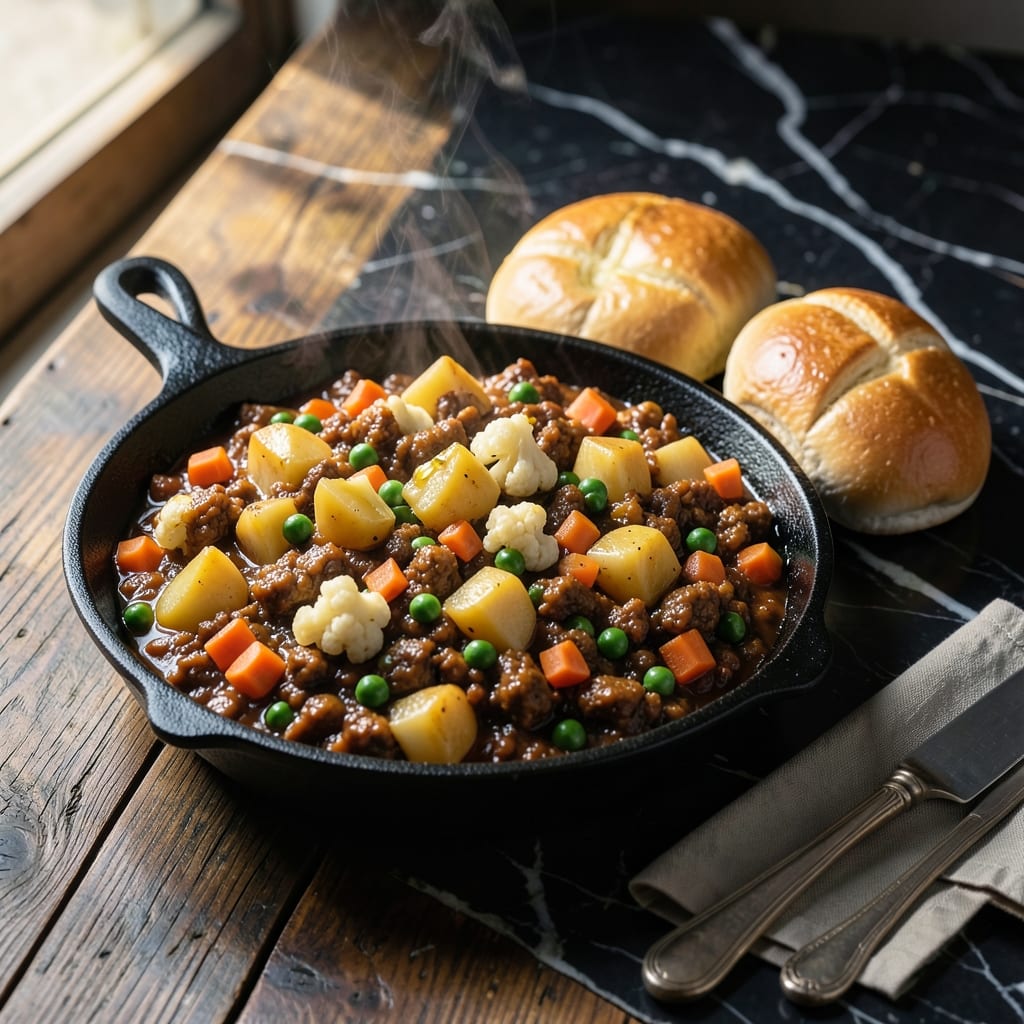
This Mumbai street food classic brings the vibrant flavors of India to your kitchen with minimal effort. The dish combines a spiced vegetable mash with buttery toasted buns, creating a perfect balance of textures and tastes.
The magic lies in cooking the vegetables slowly until they break down into a rich, thick gravy. A special masala blend and fresh ginger-garlic paste elevate the flavors to restaurant-quality standards. The pav bread is lightly toasted with butter for that authentic street food experience.
What you get is a hearty, satisfying meal where the soft, buttery bread pairs perfectly with the spiced vegetable mixture. The aroma alone will transport you to the bustling streets of Mumbai.
Serve hot with extra butter, lemon wedges, and chopped onions on the side for the complete experience.
Ingredients for Pav Bhaji Recipe Veg Recipes of India
Fresh veggies, bold spices, and buttery bread bring this Mumbai classic to life.
| Ingredient | Amount | Notes |
|---|---|---|
| Potatoes 🥔 | 4 whole | Medium-sized, peeled and diced |
| Cauliflower 🥬 | 2 cups | Chopped into small florets |
| Green Peas 🌱 | 1 cup | Fresh or frozen |
| Carrots 🥕 | 2 whole | Peeled and chopped |
| Onion 🧅 | 1 whole | Finely chopped |
| Tomatoes 🍅 | 3 whole | Chopped, ripe and firm |
| Ginger 🌿 | 1 piece | 1-inch, grated or crushed |
| Garlic Cloves 🧄 | 4 cloves | Minced into paste |
| Green Chilies 🌶️ | 2 whole | Finely chopped, adjust to taste |
| Pav Bhaji Masala 🌿 | 2 tbsp | Store-bought or homemade blend |
| Red Chili Powder 🌶️ | 1 tsp | Adjust to spice preference |
| Turmeric Powder 🌿 | ½ tsp | For color and flavor |
| Cumin Seeds 🌿 | 1 tsp | For tempering |
| Butter 🧈 | ½ cup | Plus extra for toasting pav |
| Lemon 🍋 | 1 whole | Cut into wedges for serving |
| Fresh Cilantro 🌿 | ¼ cup | Chopped, for garnish |
| Pav Buns 🍞 | 8 whole | Soft dinner rolls, lightly toasted |
| Salt 🧂 | 1 tsp | Adjust to taste |
The pav bhaji masala is non-negotiable—MDH or Everest brands are widely available at Indian grocery stores (or Amazon in a pinch). Fresh ginger and garlic paste makes a huge difference, so don’t skip it. Potatoes should be starchy (Russets work great) for that creamy texture. For the pav, look for soft, square dinner rolls at most Asian markets or the international aisle.
No pav bhaji masala? Mix 1 tbsp garam masala + 1 tsp each of cumin, coriander, and amchur powder—close enough. Out of green peas? Swap in frozen corn or chopped green beans. Want extra richness? Add a spoonful of cashew paste to the veggies. The chili heat is flexible—reduce or omit for kids (or add extra for fire lovers).
The bhaji tastes even better the next day—store in the fridge for 2-3 days. Toast the pav fresh when serving (old toasted buns get hard). Freeze extra bhaji for up to 1 month (reheat with a splash of water).
Why You’ll Love This Recipe
- One Pot Wonder: I just dump the potatoes, cauliflower, and peas into a single pan—no fancy techniques, just straightforward cooking.
- Buttery Spice Bomb: The mashed veggies soaked in that pav bhaji masala and butter? Ridiculously good, especially with the toasted pav.
- Feeds a Crowd: I make a big batch for gatherings, and honestly, it’s the first thing to disappear.
- Budget Stretcher: Between us, a kilo of potatoes and a head of cauliflower feed my family for two meals without breaking the bank.
Step-by-Step Instructions for Pav Bhaji
Here’s my tested method for recreating Mumbai street food magic in your own kitchen.
Step 1: Pressure Cook the Vegetables
In a pressure cooker, combine the 4 whole Potatoes, 2 cups Cauliflower, 1 cup Green Peas, and 2 whole Carrots with just enough water to cover them. I like to add the potatoes first since they take the longest to cook through.
Cook for 3-4 whistles until the vegetables are fork-tender. You’ll know they’re ready when a knife slides through the potatoes with no resistance. Drain the water completely and set the vegetables aside to cool slightly. This ensures they mash smoothly later without making the bhaji watery.
Step 2: Prepare the Masala Base
Heat 2 tablespoons of the 0.5 cup Butter in a large pan over medium heat. Add 1 tsp Cumin Seeds and let them sizzle for 15-20 seconds until fragrant. Immediately add the 1 whole Onion and sauté for 3-4 minutes until soft and translucent.
Stir in the 1 piece Ginger, 4 cloves Garlic Cloves, and 2 whole Green Chilies. Cook for 1-2 minutes until the raw aroma disappears. Add the 3 whole Tomatoes, 1 tsp Salt, 1 tsp Red Chili Powder, and 0.5 tsp Turmeric Powder. Cook for 5-6 minutes until the tomatoes soften and the oil separates at the edges.
Step 3: Mash and Simmer the Bhaji
Add the cooked vegetables and 2 tbsp Pav Bhaji Masala to the onion-tomato mixture. Mash everything together with a potato masher or the back of a spoon until you achieve a chunky-yet-smooth consistency. I prefer leaving some texture rather than making it completely smooth.
Cook the bhaji for 8-10 minutes on medium-low heat, stirring occasionally. The mixture will darken slightly and the flavors will meld together. Add ¼ cup water if it becomes too thick. Taste and adjust the salt if needed. The bhaji should be thick enough to hold its shape but still spreadable.
Step 4: Toast the Pav Buns and Serve
Heat a griddle or skillet over medium heat and add the remaining butter. Lightly toast each of the 8 whole Pav Buns on both sides for 1-2 minutes per side until they’re golden brown and crisp. Press down gently with a spatula for even browning.
Transfer the hot bhaji to a serving dish and garnish with 0.25 cup Fresh Cilantro. Serve with the toasted pav, 1 whole Lemon cut into wedges on the side, and extra butter if desired. The contrast between the soft, flavorful bhaji and the crisp, buttery pav is what makes this dish unforgettable.
Pro Tips For Making Pav Bhaji Recipe Veg Recipes Of India
- Boil Potatoes Separately: Cook potatoes in salted water until fork-tender before adding to the bhaji—I learned this the hard way after ending up with mushy cauliflower and undercooked potatoes.
- Mash While Hot: The moment your veggies are done, mash them while still hot with about 2 tablespoons of butter. Sounds weird, but it works: the heat helps blend everything smoothly.
- Skip Raw Onions: Always sauté onions until golden before mixing into the bhaji—raw onions give a harsh bite that overpowers the dish.
- Use Pav Bhaji Masala: Don’t substitute generic garam masala; pav bhaji masala actually changes the outcome with its tangy, spicy profile. My grandmother swore by this, and she was right.
Essential Equipment for pav bhaji recipe veg recipes of india
Pressure Cooker
A sturdy 6-quart pressure cooker is essential for perfectly tender vegetables. I recommend Presto or Hawkins brands—they’re durable and widely available at Indian stores. This cooks the veggies in 15-20 minutes instead of an hour. 💡
Heavy-Bottomed Pan
For the masala base, use a heavy-bottomed kadhai or Dutch oven to prevent burning. A 5-6 quart size gives you enough room to mash and simmer the bhaji without spills. Stainless steel or cast iron work best for even heat distribution.
Potato Masher
Invest in a good stainless steel potato masher—it makes quick work of breaking down the cooked vegetables. I prefer the flat-bottomed style for better control. Avoid wooden mashers as they can absorb flavors and are harder to clean.
Griddle or Skillet
Toasting the pav requires a cast iron griddle or non-stick skillet. A 10-inch size fits 4 pav buns at once. Heat it over medium heat for even browning. Press the buns with a spatula for that crispy, buttery finish.
Sharp Knife
A 7-8 inch chef’s knife is perfect for chopping all the vegetables quickly and safely. I use Victorinox Fibrox—it’s affordable and stays sharp. Keep it honed for effortless dicing of onions, tomatoes, and cauliflower.
Mixing Bowls
Have 2-3 mixing bowls ready for prepping ingredients. Stainless steel or glass are ideal—they don’t absorb odors. I use one for veggies, one for spices, and one for holding toasted pav before serving. ✨
Nutrition Facts
Frequently Asked Questions
Can I make pav bhaji without a pressure cooker?
Yes! Boil the vegetables in a pot with enough water until soft, about 20-25 minutes. Just ensure they’re fully tender before mashing. A pressure cooker saves time but isn’t mandatory.
What can I use if I don’t have pav bhaji masala?
Mix 1 tbsp garam masala, 1 tsp cumin, 1 tsp coriander, and ½ tsp amchur powder as a substitute. It won’t be identical but will still deliver great flavor.
How do I prevent the bhaji from becoming too watery?
Drain the cooked vegetables thoroughly before mashing. Cook the bhaji on medium-low heat and stir frequently to evaporate excess moisture. Adding 1-2 tbsp breadcrumbs can help thicken it if needed.
Can I prepare pav bhaji in advance?
The bhaji tastes even better the next day! Store in an airtight container in the fridge for up to 2-3 days. Reheat with a splash of water and toast the pav fresh before serving.

- Peanut Brittle Recipe With Dry Roasted Peanuts: Crunchy Caramelized Sweetness - October 7, 2026
- Peanut Butter and Banana Bread Recipe UK: Moist Crumb With Nutty Swirls - October 7, 2026
- Frittata Recipe Oven: Fluffy Eggs with Crisp Golden Top - October 7, 2026