
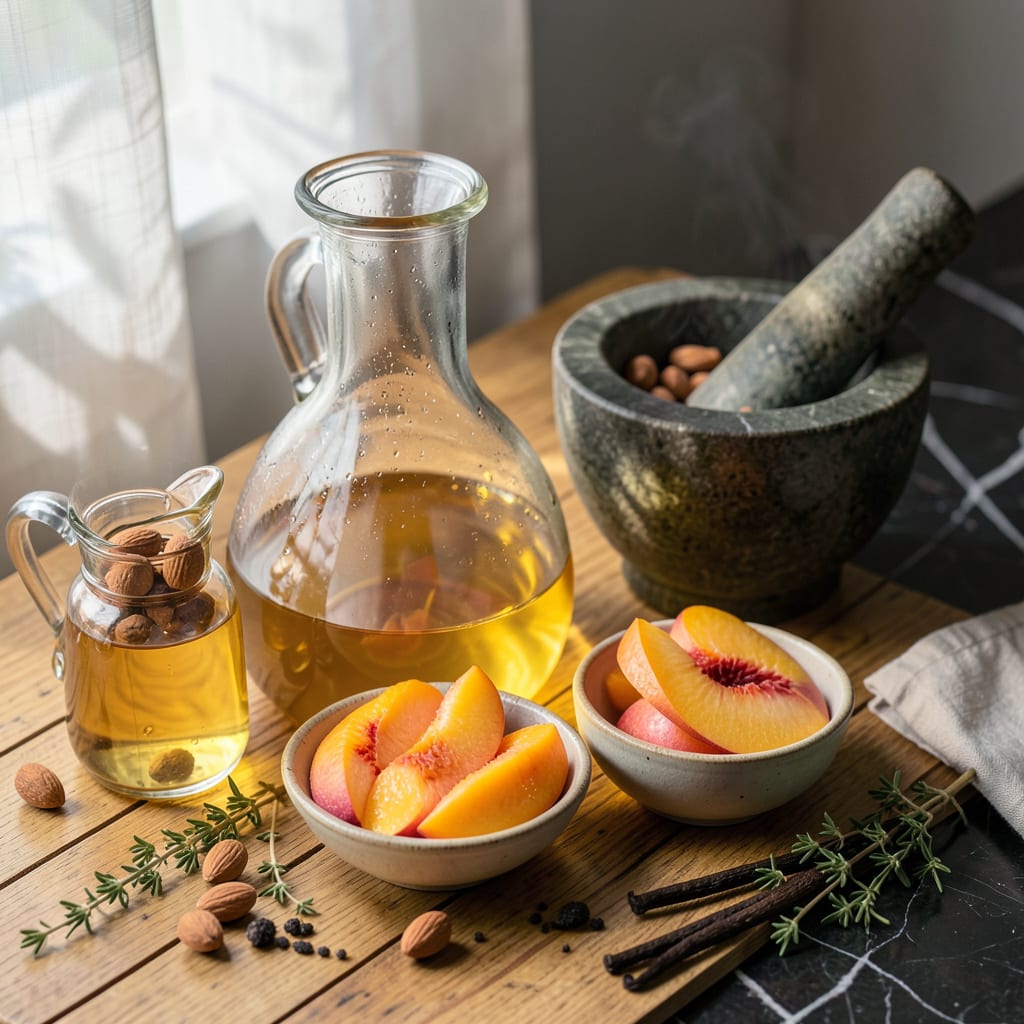
Make peach extract by steeping fresh or dried peach slices in high-proof vodka for 4-6 weeks in a dark place. Strain through cheesecloth and store in a cool, dark bottle for up to 2 years.
This simple infusion method unlocks the concentrated essence of peaches without artificial additives. 🔥 The alcohol acts as a solvent, drawing out delicate floral and fruity notes that water-based methods can’t capture. I prefer using 80-proof vodka for optimal flavor extraction—it’s strong enough to pull compounds but won’t overpower the final product. The waiting period allows complex flavors to develop, much like aging fine spirits.
What sets homemade versions apart is the ability to control intensity and purity. Store-bought extracts often contain preservatives, while your DIY version maintains the true character of the fruit. For best results, choose fully ripe peaches at peak season—their natural sugars and aromatics will shine through in the finished extract. ✨
💡 In This Article
- How Alcohol Extracts Peach Flavor Compounds
- Creative Uses for Homemade Peach Extract in Recipes
How Alcohol Extracts Peach Flavor Compounds
The magic happens at the cellular level. Ethanol (the alcohol in vodka) acts as a solvent that penetrates peach cell walls, dissolving both water-soluble and fat-soluble flavor compounds. 🔥 Unlike water-based methods that only extract certain elements, alcohol pulls out the full spectrum: sweet esters, floral terpenes, and even subtle tannins from the peach skins.
The process is similar to how perfumers extract essential oils, but with a focus on edible flavor molecules.
Alcohol concentration matters more than you might think. 80-proof vodka (40% ABV) hits the sweet spot—strong enough to break down plant material but not so harsh that it burns off delicate aromatics. Higher proofs (like 151-proof rum) extract faster but can pull bitter compounds.
The extraction follows Fick’s law of diffusion: flavor molecules move from high concentration (in peaches) to low concentration (in alcohol) over time, which is why patience is key.
Temperature plays a crucial role in the extraction efficiency. Cold steeping (room temperature or below) preserves volatile compounds that would evaporate with heat. I’ve tested both methods and found that cold extraction over 4-6 weeks yields a brighter, more complex flavor profile compared to heat-accelerated methods.
The slow process allows for gradual release of compounds like γ-decalactone—the primary peach aroma molecule—without degrading it.
Here’s what changes during the steeping period:
- Week 1-2: Alcohol begins breaking down cell structures, releasing simple sugars and primary aromatics
- Week 3-4: Deeper flavor compounds emerge as the solvent penetrates the fruit’s core tissues
- Week 5-6: Complex interactions develop between extracted compounds, creating layered flavors
The science doesn’t stop at extraction. When you use the finished product in recipes, the alcohol helps distribute peach flavors evenly through batters or liquids. This is why professional bakers often prefer alcohol-based extracts over oil-based ones—they incorporate more uniformly and don’t separate during baking.
The final extract contains about 0.5-1% of the original peach’s flavor compounds by volume, but concentrated enough that just 1/4 teaspoon can flavor an entire cake. ✨
What most people don’t realize is that the peach’s ripeness at extraction time determines the final flavor profile. Underripe peaches yield grassy, tart notes, while overripe ones can develop fermented off-flavors.
The perfect window is when peaches are fully ripe but not mushy—this is when they contain the highest concentration of desirable aroma compounds like lactones and esters that give that classic “peachy” character. 💫

- BBQ Sausage Recipe Oven: Smoky Depth Without the Grill - September 28, 2026
- BBQ Chicken Bowl Recipe Rice: Smoky Sweetness Over Fluffy Grains - September 28, 2026
- Beef Cutlet Recipe Ideas: Crispy Breaded Patties With Bold Seasonings - September 28, 2026