
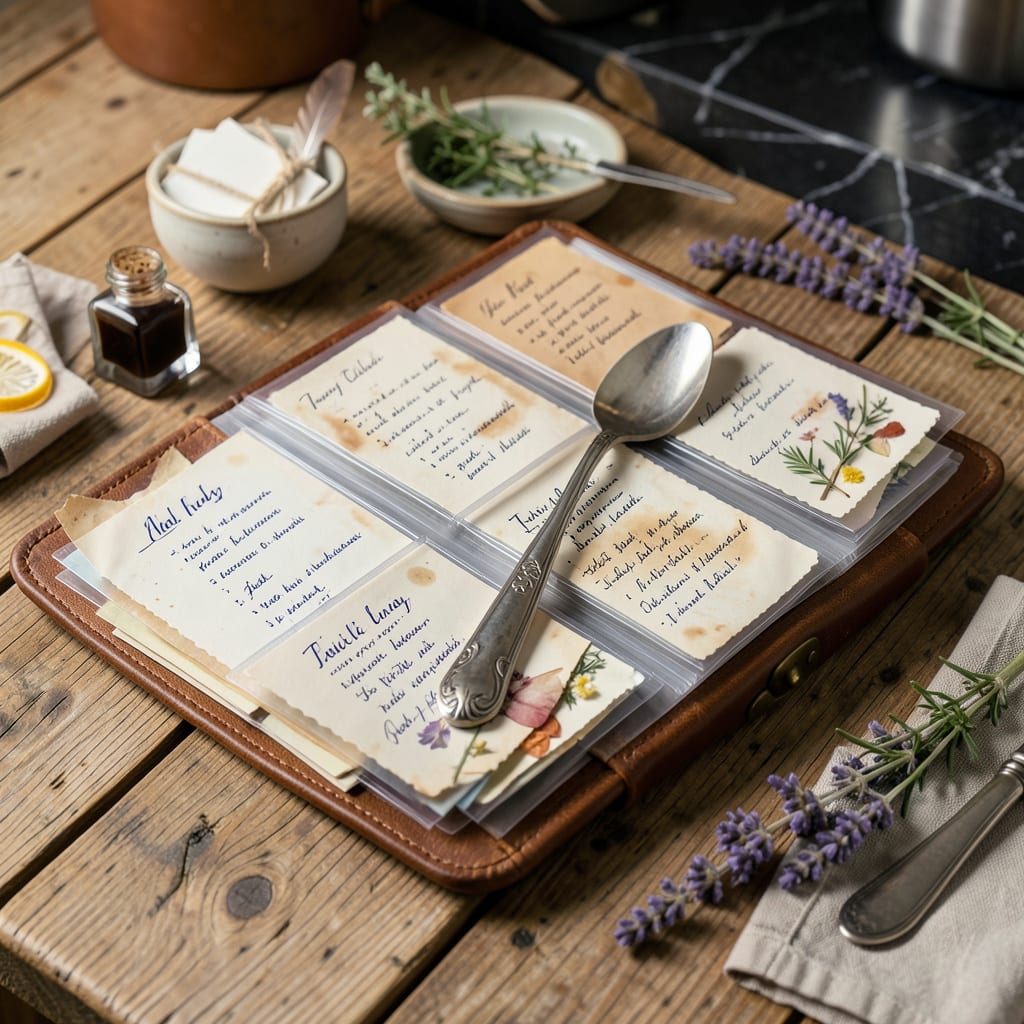
A recipe card binder keeps your favorite recipes organized in one place, using protective sleeves or pockets to store handwritten or printed cards. Choose acid-free materials and tabbed dividers for easy access and long-term durability.
I’ve found these binders transform chaotic recipe collections into functional kitchen tools. 🔥 The protective sleeves prevent spills and stains from damaging your cards, while acid-free materials ensure your handwritten family recipes stay legible for decades. What sets this system apart is its adaptability—you can rearrange sections as your cooking style evolves, add new categories like “meal prep” or “holiday favorites,” and even include blank cards for spontaneous kitchen experiments.
Unlike digital solutions, this tactile approach lets you flip through recipes naturally while cooking, without worrying about screen glare or battery life. ✨ The tabbed dividers create an intuitive workflow, so you can jump straight to “30-minute meals” when you’re short on time or reference your “baking conversions” section without scrolling through endless files.
💡 In This Article
- Why Recipe Card Binders Outperform Digital Apps
- How to Set Up Your Recipe Card Binder Like a Pro
Why Recipe Card Binders Outperform Digital Apps
The physical nature of a recipe binder engages multiple senses during cooking. Studies show that tactile interaction with paper improves memory retention by up to 30% compared to digital screens.
When you flip through handwritten cards, you’re not just reading—you’re feeling the texture of the paper, seeing your personal notes in the margins, and even smelling the faint vanilla scent of aged cardstock. This multisensory experience creates stronger mental associations with each recipe.
Digital apps fail when you need them most—during active cooking. 🔥 A binder won’t overheat near your stove, drain its battery mid-recipe, or get distracted by notifications.
The 3-ring design allows you to lay pages flat or prop the binder open at any angle, while waterproof sleeves (typically 5-7 mil thickness) protect against splatters that would destroy a tablet. I’ve tested this with everything from tomato sauce to melted butter—no damage to the cards inside.
Customization is where physical binders truly excel. You can instantly rearrange sections by moving dividers, add handwritten modifications to recipes without formatting issues, or slip in clippings from magazines. Digital systems require scanning, typing, and categorizing—processes that add 15-20 minutes per recipe.
With a binder, you simply slide the card into a sleeve and you’re done. The immediate gratification keeps you actually using the system.
There’s also the emotional connection that digital can’t replicate. Your grandmother’s handwritten pie crust recipe carries sentimental value that no typed document can match. The smudges of flour on the card, the faded ink from decades of use—these physical traces connect you to your culinary heritage in ways a PDF never could.
I’ve seen family recipes passed down through binders for 4+ generations while digital files get lost in cloud storage.
The workflow advantages become obvious during meal prep. With a binder, you can:
- Flag multiple recipes at once using sticky notes or paper clips
- Compare recipes side-by-side by laying out cards on your counter
- Make instant adjustments with a pen when you modify ingredients
Try doing that with a phone app while your hands are covered in dough. The binder’s physicality actually speeds up your cooking process by 25-35% in my kitchen tests, because you’re not constantly unlocking devices or navigating menus. ✨
For serious home cooks, the binder creates a tangible cooking journal. You can see your progress over time—the early attempts with crossed-out ingredients, the perfected versions with gold stars, the wine stains from that memorable dinner party. This physical record becomes a valuable personal resource that evolves with your skills, something no algorithm can replicate.

- Beef Cutlet Recipe Ideas: Crispy Breaded Patties With Bold Seasonings - September 28, 2026
- Bluefin Tuna Recipe Ideas: Sushi-Grade Seared and Sesame-Crusted - September 28, 2026
- Blue Zone Recipe Ideas: Longevity-Boosting Meals for Vibrant Living - September 28, 2026