
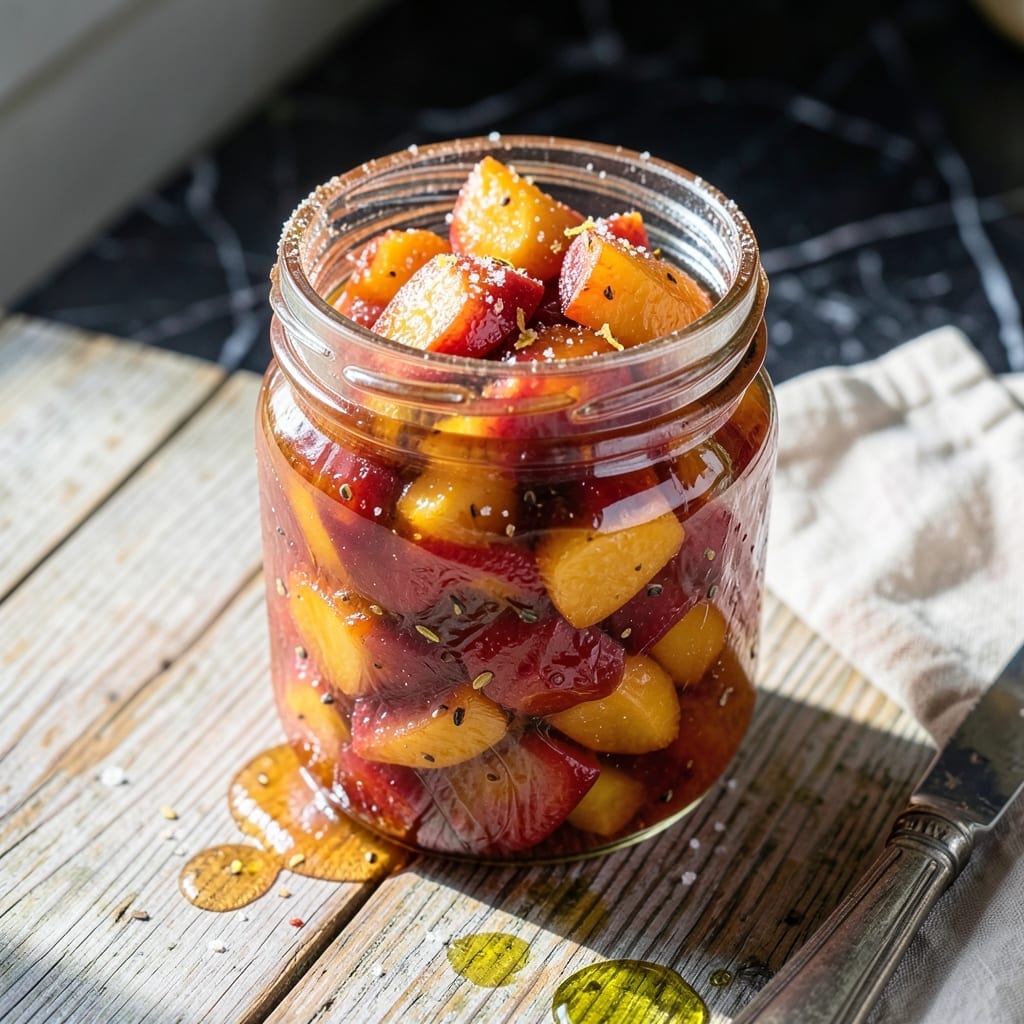
There’s nothing like homemade peach preserves to capture summer in a jar. This method relies on natural pectin in ripe peaches and a touch of lemon juice to achieve the perfect thick, glossy spread.
With just peaches, sugar, and a little patience, you’ll create a preserve that’s rich, fruity, and free of artificial thickeners. The result is a smooth, sweet spread ideal for toast, pastries, or gifting.
Ingredients for Peach Preserves Recipe Without Pectin
Summer in a jar with just peaches, sugar, and a little lemon. Pure, natural sweetness.
| Ingredient | Amount | Notes |
|---|---|---|
| Ripe Peaches 🍑 | 4 lb | Peeled, pitted, chopped |
| Granulated Sugar 🍚 | 3 cups | White or raw cane sugar |
| Lemon Juice 🍋 | ½ cup | Freshly squeezed preferred |
| Lemon Zest 🍋 | 1 tbsp | Finely grated from fresh lemon |
| Vanilla Bean 🌿 | 1 whole | Split and scraped |
| Water 💧 | ½ cup | For initial cooking |
| Cinnamon Stick 🌿 | 1 whole | Optional for spiced flavor |
Peaches are the star here—use freestone varieties for easiest pitting. Farmers markets in late summer have the best selection, but grocery store peaches work if they’re fragrant and yield slightly to pressure. The sugar isn’t just for sweetness; it helps extract the natural pectin. Organic cane sugar gives a cleaner flavor than white, but either works perfectly.
No fresh lemons? Bottled lemon juice at equal amount (but fresh is brighter). Want more depth? Swap vanilla bean for 1 tsp vanilla extract. For a spiced twist, add a pinch of ground cinnamon or a star anise pod with the cinnamon stick. The lemon zest is worth it—don’t skip this for that perfect citrus note.
Preserves seal best in sterile jars. Once opened, store in the fridge for up to 3 weeks. Unopened jars keep in a cool, dark place for 1 year. Perfect for holiday gifting—just add a pretty ribbon and label.
Why You’ll Love This Recipe
- No Fuss Cooking: I just chop peaches, simmer with sugar and a splash of lemon, and let time do the rest—no special equipment or pectin required.
- Vanilla-Kissed Sweetness: The vanilla bean and lemon zest turn simple peaches into something rich and complex, with bright citrus notes balancing the caramelized sugar.
- Endless Uses: I slather it on toast, swirl it into yogurt, or gift jars as hostess presents—it’s my most versatile pantry staple.
- Budget-Friendly Batch: A pile of ripe peaches and a few cups of sugar yield multiple jars, and it keeps for months, so I’m set for breakfast and gifts alike.
Step-by-Step Instructions for Peach Preserves
This method ensures naturally thick, glossy preserves without relying on added pectin.
Step 1: Prepare the Peaches and Aromatics
Peel, pit, and chop the 4 lb ripe peaches into ½-inch pieces. Uniform size ensures even cooking and consistent texture in your finished product. Place them in a large, heavy-bottomed pot—this prevents scorching as the mixture thickens.
Split the vanilla bean lengthwise and scrape out the seeds, adding both the seeds and the pod to the pot. Add the 1 tbsp lemon zest and 1 whole cinnamon stick at this stage so their flavors infuse during the initial cooking.
Step 2: Combine Ingredients and Begin Cooking
Pour in the 0.5 cup water and 0.5 cup lemon juice. Stir in the 3 cups granulated sugar until it begins to dissolve. The acid from the lemon juice helps balance the sweetness and aids in the natural thickening process.
Bring the mixture to a full boil over medium-high heat, stirring frequently with a wooden spoon. This prevents the sugar from settling at the bottom and burning. You’ll notice the peaches start to release their juices, creating a syrupy base for the preserves.
Step 3: Simmer Until Thickened
Once boiling, reduce the heat to medium and let the mixture simmer uncovered. Stir every 5-7 minutes to prevent sticking. After about 45-60 minutes, the preserves will begin to thicken as the natural pectin in the fruit activates.
To test for doneness, dip a cold spoon into the mixture—it should sheet off the spoon slowly and mound slightly when returned to the pot. If it’s still too runny, continue simmering and testing every 10 minutes until it reaches the desired consistency.
Step 4: Remove Aromatics and Jar the Preserves
Once thickened, remove the pot from heat. Fish out the vanilla bean pod and cinnamon stick. The vanilla seeds will remain, adding flecks of flavor throughout the preserves.
Ladle the hot preserves into clean, sterilized jars, leaving ¼-inch headspace. The preserves will thicken slightly more as they cool. Let them sit undisturbed for 12-24 hours to set fully before sealing with lids.
Pro Tips For Making Peach Preserves Recipe Without Pectin
- Test for Ripeness: Press gently on the peaches—if they give slightly and smell sweet at the stem, they’re ready. I learned this the hard way after using firm peaches and ending up with preserves that never thickened properly.
- Zest Before Juicing: Always zest the lemon before cutting it in half for juice. After burning my fingers trying to zest a juiced lemon, I finally figured out the right order.
- Simmer, Don’t Boil: Keep the heat at a steady simmer, not a rolling boil, or the sugar will crystallize and your preserves will turn grainy. My grandmother swore by this, and she was right.
- Use a Wide Pot: A wide, heavy-bottomed pot lets the mixture reduce faster and more evenly. Sounds weird, but it works—your preserves will set better and cook more consistently.
Regional Styles of These Flavors
Southern Style
In the American South, peach preserves often include a hint of spice. I add ½ tsp ground nutmeg or ¼ tsp ground cloves along with the cinnamon stick for warmth. The key is using freestone peaches from Georgia or South Carolina for maximum natural pectin and sweetness.
Appalachian Tradition
Mountain families traditionally made preserves with wild peaches and raw honey instead of sugar. The method involves cooking the fruit down for 2-3 hours until it reaches a jam-like consistency. I’ve found that adding 1 tbsp apple cider vinegar helps balance the sweetness beautifully.
Texas Twist
Everything’s bigger in Texas, including the flavor. Here, peach preserves often include chopped jalapeños or red pepper flakes for a sweet-spicy kick. I like using Hatch chiles in season for a milder heat. The result is perfect for glazing meats or pairing with sharp cheddar.
Pacific Northwest
This region favors a lighter, fruit-forward approach. I use white peaches and reduce the sugar to 2 cups for a brighter, less syrupy preserve. Adding 1 tsp fresh ginger enhances the natural peach flavor without overpowering it. 💪
New England Style
Colonial-era recipes often incorporated maple syrup alongside sugar. I replace 1 cup of granulated sugar with 1 cup dark maple syrup for depth. The addition of 1 star anise pod during cooking adds a subtle licorice note beloved in historic New England kitchens.
Midwest Simplicity
Farm families in the Midwest often made preserves with whatever was abundant. I love using a mix of peaches and nectarines for complexity. The trick is cooking in a copper pot—it reacts with the fruit acids to create a beautiful, natural caramelization. 🔥
Frequently Asked Questions
How long do these preserves keep?
Unopened jars last up to 1 year in a cool, dark place. Once opened, refrigerate and use within 3 weeks for best quality.
Why add lemon juice?
Lemon juice provides acidity that helps activate natural pectin in peaches, ensuring proper thickening. It also balances sweetness.
Can I use less sugar?
Sugar helps with preservation and thickening. Reducing it may result in runny preserves or shorter shelf life. Stick to 3 cups for best results.
What if my preserves won’t thicken?
Continue simmering and test every 10 minutes. If still thin, add more lemon juice or cook longer. Patience is key!
Nutrition Facts

- BBQ Sausage Recipe Oven: Smoky Depth Without the Grill - September 28, 2026
- BBQ Chicken Bowl Recipe Rice: Smoky Sweetness Over Fluffy Grains - September 28, 2026
- Beef Cutlet Recipe Ideas: Crispy Breaded Patties With Bold Seasonings - September 28, 2026