
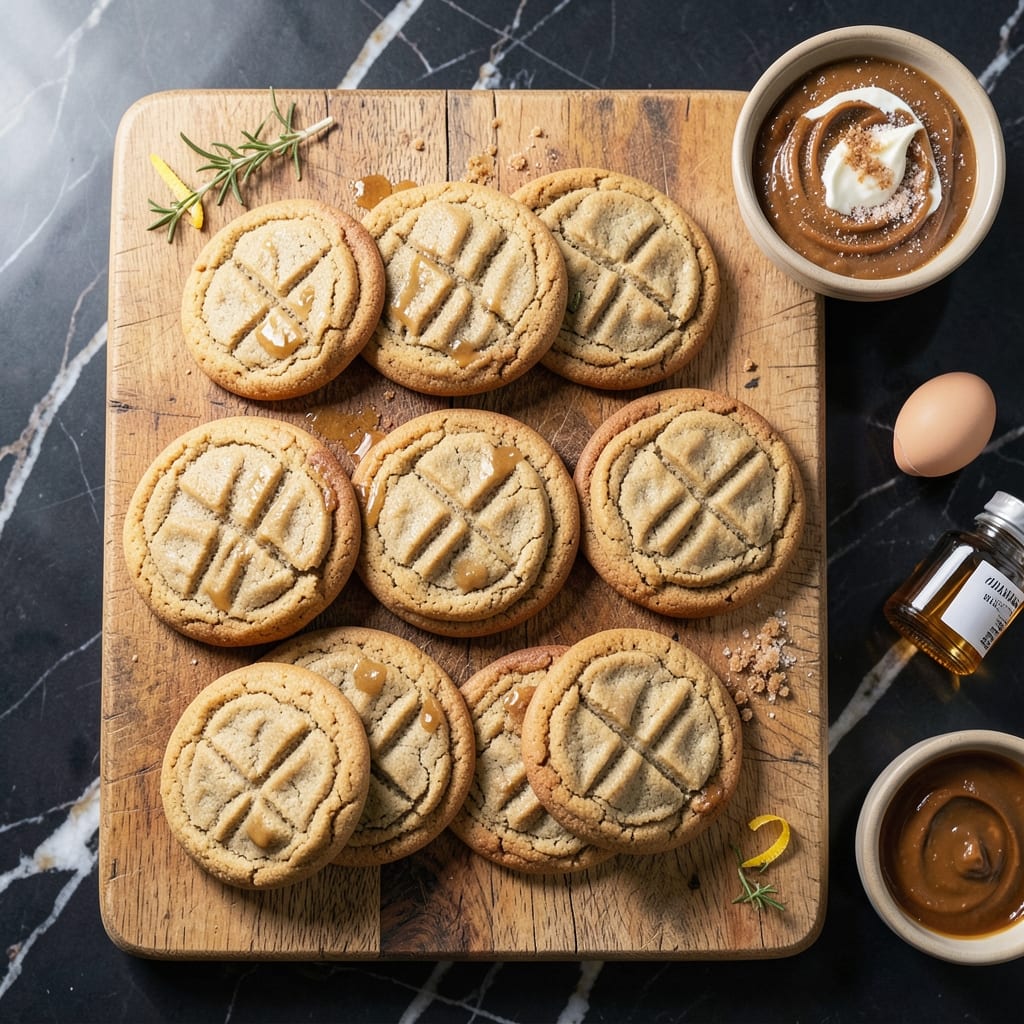
I developed this recipe after realizing many home bakers lack leavening agents but still crave that classic peanut butter cookie experience. The solution lies in the perfect ratio of ingredients and precise baking technique.
This method produces cookies with chewy edges and that signature crisscross pattern we all love. The absence of baking powder or soda means we rely on proper mixing and oven temperature to achieve the right texture.
You’ll find these cookies maintain their shape beautifully while delivering rich peanut butter flavor in every bite. The secret is in the chilling step before baking, which prevents excessive spreading.
The result is a timeless treat that proves you don’t need chemical leaveners to create bakery-quality cookies at home.
Ingredients for Peanut Butter Cookie Recipe Without Baking Powder or Baking Soda
Nine simple ingredients deliver that classic chewy texture without any leavening agents.
| Ingredient | Amount | Notes |
|---|---|---|
| Creamy Peanut Butter 🥜 | 1 cup | Natural or commercial, well-stirred |
| Unsalted Butter 🧈 | ½ cup | Softened to room temperature |
| Granulated Sugar 🍚 | ¾ cup | Fine white sugar preferred |
| Packed Light Brown Sugar 🟤 | ¾ cup | Moisture adds chewiness |
| Large Egg 🥚 | 1 whole | Room temperature for even mixing |
| Vanilla Extract 🌿 | 1 tsp | Pure extract for best flavor |
| All-Purpose Flour 🌾 | 1 ½ cups | Spoon and level method |
| Salt 🧂 | ½ tsp | Fine sea salt or table salt |
| Old-Fashioned Rolled Oats 🌾 | ½ cup | For texture and structure |
| Chopped Roasted Peanuts 🥜 | ¼ cup | Optional for crunch |
The peanut butter is non-negotiable here—Jif or Skippy give that classic flavor and consistent texture. Natural PB works too (just stir well), but the oil separation can mess with your ratios. Whole Foods has great organic options if you’re avoiding additives. Butter needs to be unsalted so you control the salt content. For the sugars, light brown is key for moisture and chew (dark brown will overpower the peanut flavor).
No peanut butter? Almond or cashew butter can swap in 1:1, but the flavor will be different. Out of brown sugar? Use all granulated plus 1 tbsp molasses per cup. Skip the oats if you want, but they really help with structure in the absence of leaveners. The egg is doing double duty here as binder and structure-builder—don’t skip it.
Dough keeps in the fridge for up to 3 days (perfect for chilling before baking). Baked cookies stay fresh 5 days in an airtight container. Freeze dough balls for up to 3 months—just thaw 30 minutes before baking. That crisscross pattern holds best when dough is properly chilled.
Why You’ll Love This Recipe
- No-Fuss Mixing: I just dump the peanut butter, butter, sugars, and egg together—no measuring leavening agents or worrying about expired baking powder.
- Rich PB Punch: The double sugars caramelize around the creamy peanut butter, giving that nostalgic sweet-salty bite in every chewy bite.
- Last-Minute Hero: Honestly, I’ve pulled these off for school bake sales with 20 minutes’ notice using only pantry staples.
- Budget-Friendly Batch: One egg and basic sugars stretch into two dozen cookies, and they taste better the next day—if they last that long.
Step-by-Step Instructions for Peanut Butter Cookies Without Leavening Agents
Here’s how I nail these chewy, crisscross-topped cookies without a single leavening agent in sight.
Step 1: Cream the Peanut Butter and Butter with Sugars
In a large bowl, beat the 1 cup Creamy Peanut Butter and 0.5 cup Unsalted Butter together until smooth and fully combined. I use an electric mixer on medium speed for this—it saves time and ensures a uniform texture.
Gradually add the 0.75 cup Granulated Sugar and 0.75 cup Packed Light Brown Sugar, beating until light and fluffy, about 2-3 minutes. The mixture should be pale and slightly aerated. This step is crucial for creating the right texture, as the sugars help bind the dough without baking powder or soda.
Step 2: Incorporate Wet and Dry Ingredients
Add the 1 whole Large Egg and 1 tsp Vanilla Extract to the peanut butter mixture, beating until fully incorporated. Scrape down the sides of the bowl as needed to ensure even mixing.
In a separate bowl, whisk together the 1.5 cups All-Purpose Flour and 0.5 tsp Salt. Gradually add this to the wet ingredients, mixing on low speed just until combined. Over-mixing can make the cookies tough, so stop as soon as the flour disappears.
Step 3: Fold in Oats and Peanuts for Texture
Using a spatula, fold in the 0.5 cup Old-Fashioned Rolled Oats and 0.25 cup Chopped Roasted Peanuts by hand. The oats add structure and chewiness, while the peanuts provide a delightful crunch and extra peanut flavor.
If the dough feels too sticky, you can chill it for 20-30 minutes to make it easier to handle. However, I often skip this step and roll the dough directly into balls—the warmth from your hands helps soften it just enough.
Step 4: Shape, Fork, and Bake to Perfection
Preheat your oven to 350°F and line two baking sheets with parchment paper. Roll the dough into 1-inch balls (about the size of a walnut) and place them 2 inches apart on the prepared sheets.
Using a fork, gently press down on each ball to flatten slightly, creating the classic crisscross pattern. Bake for 10-12 minutes, or until the edges are lightly golden but the centers still look slightly underdone. They’ll continue to set as they cool on the baking sheet.
Step 5: Cool and Enjoy the Chewy Goodness
Let the cookies cool on the baking sheets for 5 minutes before transferring them to a wire rack to cool completely. This brief rest allows them to firm up without crumbling.
The result is a cookie with a tender center, chewy edges, and that nostalgic crisscross top. Serve warm for gooey perfection, or let them cool completely for a firmer texture. Either way, they’re irresistible.
Pro Tips For Making Peanut Butter Cookie Recipe Without Baking Powder Or Baking Soda
- Chill the Dough: After mixing, let the dough rest in the fridge for at least 30 minutes—I learned this the hard way when my first batch spread into flat, greasy puddles.
- Use Room-Temp Butter: Soften the unsalted butter to room temperature first; cold butter leaves streaks of fat in the dough, and melted butter makes the cookies greasy.
- Flatten Before Baking: Press each dough ball with a fork in a crisscross pattern before baking—without leavening agents, they won’t spread or crack properly on their own.
- Swap in Crunchy Peanut Butter: If you want texture, use crunchy peanut butter instead of creamy—it adds little bits of nut that actually change the outcome, especially in a recipe this simple.
Regional Styles of These Flavors
Southern Diner Style
Nana Mae’s version from Peachtree Street used 1 cup Skippy peanut butter and ½ cup shortening instead of butter for extra stability. She always pressed the fork pattern deeper for that classic diner look. David swears these taste just like his childhood favorites. 💛
Texas Farmhouse
In Austin, I add ¼ cup chopped Texas pecans for a local twist. The oats get swapped for ½ cup crushed cornflakes for extra crunch. Central Market’s house brand peanut butter works beautifully here.
Appalachian Mountain
Asheville taught me to use maple syrup instead of half the granulated sugar. The dough is stickier, so chill for 30 minutes before rolling. These have a deeper caramel note that pairs perfectly with a glass of cold milk.
New England Classic
Northern bakers often use chilled dough for thicker cookies. Press the fork pattern once for a simpler look. I’ve found King Arthur flour gives the best structure in this style.
These hold their shape better than Southern versions but stay just as tender inside. 🥄
Nutrition Facts
Frequently Asked Questions
Why do these cookies stay chewy without leavening?
The combination of brown sugar and oats provides moisture and structure. The egg acts as a binder while the sugars caramelize during baking to create that perfect texture.
Can I use crunchy peanut butter instead?
Crunchy peanut butter will give you extra texture and nutty bits throughout. The baking time remains the same, just expect a slightly nuttier result.
What if my cookies spread too much?
Chill your dough for 30 minutes before baking and ensure your oven is properly preheated to 350°F. This helps maintain the shape and prevents excessive spreading.
How do I store these cookies?
Keep them in an airtight container at room temperature for up to 5 days. For longer storage, freeze baked cookies for up to 3 months.

- Pina Colada Dip Recipe Red Lobster: Tropical Creaminess With Toasted Coconut - October 12, 2026
- Pickled Sweet Cherry Peppers Recipe Canning: Tangy Heat for Pantry Staples - October 12, 2026
- Peppercorn Sauce Recipe Vegan: Rich Umami Depth Without Cream - October 12, 2026