
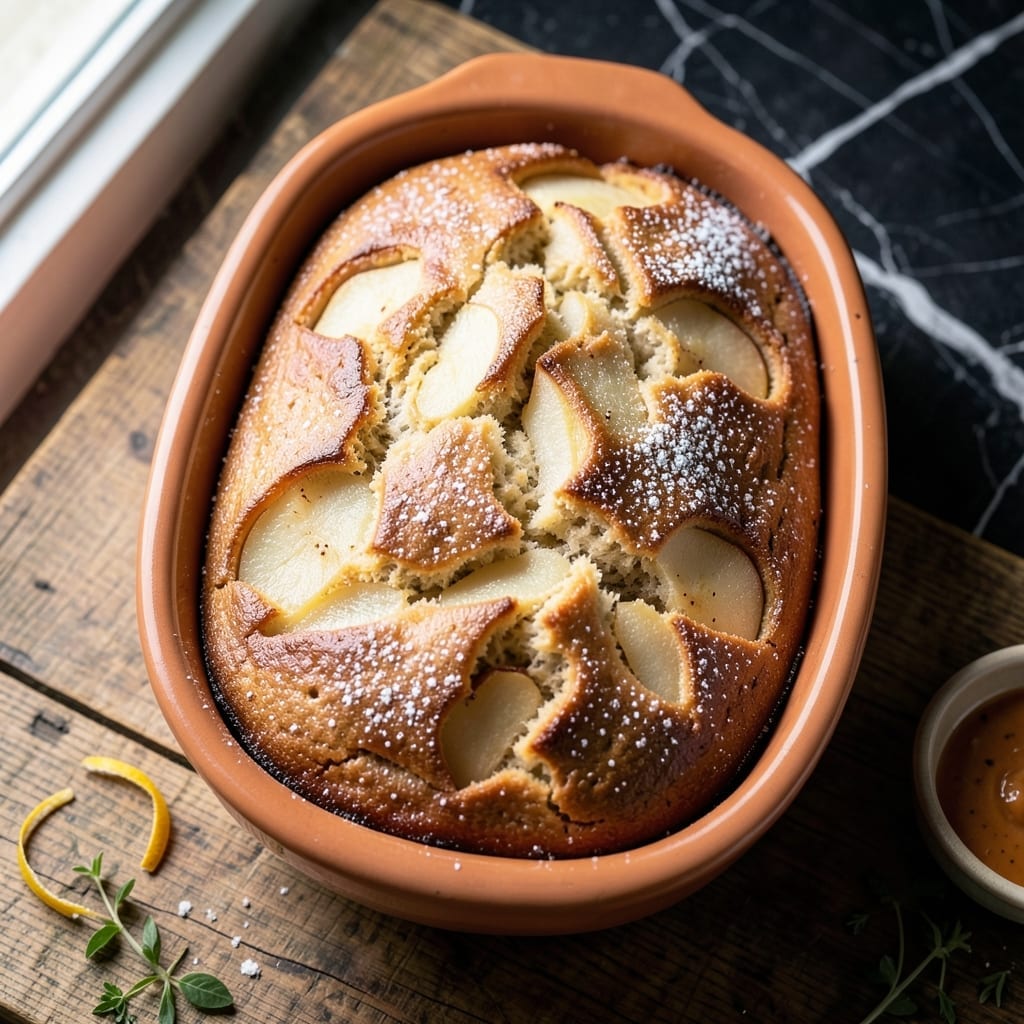
This pear bread delivers the perfect balance of moist crumb and fresh fruit flavor every time. My grandmother’s technique of folding in diced fresh pears ensures each bite bursts with natural sweetness.
The secret lies in using ripe but firm pears that hold their shape during baking. A touch of cinnamon enhances the fruit’s natural warmth without overpowering it.
You’ll end up with a tender loaf that stays moist for days, with visible flecks of pear throughout. The texture is ideal for breakfast or afternoon tea.
Best served slightly warm, this bread requires no special equipment—just a mixing bowl and standard loaf pan.
Ingredients for Pear Bread Recipe with Fresh Pears
Simple ingredients for a moist, fruit-packed loaf with grandmother’s touch.
| Ingredient | Amount | Notes |
|---|---|---|
| All-Purpose Flour 🌾 | 2 cups | Sifted for lighter texture |
| Granulated Sugar 🍚 | ¾ cup | Adjust to taste preference |
| Baking Soda 🧂 | 1 tsp | Ensures proper rise |
| Ground Cinnamon 🌿 | 1 tsp | Enhances pear flavor |
| Salt 🧂 | ½ tsp | Balances sweetness |
| Large Eggs 🥚 | 2 whole | Room temperature preferred |
| Vegetable Oil 🫒 | ½ cup | Or melted butter |
| Vanilla Extract 💧 | 1 tsp | Pure extract recommended |
| Ripe but Firm Pears 🍐 | 2 whole | Peeled, cored, diced |
| Walnuts 🌰 | ½ cup | Chopped, optional for crunch |
The pears are the star here. Choose ripe but firm Bosc or Anjou—they hold up best during baking. Soft, mealy pears turn to mush. I grab mine from Trader Joe’s or the local farmers market. The cinnamon is subtle, so a freshly opened jar works better than that dusty one in the back of your cabinet. All-purpose flour is fine, but sifting it (yes, even just whisking in the bowl) makes a noticeably lighter crumb.
No fresh pears? Canned pears in juice (drained and patted dry) work in a pinch, but the texture won’t be quite the same. Out of walnuts? Pecans or almonds add the same crunch. Vegetable oil can be swapped for melted butter (or coconut oil for a hint of flavor). Need it nut-free? Skip the walnuts entirely—the bread’s still delicious. The sugar can be reduced by a third if you prefer it less sweet.
This bread stays moist for 3-4 days wrapped tightly at room temperature. For longer storage, slice and freeze for up to 3 months. Reheat slices in the toaster oven (or microwave, if you’re desperate) to restore that just-baked warmth.
Why You’ll Love This Recipe
- One Bowl Wonder: I just dump, mix, and bake—no fancy equipment, just a bowl and a spoon.
- Warm Spiced Comfort: The cinnamon and fresh pears make every bite taste like autumn in bread form.
- Breakfast or Snack: Honestly, it’s just as good with coffee in the morning as it is for an afternoon pick-me-up.
- Stays Fresh: Leftovers taste even better the next day, and it freezes like a dream for busy weeks.
Step-by-Step Instructions for Pear Bread
Here’s the method. Simple steps, big flavor, perfect every time.
Step 1: Prep Pears and Preheat Oven
Peel, core, and dice the 2 whole Ripe but Firm Pears into small, even pieces. I like to keep them about ¼-inch so they soften nicely without disappearing into the batter. This size also distributes pear flavor in every bite.
Preheat your oven to 350°F. Grease a 9×5-inch loaf pan thoroughly with butter or nonstick spray. Don’t skip this step—it ensures your bread releases cleanly after baking. I also like to line the pan with parchment paper for extra insurance.
Step 2: Combine Wet Ingredients
In a large bowl, whisk together the 2 whole Large Eggs, 0.75 cup Granulated Sugar, 0.5 cup Vegetable Oil, and 1 tsp Vanilla Extract until smooth and well combined. The mixture should be pale and slightly thick.
I always use room temperature eggs here—they incorporate better into the oil and sugar, creating a more uniform texture. If your eggs are cold, place them in warm water for 5 minutes before starting. This small step makes a noticeable difference in the final crumb.
Step 3: Mix Dry Ingredients and Fold Together
In a separate bowl, sift together the 2 cups All-Purpose Flour, 1 tsp Baking Soda, 1 tsp Ground Cinnamon, and 0.5 tsp Salt. Sifting the flour isn’t just for show—it breaks up lumps and incorporates air, which helps create that tender, moist texture promised in the title.
Gradually add the dry ingredients to the wet mixture, folding gently with a spatula until just combined. Avoid overmixing—you want to see a few flour streaks disappear, but stop as soon as they do. Overworking the batter develops gluten, which makes bread tough instead of tender.
Step 4: Fold in Pears and Walnuts, Then Bake
Gently fold in the diced pears and 0.5 cup Walnuts (if using) until evenly distributed. The pears will release some moisture as you fold, but that’s okay—it adds to the moistness. If the batter seems too thick, the pears will loosen it up as they bake.
Pour the batter into your prepared loaf pan and smooth the top with your spatula. Bake for 50-60 minutes, or until a toothpick inserted into the center comes out clean. You’ll know it’s done when the top is golden brown and springs back when lightly pressed.
If the top browns too quickly, tent the pan with foil for the last 15-20 minutes. This prevents over-browning while allowing the center to finish baking. The walnuts might peek through the top—that’s a good sign they’re toasting nicely.
Step 5: Cool and Serve
Let the bread cool in the pan for 10 minutes, then transfer it to a wire rack to cool completely. I know it’s tempting to slice into it right away, but cooling allows the structure to set and the flavors to develop.
Once cooled, the bread should have a moist, tender crumb with visible bits of pear and walnut throughout. Slice with a serrated knife for clean cuts. This pear bread tastes great warm or at room temperature, and it keeps well wrapped at room temperature for up to 3 days.
Pro Tips For Making Pear Bread Recipe With Fresh Pears
- Pre-cook the pears: Simmer diced pears for 5 minutes before adding to batter—I learned this the hard way after ending up with crunchy bits in my loaf. It softens them just enough to blend perfectly.
- Don’t overmix: Stir the batter just until the flour disappears; overworking it makes the bread dense. My first few loaves were bricks until I backed off the spoon.
- Use ripe pears: Pick pears that yield slightly to pressure—they sweeten the bread naturally and mash easier into the batter. Underripe ones taste starchy and ruin the texture.
- Test with a skewer: Stick a skewer in the center at 50 minutes; if it comes out clean, it’s done. After burning three loaves, I finally figured out that oven times are just guesses.
Make-Ahead Tips for Leftovers
Batter Prep Ahead
You can mix the wet and dry ingredients separately the night before. Store wet in a sealed container at room temperature and dry in another. Combine them in the morning, then fold in diced pears and walnuts. This saves 10 minutes of prep time. 💡
Pear Prep Shortcut
Peel and dice your pears up to 12 hours ahead. Toss them with 1 tsp lemon juice to prevent browning. Store in an airtight container in the fridge. This keeps the fruit fresh and ready to fold into your batter.
Loaf Pan Prep
Grease your 9×5-inch loaf pan and line it with parchment paper the day before. This step often gets overlooked in the morning rush. The parchment ensures easy release and makes cleanup a breeze.
Make and Bake Later
Prepare the full batter, pour it into your pan, and refrigerate overnight. In the morning, let it sit at room temperature for 30 minutes while the oven preheats to 350°F. Bake as directed, adding 5-10 minutes if needed.
Freezing for Future
Bake the loaf completely, cool, then wrap tightly in plastic wrap and foil. Freeze for up to 3 months. Thaw overnight at room temperature. Warm slices in a toaster oven for that fresh-baked taste. ❄️
Portion Control
Slice the cooled loaf and freeze individual slices. This way, you can grab just what you need. Reheat from frozen in the toaster oven at 350°F for 8-10 minutes. Perfect for quick breakfasts or snacks.
Nutrition Facts
Frequently Asked Questions
Can I use canned pears instead of fresh?
Yes, but drain and pat them dry first. Fresh pears give better texture and flavor, but canned work in a pinch. Expect a slightly softer result.
Why did my bread turn out dense?
Overmixing the batter is the most common cause. Fold just until combined to avoid developing gluten. Also ensure your baking soda is fresh and active.
How do I know when it’s fully baked?
Insert a toothpick into the center—it should come out clean or with a few moist crumbs. The top should be golden brown and spring back when pressed.
Can I make this without nuts?
Just omit the walnuts. The bread will still be moist and flavorful. You can add raisins or chocolate chips for extra texture if desired.

- Pina Colada Dip Recipe Red Lobster: Tropical Creaminess With Toasted Coconut - October 12, 2026
- Pickled Sweet Cherry Peppers Recipe Canning: Tangy Heat for Pantry Staples - October 12, 2026
- Peppercorn Sauce Recipe Vegan: Rich Umami Depth Without Cream - October 12, 2026