
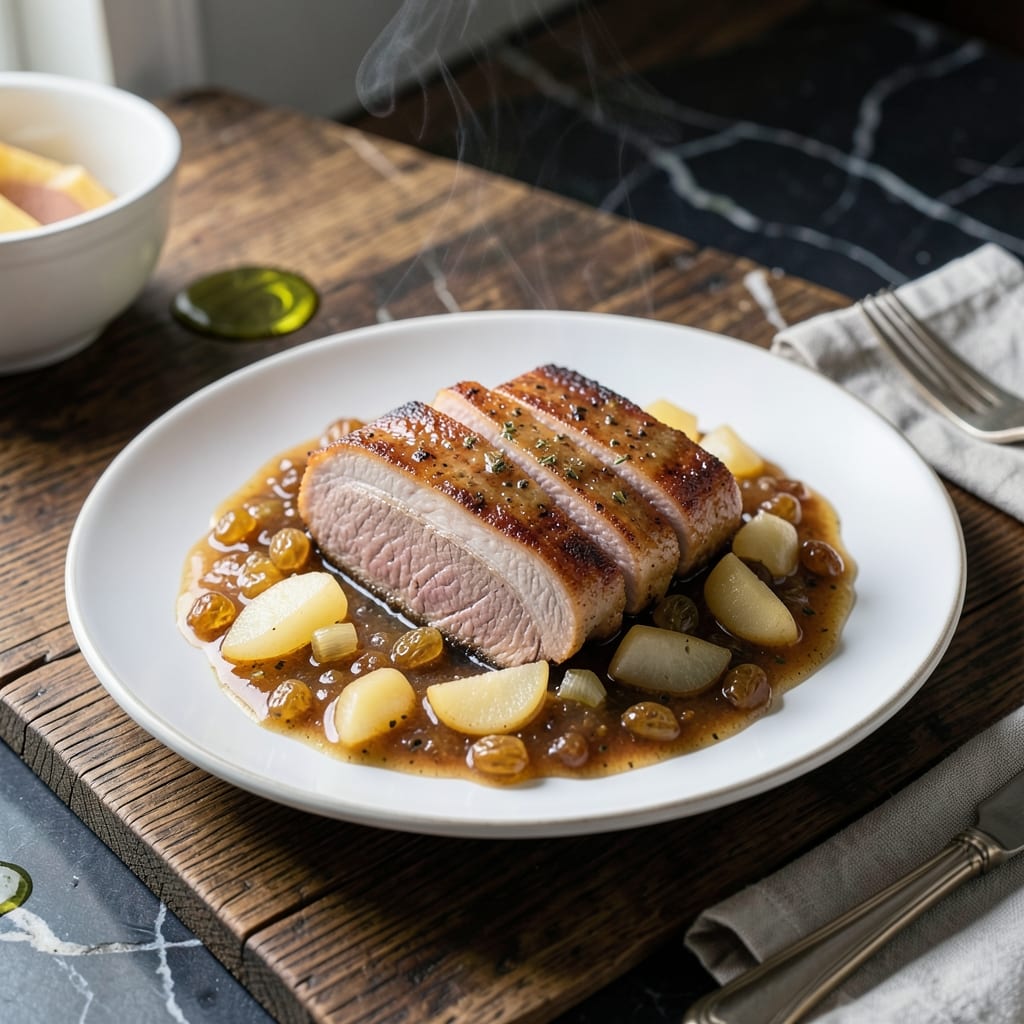
This pairing transforms simple pork into a perfect meal with minimal effort. The chutney’s sweet-spiced complexity elevates every bite.
I developed this recipe after years of testing fruit accompaniments for pork, and pears proved the ideal match. Their natural sweetness balances the savory meat.
The chutney simmers while the pork roasts, allowing flavors to meld seamlessly. You’ll achieve tender pork with caramelized edges and a chutney that’s tangy, sweet, and aromatic.
Serve this dish for Sunday suppers or holiday gatherings. It delivers restaurant-quality results with homemade warmth.
Ingredients for Pear Chutney Recipe for Pork
Pantry staples plus a few fresh items. Sweet-spiced chutney meets savory pork perfectly.
| Ingredient | Amount | Notes |
|---|---|---|
| Pork Tenderloin 🥩 | 1 ½ lb | Trimmed of excess fat |
| Bartlett Pears 🍐 | 4 whole | Firm, ripe, peeled and diced |
| Yellow Onion 🧅 | 1 whole | Finely diced for chutney |
| Apple Cider Vinegar 🍏 | ½ cup | For tangy brightness |
| Brown Sugar 🍚 | ½ cup | Light or dark variety |
| Golden Raisins 🍇 | ½ cup | Plumped for sweetness |
| Fresh Ginger Root 🌿 | 1 tbsp | Peeled and minced |
| Garlic Cloves 🧄 | 3 cloves | Minced for depth |
| Ground Cinnamon 🌶️ | ½ tsp | For warm spice |
| Ground Cloves 🌿 | ¼ tsp | Use sparingly |
| Dijon Mustard 🟡 | 1 tbsp | For sharp contrast |
| Olive Oil 🫒 | 2 tbsp | For searing pork |
| Kosher Salt 🧂 | 1 tsp | Divided for seasoning |
| Black Pepper 🌶️ | ½ tsp | Freshly ground preferred |
The pork tenderloin is key here. Look for uniform thickness—avoid the tapered ends which dry out. Whole Foods or Costco both carry great options. Pears should be firm but ripe; too soft and they’ll turn to mush. Bartletts are ideal (that sweet, floral variety), but Anjou works in a pinch. Golden raisins add chewy sweetness—Sun-Maid is reliable if you’re not buying bulk.
No Bartlett pears? Bosc pears at equal amount hold up well. Skip the raisins? Dried cranberries or chopped dates bring similar sweetness. Out of apple cider vinegar? White wine vinegar with a pinch of sugar does the trick. For the mustard, whole grain Dijon adds texture, but smooth works too. The spices are flexible—add a pinch of allspice if you’ve got it.
Chutney keeps in the fridge for 1 week—the flavors actually deepen. Pork’s best fresh, but leftovers reheat nicely for 2-3 days. Make extra chutney—it’s great on sandwiches or with cheese plates. Freeze any pork you won’t use within 3 days.
Why You’ll Love This Recipe
- One Pan Wonder: I toss the pork tenderloin and chutney ingredients together in a single skillet—minimal cleanup, maximum flavor.
- Sweet-Tangy Magic: The Bartlett pears caramelize with brown sugar and apple cider vinegar into this sticky, bright chutney that cuts through the richness of the pork.
- Weeknight Hero: Honestly, it’s my go-to for busy evenings—ready in 40 minutes and fancy enough for company.
- Leftovers Win: The chutney tastes even better the next day, so I double the batch and spoon it over sandwiches or roasted veggies.
Step-by-Step Instructions for Pear Chutney for Pork
Here’s how to create this flavor profile perfectly every time.
Step 1: Sear the Pork Tenderloin
Pat the pork tenderloin dry with paper towels and season evenly with ½ tsp Kosher Salt and ½ tsp Black Pepper. This step ensures a beautiful sear and locks in juices.
Heat 2 tbsp Olive Oil in a large oven-safe skillet over medium-high heat until shimmering. Add the seasoned pork and sear on all sides for 6-8 minutes total until golden brown. The pork should release easily from the pan when ready to turn.
Transfer the seared pork to a plate and set aside. Don’t wipe out the pan—those browned bits will add depth to your chutney later.
Step 2: Prepare the Chutney Base
In the same skillet, reduce heat to medium and add the finely diced yellow onion. Cook for 3-4 minutes until softened and translucent. Add the minced fresh ginger root and minced garlic cloves, cooking for an additional 1 minute until fragrant.
Stir in 0.5 cup Brown Sugar, 0.5 tsp Ground Cinnamon, and 0.25 tsp Ground Cloves. Cook for 1 minute, stirring constantly to toast the spices and prevent burning. The mixture should smell warm and aromatic.
Step 3: Build and Simmer the Chutney
Add the peeled and diced Bartlett pears, 0.5 cup Golden Raisins, 0.5 cup Apple Cider Vinegar, and 1 tbsp Dijon Mustard to the skillet. Stir to combine all ingredients thoroughly.
Bring the mixture to a gentle simmer, then reduce heat to medium-low. Let it cook for 15-20 minutes, stirring occasionally, until the pears are tender and the chutney has thickened slightly. The vinegar aroma will mellow as it cooks down.
The chutney should have a glossy appearance and coat the back of a spoon. If it seems too thick, add a splash of water and continue simmering.
Step 4: Finish and Serve
Return the seared pork tenderloin to the skillet, spooning the chutney over the top. Cover and let it cook over low heat for an additional 10-12 minutes, or until the pork reaches an internal temperature of 145°F.
Remove from heat and let the pork rest in the chutney for 5-10 minutes before slicing. This allows the juices to redistribute and the flavors to meld together.
Slice the pork into 1-inch thick pieces and serve with generous spoonfuls of the pear chutney. The chutney should have a perfect balance of sweet, tangy, and spiced flavors complementing the juicy pork.
Pro Tips For Making Pear Chutney Recipe For Pork
- Simmer Low and Slow: Keep the chutney at a gentle simmer for 20-25 minutes—any hotter and the vinegar will overpower the pears. I learned this the hard way after my first batch tasted more like salad dressing than chutney.
- Use Ripe Bartletts: Pick Bartlett pears that give slightly to pressure; underripe ones stay hard and sour, even after cooking. Sounds weird, but the fruit’s natural sweetness means you can cut the brown sugar by a tablespoon or two.
- Rest the Pork: Let the tenderloin rest for 10 minutes after searing, tented with foil, so the juices redistribute. Skip this and you’ll watch half the flavor pool on the cutting board.
- Toast the Spices: If you’re adding any spices (like mustard seeds or cinnamon), toast them in the pan for 30 seconds before adding the onions—it wakes up the flavors without overpowering the pears. My grandmother swore by this, and she was right.
Creative Variations of These Flavors
Spiced Apple Version
Swap Bartlett pears for 4 tart Granny Smith apples—they hold their shape beautifully. Keep all other chutney ingredients the same, but add ½ tsp ground allspice for warmth. This reminds me of apple butter days with Mrs. Henderson in Cincinnati. 🌟
Tropical Twist
Use 4 ripe mangoes instead of pears for a sunny variation. Reduce brown sugar to ¼ cup since mangoes are sweeter. Add 1 tsp lime zest and 1 chopped jalapeño for a sweet-heat combo that pairs wonderfully with pork.
Dried Fruit Medley
Replace fresh pears with 1½ cups dried pears and ½ cup dried apricots. Soak them in warm water for 15 minutes first. The texture becomes jam-like, and the flavors intensify. I love this with pork chops from our local butcher.
Savory Onion Focus
Double the yellow onion to 2 large and caramelize them for 20 minutes before adding other ingredients. Reduce pears to 2 and add 1 tbsp balsamic vinegar. This creates a deeper, more sophisticated chutney that Tom can’t get enough of.
Serve this version with grilled pork chops for a heartier meal. The caramelized onions add a rich, sweet base that complements the pork perfectly.
Herb-Infused Chutney
Add 2 tbsp chopped fresh rosemary or thyme with the pears. These herbs from my Portland garden bring an earthy note that balances the sweetness. Pair with herb-crusted pork for a cohesive flavor profile.
Nutrition Facts
Frequently Asked Questions
Can I make the chutney ahead of time?
Yes! The chutney actually tastes better after 24 hours as flavors meld. Store in an airtight container in the fridge for up to 1 week.
What if my chutney is too runny?
Simmer uncovered for 5-10 minutes more to reduce. If still thin, mix 1 tsp cornstarch with water and stir in. Cook for 2 minutes to thicken.
Can I use a different cut of pork?
Pork chops work well—sear for 4-5 minutes per side. For pulled pork, cook the chutney separately and serve on the side.
How do I know when the pork is done?
Use a meat thermometer—145°F internal temperature is perfect. Let it rest for 5-10 minutes before slicing to retain juices.

- Pina Colada Dip Recipe Red Lobster: Tropical Creaminess With Toasted Coconut - October 12, 2026
- Pickled Sweet Cherry Peppers Recipe Canning: Tangy Heat for Pantry Staples - October 12, 2026
- Peppercorn Sauce Recipe Vegan: Rich Umami Depth Without Cream - October 12, 2026