
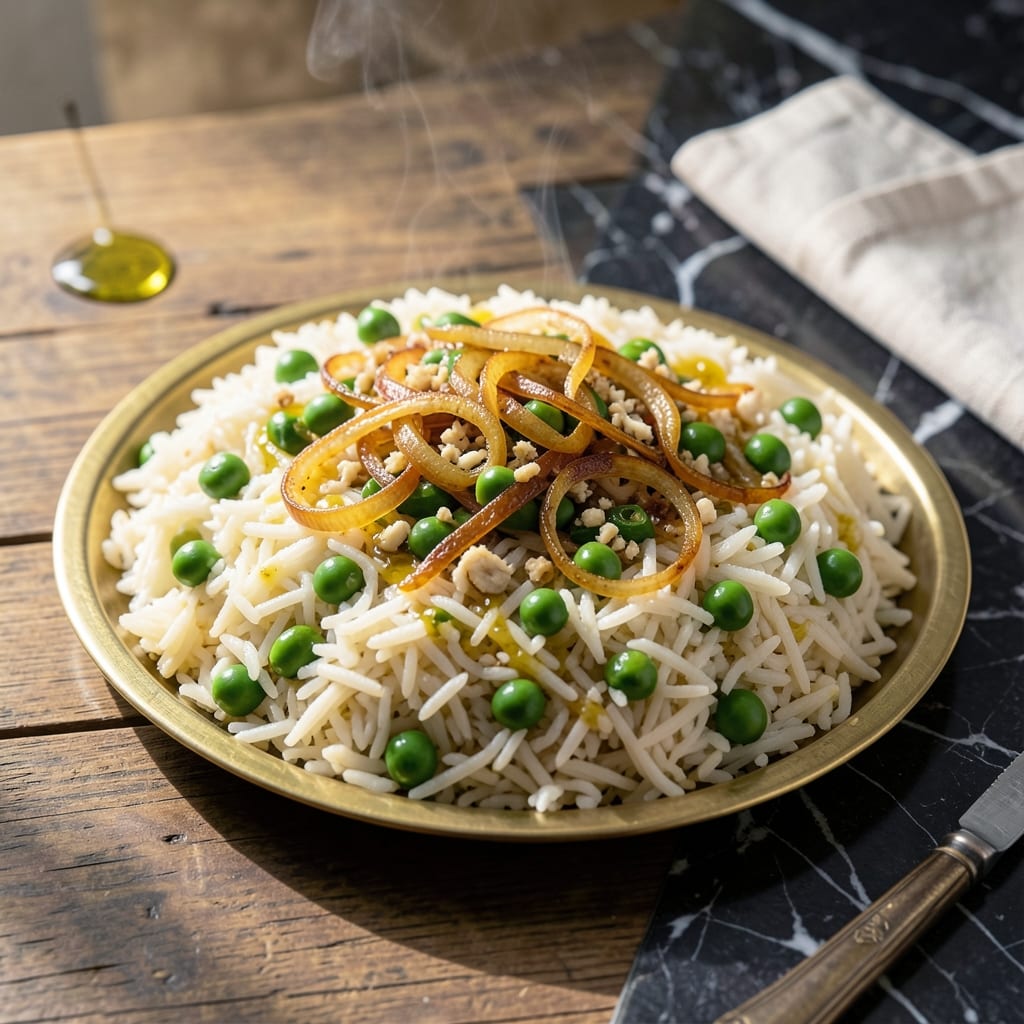
This traditional South Indian one-pot meal combines the simplicity of rice with the freshness of green peas in a dish that’s been passed down through generations. The method stays true to authentic techniques, using basic pantry staples to create something deeply comforting.
What makes this recipe special is its effortless preparation—everything cooks together in a single pot, allowing the flavors to meld beautifully. The rice absorbs the subtle sweetness of the peas while maintaining its distinct texture, resulting in a balanced and satisfying dish.
You’ll end up with fluffy grains of rice studded with tender peas, each bite carrying the warmth of home-style cooking. The aroma alone will transport you to a Tamil kitchen, where meals are made with care and tradition.
Perfect for everyday meals or special occasions, this dish proves that simplicity often leads to the most unforgettable flavors.
Ingredients for Peas Rice Recipe in Tamil
Traditional South Indian flavors come together in this simple yet deeply satisfying one-pot dish.
| Ingredient | Amount | Notes |
|---|---|---|
| Basmati Rice 🌾 | 1 ½ cups | Rinsed until water runs clear |
| Green Peas 🌱 | 1 cup | Fresh or frozen, thawed |
| Yellow Onion 🧅 | 1 whole | Finely chopped for even cooking |
| Garlic Cloves 🧄 | 3 cloves | Minced for maximum flavor |
| Fresh Ginger 🌿 | 1 tbsp | Peeled and grated finely |
| Green Chili Pepper 🌶️ | 2 whole | Slit lengthwise for heat |
| Mustard Seeds 🌿 | 1 tsp | Tempered in hot oil |
| Cumin Seeds 🌿 | 1 tsp | Whole seeds for aroma |
| Curry Leaves 🍃 | 8 pieces | Fresh for authentic flavor |
| Turmeric Powder 🌶️ | ½ tsp | For color and earthiness |
| Asafoetida 🌿 | ¼ tsp | Pinch for umami depth |
| Water 💧 | 3 ½ cups | For cooking rice and peas |
| Coconut Oil 🥥 | 2 tbsp | For tempering spices |
| Salt 🧂 | 1 ½ tsp | Adjust to taste preference |
| Fresh Cilantro 🌿 | ¼ cup | Chopped for garnish |
The rice is critical here. Basmati or other long-grain varieties hold their shape best—avoid sticky short-grain types. For authentic taste, source curry leaves and asafoetida from Indian specialty stores like Patel Brothers. Fresh green peas are ideal (look for vibrant color), but frozen works perfectly well (just thaw first). Coconut oil adds the right richness—virgin, cold-pressed for best aroma.
No curry leaves? A bay leaf plus lime zest offers a different but pleasant flavor. Missing asafoetida? Skip it—it’s traditional but not essential. Green chilies can be swapped for serrano peppers (adjust quantity to taste). For a milder dish, remove seeds from chilies. The ginger-garlic paste from Indian grocery freezers saves time but fresh is always superior. Frozen peas? No need to thaw if cooking directly.
Store basmati rice in airtight containers for up to 6 months. Fresh curry leaves keep in the fridge for 1 week wrapped in paper towels. This dish tastes even better the next day—reheat with a splash of water. Leftovers stay fresh for 3-4 days in the refrigerator.
Why You’ll Love This Recipe
- One Pot Meal: I love that everything from the basmati rice to the green peas cooks together in a single pot—minimal cleanup, maximum flavor.
- Ginger Garlic Magic: The fresh ginger and garlic cloves transform simple rice into something aromatic and deeply satisfying.
- Weeknight Savior: Honestly, this is my go-to when I need a filling meal fast. It’s ready before the kids finish their homework.
- Budget Friendly: A bag of basmati rice and frozen peas stretch far, making this a reliable, low-cost dish that never disappoints.
Step-by-Step Instructions for Peas Rice
Master this traditional South Indian one-pot method for perfectly spiced rice and peas every time.
Step 1: Prepare the Rice and Peas
Rinse the 1.5 cups Basmati Rice in a fine-mesh strainer under cold water until the water runs completely clear. This removes excess starch and prevents the grains from sticking together during cooking.
Drain the rice well, then combine it with the 1 cup Green Peas in a large bowl. Cover with 3.5 cups Water and set aside. The rice will begin to absorb some of the water, which helps it cook evenly later. If using frozen peas, ensure they’re fully thawed before this step to avoid uneven cooking.
Step 2: Temper the Whole Spices
Heat the 2 tbsp Coconut Oil in a heavy-bottomed pot over medium heat. When the oil shimmers, add the 1 tsp Mustard Seeds and 1 tsp Cumin Seeds. Cook for 30-45 seconds until the mustard seeds begin to pop and the cumin becomes fragrant.
Immediately add the 0.25 tsp Asafoetida, 8 pieces Curry Leaves, and 2 whole Green Chili Pepper slit lengthwise. Stir for 10-15 seconds until the curry leaves crisp slightly and release their aroma. Be careful not to burn the spices—this would make them bitter.
Step 3: Sauté the Aromatics
Add the 1 whole Yellow Onion finely chopped to the pot. Sauté for 4-5 minutes until the onions turn translucent and begin to color lightly at the edges. The onions should soften completely but not brown deeply at this stage.
Stir in the 1 tbsp Fresh Ginger grated and 3 cloves Garlic Cloves minced. Cook for an additional 1 minute until the raw aroma disappears. Then add the 0.5 tsp Turmeric Powder and 1.5 tsp Salt, stirring quickly to coat the aromatics evenly and prevent the turmeric from burning.
Step 4: Cook the Rice and Peas Together
Pour in the rice, peas, and water mixture, stirring to combine all ingredients. Bring to a boil over high heat, then reduce to low heat. Cover the pot with a tight-fitting lid and cook undisturbed for 15-18 minutes.
Check that the water has been fully absorbed and the rice is tender with no hard center. The peas should be soft but still hold their shape. If the mixture looks dry before the rice is done, add ¼ cup hot water and continue cooking.
Step 5: Rest and Garnish
Remove the pot from heat and let it rest, covered, for 10 minutes. This allows the steam to finish cooking the rice and lets the flavors meld together. Resist the urge to stir during this time to prevent breaking the rice grains.
Gently fluff the rice with a fork, then transfer to a serving dish. Garnish with the 0.25 cup Fresh Cilantro chopped finely. The cilantro adds a bright, fresh contrast to the warm spices and should be added just before serving to preserve its color and aroma.
Pro Tips For Making Peas Rice Recipe In Tamil
- Soak the Basmati: Give the rice a 30-minute soak in cold water before cooking—this prevents the grains from breaking and guarantees fluffy, separate peas rice every time.
- Sauté Onions Low: Cook the yellow onions on medium-low heat until golden brown, not dark; burnt bits will make your peas rice bitter, and I learned this the hard way.
- Use Frozen Peas: Skip the fresh peas unless they’re in season; frozen peas are sweeter, hold their shape better, and save you the hassle of shelling.
- Toast the Spices: After tempering mustard seeds and cumin in hot oil, let them sizzle for 10-15 seconds before adding ginger and garlic—this wakes up their flavor and makes a real difference.
Essential Equipment for This Recipe
Heavy-Bottomed Pot
For even heat distribution, I swear by a 5-6 quart heavy-bottomed pot—stainless steel or enameled cast iron works best. Brands like Le Creuset or All-Clad prevent hot spots that could burn your spices. This is non-negotiable for tempering mustard and cumin seeds properly. 🔥
Fine-Mesh Strainer
Rinsing basmati rice thoroughly requires a fine-mesh strainer to catch every grain while allowing water to flow through. I use OXO’s 11-inch strainer—it fits over most sinks and has a comfortable handle. The starch removal is crucial for fluffy, separate grains.
Wooden Spoon
A wooden spoon won’t scratch your pot and is perfect for stirring tempered spices. I keep a 12-inch bamboo spoon dedicated for Indian cooking. The flat edge helps press aromatics into the hot oil for maximum flavor extraction.
Tight-Fitting Lid
Steam is everything in one-pot rice dishes. Use a pot with a tight-fitting lid to trap moisture. If your lid is loose, place a clean kitchen towel between the pot and lid. This creates a perfect seal for evenly cooked rice.
Chef’s Knife
For finely chopping onions and mincing ginger-garlic, a 8-inch chef’s knife is essential. I recommend Victorinox Fibrox—it’s affordable and razor-sharp. Proper prep ensures even cooking and consistent texture in every bite.
Measuring Cups
Precision matters with rice-to-water ratios. Use standard measuring cups for the 1.5 cups rice and 3.5 cups water. I prefer Pyrek’s glass set because you can see the exact level. Never eyeball these measurements.
Nutrition Facts
Frequently Asked Questions
Can I use regular white rice instead of basmati?
Yes, but basmati gives the best texture. Long-grain white rice works too, though grains may stick slightly. Avoid short-grain as it turns mushy.
How do I adjust the spice level?
Reduce green chilies to 1 for mild heat or remove seeds for less spice. For extra heat, add 1/2 tsp red chili powder with turmeric.
What if my rice is undercooked?
Add 1/4 cup hot water, cover, and cook on low heat for 5 more minutes. Let it rest 10 minutes off heat before checking.
Can I make this in a rice cooker?
Sauté spices in a pan first, then transfer everything to the cooker. Use the same water ratio and cook as usual.

- Potato Candy Recipe 1933: Vintage Peanut Butter Roll Delight - October 30, 2026
- Potato Chip Cookie Recipe With Pecans: Buttery Crunch Meets Nutty Richness - October 30, 2026
- Potato Patty Recipe No Egg: Crispy Edges Without the Binder - October 30, 2026