
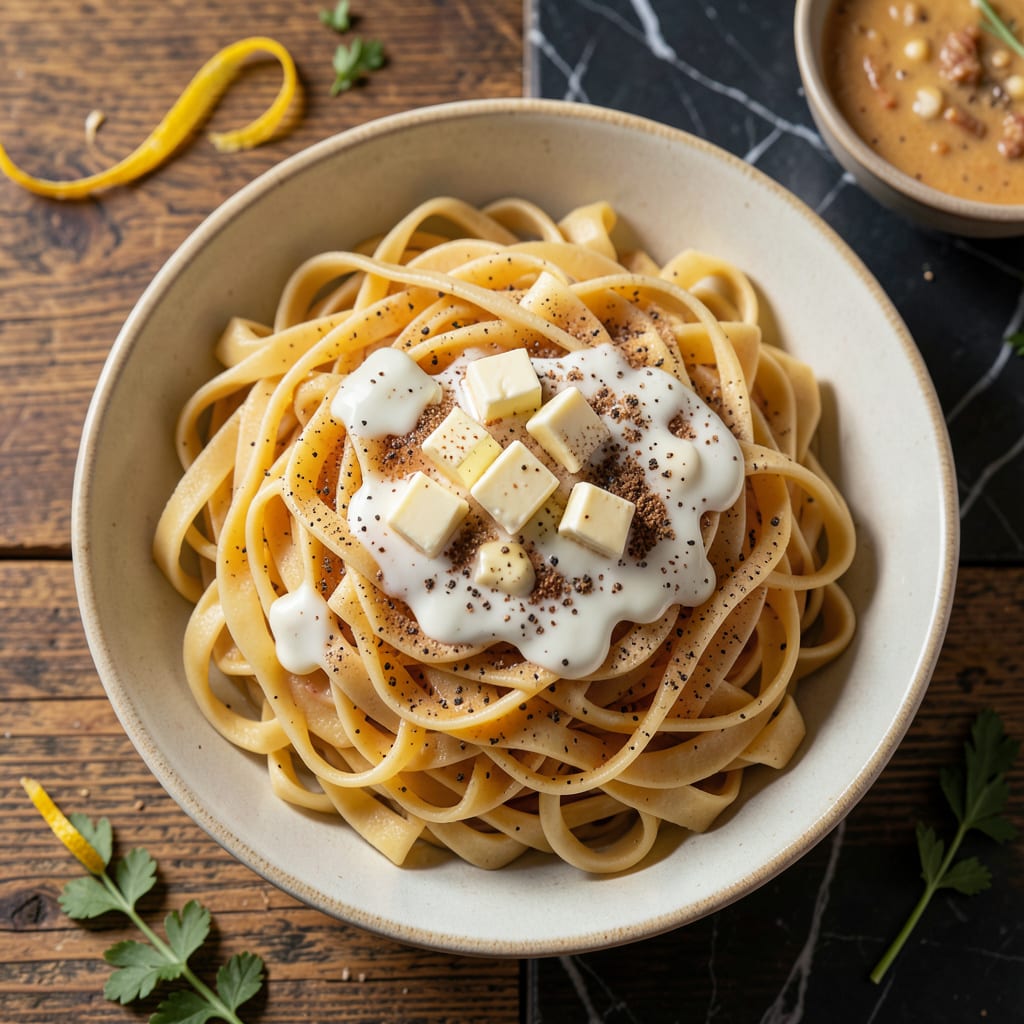
There’s something deeply satisfying about making hand-rolled noodles from scratch, and this Pennsylvania Dutch version delivers comfort in every bite. The simple dough comes together quickly with just eggs, flour, and a touch of salt.
Rolling them thin and cutting into wide strips creates the perfect texture for soaking up buttery sauces or rich gravies. These noodles bring a taste of tradition to your table with minimal effort and maximum satisfaction.
Ingredients for Pennsylvania Dutch Egg Noodles
Just flour, eggs, and a pinch of salt bring this traditional dough to life.
| Ingredient | Amount | Notes |
|---|---|---|
| All-Purpose Flour 🌾 | 2 ½ cups | Plus extra for dusting |
| Large Eggs 🥚 | 4 whole | Room temperature preferred |
| Salt 🧂 | 1 tsp | Fine table salt works |
| Unsalted Butter 🧈 | 4 tbsp | Melted for serving |
| Water 💧 | 2 tbsp | As needed for dough |
| Milk 🥛 | 2 tbsp | Optional for richer dough |
| Nutmeg 🌰 | ¼ tsp | Freshly grated if possible |
| Black Pepper 🌶️ | ½ tsp | Freshly ground preferred |
The flour is everything here. King Arthur all-purpose is my go-to—consistent and reliable. Eggs at room temp blend better into the dough, so pull them out 30 minutes early (or microwave 10 seconds, no judgment). If you want that extra-rich Pennsylvania Dutch vibe, spring for local farm eggs when you can. The salt? Basic table salt is fine here—no need for fancy stuff.
No all-purpose flour? Bread flour works too but makes slightly chewier noodles. Out of eggs? You can’t really sub those—they’re the glue. Milk adds richness but water works in a pinch. The nutmeg is optional but gives that classic Pennsylvania Dutch warmth. If you’re out, a tiny pinch of cinnamon (seriously, just a whisper) can mimic the depth.
Fresh noodles don’t keep long—use within 2 days or freeze for 2 months. Dust with flour before freezing so they don’t stick. Best part? They cook in 2-3 minutes straight from frozen.
Why You’ll Love This Recipe
- One Bowl Wonder: I mix the flour, eggs, and water right in the same bowl—no fancy equipment, just my hands and a rolling pin.
- Rich Buttery Bite: The unsalted butter gives these noodles a melt-in-your-mouth richness that store-bought just can’t touch.
- Freezer’s Best Friend: I double the batch and freeze half for those nights when I need comfort food in a flash.
- Penny-Pincher Approved: Honestly, five basic ingredients and a few cents per serving beats any boxed pasta in my book.
Step-by-Step Instructions for Pennsylvania Dutch Egg Noodles
Here’s the method I use for perfectly tender homemade noodles every time.
Step 1: Combine and Mix the Dough
In a large bowl, whisk together the 2.5 cups All-Purpose Flour, 1 tsp Salt, 0.25 tsp Nutmeg, and 0.5 tsp Black Pepper. These seasonings are what give these noodles their distinctive warmth and depth of flavor.
Make a well in the center and add the 4 whole Large Eggs, 2 tbsp Water, and 2 tbsp Milk. Using a fork, gradually incorporate the flour mixture into the wet ingredients until a shaggy dough forms. The dough will be stiff at first, but keep at it.
Step 2: Knead Until Smooth and Elastic
Turn the dough out onto a lightly floured surface. Dust your hands with flour and begin kneading. Push the dough away from you with the heel of your hand, then fold it back over itself. Rotate the dough a quarter turn and repeat.
Knead for 8-10 minutes until the dough becomes smooth and elastic. You’ll know it’s ready when it springs back gently when you poke it with your finger. If the dough feels too dry, add a teaspoon of water; if too sticky, sprinkle on a bit more flour.
Step 3: Rest the Dough for Easier Rolling
Shape the dough into a ball, wrap it tightly in plastic wrap, and let it rest at room temperature for 30 minutes. This resting period relaxes the gluten, making the dough much easier to roll out thinly and evenly.
I’ve found that skipping this step leads to dough that shrinks back as you try to roll it, which can be frustrating. The rested dough will roll out smoothly with minimal effort.
Step 4: Roll and Cut the Noodles
Divide the rested dough into 4 equal portions. On a well-floured surface, roll out one portion at a time to about ⅛-inch thickness. Use a floured rolling pin and work from the center outward, rotating the dough occasionally to maintain an even thickness.
Once rolled, let the sheet dry for 5 minutes to prevent sticking. Then, using a sharp knife or pizza cutter, slice the dough into ¼-inch wide strips. Toss the cut noodles in a bit of flour to prevent them from sticking together.
Step 5: Cook and Serve with Butter
Bring a large pot of salted water to a rolling boil. Add the noodles and cook for 2-3 minutes until they float to the surface and are tender. Fresh noodles cook quickly, so keep an eye on them to avoid overcooking.
Drain the noodles well and transfer to a serving bowl. Toss immediately with the 4 tbsp Unsalted Butter until melted and evenly coated. The butter melts into every crevice, creating that signature rich, comforting flavor these noodles are known for.
Pro Tips For Making Pennsylvania Dutch Egg Noodles
- Knead Until Smooth: Work the flour and egg mixture for at least 5 minutes—longer if it feels stiff. I learned this the hard way after my first batch turned out dense and chewy instead of tender.
- Rest the Dough: Let the dough sit covered for 30 minutes before rolling. My grandmother swore by this, and it actually changes the outcome by relaxing the gluten for easier rolling.
- Use Room-Temp Eggs: Take the eggs out of the fridge 30 minutes before starting. Sounds weird, but it works—cold eggs can make the dough harder to bring together evenly.
- Dry Before Cutting: Dust the rolled dough lightly with flour and let it sit for 5-10 minutes before slicing. This keeps the noodles from sticking together and makes cutting cleaner.
Flavor Customization for This pennsylvania dutch egg noodles
Herb Infusions
For a fresh twist, mix 1 tbsp chopped parsley or 1 tsp dried thyme into the dough before kneading. I love how the herbs fleck the noodles and add a subtle earthy note. Fresh dill works beautifully too for a brighter flavor profile. 🌿
Spiced Variations
Add ½ tsp ground paprika or ¼ tsp cayenne to the dry ingredients for a warming kick. These work especially well if you’re serving the noodles with hearty stews or roasted meats. The paprika gives a smoky depth without overpowering.
Cheese Enhancement
Fold in ½ cup grated Parmesan or sharp cheddar during the final kneading stage for extra richness. The cheese melts into the noodles as they cook, creating little pockets of savory goodness. This is my go-to when I want to impress dinner guests.
Citrus Zest
Stir 1 tsp lemon or orange zest into the flour mixture for a bright, aromatic lift. The citrus oils perfume the dough wonderfully and pair especially well with buttery sauces. A little goes a long way with this addition.
Whole Wheat Option
Replace 1 cup of all-purpose flour with whole wheat flour for a nuttier flavor and extra fiber. The noodles will be slightly denser but still tender. I find adding 1 extra tbsp water helps with the drier whole wheat flour. 💛
Sweet Noodle Twist
For dessert-style noodles, add 2 tbsp sugar and 1 tsp cinnamon to the dry ingredients. These are fantastic with a drizzle of honey and a sprinkle of powdered sugar. My kids beg me to make these for a special treat.
Nutrition Facts
Frequently Asked Questions
Do I need a pasta machine to make these?
Not at all! A rolling pin works perfectly for traditional hand-rolled texture. Just roll each portion as thin as possible, about ⅛-inch thick.
Can I make these ahead of time?
Yes! Fresh noodles keep in the fridge for 2 days or freeze for up to 2 months. Dust with flour before storing to prevent sticking.
Why did my noodles turn out tough?
The dough may have been over-kneaded or not rested long enough. Stick to 8-10 minutes of kneading and let it rest for the full 30 minutes.
What’s the best way to cook them?
Boil in salted water for 2-3 minutes until they float. Fresh noodles cook fast—test one early to avoid overcooking.

- BBQ Sausage Recipe Oven: Smoky Depth Without the Grill - September 28, 2026
- BBQ Chicken Bowl Recipe Rice: Smoky Sweetness Over Fluffy Grains - September 28, 2026
- Beef Cutlet Recipe Ideas: Crispy Breaded Patties With Bold Seasonings - September 28, 2026