
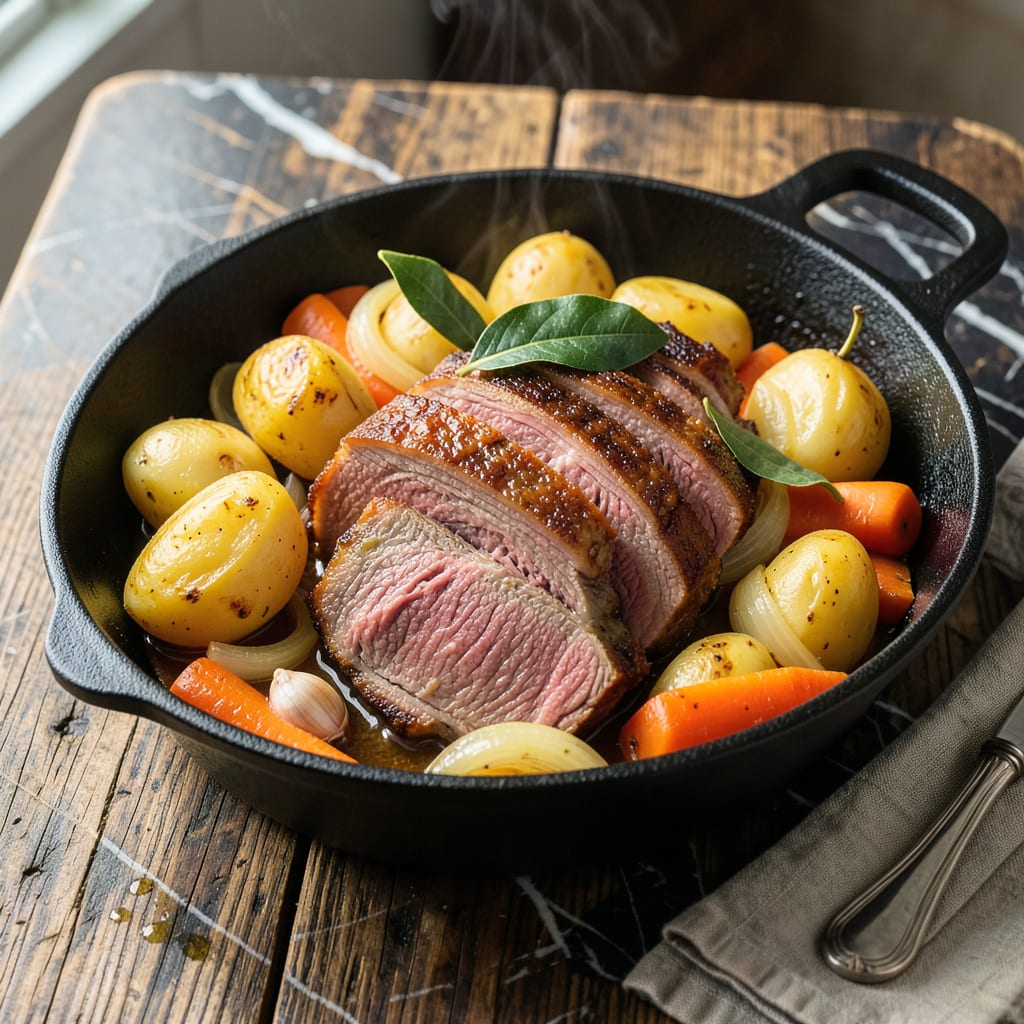
This slow-braised corned beef delivers fork-tender results every time. The secret lies in a long, gentle cooking process that transforms tough cuts into melt-in-your-mouth perfection.
With a simple spice blend and patient braising, you’ll achieve rich, flavorful meat that’s ideal for sandwiches or a hearty dinner. This method guarantees the best texture and taste.
Ingredients for The Best Corned Beef
Pantry staples plus a pre-brined brisket. Nothing exotic, just slow-cooked perfection.
| Ingredient | Amount | Notes |
|---|---|---|
| Corned Beef Brisket 🥩 | 3 lb | Pre-brined, with spice packet included |
| Yellow Onions 🧅 | 2 whole | Medium-sized, quartered |
| Carrots 🥕 | 4 whole | Peeled, cut into chunks |
| Potatoes 🥔 | 1 ½ lb | Yukon Gold, peeled, halved |
| Garlic Cloves 🧄 | 6 cloves | Smashed, unpeeled |
| Bay Leaves 🍃 | 2 whole | Dried, for braising liquid |
| Black Peppercorns 🌶️ | 2 tsp | Whole, for depth of flavor |
| Mustard Seeds 🌿 | 1 tsp | Yellow or brown variety |
| Ground Cloves 🌿 | ¼ tsp | Freshly ground preferred |
| Low-Sodium Beef Broth 🥣 | 4 cups | Or substitute water plus bouillon |
| Apple Cider Vinegar 🍏 | ¼ cup | For tangy brightness |
| Brown Sugar 🍚 | 2 tbsp | Light or dark, for balance |
| Dijon Mustard 🟡 | 1 tbsp | For serving or glaze |
| Fresh Parsley 🌿 | ¼ cup | Chopped, for garnish |
The brisket is everything here. Look for the flat cut—it’s leaner and slices better than the point. Most grocery stores carry pre-brined packs around St. Patrick’s Day, but Costco has them year-round (and they’re huge, so halve and freeze the rest). The spice packet that comes with it? Use it, but add a little extra freshly ground cloves for more warmth if you’ve got them.
No pre-brined brisket? Start with a raw beef brisket (about 4 lbs) and brine it yourself for 5-7 days with pickling spices. Short on time? Substitute beef short ribs—they won’t slice as neatly, but they’ll still get fall-apart tender. The vinegar can be swapped for white vinegar or lemon juice, but cider adds a nice mellow sweetness. Don’t skip the mustard glaze at the end (trust me on this).
This keeps beautifully in the fridge for 4-5 days—the flavors just get deeper. Freeze leftovers for up to 3 months (slice before freezing for easy thawing). Reheat gently in the braising liquid to keep it moist. Perfect for sandwiches the next day (or the next week).
Why You’ll Love This Recipe
- Set It and Forget: I toss the brisket, onions, and garlic in the pot, then let the slow cooker work its magic for hours with zero babysitting.
- Melt-in-Your-Mouth Tender: The long, gentle simmer turns the corned beef so fork-tender it practically dissolves, while the carrots and potatoes soak up that rich, garlicky broth.
- Feeds the Whole Crew: One brisket, one pot, and suddenly I’ve got a hearty dinner for six—plus leftovers for sandwiches the next day.
- Budget Stretcher: Honestly, a single corned beef brisket gives me multiple meals, and the veggies are cheap pantry staples I always have on hand.
Step-by-Step Instructions for Slow-Braised Corned Beef
Here’s the method I rely on for melt-in-your-mouth results every time.
Step 1: Rinse and Prepare the Brisket
Start by thoroughly rinsing the 3 lb Corned Beef Brisket under cold running water to remove excess brine. This prevents the finished dish from being overly salty, which is crucial for balanced flavor. Pat it completely dry with paper towels—this ensures better browning in the next step.
Discard the spice packet that comes with the brisket (we’ll use our own blend for better control). Trim any visible fat if desired, though I tend to leave most of it since it adds richness during the long braise. You’ll notice the meat has that characteristic pink color from the curing process.
Step 2: Sear the Brisket and Sauté the Aromatics
Heat a large Dutch oven over medium-high heat. When hot, add the brisket and sear for 4-5 minutes per side until deeply browned. You’re looking for a dark, flavorful crust—this step builds the foundation of your braising liquid. Transfer the brisket to a plate and set aside.
In the same pot, add the 2 whole Yellow Onions, 4 whole Carrots, and 6 cloves Garlic Cloves. Sauté for 3-4 minutes until the onions start to soften and develop color. The browned bits from the brisket will dissolve into the vegetables, creating incredible depth of flavor.
Step 3: Build the Braising Liquid and Add Vegetables
Pour in the 4 cups Low-Sodium Beef Broth, then add the 0.25 cup Apple Cider Vinegar, 2 tbsp Brown Sugar, 2 tsp Black Peppercorns, 1 tsp Mustard Seeds, and 0.25 tsp Ground Cloves. Stir to combine and deglaze the pot, scraping up all those flavorful browned bits.
Return the brisket to the pot along with any accumulated juices. Add the 1.5 lb Potatoes and 2 whole Bay Leaves. The liquid should come about halfway up the brisket—if it doesn’t, add a little water. This ensures even cooking and maximum flavor infusion into the meat and vegetables.
Step 4: Braise Low and Slow to Perfection
Bring the mixture to a boil, then immediately reduce the heat to low. Cover the pot and let it simmer gently for 3 to 3.5 hours. The key here is maintaining a slow, steady simmer—not a rolling boil. You’ll know it’s working when you can easily pierce the brisket with a fork and it slides out without resistance.
About halfway through cooking, I like to turn the brisket over to ensure even cooking. The vegetables will be tender and the liquid will have reduced slightly, concentrating all those wonderful flavors. The potatoes should be easily pierced with a knife when done.
Step 5: Rest, Slice, and Serve
Carefully transfer the brisket to a cutting board and let it rest for 10-15 minutes. This allows the juices to redistribute throughout the meat, ensuring every slice is moist and flavorful. Slice against the grain into ½-inch thick pieces—the fibers will be short and tender.
Arrange the slices on a platter surrounded by the braised vegetables. Skim any excess fat from the braising liquid if desired, then spoon some of the liquid over the meat. Garnish with 0.25 cup Fresh Parsley and serve with 1 tbsp Dijon Mustard on the side for those who want an extra kick. The meat should be fork-tender with a rich, complex flavor that’s perfectly balanced between sweet, tangy, and savory.
Pro Tips For Making The Best Corned Beef
- Simmer, Don’t Boil: Keep the water at a gentle simmer—rolling boils make the brisket tough. I learned this the hard way after my first attempt came out chewy as leather.
- Rinse the Brisket: Always give the corned beef a quick rinse under cold water before cooking to remove excess salt. Sounds weird, but it works: it keeps the dish from being overly salty.
- Cut After Resting: Let the brisket rest 10-15 minutes after cooking before slicing against the grain. My grandmother swore by this, and she was right: it keeps the meat juicy.
- Use Stout Beer: Swap half the water for a dark stout beer in the cooking liquid. I was skeptical until I tried it—adds a depth of flavor that water alone can’t.
Serving Suggestions for This Recipe
Classic Plated Dinner
For a traditional presentation, arrange ½-inch slices of the braised corned beef on a large platter. Surround it with the cooked carrots, onions, and potatoes from the braising liquid. Spoon some of the reduced broth over the top for extra moisture.
Reuben Sandwich Style
Pile thin slices on rye bread with Swiss cheese, sauerkraut, and Russian dressing. Grill in a pan with butter until golden and crispy. The tangy kraut cuts through the richness beautifully. I love this for lunch the next day.
Taco Night Twist
Shred the corned beef and warm in a skillet with a splash of the braising liquid. Serve in corn tortillas with shredded cabbage, diced avocado, and a drizzle of Dijon mustard mixed with mayo. This fusion approach is a crowd-pleaser.
💫
Breakfast Hash
Dice leftover meat and potatoes, then crisp in a skillet with onions and a fried egg on top. The vinegar in the braising liquid adds a nice brightness to the hash. Perfect for using up leftovers creatively.
Elegant Garnishes
Always finish with chopped fresh parsley for color and freshness. For special occasions, add a side of horseradish cream or whole-grain mustard. The vibrant green parsley makes the dish look as good as it tastes.
Nutrition Facts
Frequently Asked Questions
What’s the ideal cooking temperature?
Maintain a gentle simmer at low heat. The liquid should barely bubble, around 180-190°F. This slow cooking ensures tender meat without drying it out.
Can I use a slow cooker instead?
Yes! Cook on low for 8-10 hours or high for 5-6 hours. Add vegetables during the last 2-3 hours to prevent mushiness.
Why is my corned beef tough?
Tough meat usually means it didn’t cook long enough or the temperature was too high. Always cook until fork-tender, which may take up to 3.5 hours.
How do I store leftovers?
Refrigerate in an airtight container for up to 5 days, or freeze for 3 months. Reheat gently in the braising liquid.

- BBQ Sausage Recipe Oven: Smoky Depth Without the Grill - September 28, 2026
- BBQ Chicken Bowl Recipe Rice: Smoky Sweetness Over Fluffy Grains - September 28, 2026
- Beef Cutlet Recipe Ideas: Crispy Breaded Patties With Bold Seasonings - September 28, 2026