
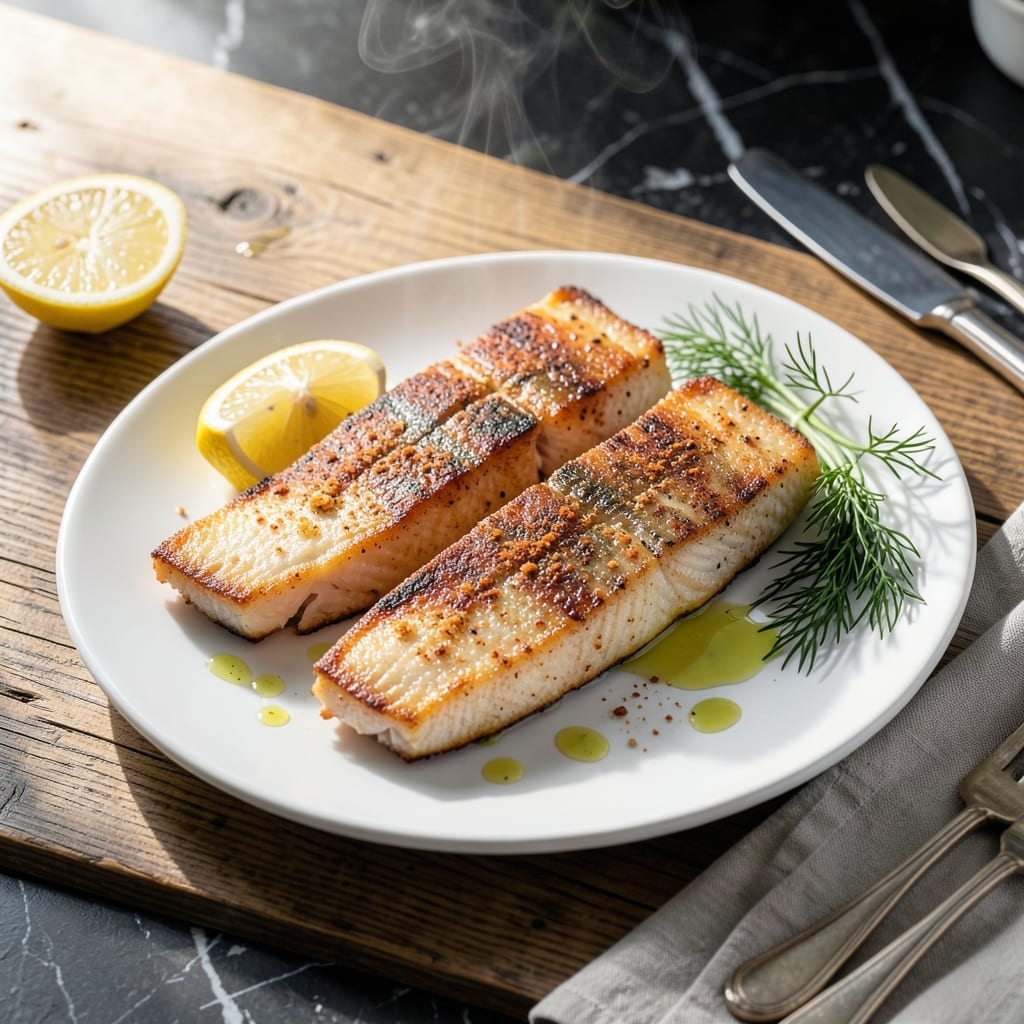
Pan-frying perch fillets delivers a flaky interior with a beautifully crisp golden crust. This method highlights the delicate texture of white fish while creating a satisfying crunch that elevates every bite.
The key is maintaining the right oil temperature and cooking time to prevent overcooking. Perch cooks quickly, so staying attentive ensures the fish stays tender and moist rather than dry or rubbery.
With just a few simple ingredients and proper technique, you can achieve restaurant-quality results at home. The fillets develop a delicate crust that seals in natural juices for maximum flavor.
Serve immediately with lemon wedges or your favorite tartar sauce to complement the mild, sweet flavor of the fish.
Ingredients for Perch Fillet Recipe Pan Fried
Fresh perch and a few pantry staples create this crisp, flaky masterpiece.
| Ingredient | Amount | Notes |
|---|---|---|
| Perch Fillets 🐟 | 1 ½ lb | Skinless, boneless, about 1-inch thick |
| All-Purpose Flour 🌾 | ½ cup | For light dredging |
| Cornstarch 🌾 | 2 tbsp | For extra crispiness |
| Kosher Salt 🧂 | 1 tsp | Diamond Crystal preferred |
| Freshly Ground Black Pepper 🌶️ | ½ tsp | Coarse grind |
| Paprika 🌶️ | 1 tsp | Sweet or smoked variety |
| Garlic Powder 🧄 | ½ tsp | For subtle depth |
| Vegetable Oil 🫒 | 1 cup | High smoke point, for frying |
| Unsalted Butter 🧈 | 2 tbsp | For finishing and richness |
| Fresh Lemon 🍋 | 1 whole | Cut into wedges for serving |
| Fresh Parsley 🌿 | 2 tbsp | Chopped, for garnish |
| Tartar Sauce 🥄 | ½ cup | Store-bought or homemade |
The perch fillets are everything here. Fresh, never frozen—look for firm, translucent flesh with no fishy odor. Most seafood counters at Whole Foods or local fishmongers will skin and debone them for you if you ask. The vegetable oil must have a high smoke point, so peanut or canola work just as well. For the flour, a fine mill grind ensures an even coating that fries up light and crisp.
No perch? Tilapia or cod are solid substitutes with similar flakiness. Out of cornstarch? Arrowroot powder at equal amounts works in a pinch. The paprika adds color and mild sweetness—smoked paprika at half the amount deepens the flavor if you prefer. For the tartar sauce, aioli or remoulade make great alternatives. Just avoid heavy sauces that might overpower the fish.
Cook the fillets immediately after dredging—they don’t hold well. Leftovers? Not ideal, but they’ll keep in the fridge for 1-2 days. Reheat gently in a 300°F oven to avoid drying them out. The tartar sauce keeps for about 1 week.
Why You’ll Love This Recipe
- One Pan Wonder: I love that I only need a skillet and a few ingredients to make this crispy perch fillet.
- Crispy Perfection: That golden crust from the flour and cornstarch combo? It’s what makes every bite so satisfying.
- Weeknight Hero: Honestly, it’s my go-to for busy evenings when I need something quick and delicious.
- Budget Friendly: Perch fillets are affordable, and a little goes a long way—great for feeding the family without breaking the bank.
Step-by-Step Instructions for Perch Fillet Pan Fried
Master the technique for achieving a golden crust while keeping the fish flaky and moist.
Step 1: Season and Dredge the Perch Fillets
Pat the 1.5 lb Perch Fillets completely dry with paper towels—this is essential for a crispy crust. In a shallow dish, whisk together the 0.5 cup All-Purpose Flour, 2 tbsp Cornstarch, 1 tsp Kosher Salt, 0.5 tsp Freshly Ground Black Pepper, 1 tsp Paprika, and 0.5 tsp Garlic Powder until fully combined.
Dredge each fillet lightly in the flour mixture, shaking off any excess. The cornstarch in the blend ensures extra crispiness, while the paprika and garlic powder add subtle depth. Press the mixture gently into the fish to ensure it adheres well. Set the dredged fillets aside on a clean plate.
Step 2: Heat the Oil and Achieve the Perfect Temperature
Pour the 1 cup Vegetable Oil into a large, heavy-bottomed skillet—cast iron works beautifully here. Heat over medium-high heat until the oil reaches 350-360°F. To test without a thermometer, flick a pinch of the flour mixture into the oil. If it sizzles immediately and floats to the surface, the oil is ready.
Avoid overheating the oil, as this can burn the coating before the fish cooks through. Maintain a consistent temperature throughout frying to ensure even browning and a crispy exterior. The high smoke point of vegetable oil makes it ideal for this process.
Step 3: Pan Fry the Fillets to Golden Perfection
Carefully place the dredged Perch Fillets into the hot oil, working in batches if necessary to avoid overcrowding the pan. Fry for 3-4 minutes per side until the crust is deep golden brown and crispy. Resist the urge to move the fillets too soon—letting them cook undisturbed ensures the coating sets properly.
Use a slotted spatula to gently flip the fillets, taking care not to pierce the delicate flesh. The fish is done when it flakes easily with a fork and the internal temperature reaches 145°F. Transfer the cooked fillets to a paper towel-lined plate to drain excess oil.
Step 4: Finish with Butter and Garnish
Wipe out the skillet and return it to medium-low heat. Add the 2 tbsp Unsalted Butter and let it melt, swirling to coat the pan. Return the cooked fillets to the skillet and baste them with the melted butter for 30 seconds on each side. This step adds richness and enhances the golden crust.
Transfer the fillets to a serving platter. Garnish with the 2 tbsp Fresh Parsley, finely chopped, and serve immediately with 1 whole Fresh Lemon cut into wedges and 0.5 cup Tartar Sauce on the side. The lemon adds a bright contrast to the rich, crispy fish.
Pro Tips For Making Perch Fillet Recipe Pan Fried
- Pat Fillets Dry: Use paper towels to thoroughly dry each fillet before dredging—water is the enemy of a good crust. I learned this the hard way after my first few batches turned out soggy instead of crisp.
- Hot Pan, Cold Oil: Heat your pan until it’s smoking hot, then add the oil and let it shimmer for 10 seconds before adding the fillets. This prevents the coating from absorbing oil and turning greasy.
- Skip the Overcrowding: Resist the urge to cook all fillets at once—give each piece at least an inch of space in the pan. After burning three batches, I finally figured out that steam from crowding ruins the crisp.
- Mix Flour and Cornstarch: Use a 2:1 ratio of all-purpose flour to cornstarch in your dredge for extra crunch. Sounds weird, but it works and keeps the coating light instead of heavy.
Storing and Reheating This Recipe
Refrigerator Storage
Let your fillets cool completely before storing—this takes about 30 minutes. Place them in an airtight container lined with paper towels to absorb excess moisture. They’ll stay fresh in the fridge at 40°F or below for up to 2 days. ❄️
Freezer Storage
For longer storage, wrap each fillet individually in plastic wrap, then place in a freezer bag. Squeeze out all air before sealing. They’ll maintain quality for up to 2 months at 0°F. Label with the date to track freshness.
Oven Reheating
Preheat your oven to 300°F for gentle reheating. Place fillets on a baking sheet lined with parchment paper. Cover loosely with foil and warm for 10-12 minutes. This method prevents drying while restoring crispness.
Skillet Reheating
Heat a skillet over medium-low heat with 1 tbsp butter. Add fillets and cook for 2-3 minutes per side until heated through. This revives the crust better than any other method. I always use my cast iron for this. 🔥
Avoid Microwaving
The microwave tends to make the coating soggy and the fish rubbery. If you must use one, place fillets on a paper towel and heat at 50% power for 1-minute intervals until just warm. Check frequently to prevent overcooking.
Serving Reheated Fish
Always garnish with fresh lemon wedges and chopped parsley after reheating. This brightens the flavors and makes leftovers feel like a new meal. The tartar sauce keeps for 1 week in the fridge.
Nutrition Facts
Frequently Asked Questions
What oil works best for pan frying?
Use oils with a high smoke point like vegetable, peanut, or canola. They handle the 350-360°F temperature needed without burning. Avoid olive oil as it can smoke excessively.
How do I know when the fish is done?
The fillets are ready when they reach an internal temperature of 145°F and flake easily with a fork. The crust should be deep golden brown and crispy. This usually takes 3-4 minutes per side.
Can I use frozen perch fillets?
Yes, but thaw them completely in the fridge overnight first. Pat them extra dry before dredging to ensure a crispy crust. Never cook frozen fillets directly.
Why does my coating fall off?
This usually happens if the oil isn’t hot enough or you move the fillets too soon. Let the oil reach 350°F and resist flipping for at least 3 minutes so the coating sets properly.

- Potato Candy Recipe 1933: Vintage Peanut Butter Roll Delight - October 30, 2026
- Potato Chip Cookie Recipe With Pecans: Buttery Crunch Meets Nutty Richness - October 30, 2026
- Potato Patty Recipe No Egg: Crispy Edges Without the Binder - October 30, 2026