
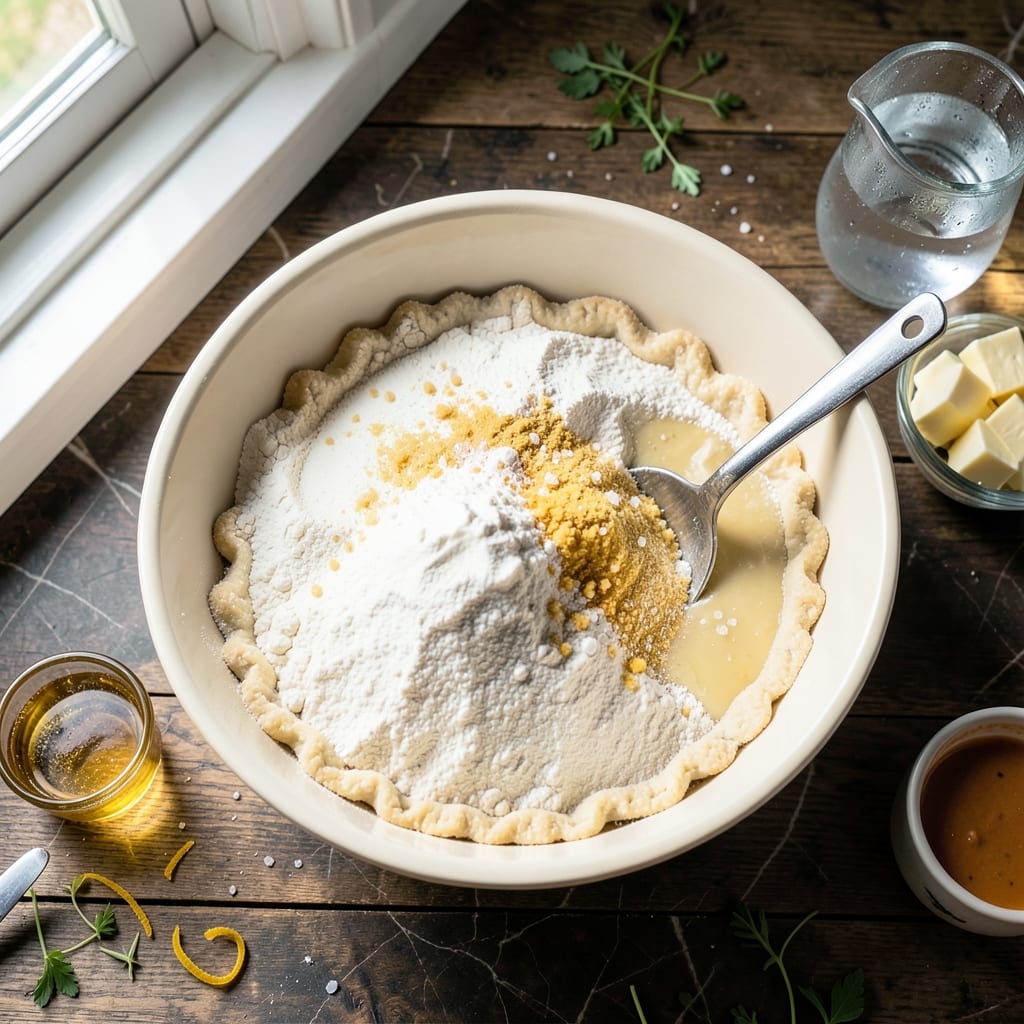
Achieving a perfect pie crust with butter comes down to technique, not luck. Cold ingredients and proper handling create those coveted flaky layers that shatter with every bite.
I’ve tested countless methods, and the key is working quickly to prevent the butter from melting into the flour. This ensures distinct layers that puff up beautifully during baking.
The result is a crust so tender and flaky it rivals any bakery’s. The butter creates steam as it bakes, lifting the dough into delicate, crisp sheets.
This method guarantees consistent results, whether you’re making a simple apple pie or an elaborate lattice-top creation.
Ingredients for Perfect Pie Crust Recipe with Butter
Cold butter and flour create those coveted flaky layers in this tender crust.
| Ingredient | Amount | Notes |
|---|---|---|
| All-Purpose Flour 🌾 | 2 ½ cups | Spoon and level, do not pack |
| Unsalted Butter 🧈 | 1 cup | Cold, cut into 1/2-inch cubes |
| Ice Water 💧 | ½ cup | Plus 1 tbsp as needed |
| Granulated Sugar 🍚 | 1 tsp | Optional, for sweet crusts |
| Salt 🧂 | ½ tsp | Fine sea salt preferred |
| Apple Cider Vinegar 🍏 | 1 tsp | Enhances flakiness |
| Shortening 🧈 | ¼ cup | Optional, for extra flakiness |
| Vanilla Extract 🌿 | ½ tsp | Optional, for sweet crusts |
The butter is non-negotiable here. Use high-fat European-style (like Plugrá or Kerrygold) for maximum flakiness—it has less water, which means more steam and better lift. The flour should be all-purpose, but King Arthur or Gold Medal are reliable choices. Cold ingredients are key, so chill your bowls and utensils too if your kitchen runs warm.
No unsalted butter? Salted works in a pinch—just omit the added salt. Swap apple cider vinegar for lemon juice or white vinegar (same amount). For a whole wheat option, replace up to half the all-purpose flour with white whole wheat. The shortening is optional but adds insurance against tough crust—Crisco is the classic.
The dough keeps 2-3 days wrapped tightly in the fridge, or freeze for 1 month. Baked crusts stay crisp stored at room temperature in an airtight container for 2 days. For make-ahead, roll the dough between parchment and freeze flat—thaw 15 minutes before using.
Why You’ll Love This Recipe
- Five Ingredients: Only flour, cold butter, ice water, sugar, and salt—no fuss, no special trips to the store.
- Buttery Layers: The cold butter creates flaky layers that melt in your mouth, and the hint of sugar adds just the right balance.
- Endless Possibilities: Sweet pies, savory quiches, even hand pies—this crust handles it all without breaking a sweat.
- Freezer Friendly: I make a double batch and freeze the extras, so I’m never more than 10 minutes away from a fresh-baked pie.
Step-by-Step Instructions for Perfect Pie Crust
Master these steps and you’ll achieve that coveted shatter-perfect texture with every bake.
Step 1: Combine Dry Ingredients and Chill Equipment
In a large bowl, whisk together the 2.5 cups All-Purpose Flour, 0.5 tsp Salt, and 1 tsp Granulated Sugar until evenly distributed. This ensures the salt and sugar are uniformly incorporated throughout the crust.
Place both the bowl of dry ingredients and your pastry cutter in the freezer for 10 minutes. Chilling prevents the 1 cup Unsalted Butter from melting prematurely when you begin cutting it in, which is essential for maintaining distinct flaky layers.
Step 2: Cut in Cold Butter and Shortening
Remove the chilled bowl and tools from the freezer. Add the 1 cup Unsalted Butter (cut into ½-inch cubes) and the 0.25 cup Shortening to the flour mixture. Using the pastry cutter, work the fats into the flour with quick, decisive motions until the mixture resembles coarse crumbs with some pea-sized pieces remaining.
Here’s the thing—visible butter flakes are what create those coveted flaky layers. Stop cutting once you achieve a crumbly texture with noticeable fat pieces throughout. This uneven distribution is intentional and critical for texture.
Step 3: Add Liquid Ingredients Gradually
Create a well in the center of the flour-butter mixture. Add the 0.5 cup Ice Water, 1 tsp Apple Cider Vinegar, and 0.5 tsp Vanilla Extract. Using a fork, gently toss the mixture from the bottom up, gradually incorporating the wet ingredients until the dough just begins to come together.
Real talk: the vinegar tenderizes the gluten while the ice water keeps everything cold. If the dough seems too dry after adding the initial 0.5 cup Ice Water, add up to 1 tbsp more, but don’t overwork it. The mixture should hold together when pressed but still appear shaggy.
Step 4: Form and Chill the Dough
Turn the dough out onto a lightly floured surface and gently press it into a rough ball. Divide into two equal portions, flatten each into a 1-inch thick disc, and wrap tightly in plastic wrap. Refrigerate for at least 1 hour (or up to 48 hours for convenience).
This resting period allows the gluten to relax and the butter to re-solidify. It’s the secret to easy rolling and preventing shrinkage during baking. When ready to use, the dough should be firm but pliable—if it cracks when rolled, let it warm slightly at room temperature for 5-10 minutes.
Step 5: Roll and Blind Bake for Perfect Results
On a lightly floured surface, roll one disc of dough into a 12-inch circle about ⅛-inch thick. Transfer to a pie dish, press gently into the bottom and up the sides, then trim the edges, leaving a ½-inch overhang. Fold the overhang under and crimp decoratively.
For pre-baking, chill the lined pie shell for 20 minutes, then line with parchment paper and fill with pie weights or dried beans. Bake at 375°F for 15 minutes, remove weights and parchment, then bake an additional 5-10 minutes until the edges are just beginning to turn golden brown. Cool completely before filling.
Pro Tips For Making Perfect Pie Crust Recipe With Butter
- Chill the Butter: Cut your unsalted butter into small cubes and refrigerate for 15 minutes before mixing—I learned this the hard way after my first three crusts turned out more like cookies than flaky pastry.
- Use Ice Water: Fill a glass with water and ice cubes, then measure from that—about 6-8 tablespoons is usually right. The colder the water, the flakier the crust.
- Don’t Overwork Dough: Mix just until the dough comes together, even if it looks a little shaggy. After burning a batch from over-handling, I finally figured out that less is more with pie crust.
- Rest Before Rolling: Wrap the dough and refrigerate for at least 1 hour—sounds tedious, but it prevents shrinking when baked. My grandmother swore by this, and she was right.
Common Mistakes When Making This Recipe
Overworking the Dough
The moment you start mixing, the clock is ticking. Overworking develops gluten, which makes your crust tough instead of tender. I stop mixing as soon as the dough just holds together—it’s okay if it looks shaggy. 💪
Using Warm Butter
Butter must stay cold until it hits the oven. If your kitchen is warm, chill your flour and bowl for 10 minutes before starting. I’ve ruined batches by skipping this step—visible butter pieces are your flaky insurance.
Adding Too Much Water
Start with ½ cup ice water and add more by the tablespoon. Too much water activates excess gluten and creates a sticky mess. The dough should hold when pressed but still look rough around the edges.
Skipping the Rest
Rushing the 1-hour chill means your butter will melt prematurely during rolling. This causes shrinkage and a dense texture. I always rest my dough for the full time—patience pays off in flakiness.
Over-Flouring Surface
Use just enough flour to prevent sticking when rolling—about 1-2 tbsp. Too much flour toughens the crust. If the dough sticks, lift and re-flour sparingly, but don’t work extra flour into the dough. 🌾
Uneven Rolling
Roll from the center outward in all directions, turning the dough ¼ turn after each pass. This prevents sticking and ensures even thickness. Aim for ⅛-inch thickness—use a ruler if you’re unsure.
Nutrition Facts
Frequently Asked Questions
Why is cold butter so important?
Cold butter creates steam as it melts in the oven, which lifts the dough into flaky layers. If it warms up too soon, the layers will blend together, resulting in a dense texture. Keep everything chilled until baking.
How do I prevent the crust from shrinking?
Chill the dough for at least 1 hour before rolling. This relaxes the gluten and prevents it from contracting during baking. Also, avoid overworking the dough.
Can I use salted butter instead?
Yes, but reduce the added salt to ¼ tsp. Salted butter works in a pinch, though unsalted gives you better control over the flavor. The taste difference is minimal.
What’s the secret to a flaky texture?
Don’t overmix! Stop as soon as the dough comes together. Visible butter pieces and minimal handling ensure layers that puff up beautifully during baking.

- Pina Colada Dip Recipe Red Lobster: Tropical Creaminess With Toasted Coconut - October 12, 2026
- Pickled Sweet Cherry Peppers Recipe Canning: Tangy Heat for Pantry Staples - October 12, 2026
- Peppercorn Sauce Recipe Vegan: Rich Umami Depth Without Cream - October 12, 2026