
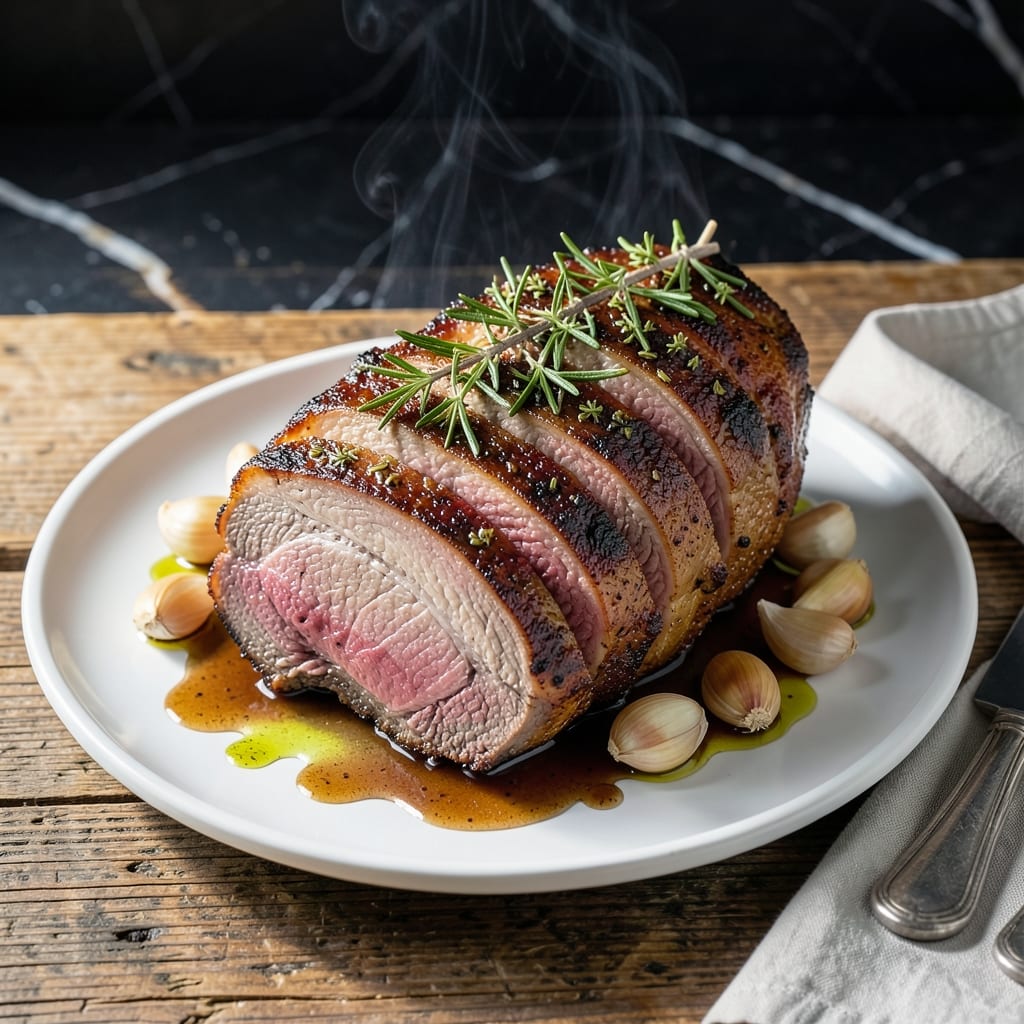
There’s a reason prime rib is the centerpiece of holiday feasts and special occasions—it’s impossible to beat when done right. I’ve refined this method over years of testing to ensure every slice stays juicy and packed with flavor.
The secret lies in a simple herb crust and precise cooking. Starting with a high-heat sear locks in moisture, while a low, slow roast guarantees even doneness from edge to edge. No dry, overcooked ends here.
What you’ll get is a showstopping main with a perfectly caramelized crust and tender, rosy interior. The aroma alone will have everyone gathering in the kitchen, waiting for that first bite.
Pair it with red wine or horseradish sauce for a classic finish. Here’s how to nail it every time.
Ingredients for Perfect Prime Rib Roast Recipe and Cooking Instructions
Quality matters here. A well-marbled roast and fresh herbs create that perfect, juicy result.
| Ingredient | Amount | Notes |
|---|---|---|
| Prime Rib Roast 🥩 | 5 lb | Bone-in, well-marbled preferred |
| Kosher Salt 🧂 | 2 tbsp | Diamond Crystal preferred for texture |
| Freshly Ground Black Pepper 🌶️ | 2 tsp | Coarse grind for crust |
| Fresh Rosemary 🌿 | 3 tbsp | Finely chopped, stems discarded |
| Fresh Thyme 🍃 | 2 tbsp | Leaves stripped from stems |
| Garlic Cloves 🧄 | 6 cloves | Minced for herb crust |
| Dijon Mustard 🟡 | 3 tbsp | For binding herb crust |
| Olive Oil 🫒 | 2 tbsp | Extra-virgin for richness |
| Unsalted Butter 🧈 | 4 tbsp | Softened for basting |
| Red Wine 🍷 | 1 cup | Dry variety for deglazing |
| Beef Stock 🥩 | 1 cup | Low-sodium preferred |
| All-Purpose Flour 🌾 | 2 tbsp | For thickening pan sauce |
The prime rib is the star—source bone-in from a trusted butcher like Whole Foods or Local Harvest. Look for vibrant red color with generous fat marbling (that’s where the flavor lives). Ask for the ribeye end if you want more fat. The herbs should be organic when possible—rosemary and thyme from Trader Joe’s are consistently fresh. Avoid pre-ground black pepper; whole peppercorns you grind yourself taste vastly superior.
No red wine? Substitute beef broth with a splash of balsamic vinegar for acidity. Fresh herbs unavailable? Dried at one-third the quantity works, but rehydrate in warm water first. For a non-alcoholic deglaze, apple cider vinegar plus a teaspoon of sugar mimics wine’s complexity. The Dijon can be swapped for whole-grain mustard (same quantity), but avoid yellow mustard—it lacks depth.
The roast can rest at room temperature for 1 hour before cooking (this ensures even doneness). Leftovers keep beautifully—slice and store in airtight containers for 4-5 days, or freeze for 3 months. Reheat gently in the oven to preserve moisture.
Why You’ll Love This Recipe
- Set and Forget: I rub the roast with salt, pepper, rosemary, and thyme, pop it in the oven, and let it do its thing—no babysitting required.
- Herb-Crusted Heaven: That crust from the fresh rosemary and thyme? It’s the reason I make this every holiday.
- Holiday Centerpiece: This is my go-to for Christmas dinner—impressive but not complicated.
- Leftovers for Days: A big roast means sandwiches for lunch all week, and honestly, they might be better than the original meal.
Step-by-Step Instructions for Perfect Prime Rib Roast
Master this method for a flawless herb-crusted roast with tender, juicy results every time.
Step 1: Prepare the Herb Crust
Remove the prime rib roast from the refrigerator 1 hour before cooking to bring it to room temperature. Pat it dry with paper towels—this ensures the herb crust adheres properly and promotes even browning.
In a small bowl, combine the 2 tbsp olive oil, 3 tbsp Dijon mustard, 2 tbsp kosher salt, 2 tsp freshly ground black pepper, 3 tbsp fresh rosemary, 2 tbsp fresh thyme, and 6 cloves minced garlic cloves. Mix until it forms a thick paste. This aromatic blend will create a fragrant, flavorful crust that locks in juices.
Step 2: Sear and Season the Roast
Preheat your oven to 450°F. Place the prime rib roast bone-side down in a roasting pan. Spread the herb mixture evenly over the entire surface of the roast, pressing it in firmly to create a uniform crust. The mustard in the mixture helps it cling to the meat.
Roast the prime rib at 450°F for 20 minutes to sear the exterior and develop a rich, caramelized crust. This initial high-heat blast is critical for achieving that coveted golden-brown finish and deep flavor.
Step 3: Slow-Roast to Perfection
After the initial sear, reduce the oven temperature to 325°F. Continue roasting the prime rib for approximately 1 hour and 15 minutes (about 15-18 minutes per pound for medium-rare). Use a meat thermometer to check the internal temperature—125°F for medium-rare, 130°F for medium.
Baste the roast with 4 tbsp unsalted butter every 30 minutes during cooking. This basting process enhances the crust’s richness and contributes to the juiciness of the final result. The roast is done when the thermometer inserted into the thickest part reads your target temperature.
Step 4: Rest and Prepare the Pan Sauce
Transfer the prime rib to a cutting board and tent loosely with foil. Let it rest for 15-20 minutes—this allows the juices to redistribute for maximum tenderness. While it rests, place the roasting pan on the stovetop over medium heat.
Add 1 cup red wine to the pan and deglaze, scraping up the browned bits with a wooden spoon. Simmer for 2 minutes, then whisk in 2 tbsp all-purpose flour to thicken. Pour in 1 cup beef stock and simmer for another 3-4 minutes until the sauce reaches your desired consistency. Strain and serve alongside the sliced roast.
Pro Tips For Making Perfect Prime Rib Roast Recipe And Cooking Instructions
- Dry the Roast Overnight: Pat the prime rib completely dry, then leave it uncovered in the fridge for 12-24 hours—this guarantees a deep, crispy crust when it hits the oven.
- Salt Heavily, Early: Use at least 1 tablespoon of kosher salt per pound and apply it the night before cooking; it penetrates deep for seasoning that actually tastes like something.
- Skip the Water Pan: I learned this the hard way—adding water to the roasting pan steams the meat, softening that beautiful crust you worked so hard to create.
- Rest 30 Minutes: After pulling it at 120°F for medium-rare, tent it loosely with foil and walk away—cutting too soon sends all the juices onto the cutting board instead of your plate.
Wine and Beer Pairings for This Recipe
Bold Red Wines
A rich, full-bodied Cabernet Sauvignon from Napa Valley is my top choice—its bold tannins and dark fruit flavors stand up to the prime rib’s richness. I also love a Malbec from Argentina for its smoky, plummy notes that complement the herb crust beautifully. 🍷
Classic Pairings
A Bordeaux blend offers earthy complexity that enhances the beef’s natural flavors. For something slightly lighter, try a Syrah from the Rhône Valley—its peppery finish cuts through the fat perfectly. These wines elevate the meal without overpowering it.
Beer Options
A robust stout or porter works surprisingly well with prime rib. The roasted malt flavors mirror the caramelized crust. I enjoy a Guinness for its creamy texture and bittersweet notes that balance the dish. 🍺
Lighter Alternatives
For those who prefer white wine, a full-bodied Chardonnay with oak aging can hold its own. The buttery notes complement the herb crust, while the acidity cleanses the palate. Avoid light, crisp whites—they’ll get lost.
Non-Alcoholic Choices
A sparkling pomegranate juice offers festive bubbles and tartness that cuts through the richness. For depth, try a black cherry soda with its deep fruit flavors. Both options keep the meal celebratory without alcohol.
Nutrition Facts
Frequently Asked Questions
How do I know when it’s done?
Use a meat thermometer! For medium-rare, pull it at 125°F. The temperature will rise to 130°F during resting. This ensures perfect doneness every time.
Should I cover it while cooking?
No, leave it uncovered. This allows the crust to develop properly and the meat to brown evenly. Covering can steam the roast, ruining the texture.
Can I use dried herbs instead?
Yes, but use 1/3 the amount and rehydrate in warm water first. Fresh herbs provide better flavor, but dried work in a pinch.
Why rest before slicing?
Resting for 15-20 minutes lets juices redistribute. Skipping this step causes juices to spill out, making the meat dry. Always tent with foil.

- Potato Candy Recipe 1933: Vintage Peanut Butter Roll Delight - October 30, 2026
- Potato Chip Cookie Recipe With Pecans: Buttery Crunch Meets Nutty Richness - October 30, 2026
- Potato Patty Recipe No Egg: Crispy Edges Without the Binder - October 30, 2026