
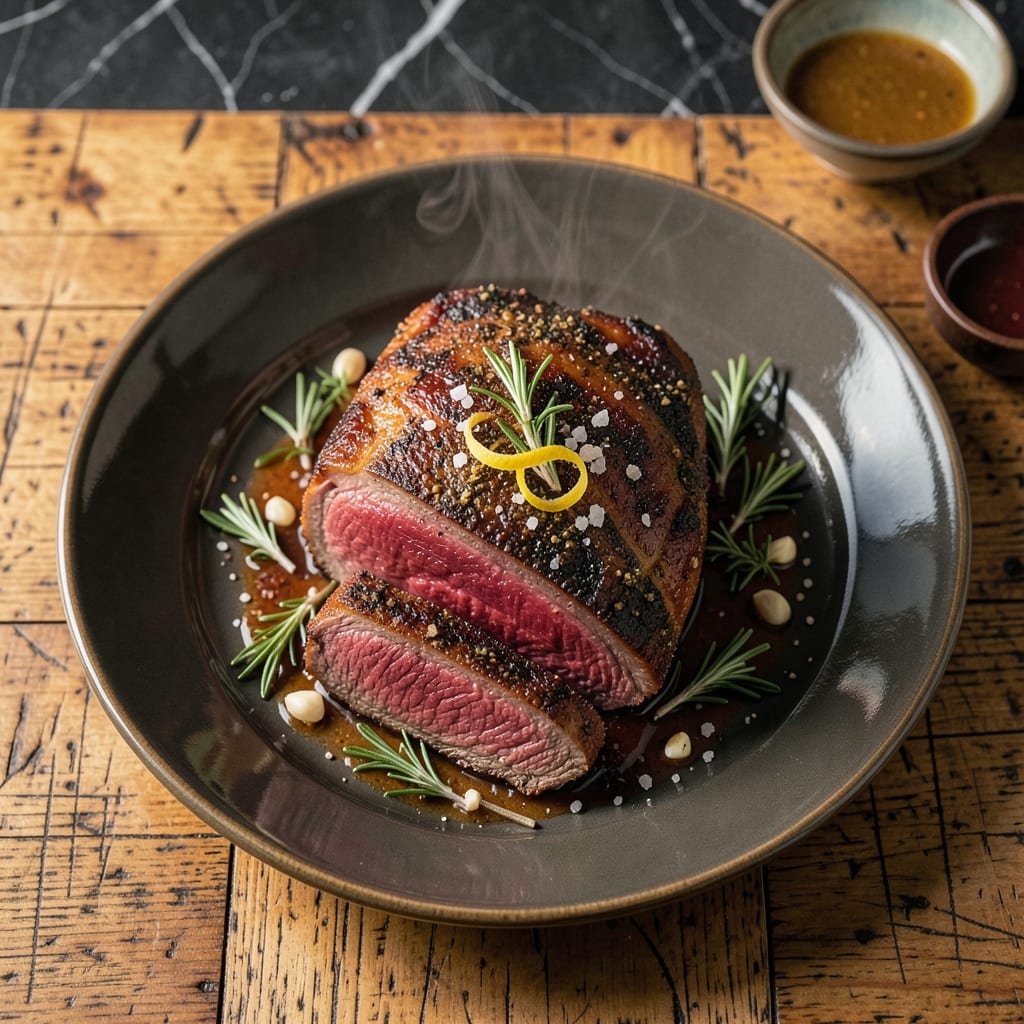
Mastering roast beef at home is simpler than you think. This proven oven method delivers perfect medium-rare results with a herb crust that forms an aromatic seal.
I developed this technique after testing cuts and temperatures in my small Boston kitchen. The key is starting with room-temperature beef and using a meat thermometer for precision.
You’ll achieve a rosy center with a golden-brown exterior, every time. The herb crust adds depth without overpowering the beef’s natural richness.
Pair with roasted potatoes and green beans for a complete meal. This approach turns Sunday dinner into a memorable event.
Ingredients for Perfect Roast Beef Recipe Oven
Quality beef plus fresh herbs create that golden crust and rosy center every time.
| Ingredient | Amount | Notes |
|---|---|---|
| Beef Ribeye Roast 🥩 | 3 lb | Bone-in, well-marbled, room temperature |
| Kosher Salt 🧂 | 2 tbsp | Diamond Crystal preferred for even seasoning |
| Freshly Ground Black Pepper 🌶️ | 1 tbsp | Coarse grind for crust texture |
| Fresh Rosemary Sprigs 🌿 | 4 whole | Stems removed, finely chopped |
| Fresh Thyme Sprigs 🍃 | 6 whole | Leaves stripped from stems |
| Garlic Cloves 🧄 | 6 cloves | Minced for herb crust paste |
| Dijon Mustard 🟡 | 2 tbsp | For herb crust binding agent |
| Extra-Virgin Olive Oil 🫒 | 2 tbsp | High-smoke-point for searing |
| Unsalted Butter 🧈 | 2 tbsp | Softened for finishing baste |
| Red Wine 🍷 | ½ cup | Dry variety for deglazing pan |
| Beef Stock 🥣 | 1 cup | Low-sodium preferred for pan sauce |
| Yellow Onion 🧅 | 1 whole | Roughly chopped for pan sauce |
The beef cut is non-negotiable here. Ribeye roast with good marbling (look for that white fat streaking through) gives you that buttery texture. Whole Foods or a good butcher will have it—ask for the bone-in version, which adds flavor. I’ve had luck with Costco’s prime-grade too (the good stuff, not the pre-cut steaks). Bring it to room temp before roasting—cold meat cooks unevenly.
No ribeye? Prime rib or beef tenderloin work too, though the flavor profile shifts slightly. Fresh herbs are ideal but dried at one-third the amount will do in a pinch. Out of Dijon? Whole-grain mustard adds a nice texture. The wine can be any dry red you’d drink—Cabernet or Merlot both work. Skip the cooking wine; it’s harsh.
Leftovers (if there are any) keep 4-5 days wrapped tightly in the fridge. For longer storage, slice and freeze for up to 3 months. Reheat in the pan with a splash of stock to revive. That herb crust? Even better the next day.
Why You’ll Love This Recipe
- One Pan Wonder: I just rub the ribeye with salt, pepper, and fresh herbs, pop it in the oven, and let it do the work.
- Herb Infused: That rosemary and thyme crust gives every bite a deep, aromatic flavor I can’t get enough of.
- Sunday Dinner Star: It’s my go-to for holiday meals or a fancy Sunday supper—always impresses.
- Leftovers Gold: Honestly, the slices make the best sandwiches for days after.
Step-by-Step Instructions for Herb-Crusted Roast Beef
Here’s the method that guarantees juicy, medium-rare beef with a fragrant herb crust every time.
Step 1: Prepare the Herb Crust and Season the Roast
Finely chop the stems from the 4 whole Fresh Rosemary Sprigs and strip leaves from the 6 whole Fresh Thyme Sprigs. Mince the 6 cloves Garlic Cloves and combine with the herbs, 2 tbsp Dijon Mustard, 2 tbsp Kosher Salt, and 1 tbsp Freshly Ground Black Pepper in a small bowl.
Pat the 3 lb Beef Ribeye Roast completely dry with paper towels. Rub the herb mixture all over the surface of the beef, pressing firmly to create an even coating. This paste not only seasons but creates that signature crust we’re after.
Step 2: Sear the Roast for Maximum Flavor
Heat the 2 tbsp Extra-Virgin Olive Oil in a large oven-safe skillet or roasting pan over high heat. When the oil shimmers and is nearly smoking, carefully place the roast in the pan. Sear for 2-3 minutes per side until deeply browned.
Don’t rush this step—the Maillard reaction here develops complex flavors that will carry through the entire cooking process. You’ll see the herb crust begin to caramelize at the edges, releasing incredible aromatics.
Step 3: Roast to Perfect Medium-Rare
Preheat your oven to 375°F. After searing, transfer the pan with the roast directly to the oven. Roast uncovered for 25-30 minutes or until the internal temperature reaches 130°F for medium-rare.
I recommend using an instant-read thermometer for accuracy. The roast is ready when it registers 125-130°F in the thickest part. Remember the temperature will rise 5-10°F during resting.
Step 4: Create the Pan Sauce While Resting
Transfer the roast to a cutting board and tent loosely with foil. Place the pan on the stovetop over medium heat. Add the roughly chopped 1 whole Yellow Onion and cook for 3-4 minutes until softened.
Deglaze with 0.5 cup Red Wine, scraping up all the browned bits. Add the 1 cup Beef Stock and bring to a simmer. Reduce by half, then whisk in the 2 tbsp Unsalted Butter until the sauce is glossy and slightly thickened.
Step 5: Slice and Serve
Let the roast rest for 15-20 minutes before slicing. This allows the juices to redistribute, ensuring every slice is moist and flavorful. Carve against the grain into ½-inch thick slices.
Serve immediately with the pan sauce spooned over the top. The beef should be rosy pink throughout with a fragrant, crusty exterior. Each serving of this herb-crusted masterpiece will deliver that perfect medium-rare experience we aimed for.
Pro Tips For Making Perfect Roast Beef Recipe Oven
- Start High, Finish Low: Sear the ribeye at 450°F for 15 minutes to get that deep crust, then drop to 275°F to finish—this gives you even cooking without drying it out.
- Salt Generously, Early: I learned this the hard way: coat the roast with kosher salt at least an hour before cooking, so it penetrates deeply and seasons every bite.
- Let It Rest: Resist the urge to slice right away—give it a full 20 minutes tented under foil to redistribute the juices, or you’ll lose half the moisture to the cutting board.
- Herb Under the Roast: Tuck rosemary and thyme sprigs under the roast in the pan, not just on top, so the fat renders down and infuses the meat with flavor as it cooks.
Regional Styles of These Flavors
English Sunday Roast
In the UK, this dish is the centerpiece of Sunday lunch. They use ribeye or sirloin, often with horseradish sauce and Yorkshire puddings. I love how the British serve it with roasted parsnips and carrots for a hearty meal. The gravy is typically made from pan drippings and beef stock. 💛
French Style
The French prefer beef tenderloin for their roast, cooked with shallots and red wine. They often add butter at the end for a glossy finish. I’ve found that a Bordelaise sauce pairs beautifully with this version.
Italian Approach
Italians often use rosemary and garlic heavily, sometimes adding balsamic vinegar to the pan sauce. They might serve it with polenta or roasted potatoes. The herbs are usually pounded into a paste with olive oil.
American Classic
Here in New England, we often see prime rib roasted with just salt, pepper, and garlic. The au jus is a must for dipping. I remember my Irish-Italian family serving it with horseradish and creamy mashed potatoes for Sunday dinner.
German Tradition
Germans typically use beef rump roast and serve it with red cabbage and potato dumplings. The meat is often marinated overnight in a mixture of vinegar, oil, and spices. This creates a tender, flavorful roast.
Asian Fusion
For an Asian twist, marinate the beef in soy sauce, ginger, and sesame oil before roasting. Serve with steamed jasmine rice and stir-fried vegetables. I’ve had great results with this approach using hoisin sauce in the pan sauce. 🔥
Nutrition Facts
Frequently Asked Questions
What’s the best cut for this roast?
Ribeye roast with good marbling is ideal for flavor and tenderness. Prime rib or beef tenderloin also work well. Avoid lean cuts like sirloin tip, as they can dry out.
Can I cook it from frozen?
No, always thaw completely first. Roasting from frozen leads to uneven cooking and a dry exterior. Thaw overnight in the fridge for best results.
How do I know when it’s done?
Use a meat thermometer! Pull it at 125-130°F for medium-rare. The temp will rise 5-10°F while resting. Avoid cutting to check—it releases precious juices.
Can I make the herb crust ahead?
Yes! Mix the herb paste up to 24 hours ahead and refrigerate. Apply to the roast just before cooking for maximum freshness and flavor.

- Pina Colada Dip Recipe Red Lobster: Tropical Creaminess With Toasted Coconut - October 12, 2026
- Pickled Sweet Cherry Peppers Recipe Canning: Tangy Heat for Pantry Staples - October 12, 2026
- Peppercorn Sauce Recipe Vegan: Rich Umami Depth Without Cream - October 12, 2026