
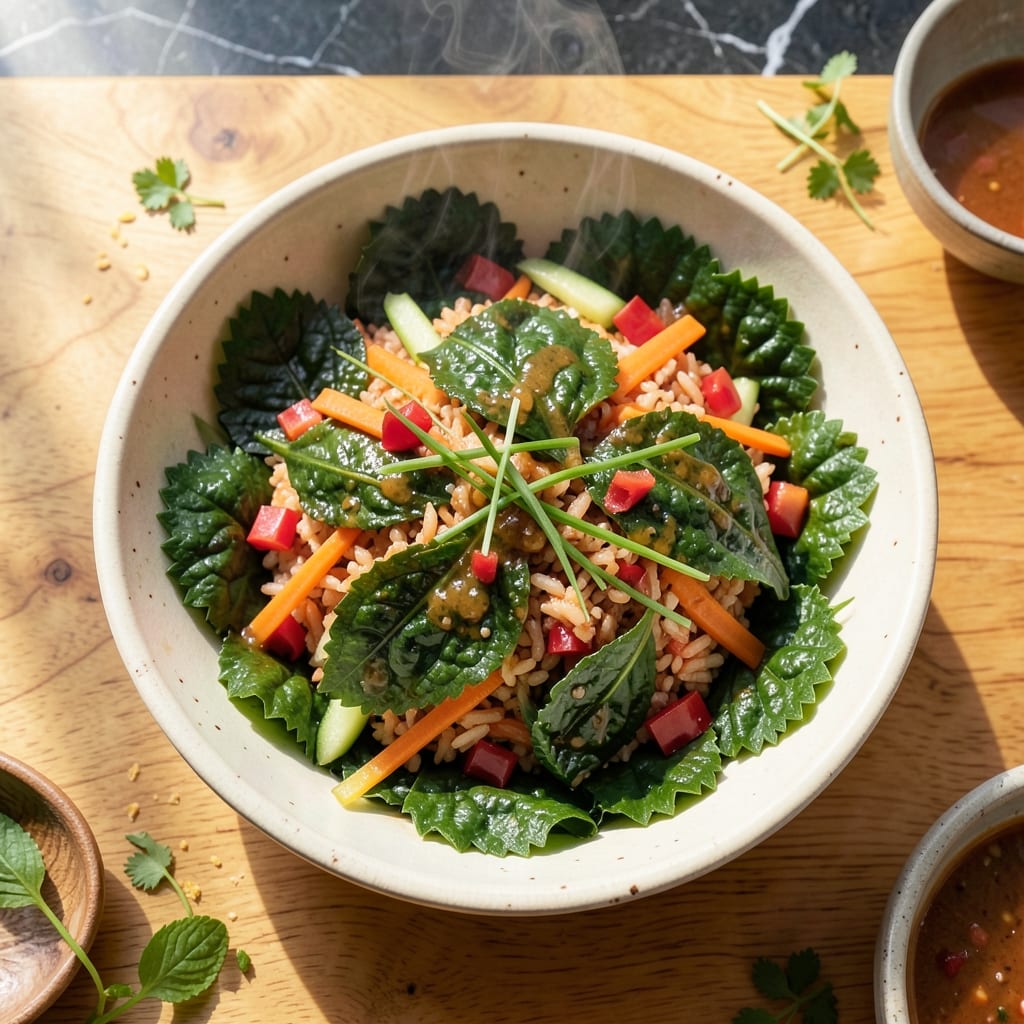
I discovered this Korean breakfast wrap while searching for a fast morning solution that didn’t sacrifice flavor. The perilla leaves, with their distinctive minty-anise aroma, transform simple ingredients into something extraordinary.
The secret lies in the leaf’s natural oils, which infuse every bite with authentic Korean character. Paired with rice, vegetables, and a touch of spicy sauce, it creates a balanced, portable meal that’s ready in minutes.
This dish proves that traditional flavors can fit seamlessly into a modern routine. The wraps stay fresh for hours, making them ideal for meal prep or on-the-go mornings.
Perfect for anyone wanting to explore Korean cuisine without complicated techniques. Here’s how to make them at home.
Ingredients for Perilla Leaves Recipe Cooking
Fresh perilla leaves and vibrant vegetables create this portable Korean-inspired breakfast wrap.
| Ingredient | Amount | Notes |
|---|---|---|
| Perilla Leaves 🍃 | 20 whole | Fresh, washed, stems removed |
| Short-Grain White Rice 🍚 | 2 cups | Cooked and cooled |
| Carrots 🥕 | 1 whole | Julienned for crunch |
| Cucumber 🥒 | 1 whole | Thinly sliced, seeds removed |
| Red Bell Pepper 🌶️ | ½ whole | Thinly sliced into strips |
| Scallions 🧅 | 4 whole | Thinly sliced on diagonal |
| Gochujang 🌶️ | 2 tbsp | Korean chili paste, vegan |
| Soy Sauce 🫒 | 1 tbsp | Low-sodium preferred |
| Rice Vinegar 💧 | 1 tbsp | For tangy brightness |
| Sesame Oil 🫒 | 1 tsp | Toasted variety for depth |
| Sesame Seeds 🌾 | 1 tbsp | Toasted for garnish |
| Garlic Cloves 🧄 | 2 cloves | Minced finely |
| Vegetable Oil 🫒 | 1 tbsp | For light sautéing |
| Sea Salt 🧂 | ½ tsp | Fine grain for seasoning |
Perilla leaves are the soul of this dish. Seek them out at Korean markets or Asian grocery stores—look for bright green, unblemished leaves with that signature minty-anise scent. Avoid wilted or yellowing bunches. The leaves should be pliant but not limp. If you’re in a pinch, Thai basil offers a similar aromatic profile, though the flavor differs slightly.
No gochujang? Sriracha mixed with a touch of miso paste can mimic the fermented depth. Short on perilla? Mint leaves at double the quantity provide a bright, fresh alternative. For the rice, jasmine or medium-grain works if short-grain isn’t available. The vegetables can be swapped for zucchini or radishes—just keep them crisp and thinly cut for easy wrapping.
Assemble wraps just before serving to prevent sogginess. Store components separately in the fridge for up to 3 days. Perilla leaves wilt quickly, so keep them wrapped in damp paper towels. The cooked rice and sauces hold for 5 days when properly sealed.
Why You’ll Love This Recipe
- No Chop Stress: I just roll the perilla leaves around the rice and veggies—no knife skills required.
- Fresh Crunch: The cucumber and bell pepper stay crisp against the warm rice, and that perilla aroma? Unbeatable.
- Lunchbox Hero: These wraps keep perfectly in the fridge, so I pack them for work or picnics without a second thought.
- Pennywise Bite: Honestly, a bunch of perilla leaves and a cup of rice stretch further than I expected, feeding four for less than a fiver.
Step-by-Step Instructions for Korean-Style Breakfast Wrap
This method delivers fresh, vibrant wraps with minimal effort and maximum flavor.
Step 1: Prepare the Vegetable Filling
Heat the vegetable oil in a large skillet over medium-high heat. Add the minced garlic cloves and sauté for 30 seconds until fragrant but not browned. This builds the aromatic base for your filling.
Add the julienned carrots, thinly sliced red bell pepper, and thinly sliced scallions. Stir-fry for 3-4 minutes until the vegetables soften slightly but retain their vibrant color and crisp texture. The carrots should be tender-crisp, not mushy.
Drizzle with the soy sauce, rice vinegar, and sesame oil. Toss to coat evenly and cook for an additional 1 minute. Remove from heat and let cool slightly.
Step 2: Season the Cooked Rice
In a mixing bowl, combine the cooked and cooled short-grain white rice with the 2 tbsp gochujang. Use your hands or a rice paddle to thoroughly distribute the chili paste, ensuring every grain is evenly coated.
The rice should turn a vibrant reddish-orange color. Add the 0.5 tsp sea salt and mix again. This step infuses the rice with a balance of heat and umami that complements the fresh vegetables perfectly.
Step 3: Assemble the Perilla Wraps
Lay out the 20 whole perilla leaves on a clean surface, vein-side up. Place a spoonful of the seasoned rice in the center of each leaf, leaving a 1-inch border at the top. The leaf’s natural cup shape helps contain the filling.
Top the rice with a portion of the vegetable mixture, then add a few slices of thinly sliced cucumber for a refreshing crunch. Fold the bottom of the leaf up over the filling, then roll tightly toward the top, tucking in the sides as you go to create a secure wrap.
Step 4: Garnish and Serve
Arrange the wraps seam-side down on a serving platter. Lightly brush the tops with a tiny amount of vegetable oil for a subtle sheen, then sprinkle with the toasted sesame seeds. This adds a nutty aroma and visual appeal.
Serve immediately while the leaves are still fresh and pliable. Each bite should offer a harmony of textures—chewy rice, crisp vegetables, and the grassy, slightly minty note of the perilla leaf. The wraps are best enjoyed fresh but can be stored in the refrigerator for up to 2 hours if covered.
Pro Tips For Making Perilla Leaves Recipe Cooking
- Blanch the Leaves: Drop perilla leaves in boiling water for exactly 10 seconds, then shock in ice water—this keeps them vibrant and crisp for wrapping.
- Salt the Veggies: Sprinkle a pinch of salt on shredded carrots, cucumber, and bell pepper, then let them sit for 5 minutes to draw out excess water before mixing with rice.
- Use Warm Rice: Pack the short-grain rice while it’s still warm—it sticks better to the perilla leaves and won’t fall apart when rolled.
- Skip the Overstuff: I learned this the hard way—fill each leaf with just 1 heaped spoonful of rice mix, or it’ll burst open when you try to fold it.
Dietary Considerations for perilla leaves recipe cooking
Vegan-Friendly
This dish is naturally 100% plant-based, making it perfect for vegan diets. The perilla leaves, vegetables, and rice create a complete meal without any animal products. I love how it satisfies both flavor and nutrition needs. 🌱
Gluten-Free Option
To make this gluten-free, simply replace the soy sauce with tamari or a certified gluten-free soy sauce. All other ingredients, including perilla leaves and gochujang, are typically gluten-free—just double-check labels.
Allergen Awareness
The primary allergen to watch for is soy in the gochujang and soy sauce. For soy-free versions, use coconut aminos as a substitute. Also, ensure your perilla leaves are fresh and pesticide-free, as some people may have sensitivities.
Low-Calorie Benefits
Each wrap contains approximately 120-150 calories, depending on filling size. The dish is naturally light yet filling, thanks to the fiber-rich vegetables and complex carbs from the rice. Perfect for a nutritious start to your day.
Nutrient-Rich Profile
Perilla leaves are packed with vitamin A, iron, and calcium. Combined with the colorful veggies, this meal delivers a powerful dose of vitamins and minerals. The gochujang adds a fermented boost for gut health. 💪
Storage Considerations
Since perilla leaves wilt quickly, these wraps are best eaten fresh. If storing, keep components separate and assemble just before eating. The rice and veggies can be refrigerated for up to 3 days in airtight containers.
Nutrition Facts
Frequently Asked Questions
Can I use dried leaves instead of fresh?
No, dried leaves lack the pliability and fresh flavor needed for wrapping. Fresh leaves provide the right texture and aromatic qualities that make this dish special.
How do I prevent the wraps from falling apart?
Roll them tightly and tuck in the sides as you go. Using a 1-inch border at the top helps secure the filling. Serve immediately for best results.
What can I substitute for gochujang?
Mix sriracha with a touch of miso paste for similar depth. For milder heat, try 1 tbsp red pepper flakes with 1 tsp soy sauce.
How long can I store assembled wraps?
Assembled wraps stay fresh for up to 2 hours in the fridge. For longer storage, keep components separate and assemble just before serving.

- Pina Colada Dip Recipe Red Lobster: Tropical Creaminess With Toasted Coconut - October 12, 2026
- Pickled Sweet Cherry Peppers Recipe Canning: Tangy Heat for Pantry Staples - October 12, 2026
- Peppercorn Sauce Recipe Vegan: Rich Umami Depth Without Cream - October 12, 2026