
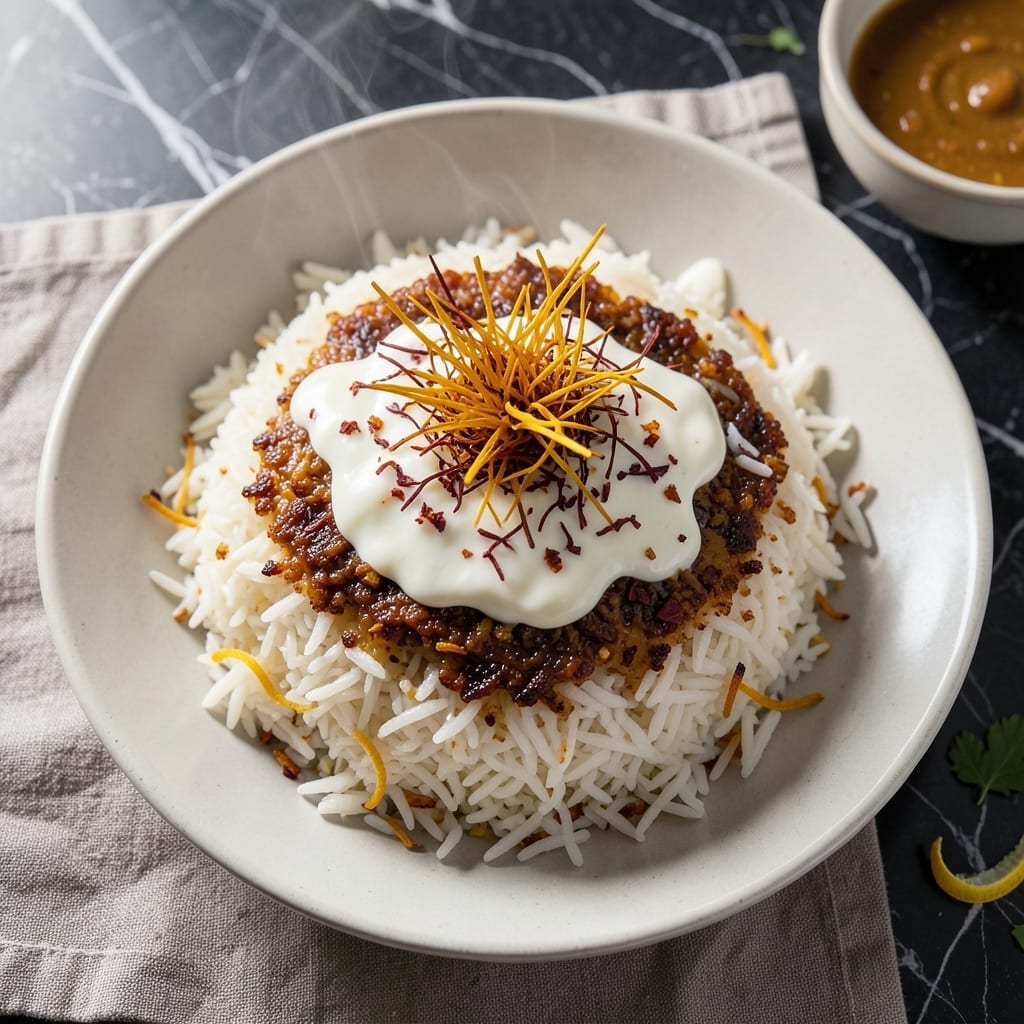
This Persian basmati rice delivers the perfect balance of fragrant grains and a crispy golden tahdig crust that defines authentic preparation.
I’ve refined this method through years of testing to ensure the rice stays fluffy while forming that coveted crunchy bottom layer. The key lies in proper soaking and precise layering techniques.
You’ll achieve restaurant-quality results with steamed basmati that’s light yet rich, topped by a shatteringly crispy crust that releases with each serving.
Traditional Persian flavor comes alive in every bite. This technique transforms simple ingredients into an extraordinary side dish.
Ingredients for Persian Rice Recipe Martha Stewart
Fragrant basmati, golden saffron, and a shatteringly crisp crust define this elegant dish.
| Ingredient | Amount | Notes |
|---|---|---|
| Basmati Rice 🍚 | 2 cups | Rinsed until water runs clear |
| Water 💧 | 4 cups | For soaking and cooking |
| Kosher Salt 🧂 | 1 ½ tbsp | Diamond Crystal preferred |
| Unsalted Butter 🧈 | ½ cup | Melted for tahdig layer |
| Vegetable Oil 🫒 | ¼ cup | Neutral flavor, high smoke point |
| Plain Yogurt 🥛 | ½ cup | Full-fat for richness |
| Saffron Threads 🌼 | ¼ tsp | Crushed and steeped in hot water |
| Cardamom Pods 🌿 | 4 whole | Lightly crushed to release aroma |
| Bay Leaves 🍃 | 2 whole | For subtle depth of flavor |
| Ground Turmeric 🌶️ | ½ tsp | For golden color |
| Granulated Sugar 🍚 | 1 tsp | Balances saffron bitterness |
| Cinnamon Stick 🌰 | 1 whole | Optional, for added warmth |
The basmati rice is non-negotiable here. Seek out Indian or Pakistani brands at Whole Foods or a Middle Eastern market for the longest grains and most authentic texture. Saffron quality varies wildly—Spanish or Iranian threads (sold at Penzeys or Trader Joe’s) deliver superior aroma and color. The butter should be unsalted to control the seasoning precisely, and European-style adds a richer mouthfeel to the tahdig.
No saffron? A pinch of turmeric plus a drop of rosewater mimics the color and floral notes. Yogurt can be Greek or regular, but avoid non-fat—it lacks the richness to properly crisp the crust. For a dairy-free version, coconut oil replaces butter without sacrificing texture. Cardamom pods can be substituted with half a teaspoon of ground cardamom, though whole offers better depth.
Store basmati rice in an airtight container away from light for up to 1 year. Saffron keeps indefinitely in a dark, cool place. The cooked rice holds well at room temperature for 2 hours, or refrigerate for 3 days—reheat gently with a splash of water to restore fluffiness.
Why You’ll Love This Recipe
- One Pot Wonder: I just toss basmati rice, water, salt, butter, and oil in a pot and let it work its magic—no fancy steps.
- Crispy Gold Bottom: That buttery, crunchy tahdig layer? I could eat it plain. Honestly, it’s the best part.
- Pairs with Anything: This rice goes with lamb kebabs one night and leftover chicken the next. Between us, it’s my blank canvas.
- Stretches Easily: One batch feeds us for two meals, and the leftovers reheat like a dream. My wallet thanks me every time.
Step-by-Step Instructions for Persian Rice With Crispy Tahdig Crust
Master these techniques for fragrant basmati with a golden, shatteringly crisp bottom layer.
Step 1: Prepare and Soak the Rice
Place the 2 cups Basmati Rice in a large bowl and cover with cool water. Agitate gently with your hands, then drain. Repeat this process 3-4 times until the water runs completely clear.
After the final rinse, cover the rice with the 4 cups Water and add 1.5 tbsp Kosher Salt. Let it soak at room temperature for 30-60 minutes. This removes excess starch while allowing the grains to absorb water evenly, preventing breakage during cooking.
Step 2: Steep Saffron and Par-Cook Rice
In a small bowl, crush the 0.25 tsp Saffron Threads between your fingers and dissolve in 2 tablespoons of hot water with the 1 tsp Granulated Sugar. This infuses the saffron while balancing its natural bitterness.
Drain the soaked rice and transfer to a large pot of boiling water with the 4 whole Cardamom Pods, 2 whole Bay Leaves, and 1 whole Cinnamon Stick. Par-cook for 5-6 minutes until the grains are slightly tender but still firm in the center. Drain immediately in a colander.
Step 3: Prepare the Tahdig Layer
In a nonstick pot, combine the 0.5 cup Unsalted Butter and 0.25 cup Vegetable Oil over medium heat until the butter melts. Add 0.5 tsp Ground Turmeric and swirl to create a golden base.
Spoon the 0.5 cup Plain Yogurt into the pot and spread it evenly across the bottom. This creates the foundation for the tahdig. The mixture should sizzle gently but not brown—adjust heat if necessary.
Step 4: Layer and Steam to Perfection
Spoon half of the par-cooked rice into the pot, gently pressing it into the yogurt mixture. Drizzle half of the steeped saffron water over the rice. Add the remaining rice in a pyramid shape, creating a small hole in the center for steam to escape.
Cover with a clean kitchen towel and place the lid on top, securing it tightly. Cook over low heat for 40-45 minutes until the rice is tender and the tahdig is a deep golden brown. Resist the urge to peek during this time.
Step 5: Flip and Serve the Tahdig
Remove from heat and let rest for 5 minutes. Place a large platter over the pot and, with confidence, flip the entire contents onto the serving dish. The tahdig should release as a single, crisp golden crust.
Serve immediately while hot, allowing guests to experience the contrast between the fragrant, fluffy rice and the shatteringly crisp bottom layer. The saffron-infused grains should glisten at the top, with the turmeric-tinted tahdig forming a perfect circle beneath.
Pro Tips For Making Persian Rice Recipe Martha Stewart
- Rinse the Rice: Soak basmati rice in cold water for 30 minutes, then rinse until the water runs clear—this removes excess starch so your tahdig gets crispy instead of gummy.
- Use Both Fats: Don’t skip the butter and oil combo; the butter adds flavor while the oil prevents burning during the long cook time for that golden crust.
- Low Heat After Boil: Once the water absorbs, drop the heat to low and let it steam for 45 minutes—any higher and you’ll burn the bottom before the rice cooks through.
- Skip the Peek: Resist lifting the lid while it steams or you’ll release the trapped steam that’s creating that perfect fluffy texture and crispy bottom layer.
Make-Ahead Tips for This persian rice recipe martha stewart
Overnight Soaking
For best results, soak the 2 cups Basmati Rice in water with 1.5 tbsp Kosher Salt overnight in the fridge. This extends the soaking time to 8-12 hours, ensuring maximum starch removal and even hydration for perfectly fluffy grains.
Prep the Tahdig Layer
You can mix the 0.5 cup Unsalted Butter, 0.25 cup Vegetable Oil, and 0.5 cup Plain Yogurt the night before. Store in an airtight container in the fridge. The flavors meld beautifully overnight, saving you time on cooking day. 💡
Steep Saffron Early
Crush the 0.25 tsp Saffron Threads and steep in hot water with 1 tsp Granulated Sugar up to 24 hours ahead. The longer it sits, the more vibrant the color and aroma. I always do this first to let the saffron fully infuse.
Par-Cook Rice in Advance
Par-cook the rice in boiling water with spices for just 3-4 minutes instead of 5-6, then drain and cool. Store in the fridge for up to 24 hours. This prevents overcooking when you finish the dish later.
When ready to cook, simply add the par-cooked rice to your pot and proceed with steaming.
Reheating the Tahdig
To revive leftovers, place portions in a skillet with 2 tbsp water over low heat for 5-7 minutes. Cover to trap steam. This restores moisture while keeping the tahdig crust crispy. ❄️
Nutrition Facts
Frequently Asked Questions
Why do I need to soak the basmati rice first?
Soaking removes excess starch for fluffier grains and prevents clumping. 30-60 minutes is ideal, but overnight works even better for maximum hydration.
Can I make tahdig without yogurt?
Yes, but yogurt creates the best crispy texture. For a dairy-free version, use coconut oil mixed with a little potato starch as a substitute.
How do I know when the tahdig is ready?
After 40-45 minutes on low heat, the crust should be deep golden brown. Listen for a sizzling sound—this indicates the perfect crisp has formed.
What if my tahdig sticks to the pot?
Use a nonstick pot and ensure the heat isn’t too high. Let it rest for 5 minutes before flipping, and it should release cleanly.

- Pina Colada Dip Recipe Red Lobster: Tropical Creaminess With Toasted Coconut - October 12, 2026
- Pickled Sweet Cherry Peppers Recipe Canning: Tangy Heat for Pantry Staples - October 12, 2026
- Peppercorn Sauce Recipe Vegan: Rich Umami Depth Without Cream - October 12, 2026