
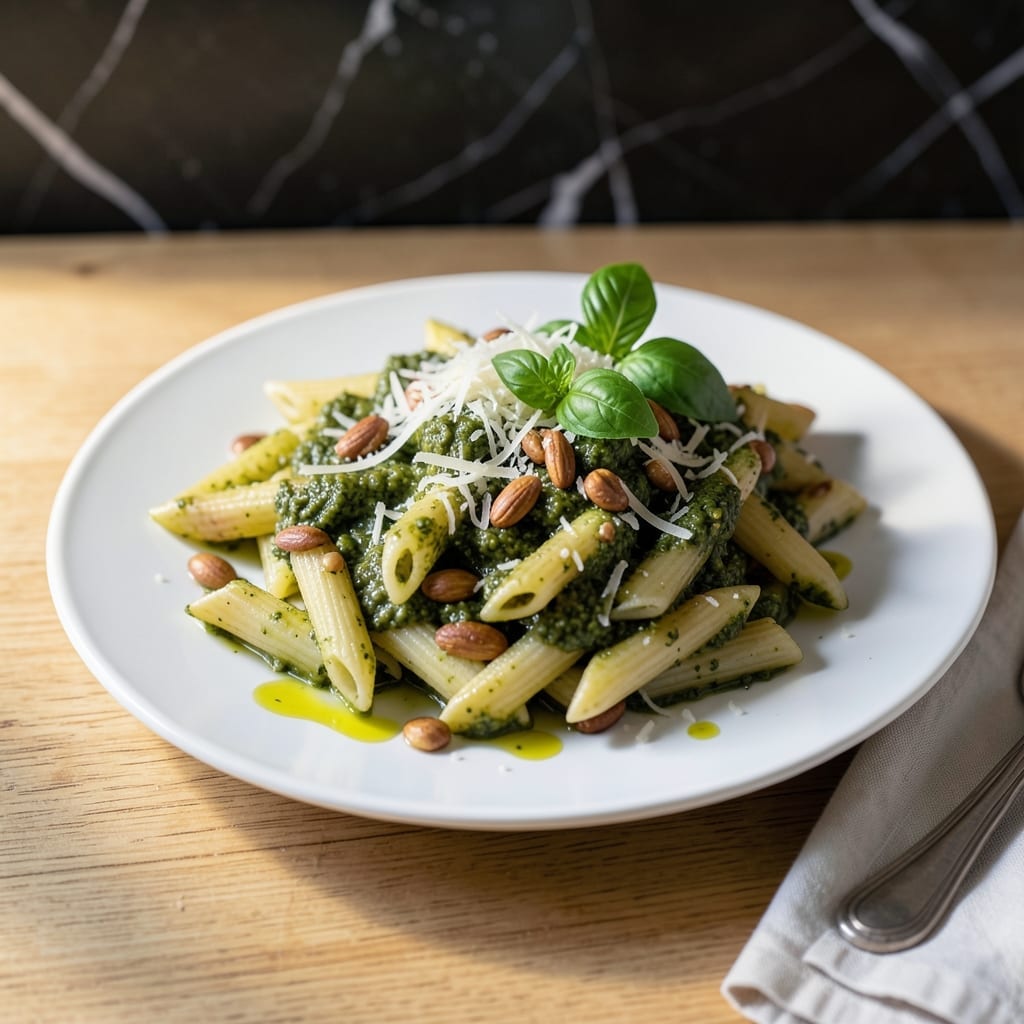
There’s something timeless about a simple pasta dish that lets fresh ingredients shine. This vegetarian version transforms basic elements into a meal that’s both elegant and comforting.
I’ve refined this method through years of trial and error, learning that the key is balancing rich pesto with al dente pasta. The result is a restaurant-quality dish that comes together in 20 minutes.
Fresh basil, garlic, and good olive oil create a sauce that’s vibrant and aromatic. The pasta serves as the perfect canvas, allowing the pesto’s flavors to take center stage without competition.
Serve warm or cold, as a main course or side dish. This recipe proves that vegetarian meals can be just as satisfying as their meat-based counterparts.
Ingredients for Pesto Pasta Recipe Vegetarian
Fresh basil, garlic, and quality cheese create this vibrant vegetarian pasta in minutes.
| Ingredient | Amount | Notes |
|---|---|---|
| Dried Pasta 🍝 | 12 oz | Fettuccine or linguine preferred |
| Fresh Basil Leaves 🌿 | 2 cups | Packed, stems removed |
| Garlic Cloves 🧄 | 4 cloves | Peeled, roughly chopped |
| Pine Nuts 🥜 | ½ cup | Toasted for depth of flavor |
| Parmesan Cheese 🧀 | ¾ cup | Freshly grated from block |
| Extra-Virgin Olive Oil 🫒 | ¾ cup | High-quality, fruity finish |
| Lemon Juice 🍋 | 1 tbsp | Freshly squeezed preferred |
| Kosher Salt 🧂 | 1 tsp | Adjust to taste |
| Black Pepper 🌶️ | ½ tsp | Freshly ground preferred |
| Red Pepper Flakes 🔥 | ¼ tsp | Optional for heat |
| Pecorino Romano Cheese 🧀 | ¼ cup | Freshly grated, optional boost |
| Reserved Pasta Water 💧 | ½ cup | For adjusting pesto consistency |
The basil must be fresh—farmers markets or well-stocked grocery stores (like Whole Foods) have the best. Look for bright green leaves without wilting. Pine nuts can be pricey; Trader Joe’s offers them at a reasonable cost. For the Parmesan, Parmigiano-Reggiano is ideal—grate it yourself for the best texture and flavor. Avoid pre-grated cheese, which often contains anti-caking agents.
No pine nuts? Walnuts or cashews work well (toast them first). For a nut-free version, use sunflower seeds. If Parmesan isn’t available, Pecorino Romano adds a sharper flavor. The olive oil should be high-quality—extra-virgin with a fruity finish enhances the pesto. Dried basil won’t work here; fresh is essential for the vibrant color and flavor.
Pesto oxidizes quickly, so store it in an airtight container with a thin layer of olive oil on top. Keeps in the fridge for 5 days or can be frozen in ice cube trays for up to 3 months. Cooked pasta holds well for 3 days refrigerated.
Why You’ll Love This Recipe
- Minimal Chopping Required: Just toss basil, garlic, and pine nuts in the blender—no knife skills needed.
- Fresh Herb Explosion: The basil and garlic combo hits that bright, herby note that makes every bite sing.
- Meal Prep Hero: I make a double batch on Sunday and it tastes just as good reheated for lunch.
- Pantry Savior: Dried pasta and a few fresh staples stretch into a meal that feels way fancier than it is.
Step-by-Step Instructions for Pesto Pasta Vegetarian
This method ensures vibrant basil flavor and perfect sauce consistency every time.
Step 1: Toast the Pine Nuts and Prepare Aromatics
Heat a dry skillet over medium-low heat and add the 0.5 cup Pine Nuts. Toast for 3-4 minutes, stirring frequently, until they turn golden brown and release a nutty aroma. Immediately transfer to a plate to cool—this prevents over-browning.
While the pine nuts cool, peel and roughly chop the 4 cloves Garlic Cloves. I like to smash them lightly with the flat side of my knife first to release their oils. Pack the 2 cups Fresh Basil Leaves into a measuring cup, ensuring no stems remain.
Step 2: Blend the Pesto to Silky Perfection
In a food processor, combine the toasted pine nuts, chopped garlic, 0.75 cup Parmesan Cheese, 0.25 cup Pecorino Romano Cheese, 1 tsp Kosher Salt, 0.5 tsp Black Pepper, and 0.25 tsp Red Pepper Flakes. Pulse for 15-20 seconds until finely chopped.
With the processor running, slowly drizzle in the 0.75 cup Extra-Virgin Olive Oil through the feed tube. Stop to scrape down the sides, then add the 2 cups Fresh Basil Leaves and 1 tbsp Lemon Juice. Blend for 30-45 seconds until completely smooth, stopping to scrape the bowl as needed. The pesto should be thick but pourable.
Step 3: Cook the Pasta to Al Dente
Bring a large pot of salted water to a rolling boil. Add the 12 oz Dried Pasta and cook according to package directions until al dente—typically 1-2 minutes less than the suggested time. Stir occasionally to prevent sticking.
Before draining, reserve 0.5 cup Reserved Pasta Water by scooping it out with a measuring cup. The starchy water is essential for adjusting the pesto’s consistency later. Drain the pasta but do not rinse—you want that surface starch to help the sauce cling.
Step 4: Combine and Adjust for Creamy Consistency
Return the drained pasta to the pot and immediately add the pesto. Toss vigorously with tongs, adding the 0.5 cup Reserved Pasta Water 1-2 tablespoons at a time until the sauce clings beautifully to every strand. The heat from the pasta will mellow the garlic’s bite.
Taste and adjust seasoning if needed, though the cheeses and salt in the pesto usually provide enough flavor. The sauce should coat the pasta evenly without pooling at the bottom of the pot. Serve immediately while warm for the best texture and flavor.
Pro Tips For Making Pesto Pasta Recipe Vegetarian
- Toast the Pine Nuts: Lightly toast the pine nuts in a dry pan over medium heat for 2-3 minutes until golden and fragrant—this brings out their rich, buttery flavor and prevents a raw, bitter taste in your pesto.
- Blanch the Basil: I learned this the hard way—blanching basil leaves for 10 seconds in boiling water keeps them vibrant green and prevents your pesto from turning dull and muddy.
- Save Pasta Water: Always reserve about ½ cup of the starchy pasta water before draining; it’s the best way to loosen the pesto and help it cling perfectly to the noodles.
- Skip the Food Processor: Sounds old-school, but pulsing the basil, garlic, and pine nuts with a mortar and pestle gives you a chunkier, more textured pesto that actually tastes fresher than the ultra-smooth stuff.
Health Benefits of This Dish
Heart-Healthy Fats
The extra-virgin olive oil in this dish provides monounsaturated fats that support heart health. Combined with pine nuts, you get a dose of healthy fats that help lower bad cholesterol. I always use high-quality oil from my local farmers market for the best benefits. 💪
Plant-Powered Nutrition
Fresh basil isn’t just flavorful—it’s packed with vitamin K, iron, and antioxidants. The garlic adds immune-boosting properties, while the pasta provides energy-sustaining complex carbohydrates from durum wheat.
Protein Boost
The Parmesan cheese delivers 10g of protein per ounce, making this meal more satisfying. For a vegan twist, nutritional yeast can provide similar protein content. I love that this dish feels indulgent while still being nutritionally balanced.
Digestive Benefits
Garlic and olive oil both support gut health through their anti-inflammatory properties. The fiber from whole wheat pasta (if you choose it) adds an extra digestive boost. This creation proves vegetarian meals can be both delicious and nourishing. 🌱
Low-Calorie Option
At about 500-600 calories per serving (with regular pasta), this recipe is lighter than many creamy pasta dishes. You can reduce calories further by using zucchini noodles or cutting the oil by 2 tablespoons.
Antioxidant Rich
Basil contains eugenol, a compound with antioxidant properties. The lemon juice adds vitamin C, while pine nuts contribute vitamin E. Together, they create a meal that fights oxidative stress naturally.
Nutrition Facts
Frequently Asked Questions
Can I make this without a food processor?
Yes! Use a mortar and pestle for an authentic texture. Crush garlic and salt first, then add basil in batches. It takes 10-15 minutes but creates a wonderfully rustic pesto.
How do I prevent the pesto from turning brown?
Pesto oxidizes quickly. Store it with a thin layer of olive oil on top in an airtight container. It stays fresh in the fridge for 5 days this way.
What pasta shape works best?
Long shapes like fettuccine or linguine hold sauce beautifully. For a heartier bite, try penne or farfalle. Avoid very thin pastas like angel hair—they can get overwhelmed.

- Potato Candy Recipe 1933: Vintage Peanut Butter Roll Delight - October 30, 2026
- Potato Chip Cookie Recipe With Pecans: Buttery Crunch Meets Nutty Richness - October 30, 2026
- Potato Patty Recipe No Egg: Crispy Edges Without the Binder - October 30, 2026