
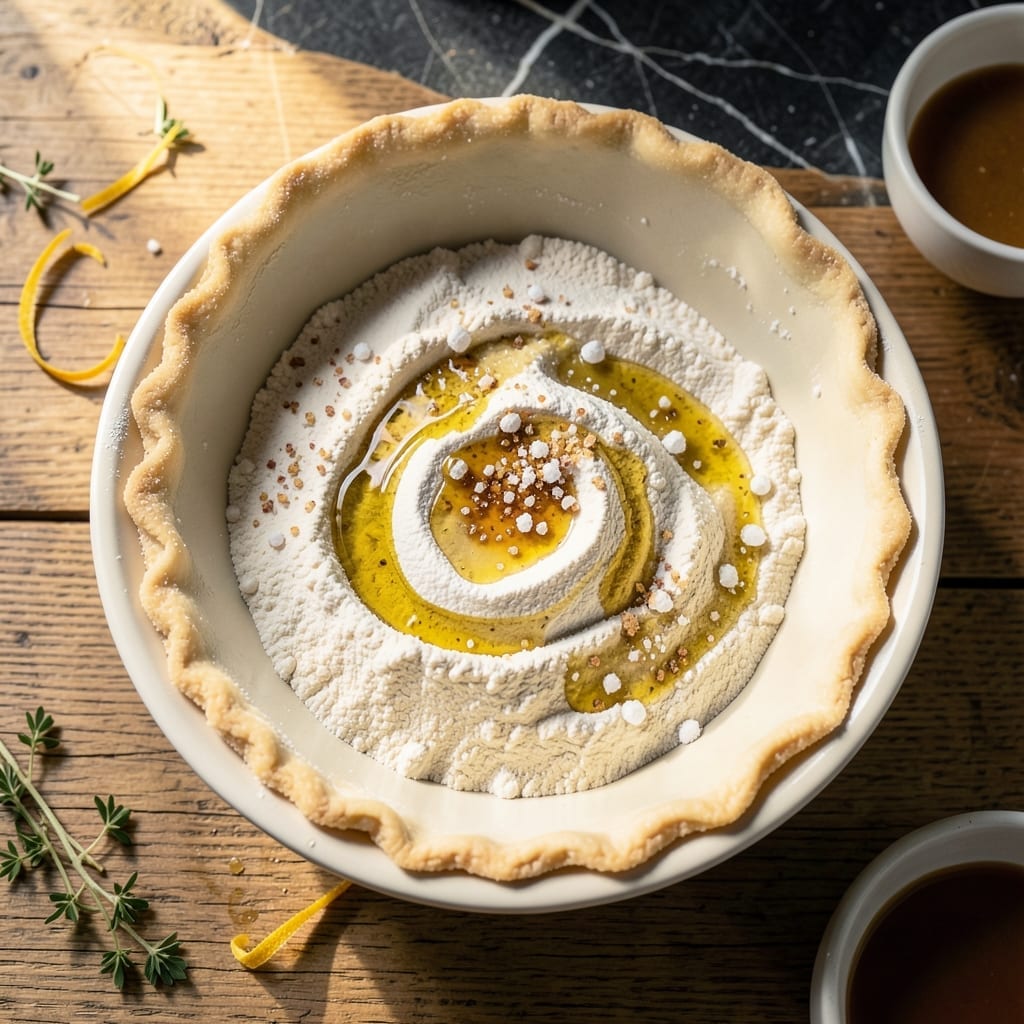
This oil-based pie crust delivers flaky, tender results without a single stick of butter. I developed the method after realizing how many home cooks struggle with pastry that shrinks or turns tough.
The secret lies in using cold oil and minimal handling. Unlike butter, oil creates crisp layers without the risk of melting, making it more forgiving for beginners. The dough comes together quickly in one bowl.
What emerges from the oven is a golden crust with distinct flakes and a sturdy structure that holds fillings beautifully. It works for fruit pies, custards, or even savory quiches with equal success.
No special equipment required—just a fork, a bowl, and 10 minutes of your time. The results rival traditional butter crusts in both texture and flavor.
Ingredients for Pie Crust Recipe with Oil
No butter, no problem. This oil crust needs just seven pantry staples.
| Ingredient | Amount | Notes |
|---|---|---|
| All-Purpose Flour 🌾 | 2 ½ cups | Sifted for lighter texture |
| Vegetable Oil 🫒 | ¾ cup | Cold, neutral-flavored preferred |
| Ice Water 💧 | ¼ cup | Plus 1 tbsp as needed |
| Salt 🧂 | 1 tsp | Fine sea salt preferred |
| Granulated Sugar 🍚 | 1 tbsp | Optional, for sweet crusts |
| Baking Powder 🧂 | ½ tsp | For extra flakiness |
| Apple Cider Vinegar 🍏 | 1 tsp | Cold, for tenderness |
The oil is everything here. Use a neutral-flavored vegetable or canola oil—avoid olive oil, which can be too assertive. Keep it ice cold for the flakiest layers (I stash mine in the freezer while prepping). The flour should be all-purpose; no need for fancy pastry flour. King Arthur or Gold Medal both work beautifully. If you’re making a sweet pie, don’t skip the sugar—it adds just the right touch of caramelization.
No vinegar? Lemon juice works the same magic. Swap the oil for melted coconut oil if you want a subtle flavor (just chill it first). The baking powder isn’t mandatory but adds lift for extra flakiness. If your kitchen is warm, pop the water in the freezer for 10 minutes before mixing. The salt can be table salt in a pinch, but sea salt gives a cleaner taste.
The dough keeps 2-3 days wrapped tight in the fridge, or freeze for 3 months. Let it sit at room temp 10 minutes before rolling (don’t skip this step). Baked crusts stay crisp 1-2 days at room temperature in an airtight container.
Why You’ll Love This Recipe
- No-Fuss Mixing: I just stir flour, oil, and ice water—no chilled butter to cut in, no pastry blender to dig out.
- Flaky & Light: The oil makes it tender, and a pinch of sugar brings out a subtle sweetness that pairs with any filling.
- Endless Uses: I’ve rolled it out for apple pies, hand pies, even quiches. Honestly, it’s my blank canvas for any sweet or savory bake.
- Pantry Stable: All-purpose flour and vegetable oil sit in my cupboard for months, so I can make this on a whim without a grocery run.
Step-by-Step Instructions for Pie Crust With Oil
This method delivers flaky, tender layers without the fuss of cold butter or pastry cutters.
Step 1: Combine Dry Ingredients for Structure
In a large mixing bowl, whisk together the 2.5 cups All-Purpose Flour, 1 tsp Salt, 1 tbsp Granulated Sugar, and 0.5 tsp Baking Powder until evenly distributed. I sift my flour first for an airier texture—this step prevents dense, tough crusts.
Watch for any lumps, especially from the baking powder. A quick whisk breaks them up and ensures uniform distribution. The sugar adds subtle sweetness and aids in browning, but you can omit it for savory pies. This dry base creates the framework for your flaky layers.
Step 2: Incorporate Oil for Tenderness
Pour the 0.75 cup Vegetable Oil into the dry ingredients. Using a fork, stir until the mixture resembles coarse crumbs with some pea-sized clumps remaining. The oil should fully coat the flour—this is what replaces butter for flakiness.
Don’t overmix here. You want visible oil streaks in the flour; these create the pockets that will separate into flaky layers during baking. I use a neutral oil like canola or vegetable for a clean flavor that lets the filling shine.
Step 3: Add Liquids to Bind the Dough
In a small bowl, combine the 0.25 cup Ice Water and 1 tsp Apple Cider Vinegar. The vinegar tenderizes the gluten, and the cold temperature prevents it from developing toughness. Pour this mixture over the flour-oil blend.
Stir with a fork until the dough just comes together. It will look shaggy and slightly crumbly—that’s perfect. If it seems too dry to hold when pressed, add the reserved 1 tbsp Ice Water. The dough should stick together when pinched but not be sticky.
Step 4: Rest and Roll for Perfect Texture
Turn the dough onto a lightly floured surface and gently shape it into a disk. Wrap it tightly in plastic wrap and refrigerate for 30 minutes. This rest allows the flour to fully hydrate and the oil to solidify slightly, making rolling easier.
After resting, roll the dough between two sheets of parchment paper to ⅛-inch thickness. The parchment prevents sticking and makes transferring to your pie dish effortless. Look for a smooth, even surface with visible oil streaks—these will become your flaky layers.
Step 5: Blind Bake or Fill and Finish
For pre-baked shells, transfer the rolled dough to your pie plate, crimp the edges, and prick the bottom with a fork. Bake at 425°F for 15 minutes with pie weights, then remove weights and bake 8-10 minutes more until light golden brown.
For filled pies, add your filling to the unbaked crust and bake according to your recipe. The crust will develop a golden, crisp finish. Let it cool slightly before slicing—the layers set as it cools, giving you that perfect flaky texture in every bite.
Pro Tips For Making Pie Crust Recipe With Oil
- Chill the Oil: I learned this the hard way—cold oil makes flakier crust, so pop your vegetable oil in the freezer for 10 minutes before mixing. Sounds weird, but it works.
- Measure Water Carefully: Use exactly 3 tablespoons of ice water per cup of flour—any more and your crust turns tough. I was skeptical until I tried it.
- Skip Overmixing: Stir just until the dough holds together—overworking it develops gluten and ruins the texture. My grandmother swore by this, and she was right.
- Roll Between Parchment: Skip the floured counter and roll the dough between two sheets of parchment—less mess, zero sticking. This isn’t the prettiest method, but it’s the easiest.
Wine and Beer Pairings for pie crust recipe with oil
Sweet Wine Pairings
For fruit-filled pies like apple or cherry, a Moscato d’Asti from Italy offers the perfect balance. Its light effervescence and notes of peach and apricot complement the crust’s buttery undertones without overpowering the filling. Serve well-chilled at 45-50°F. 🍷
Dessert Wine Options
A glass of Late Harvest Riesling from Washington State enhances the caramelized crust edges. The honeyed sweetness and bright acidity cut through the richness beautifully. Look for bottles from Chateau Ste. Michelle for consistent quality.
Beer Pairings
For a casual gathering, try a Belgian Witbier like Hoegaarden. Its citrus and coriander notes contrast nicely with the crust’s flakiness. The light body won’t compete with delicate fruit fillings.
Coffee Alternatives
Non-alcoholic options work wonderfully too. A cold brew coffee with a splash of vanilla syrup highlights the crust’s subtle sweetness. The bitterness balances the dish’s richness perfectly.
Sparkling Choices
For celebratory occasions, Prosecco from Veneto offers crisp apple and pear notes that harmonize with both sweet and savory pies. Its fine bubbles cleanse the palate between bites.
Tea Pairings
Earl Grey tea with its bergamot notes makes an elegant pairing, especially for citrus-based pies. Brew at 200°F for 3-4 minutes to avoid bitterness. The floral aroma complements the crust’s texture beautifully. 💫
Nutrition Facts
Frequently Asked Questions
Can I use olive oil instead of vegetable oil?
Yes, but choose a light olive oil for a neutral flavor. Strong extra-virgin may overpower your pie. Keep it ice cold for best results.
Why does the dough need to rest before rolling?
Resting allows the flour to fully hydrate and the oil to redistribute. This prevents shrinking and makes the dough easier to roll. 30 minutes is ideal.
Can I make this ahead and freeze it?
Wrap the dough tightly and freeze for up to 3 months. Thaw in the fridge overnight before using.
What if my crust turns out tough?
Overworking the dough is the likely culprit. Use a light touch when mixing and rolling to keep it tender.

- Potato Candy Recipe 1933: Vintage Peanut Butter Roll Delight - October 30, 2026
- Potato Chip Cookie Recipe With Pecans: Buttery Crunch Meets Nutty Richness - October 30, 2026
- Potato Patty Recipe No Egg: Crispy Edges Without the Binder - October 30, 2026