
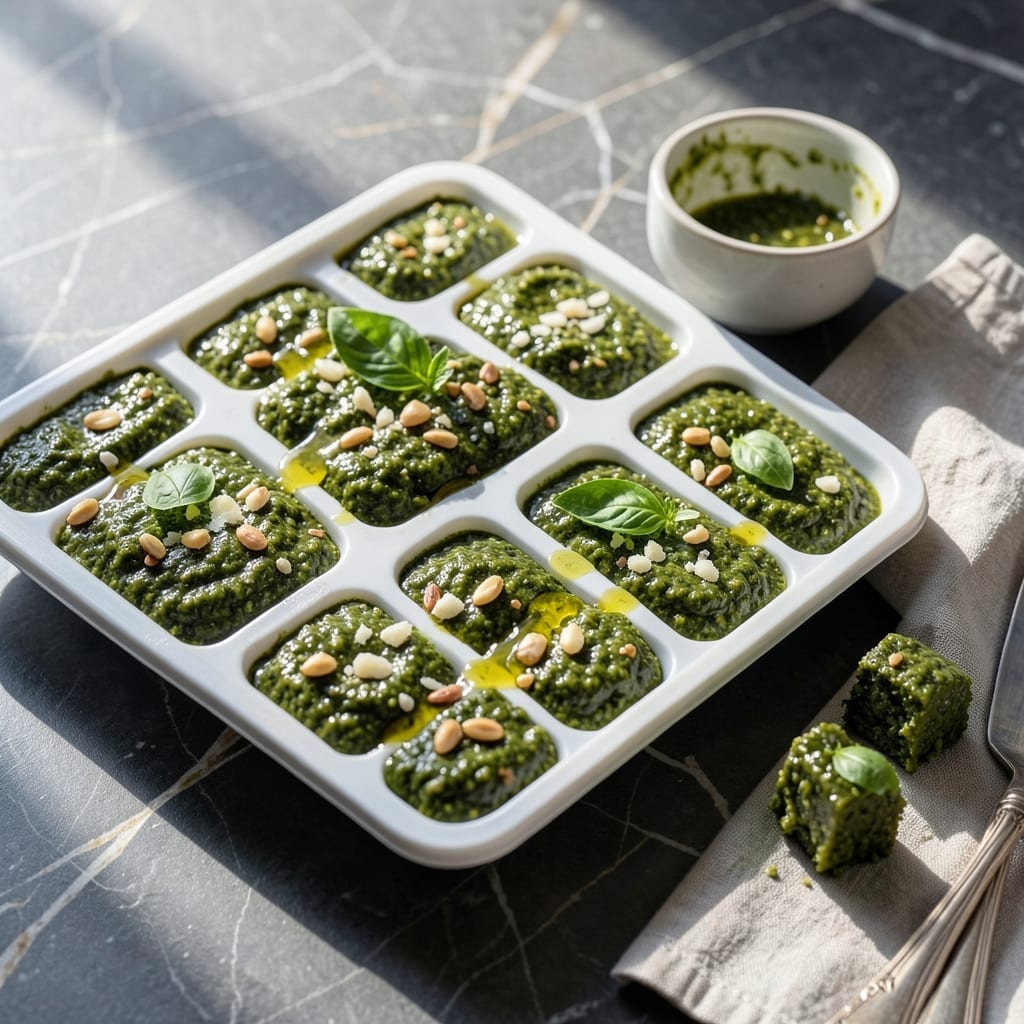
Preserving fresh basil pesto at its peak is a game-changer for busy cooks. This method locks in vibrant herb flavor without preservatives or waste.
The technique is simple: blend your pesto as usual, then portion into ice cube trays for easy storage. Each cube contains just the right amount for single-serving recipes.
Once frozen solid, transfer the cubes to a sealed container. They’ll keep for 3-4 months, ready to transform pasta, soups, or sandwiches with minimal effort.
No more throwing out spoiled herbs or last-minute grocery runs. This approach maintains the pesto’s bright, aromatic qualities until you’re ready to use it.
Ingredients for Pesto Recipe Freeze in Ice Cube Trays
Eight premium ingredients transform into vibrant pesto ready for perfect portioning and preservation.
| Ingredient | Amount | Notes |
|---|---|---|
| Fresh Basil Leaves 🌿 | 2 cups | Packed, stems removed for purity |
| Pine Nuts 🥜 | ½ cup | Toasted for nutty depth |
| Garlic Cloves 🧄 | 3 cloves | Peeled and roughly chopped |
| Parmesan Cheese 🧀 | ¾ cup | Freshly grated Parmigiano-Reggiano |
| Extra-Virgin Olive Oil 🫒 | ¾ cup | High-quality, fruity, cold-pressed |
| Lemon Juice 🍋 | 1 tbsp | Freshly squeezed for brightness |
| Sea Salt 🧂 | ½ tsp | Fine grain preferred for even distribution |
| Freshly Ground Black Pepper 🌶️ | ¼ tsp | Coarse grind for texture |
The basil must be pristine—farmers market quality with deep green leaves and no wilting. Parmigiano-Reggiano is non-negotiable; pre-grated lacks the melt and nuance. Pine nuts, while pricey, deliver authentic flavor, though Trader Joe’s and Costco offer them at competitive prices. Toasting the nuts intensifies their richness, a step professional kitchens never skip.
Substitutions require care. Walnuts or cashews replace pine nuts adequately, though with a slightly different profile. Pecorino Romano can stand in for Parmesan, offering a sharper bite. If basil is scarce, a blend of parsley and basil (70/30 ratio) works without compromising integrity. Always use cold-pressed olive oil—inferior oils yield a flat, dull pesto.
Portioned pesto freezes beautifully for 3-4 months in airtight containers. A thin olive oil layer on top prevents browning. Thaw in the refrigerator overnight or submerge the sealed container in cold water for 30 minutes. Avoid microwave thawing to preserve texture and flavor.
Why You’ll Love This Recipe
- Minimal Effort: I just toss basil, pine nuts, garlic, Parmesan, and olive oil in the blender—no fancy steps.
- Flavor Bomb: The pine nuts and Parmesan give it that rich, nutty depth I crave in every bite.
- Weeknight Hero: I pop a frozen pesto cube into pasta, soups, or marinades for instant flavor.
- No Waste: Honestly, I used to throw out wilted basil—now I freeze extras and nothing goes to waste.
Step-by-Step Instructions for Pesto to Freeze in Ice Cube Trays
This method ensures vibrant flavor retention and convenient portioning for future use.
Step 1: Toast the Pine Nuts
Heat a dry skillet over medium-low heat. Add the 0.5 cup Pine Nuts in a single layer, stirring frequently for 3-5 minutes until they turn golden brown and release a nutty aroma. Watch closely—pine nuts burn easily.
Immediately transfer the toasted pine nuts to a plate to cool. This prevents residual heat from continuing to cook them. The toasting step deepens their flavor and adds a satisfying crunch to the finished pesto.
Step 2: Blend the Base Ingredients
In a food processor, combine the 2 cups Fresh Basil Leaves, 3 cloves Garlic Cloves, and cooled 0.5 cup Pine Nuts. Pulse in 1-second bursts until finely chopped but not puréed—you want texture.
Add the 0.75 cup Parmesan Cheese, 0.5 tsp Sea Salt, and 0.25 tsp Freshly Ground Black Pepper. Pulse again until the mixture resembles coarse sand. Stop and scrape down the sides as needed to ensure even blending.
Step 3: Emulsify with Liquid Ingredients
With the food processor running on low, slowly drizzle in the 0.75 cup Extra-Virgin Olive Oil through the feed tube. This gradual addition creates a smooth, creamy emulsion.
Once the oil is incorporated, add the 1 tbsp Lemon Juice and pulse briefly to combine. Taste and adjust seasoning if needed, though the flavors will meld further as it rests.
Step 4: Portion and Freeze
Spoon the pesto into ice cube trays, filling each compartment about ¾ full. This allows room for expansion as it freezes. Lightly tap the tray on the counter to remove air bubbles and level the tops.
Place the tray in the freezer and freeze for 4-6 hours or until completely solid. Once frozen, transfer the pesto cubes to an airtight container or freezer bag for long-term storage. Label with the date—it keeps for up to 3 months.
To use, thaw the desired number of cubes in the refrigerator overnight or drop frozen cubes directly into hot pasta, soups, or sauces for an instant burst of fresh herb flavor.
Pro Tips For Making Pesto Recipe Freeze In Ice Cube Trays
- Blanch the Basil: Drop fresh basil leaves in boiling water for 10 seconds, then shock in ice water—I learned this the hard way after my first batch turned brown in the freezer.
- Toast the Pine Nuts: Spread pine nuts in a dry pan over medium heat until golden, about 3-4 minutes; it actually changes the outcome more than you’d expect.
- Skip the Pre-Grated: Grate your own Parmesan—pre-grated contains anti-caking agents that make the pesto grainy after thawing.
- Cover with Oil: Pour a thin layer of olive oil over each ice cube tray section before freezing to prevent freezer burn and keep the color vibrant.
Common Mistakes When Making This Dish
Overfilling Trays
Resist the urge to fill compartments to the brim. Pesto expands as it freezes, so I fill each cube only ¾ full. Overfilling causes messy spills and makes removal difficult. This simple step prevents wasted pesto and freezer cleanup.
Skipping the Oil Layer
Always add a thin extra-virgin olive oil layer on top of each cube before freezing. This creates a protective barrier against air, preventing oxidation that turns pesto brown. I use about ½ tsp per cube for optimal coverage.
Using Wet Trays
Dry your ice cube trays thoroughly before portioning. Any moisture creates ice crystals that dilute pesto flavor. I run mine through the dishwasher first, then towel-dry completely. This ensures clean release and maintains pure herb taste.
Rushing the Freeze
Don’t remove cubes until they’re completely solid—usually 4-6 hours at 0°F. Partially frozen pesto sticks together and loses its perfect portioning. I set a timer to avoid forgetting them in the freezer. 💡
Improper Storage
Transfer frozen cubes to an airtight container immediately after unmolding. Leaving them exposed causes freezer burn within weeks. I use quart-size freezer bags and squeeze out all air before sealing.
Microwave Thawing
Avoid microwaving frozen pesto cubes. The heat separates the emulsion and dulls the fresh herb flavor. Instead, thaw in the fridge overnight or add frozen cubes directly to hot dishes. This preserves texture and vibrant taste.
Nutrition Facts
Frequently Asked Questions
How long do pesto cubes stay fresh in the freezer?
Frozen pesto cubes maintain peak flavor for 3-4 months in an airtight container. After that, they’re still safe to eat but may lose some vibrancy. Always label with the date for easy tracking.
Can I use silicone molds instead of ice cube trays?
Silicone molds work perfectly and often come in fun shapes. Fill them ¾ full like trays, then pop out frozen cubes easily. The flexibility of silicone makes removal even simpler.
Why does my pesto turn brown in the freezer?
Browning happens when pesto oxidizes. Prevent this by adding a thin layer of olive oil on top of each cube before freezing. This creates a barrier against air exposure.
How do I use frozen pesto cubes in cooking?
Toss frozen cubes directly into hot pasta, soups, or sauces—they’ll melt instantly. For dressings or dips, thaw overnight in the fridge. Each cube equals about 1-2 tablespoons of fresh pesto.

- Pina Colada Dip Recipe Red Lobster: Tropical Creaminess With Toasted Coconut - October 12, 2026
- Pickled Sweet Cherry Peppers Recipe Canning: Tangy Heat for Pantry Staples - October 12, 2026
- Peppercorn Sauce Recipe Vegan: Rich Umami Depth Without Cream - October 12, 2026